Petco Text Logo
Petco Pet Logo
Jump To Section

    About Breed

    The Rottweiler traces its roots back to dogs used by Ancient Roman armies and later developed in Germany as a dependable herder and drover, moving livestock and goods to market. Strong, intelligent, and purpose-driven, the breed has carried that working heritage into modern roles like search-and-rescue, police and military service, and assistance work.

    Today, Rottweilers are best known for pairing confidence and capability with deep loyalty to their people, thriving when they have clear guidance, regular activity, and a close bond with their family.

    Origin: Germany   
    Other Names: Rott, Rottie

    Working Group

    Dogs of the AKC Working Group were bred to perform important jobs such as guarding property, pulling sleds, and conducting water rescues. Throughout history, these dogs have been invaluable partners to humans. Breeds like the Doberman Pinscher, Siberian Husky, and Great Dane are part of this group. Intelligent and quick to learn, they can be excellent companions, but their large size and strength require consistent training and may not be suitable for every household.

    Breed Appearance

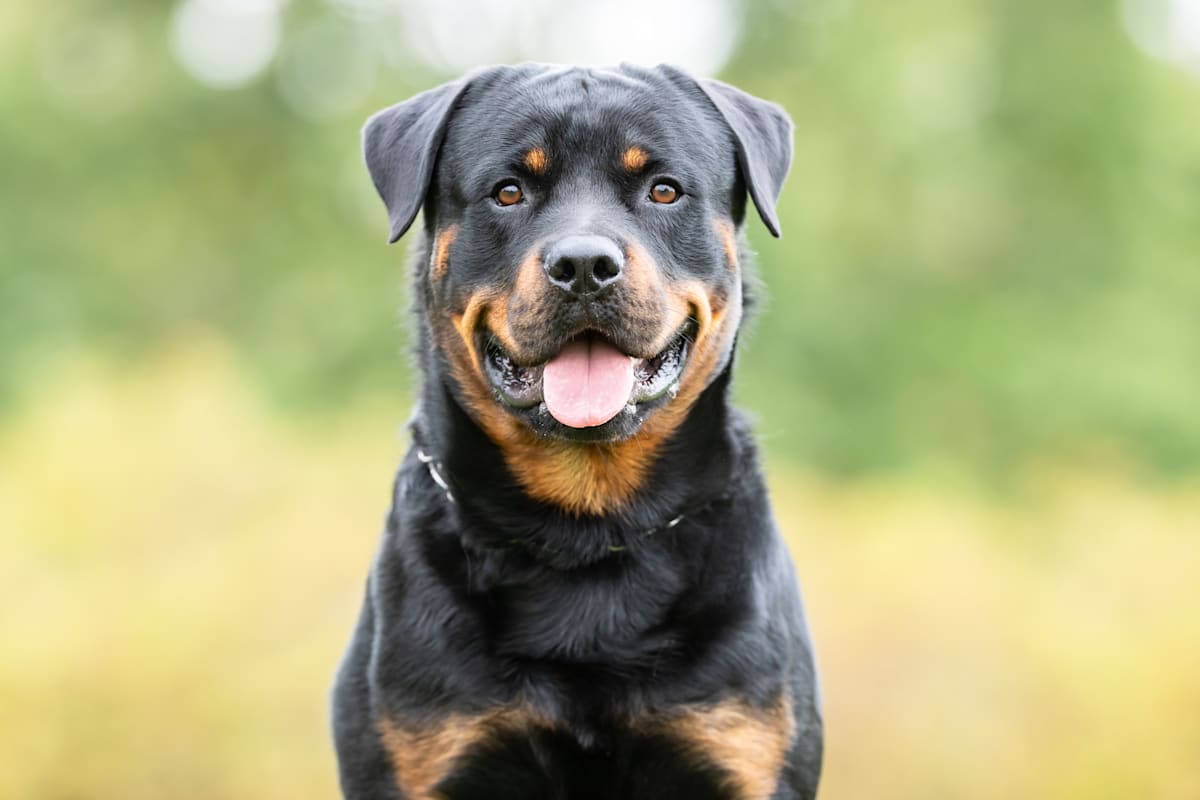
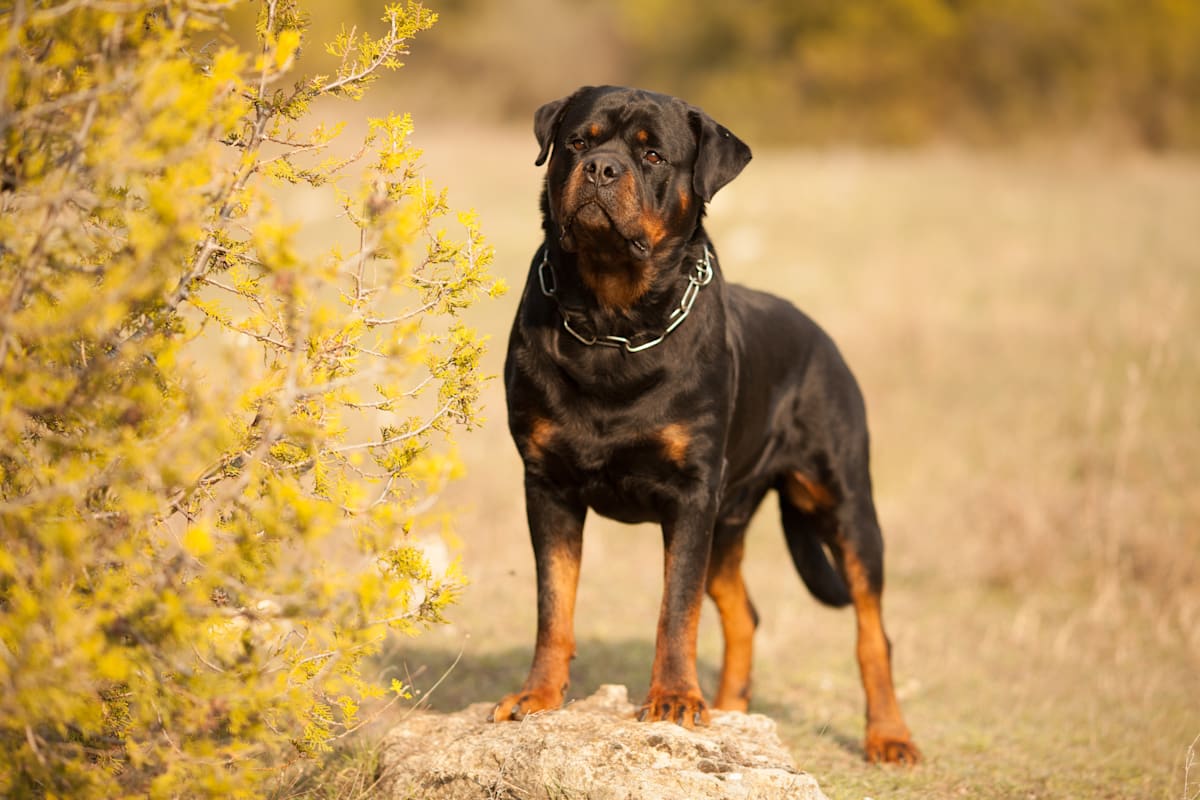
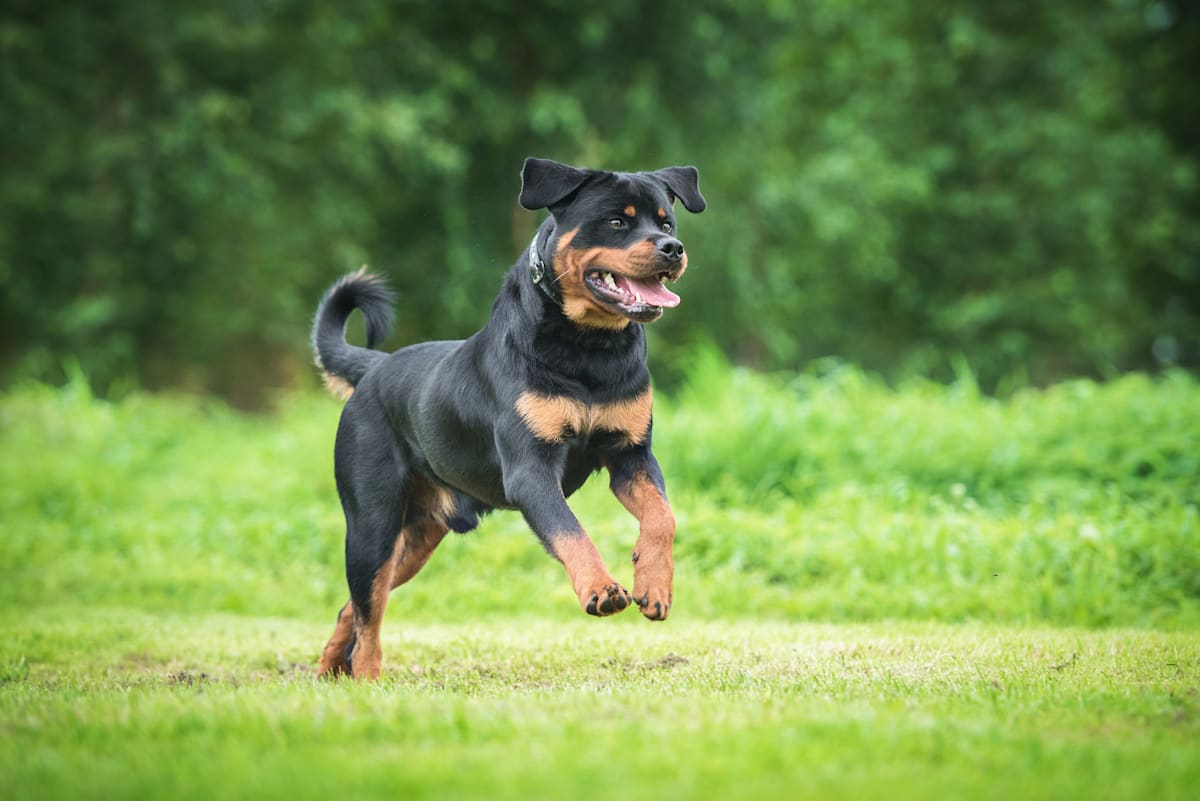
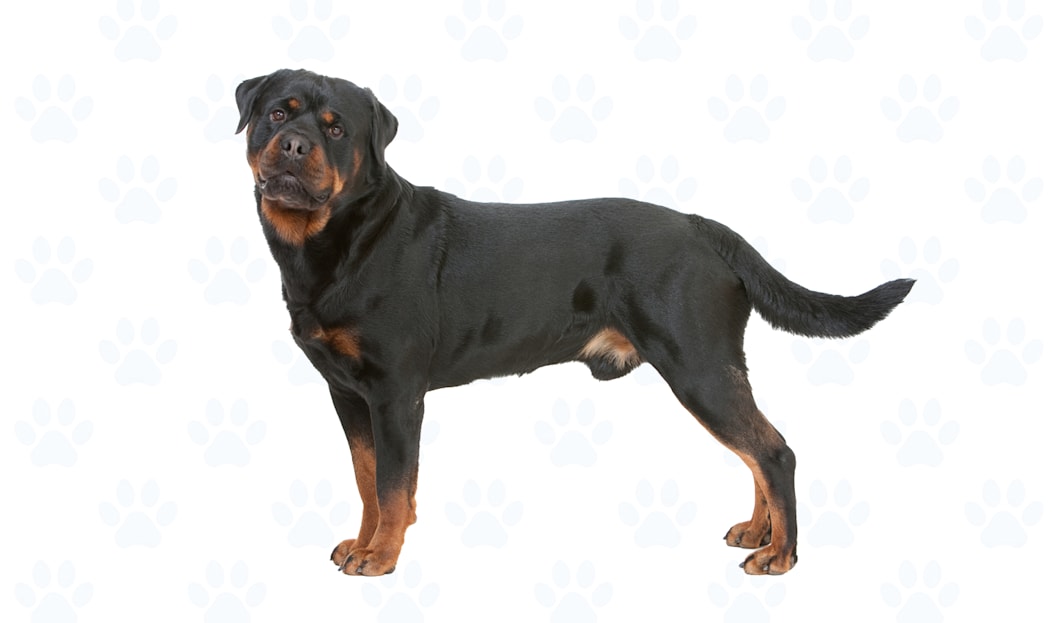
    The American Kennel Club (AKC) lists the key features of the breed: ͞medium large, robust and powerful dog, black with defined rust markings.͟The breed is strong and powerful with a bulky gait and a confident posture. The expression is noble, alert, and self-confident. Triangular ears and a broad jaw make for a rugged, strong-looking animal. The coat is coarse with medium length with short hair on the head and ears. The Rottweiler has a distinctive tritter gait that is powerful and steady. A fast runner with a strong towing pull that comes from its powerful muscles and athletic posture. Overall, it’s a mighty looking breed suited to its long history of work in the fields. 

    Size & Weight

    Rottweilers typically grow to be about 22-27 inches tall with a healthy adult weight between 80-135 pounds depending on the height and sex of the dog. Lots of dog to love and admire!
    Full Grown
    Female
    25 in. / 100 lbs.
    Male
    27 in. / 135 lbs.
    Height bar
    Female Pet
    Height Figure
    Male Pet
    Height is measured up to the shoulders.

    Rottweiler Breed Characteristics

    Size

    Tiny

    Jumbo

    Weight

    Light

    Heavy

    Shedding

    Minimal

    Abundant

    Coat Length

    Short

    Long

    Grooming Frequency

    Occasional

    Frequent

    Personality

    Antisocial

    Outgoing

    Protection

    None

    Bodyguard

    Behavior with Kids

    Always monitor

    Babysitter

    Training

    Headstrong

    Obedient

    Barking

    Mute

    Loud

    Living Space

    City apartment

    Ranch

    Exercise

    Couch potato

    Bring it on!

    Climate

    Warm

    Cold

    How to Care for a Rottweiler

    Caring for a Rottweiler means supporting both their strong body and thoughtful, devoted nature. With the right balance of training, exercise, nutrition, grooming, and preventive care, these confident working dogs can thrive as healthy, happy members of your family.

    Coat & Grooming: The Rottweiler coat is short and manageable. As with most dogs, trimming the nails regularly is a critical part of grooming. Don’t let them grow long and break, since infection can set into nails that are overgrown, split, and cracked. Rottweilers are pretty low maintenance overall. Just do what you do for yourself: brush the teeth, comb the hair, and check for ear wax!

    Shedding: Rottweilers have a thick coat of short and coarse black hair. They do shed, but a healthy diet and regular grooming can make a big difference. Watch out for springtime and autumn, when they gain/lose their winter coat through shedding. Otherwise, the breed is a fairly typical shedder. Comb often and invest in a good vacuum!

    Training: Rottweilers have been used as police and military dogs ever since the First World War. They are very intelligent and like to please. Some dogs will try to be the boss and will resist training at first; all it takes is consistency and a stern commitment to training from you, especially early in the animal’s life. With so many breeds to choose from, the police and military trainers choose Rottweilers for a reason. They are smart, capable, and take instructions well. Most of the modern training problems of the breed were actually benefits in the past: alarm barking, herding, and fierce loyalty to their pack.

    Overall, the Rottweiler is a willing partner in your life, and he will work hard to learn and adapt to your environment. Early socialization and obedience training is key to be sure he has a good grounding in proper behavior around other dogs, children, and adults alike.

    Barking: Excessive barking shouldn’t be a problem with proper training and socialization. Rottweilers really want to protect their devoted family, so it’s important to instruct the dog on proper behavior. The alarm bell barking was a useful trait in the breed’s past, so don’t hold it against them now. Just work with your Rottweiler to instruct them on the right time and place, and they’ll figure it out. After all, these animals want to be useful and practical to you – not a nuisance! Learning what your Rottweiler is trying to say will go a long way towards building a connection between human and dog.

    Personality: When it comes to personality, the Rottweiler has it all: calm, confident, and a heart of gold. Despite the media portrayals as aggressive, the natural temperament of the breed is calm and alert. Rottweilers are very self-assured and don’t shy away from anything. They are devoted companions, and despite their size, love to cuddle and lean on your leg to be close to you


    Temperament & Behavior: Despite what Hollywood would tell you, this breed is calm and happy when properly trained. Rotties are always on the lookout for danger and intrusions, but they make time to play and act goofy too. As a natural herder and drover, they want to please their owners with useful tasks and a strong work ethic. Aggressiveness and belligerence are not common to the breed (outside some irresponsible trainers), so you can expect an intelligent and attentive dog with a calm, confident disposition. They all have a strong desire to protect and nurture the family. Rottweilers might be reserved with strangers, but once you get to know them, they’re loving and friendly almost to a fault! They need interaction and suffer from loneliness if left alone for too long. This is not a breed to tie up or leave cooped up in a room alone all day.

    Behavior with kids: Rottweilers are natural parents: possessive, protective, and a little goofy at times. They love their family and look to herd children away from danger.The only real issue with children is introducing strangers to your Rottweiler (kids or otherwise). Proper training and obedience go a long way, but you should never leave younger children unattended with any dog.They may try to intervene in rowdy play, preferring a serene and quiet environment.

    Protection: The Ancient Romans prized their dogs for not only herding, but also protecting the cattle as guardians against poaching and predators. This natural tendency to look after the homestead can be enhanced with proper training, but almost any Rottweiler will always keep an ear and eye out for trouble lurking around the corner.

    Life span: The average lifespan of a Rottweiler is 8 to 10 years.

    Inherited health issues: As is true with many purebred dogs, Rotties have their share of health issues. Careful selection of your breeder is essential to bringing home a puppy that’s as healthy as possible. Many inherited conditions can be tested for and subsequently eliminated from a breeding pool, and it’s important to discuss this testing with your breeder. These conditions may include, but are limited to, the following: Aortic stenosis, Follicular parakeratosis, Symmetric lupoid onychodystrophy, Vitiligo, Cranial cruciate ligament rupture, Elbow dysplasia, Hip dysplasia, Cancer and Osteochondrosis Dissecans.

    Preventive care: Start out your Rottie puppy’s life on the right foot, by developing a strong relationship with his veterinarian. Visit your veterinarian in the first week after bringing your puppy home, in order to get a complete assessment of his health, and to look for any early signs of potential health problems. Your veterinarian will make recommendations regarding vaccinations, deworming, and flea and tick prevention, and discuss when you should have sterilization surgery performed.

    Because Rottweilers have a propensity towards obesity, weight management is a critical component of their health plan. Make sure to closely monitor your Rottie’s weight, both as he’s growing and once he’s an adult. Remember that post-sterilization surgery, the metabolism of many dogs slows down, and they need less food to maintain a healthy weight.

    Hip dysplasia and other orthopedic problems are quite common in Rotties. Again, weight management can lessen the severity of some of those problems, and help prevent others – such as cranial cruciate ligament ruptures. Supplementation with omega-3 fatty acids should be a routine part of any Rottie’s preventive care regimen, since it can lessen the pain and inflammation associated with osteoarthritis, a common follow-on problem of many orthopedic problems.

    When your Rottie is a puppy, choose a high quality puppy food specifically formulated for large breeds. Many orthopedic problems are worsened when the rate of growth is too fast – hip dysplasia is an example – and foods formulated for large breeds encourages a more controlled rate of growth, so the risk of these problems decrease.

    Once your Rottweiler reaches adulthood, it’s important to carefully monitor his food intake. Be judicious with treats, and select healthy, relatively lower calorie foods such as carrots, to use as snacks – and always monitor the quantity fed. Your veterinarian can help you to determine what your dog’s ideal weight is, and help you feed accordingly. Remember: it’s much easier to keep your Rottie trim, than to get your Rottie to lose weight!

    Daily Consumption: Average daily consumption for an adult Rottweiler is 2.5-4 cups.

    Energy Level: Frisky, energetic breed that is always ready for action

    Exercise: Rottweilers are natural working dogs, so they don’t shy away from some heavy exercise. The American Kennel Club recommends two vigorous walks per day, and if you can hook up a wagon to the dog, that’s even better. They cut their teeth herding cattle and hauling goods to the markets in Germany, so don’t be shy when it comes to working out with your dog.


    The breed is prone to overeating, so adequate exercise is important to keeping them trim and healthy. A fenced yard is a must, since they like to roam and can get into trouble. Don’t leave them alone for too long, since they are highly-social animals that like to be around people. Many Rottweilers will follow their people from room-to-room to be close at all times. They have so much love to give!

    Climate: German breeders liked the Rottweiler for its hardy and sturdy construction. These dogs can adapt to almost any climate, since their thick undercoat will disappear in warmer climates or thicken up for a long winter, if necessary. A light winter coat might help in very cold climates, but generally, this breed can hack it in any weather.

    Cost of Owning

    On average, owning a middle-aged Rottweiler costs around $1300 per year
    $400
    Vet Care
    $300
    Grooming & Boarding
    $400
    Food & Treats
    $200
    Other

    Unlock exclusive rewards with Vital Care, or enjoy up to 35% off essentials when you subscribe with Repeat Delivery.

    Enjoy exclusive rewards every time you shop. Get member-only deals, points, and special offers designed to help you save more on what your pet needs.

    Never run out of the essentials. Subscribe and get your pet’s favorites delivered on schedule—with up to 35% off plus the convenience of automatic refills.

    Cross Breeds

    Select a Breed to Cross

    Choose a breed from the dropdown to see potential crosses.

    Boxer
    Dropdown Icon

    Your love story starts here.

    Find adoptable pets near you with a simple search.

    Fun Facts

    In the Middle Ages, some merchants would travel with a Rottweiler who carried their precious coins and money in a pouch tied to the dog’s neck. Good luck trying to take that!

    In the Middle Ages, some merchants would travel with a Rottweiler who carried their precious coins and money in a pouch tied to the dog’s neck. Good luck trying to take that!

    A famous Rottie named Jake helped to stop a violent assault in the UK in 2009. On a walk through the countryside, he heard screams coming from the bush. Jake to the rescue! He found the attacker, chased him away from the woman, and led his owner Liz to the scene. What a hero! The Royal SPCA recognized his bravery and heroism the following year.

    A famous Rottie named Jake helped to stop a violent assault in the UK in 2009. On a walk through the countryside, he heard screams coming from the bush. Jake to the rescue! He found the attacker, chased him away from the woman, and led his owner Liz to the scene. What a hero! The Royal SPCA recognized his bravery and heroism the following year.

    The film The Omen put the breed in a negative light and the public has stigmatized the breed ever since! Luckily for them, Rottweilers had many vocal advocates and more than a few positive film roles since then.

    The film The Omen put the breed in a negative light and the public has stigmatized the breed ever since! Luckily for them, Rottweilers had many vocal advocates and more than a few positive film roles since then.

    History

    As the Ancient Romans traveled across Europe, they brought large, sturdy dogs with them as drovers (hauling animals). These dogs were perfect for the army: they were strong, they didn’t complain, and they would look after the cattle herd with a keen ear for trouble. The name for the modern breed comes from the Rottweil region of present-day Germany. As farming became more intensive from the dawn of the millennium to industrialized society, the need for strong, capable dogs pointed farmers to something like the Rottweiler breed.They were great for the farm: natural herders, great alarm systems, and a loyal companion for rural life. Rottweilers were called Rottweiler Metzgerhunds in Germany, which translates to "butcher dogs" from Rottweil. You could often see these strong dogs pulling heavy carts of butchers’ meat from the farm to the market.

    At the start of the 20th-century, the breed was nearly lost due to a lack of popularity. Once the war came to Europe, it all changed. There was a huge demand for police and military dogs, and the Rottweiler was an easy choice for its strength, intelligence, and fierce loyalty. Soldiers used them for guarding camps, hauling materiel, and even delivering messages!

    The American Kennel Club recognized the breed officially in 1931, and the popularity of Rottweilers grew throughout the century to become one of the top ten breeds in America today. They remain a staple of law enforcement and the military, but most Rottweilers live their lives in loving comfort as an all-purpose family dog.

    Read More

    Sponsored