Petco Text Logo
Petco Pet Logo
Jump To Section

    About Mini Poodles

    Miniature Poodles are intelligent and loving dogs. These dogs fit into a small apartment with ease. They make great family dogs, and have a love of games and a goofy personality. Poodles are proud and regal in their appearance, and their fur is easy to maintain. If you are looking for a hypoallergenic dog for a sensitive person in your household, but don’t have a lot of space, the Miniature Poodle is great choice.


    Other Names: Caniche, Barbone (en français)

    Non-Sporting Group

    The breeds in the Non-Sporting Group are a varied collection in size, coat, personality, and overall appearance. These sturdy dogs range from Chow Chows and Dalmatians to French Bulldogs and Keeshonds. Some, like the Schipperke and Tibetan Spaniel, are uncommon sights, while others, such as the Poodle and Lhasa Apso, have a large following. This group truly spans a wide range of traits and looks.

    Breed Appearance

    The American Kennel Club (AKC) maintains the breed standard for all types of Poodles. The main differentiation between Toy, Miniature, and Standard Poodles is the height. Miniature Poodles are squarely-framed, active, and elegant dogs. Poodle classes can vary wildly in height and weight depending on local standards in a given country. Here in America, the AKC lists Miniature Poodles as being between 10 and 15 inches in height.

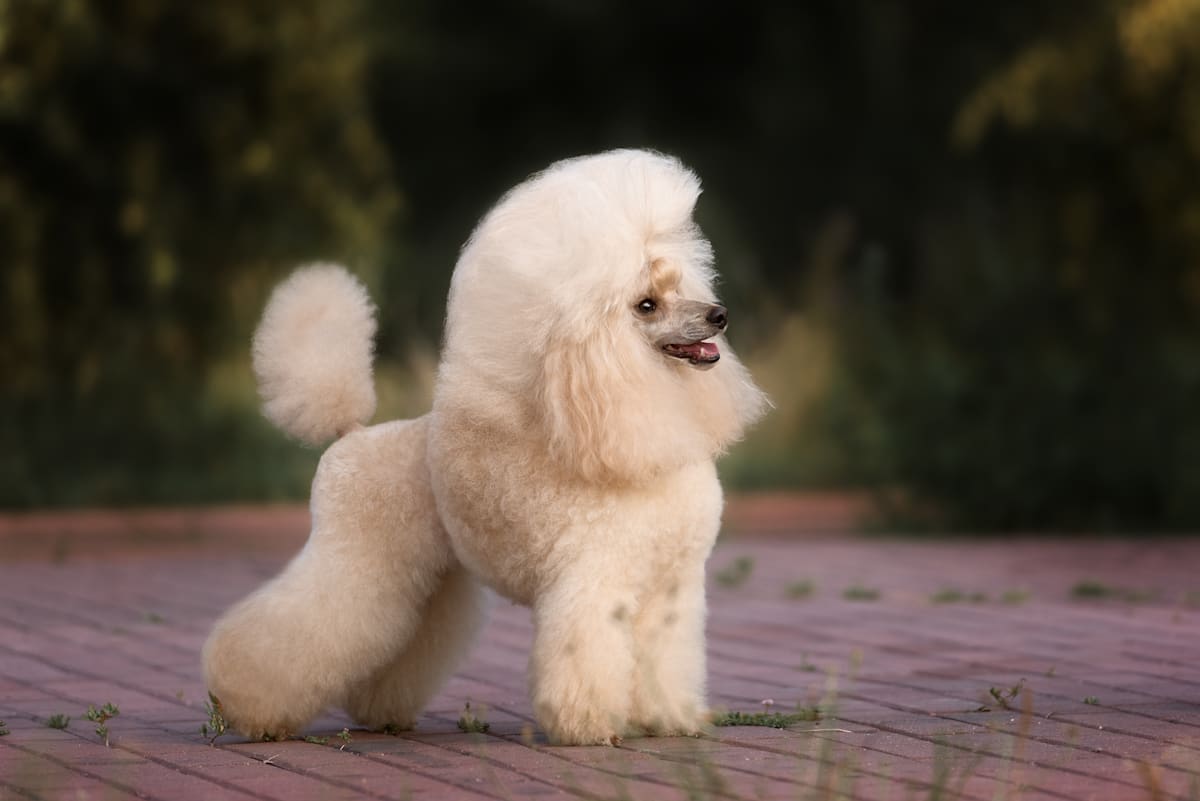
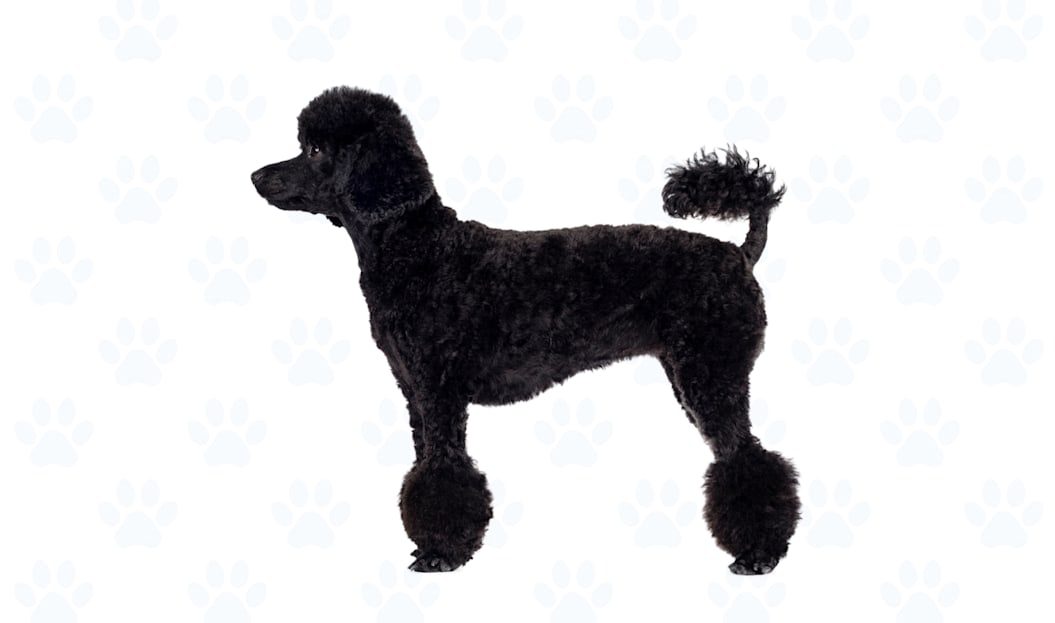
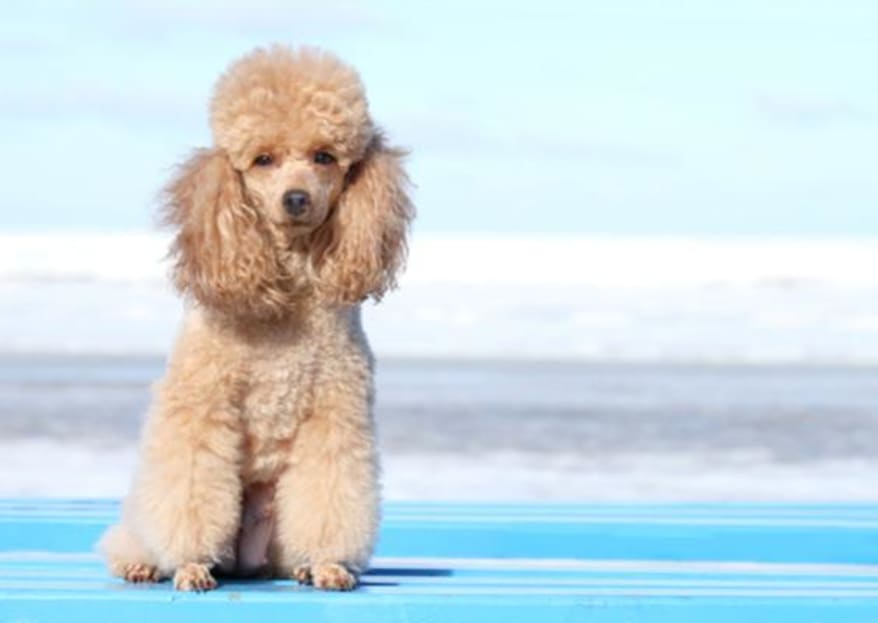
    The Miniature Poodle only grows a single coat of fur. The breed is popular as a hypoallergenic dog since they don’t really shed much at all. You’ll often see Miniature Poodles with elaborate styling and clips. The lion cut is one of the most common – close cut around the body with a mane of fur around their neck and head.

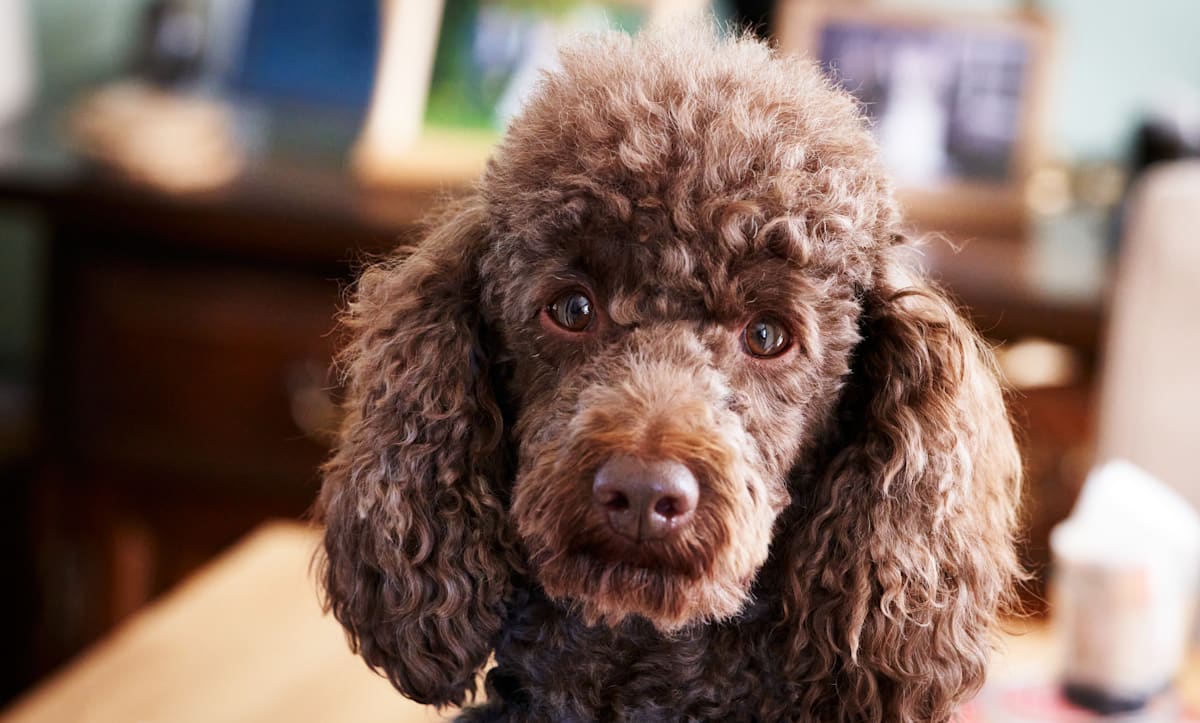
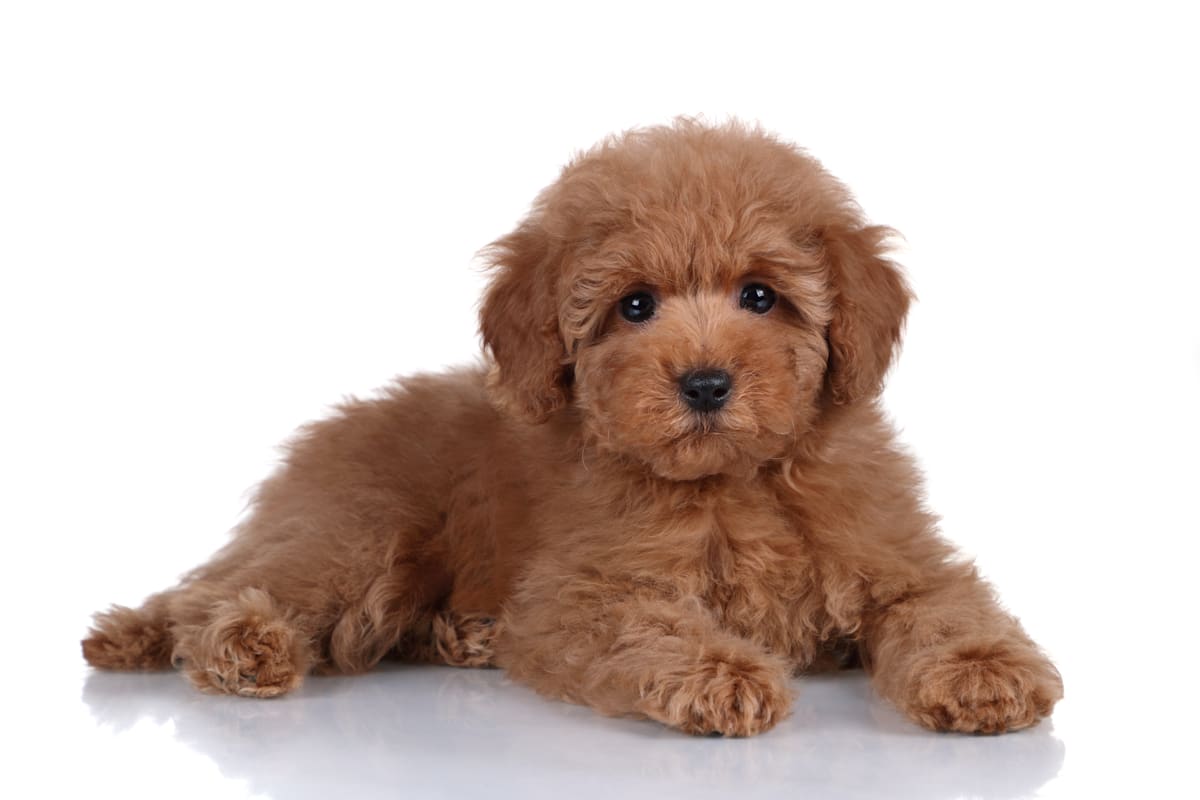
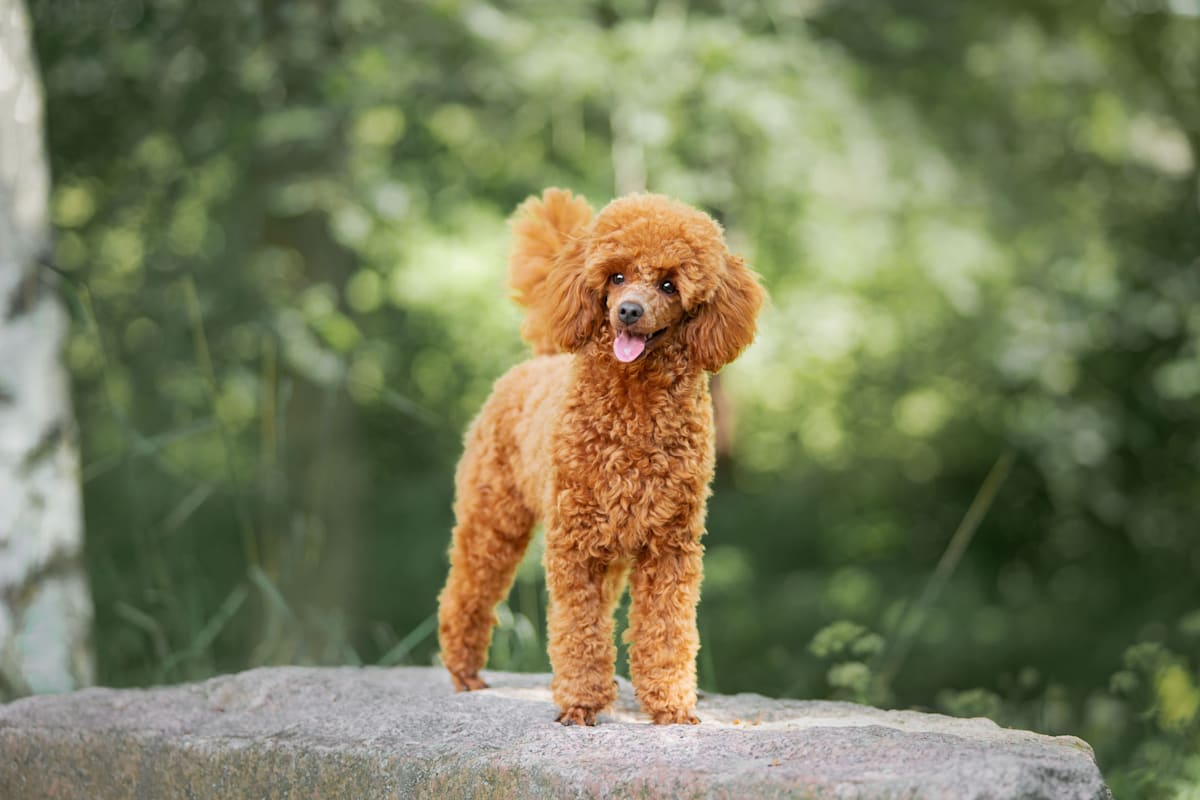
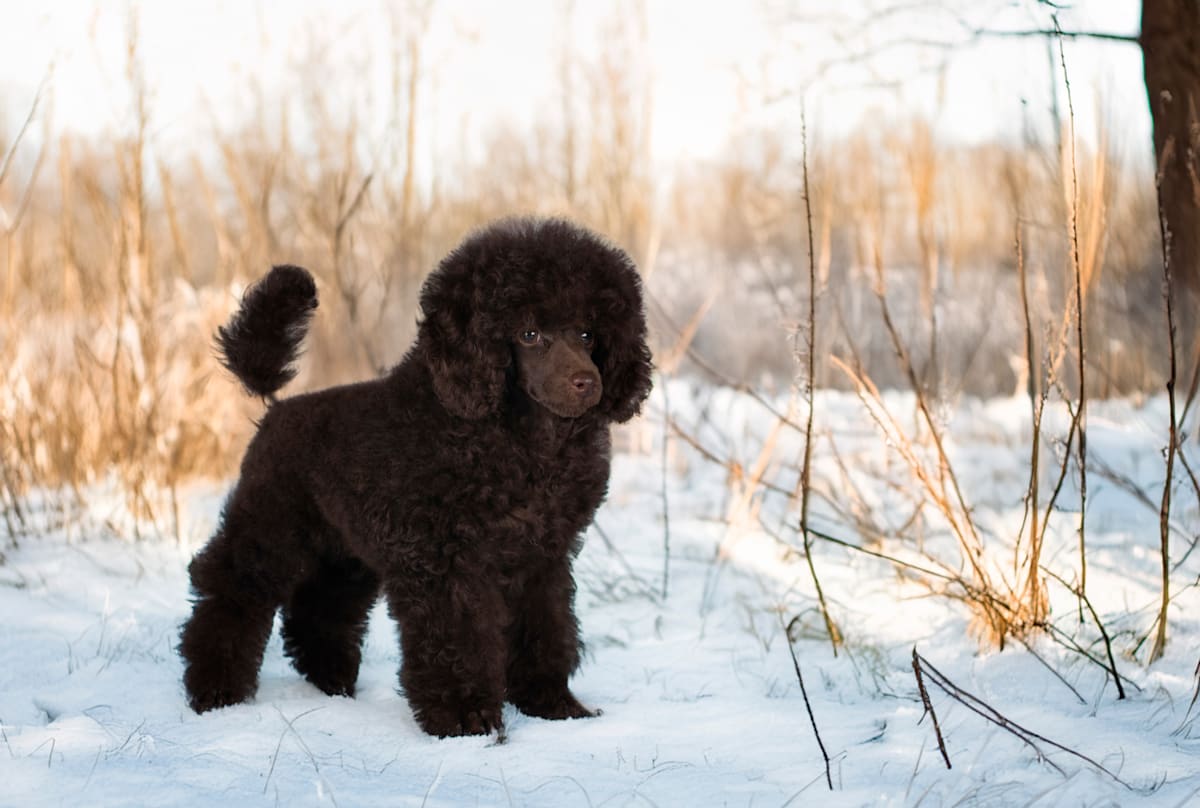
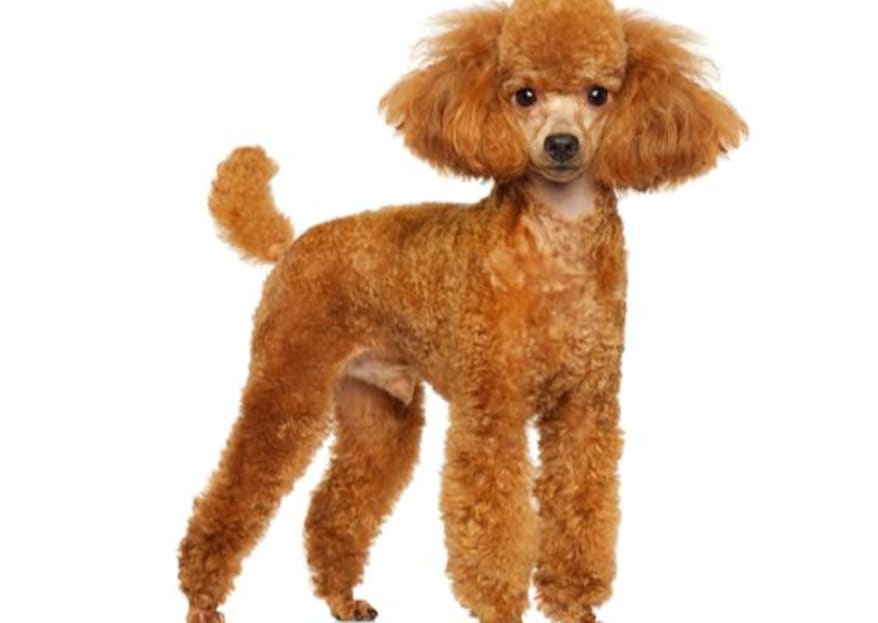
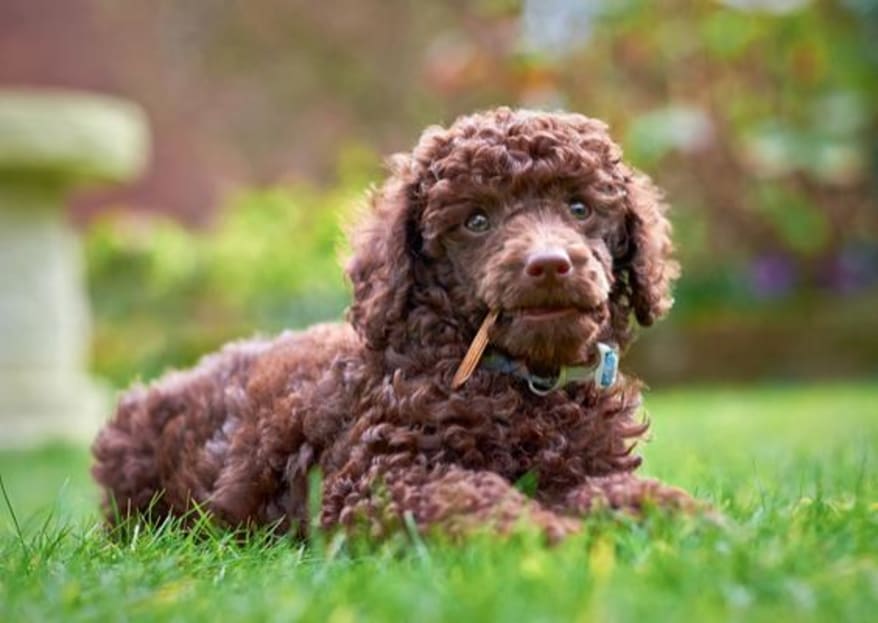
    The AKC recognizes ten coat colors in Miniature Poodles: apricot, cream, black, blue, brown, gray, café au lait, red, silver, silver beige, white, and combinations of these colors.

    Size & Weight

    Miniature Poodles aren’t the biggest Poodles but they are still fair sized dogs. The official AKC breed standard for the Miniature Poodle says that they cannot exceed 15 inches tall and must be above 9 inches. They typically weigh 15 to 17 pounds as adults. If you prefer a different size, check out the Toy and Standard varieties.
    Full Grown
    Female
    10 in. / 10 lbs.
    Male
    15 in. / 15 lbs.
    Height bar
    Female Pet
    Height Figure
    Male Pet
    Height is measured up to the shoulders.

    Miniature Poodle Breed Characteristics

    Size

    Tiny

    Jumbo

    Weight

    Light

    Heavy

    Shedding

    Minimal

    Abundant

    Coat Length

    Short

    Long

    Grooming Frequency

    Occasional

    Frequent

    Living Space

    City apartment

    Ranch

    Exercise

    Couch potato

    Bring it on!

    Climate

    Warm

    Cold

    Personality

    Antisocial

    Outgoing

    Protection

    None

    Bodyguard

    Behavior with Kids

    Always monitor

    Babysitter

    Training

    Headstrong

    Obedient

    Barking

    Mute

    Loud

    How to Care for a Miniature Poodle

    Caring for a Miniature Poodle means nurturing both their sharp mind and ever-growing coat. With consistent grooming, thoughtful training, balanced nutrition, and daily activity, these energetic, people-focused pups can thrive in a wide range of home and lifestyle settings.

    Coat & Grooming: Miniature Poodles come in many different coats, including mixed colors. Historically, Poodles in Europe were often parti-colored with solid patches over a white base, though modern AKC standards recognize ten base colors and various combinations. Some types, such as phantom, bridle, and sable, are not eligible for competition under many breed standards. Miniature Poodles are often well-coiffed and styled with bows and hair ties, and they require weekly grooming even with simple trims. The AKC mandates specific “show clips” for mature Poodles, including the “Continental” or “English Saddle,” while dogs under twelve months may be shown in the “Puppy” clip. For everyday care, stay on top of ears, teeth, and nails to prevent discomfort and avoid unnecessary vet visits.

    Shedding: Miniature Poodles don’t lose much fur since they lack the typical double coat found in many breeds. Their single coat makes them a good option for people with allergies or sensitivities. Hair loss, however, can signal medical issues, so consult your veterinarian if you notice it. Routine brushing and normal household cleaning help maintain a healthy coat year-round.

    Training: Miniature Poodles are highly intelligent and can learn almost anything with the right trainer. They enjoy games, thrive with mental stimulation, and are often seen on agility courses. Like all breeds, they benefit from an early obedience routine and consistent socialization.

    Barking: Miniature Poodles aren’t typically overly talkative, but they will alert you to activity around the home. They may become animated around larger dogs or energetic children, especially in busy environments. Early socialization and exposure to new people and pets can help create a confident, well-adjusted dog. While a bark at a squirrel or mail carrier is normal, excessive howling can indicate behavioral issues that may require additional training or a vet checkup. Their intelligence means they tend to pick up new lessons quickly.

    Personality: Miniature Poodles are quite affectionate if they get to know you, but they can be a tad standoffish at first. A well-trained Miniature Poodle should display love, warmth, and affection for their companions and new friends alike after a brief period of getting to know strangers.

    Temperament & Behavior: Miniature Poodles are patient and well-mannered when properly trained and socialized. They can be playful, goofy, and energetic despite their elegant appearance. Some may be cautious when meeting new people but typically warm up with a little time and gentle encouragement. They are affectionate with their families, though they may try to take on more than they can handle around larger dogs.

    Behavior with Kids: Miniature Poodles generally make good family pets. They are protective but not excessively so and show strong affection toward their companions. Supervision is recommended around young children or unfamiliar individuals.

    Protection: A well-trained Miniature Poodle is usually friendly after a brief introduction. They are suspicious of strangers who come to call but should warm up after the usual pleasantries. Give them some time to get used to new friends, and your Miniature Poodle should warm up and offer affection. Keep in mind that your Miniature Poodle is not always aware of its size. It may take on more than it can handle around bigger dogs.

    Life span: On average, Miniature Poodles live to be about 10-18 years old.

    Inherited Health Issues: Miniature Poodles, like all breeds, can inherit certain health conditions. While some issues can be screened through genetic testing, not all risks can be identified in advance. If purchasing a puppy, review the breeder’s genetic testing practices and confirm efforts to reduce hereditary abnormalities.

    Preventive Care: Small breeds like Miniature Poodles are more prone to dental disease, so brushing 2–3 times weekly with dog-specific toothpaste is important. Follow your veterinarian’s guidance on dental cleanings. High-quality small-breed food and access to fresh water can help prevent urinary problems such as stone formation. Conditions that may affect the breed include (but are not limited to): mitral valve degeneration, patent ductus arteriosus, hormone-responsive dermatosis, diabetes, hyperadrenocorticism, HGE, immune-mediated diseases, Von Willebrand’s disease, avascular femoral head necrosis, atlantoaxial subluxation, patellar luxation, perineal herniation, cancer, GME, IVDD, ocular conditions, ectopic ureters, urinary stones, cryptorchidism, dystocia and tracheal collapse.

    Your veterinarian can help you determine the ideal weight for your Miniature Poodle, as well as the appropriate amount of food to feed. It’s a good idea to offer some canned food along with dry, as canned food helps to add important moisture to the diet. In breeds predisposed to the development of urinary stones, like Miniature Poodles, a diet that’s high in water can help to lessen those risks.

    Daily Consumption: An adult Mini Poodle eats 1/4 to 1/2 cup of dry food per day.

    Energy Level: Frisky, energetic breed that is always ready for action

    Exercise: Miniature Poodles need a consistent routine of walking and play to keep them mentally and physically healthy. They enjoy being close to family and prefer sleeping indoors near their companions. Although originally bred from hunting dogs, they retained some territorial behaviors such as marking around the neighborhood. They are fine swimmers but often don’t enjoy spending time in the water.

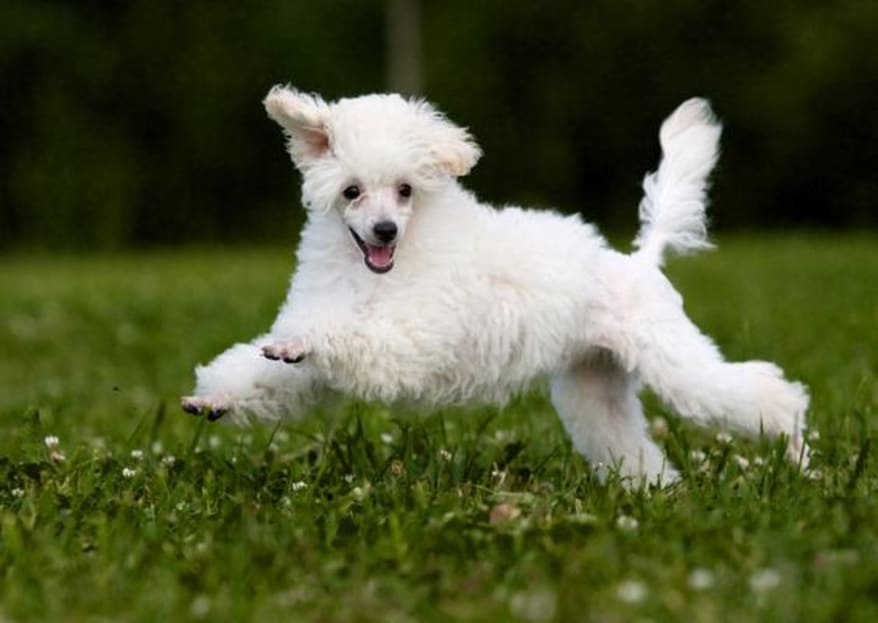
    Miniature Poodles have a surprisingly high energy capacity despite their size and require daily activity to stay fulfilled. Lack of exercise is a common issue in apartment dogs, so ensure they get enough movement. Walks benefit both you and your Poodle, and mixing up activities can help keep them stimulated.

    Living Space: Miniature Poodles are suitable for small or medium-size apartments or homes. If you love the breed but prefer a different size, Toy and Standard Poodles offer alternatives.

    Climate: Miniature Poodles can adapt to many climates but may be vulnerable to overheating or frostbite in extreme conditions. Watch for signs of distress during hot or cold weather. If you live in a cold region, consider a warm coat for your dog during winter outings.

    Cost of Owning

    The average cost of owning an adult Mini Poodle is about $1000 per year
    $300
    Vet Care
    $300
    Grooming & Boarding
    $250
    Food & Treats
    $150
    Other

    Unlock exclusive rewards with Vital Care, or enjoy up to 35% off essentials when you subscribe with Repeat Delivery.

    Enjoy exclusive rewards every time you shop. Get member-only deals, points, and special offers designed to help you save more on what your pet needs.

    Never run out of the essentials. Subscribe and get your pet’s favorites delivered on schedule—with up to 35% off plus the convenience of automatic refills.

    Cross Breeds

    Select a Breed to Cross

    Choose a breed from the dropdown to see potential crosses.

    Maltese
    Dropdown Icon

    Your love story starts here.

    Find adoptable pets near you with a simple search.

    Fun Facts

    In 1942, the US Army declared Poodles suitable for wartime work, and records show them helping in battles dating back to the European conflicts of the 1600s.

    In 1942, the US Army declared Poodles suitable for wartime work, and records show them helping in battles dating back to the European conflicts of the 1600s.

    A team of Poodles ran the Iditarod in the late Eighties, performing so poorly that organizers later set new breed rules to protect dogs in Alaska’s extreme conditions.

    A team of Poodles ran the Iditarod in the late Eighties, performing so poorly that organizers later set new breed rules to protect dogs in Alaska’s extreme conditions.

    Miniature Poodles have fur that never stops growing—skip grooming for too long and you may end up with one very fluffy fur-ball.

    Miniature Poodles have fur that never stops growing—skip grooming for too long and you may end up with one very fluffy fur-ball.

    Miniature Poodles have long been loved by the rich and famous, from actresses and queens to Elvis Presley and Winston Churchill, who cherished his Poodle, Rufus.

    Miniature Poodles have long been loved by the rich and famous, from actresses and queens to Elvis Presley and Winston Churchill, who cherished his Poodle, Rufus.

    History

    Origin: France and Germany

    The exact origin of the Poodle is not fully understood by researchers. The word “Poodle”probably comes from Low German. Their word for splashing around is “pudel”. Some of the DNA that you find in modern Poodles likely came from several different water dogs from Europe, like the Hungarian Water Dog. The first breed standard for the Poodle was developed in France around the mid-19th century. At the time, Poodles were mainly hunting dogs. After breeders reduced the size down to Miniature and Toy Poodles, these dogs became very fashionable in Europe in the 1700s.

    France proudly declared the Poodle as their national dog, but the loyal following goes far beyond the borders of France. You can find Miniature Poodles and Poodle lovers around the world today. The first Poodle breed standards were recognized in the UK in 1874 and in America in 1886. In 1931, The Poodle Club of America began and never looked back. Today this breed remains popular worldwide with many national clubs still active in supporting Miniature Poodles, other Poodles, and their owners.

    Read More

    Sponsored