Petco Text Logo
Petco Pet Logo
Jump To Section

    About Mini Schnauzers

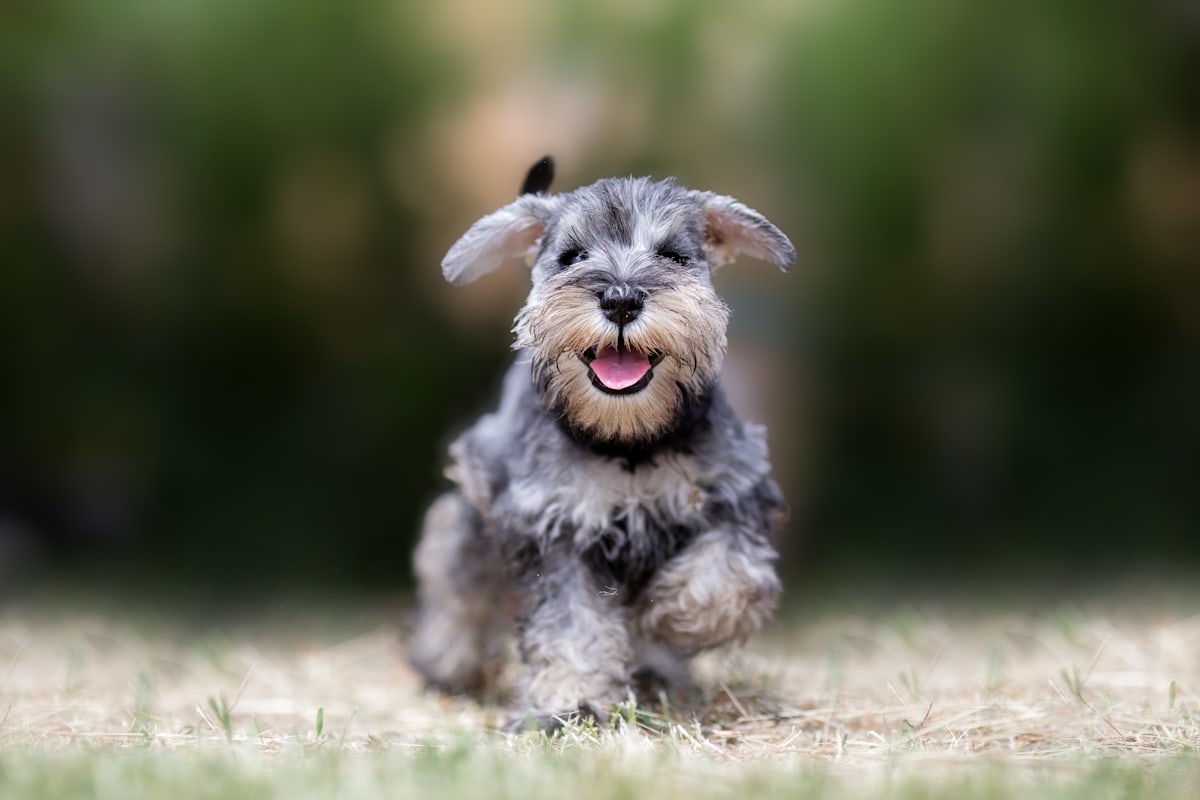
    The Miniature Schnauzer is a lovable rascal in gentleman’s clothes. These bearded small terriers can be described as spunky, bold, curious, and reliably...vocal. This size variety closely resembles its larger Schnauzer counterparts, although boasts combined temperament traits from other small companion breeds in its bloodline. Miniature Schnauzers are well-suited to many climates, living spaces, and activities.

    Although this breed is low-shedding, regular grooming will be part of their routine. Ranked with above-average working intelligence, the Miniature Schnauzer is a quick learner and can excel at obedience, though they’re known to be headstrong and can be feisty with other animals. Miniature Schnauzers require a moderate amount of exercise, depending on the drive of the individual dog, and will remain an adaptable, fun-loving, and exuberant companion that typically lives beyond a decade.

    Other Names: Dwarf Schnauzer, Zwergschnauzer

    AKC Breed Group

    Terriers are known for their bold, spirited personalities and low tolerance for other animals, a trait rooted in their history as vermin hunters. Many still show a feisty attitude and eagerness for debate. Their wiry coats require specialized grooming called stripping to maintain their classic look. Terriers make engaging companions but do best with owners who can match their lively, determined nature.

    Breed Appearance

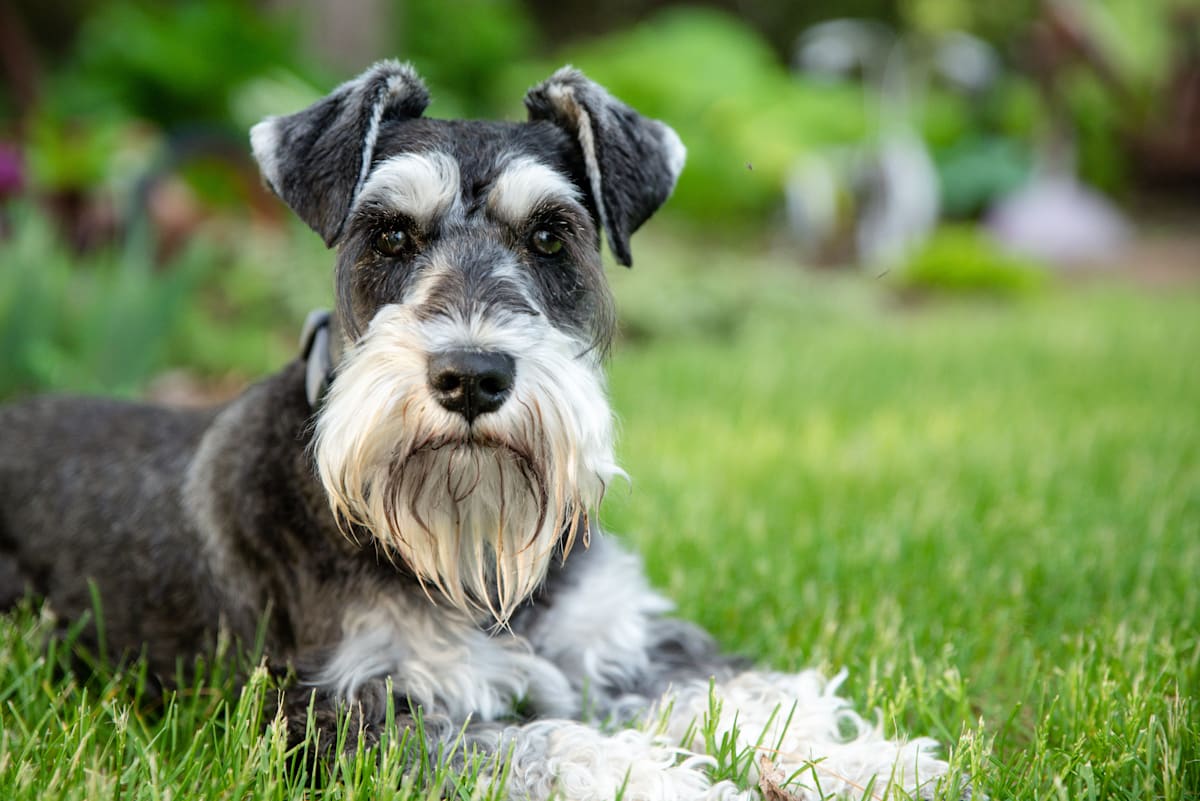
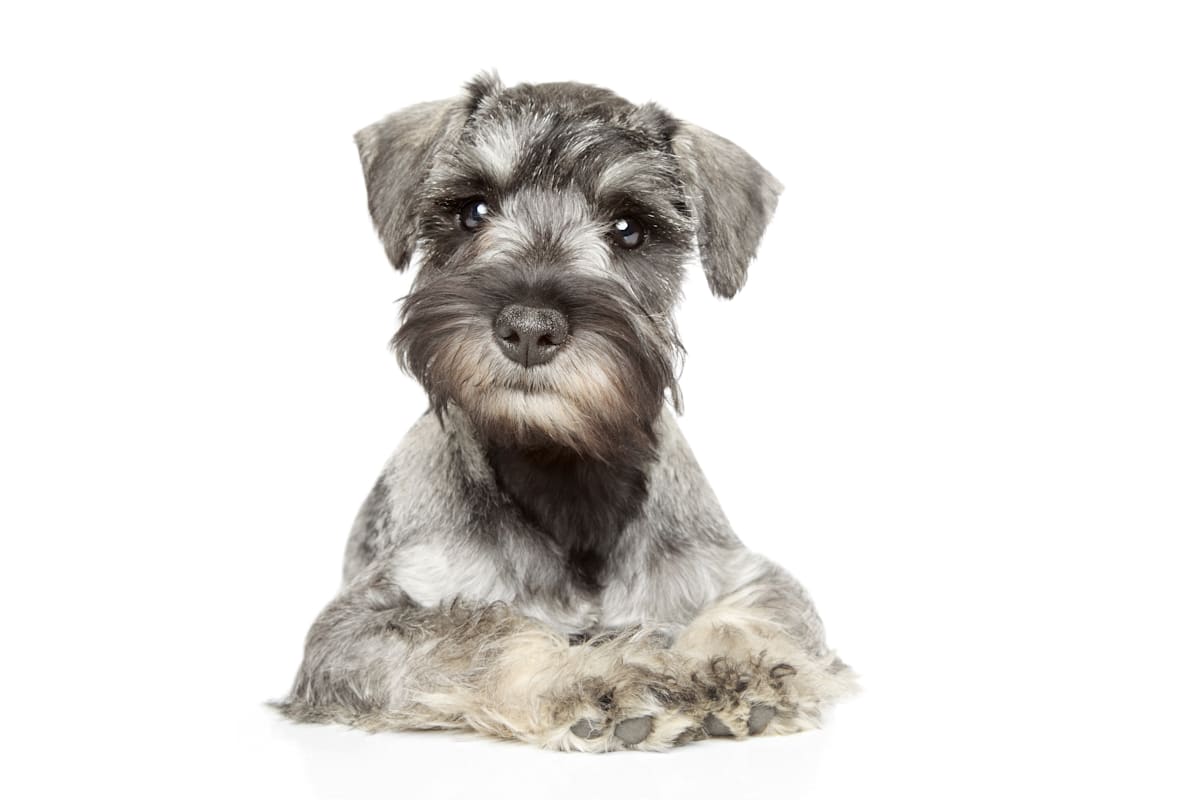
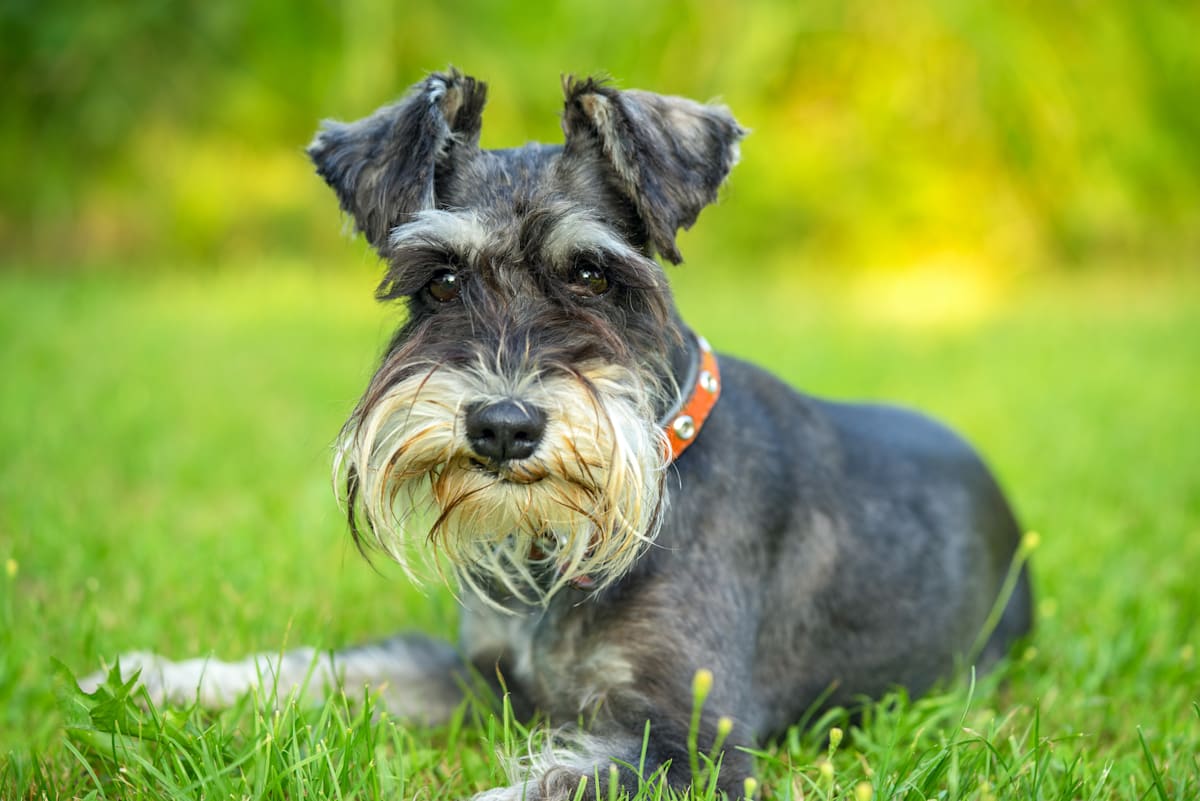
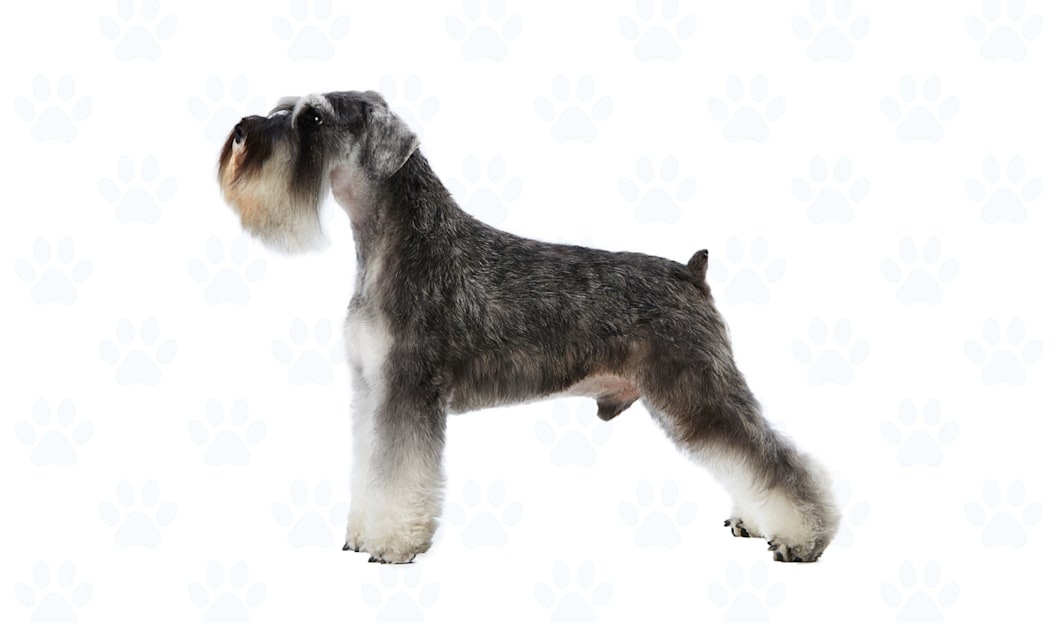
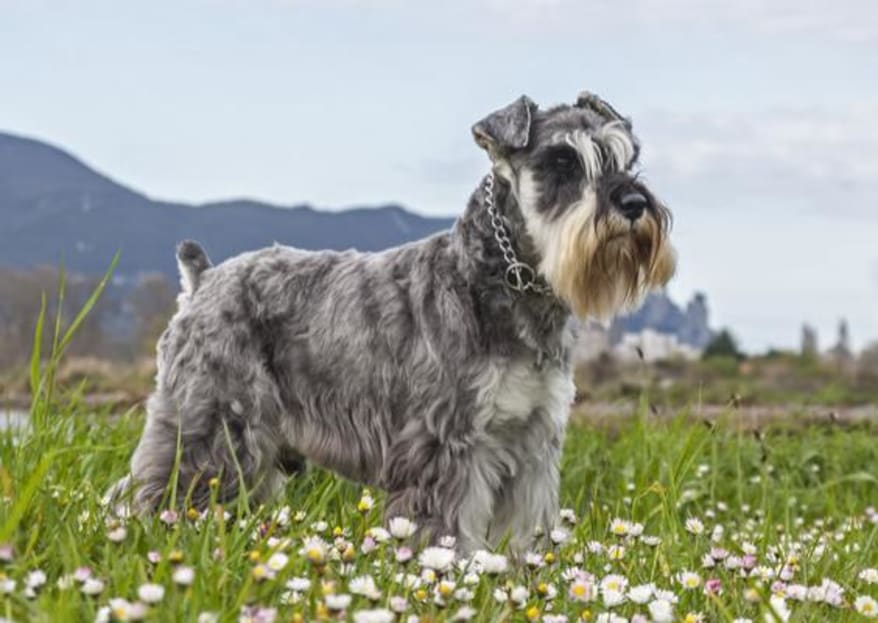
    Miniature Schnauzers are sturdily built small dogs with square proportions, making them as long as they are tall. Although this is the smallest of the three Schnauzer sizes, nothing about the individual should appear toy-like. Instead, they should appear robust, active and alert. Miniature Schnauzers shorter than 12” are strictly disqualified from being shown. Miniature Schnauzers have a rectangular-shaped head with a blunt muzzle of medium length. They usually sport thick, accentuated whiskers and eye-brow tufts. They have dark, deep set eyes with a keen, alert expression. Their ears are set high on the skull and sit forward in a V-shape that folds close to the head when uncropped.

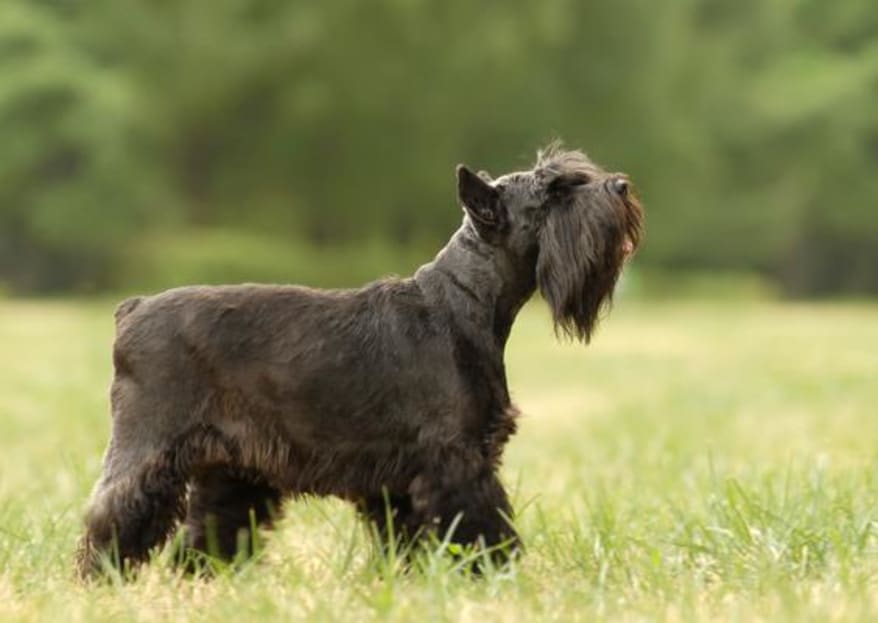
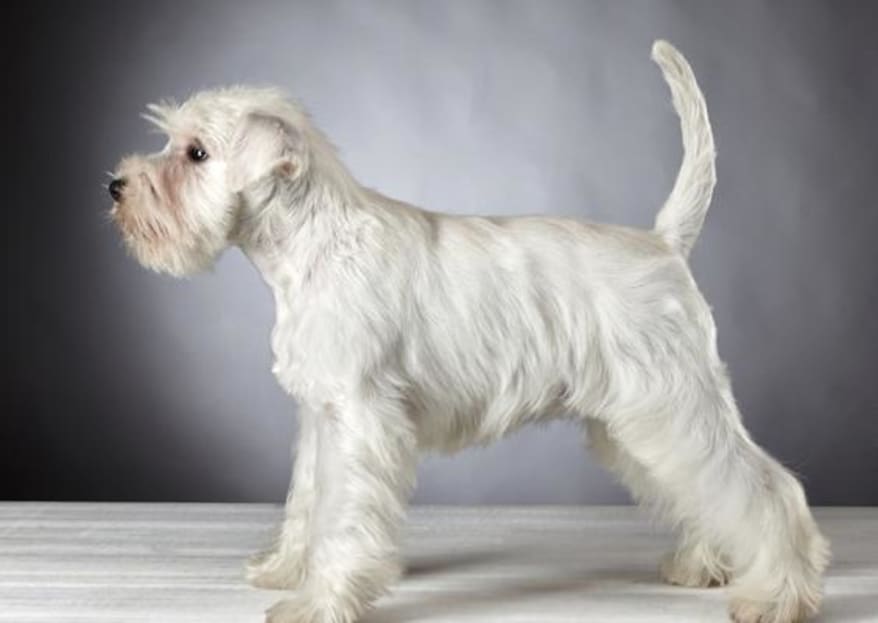
    Miniature Schnauzers have a deep body and straight back that slopes very slightly towards the tail, which sits high on the haunches and stands almost straight up. Their legs are well-boned, with front legs standing parallel to each other, and muscular thighs set at a slight angle. Miniature Schnauzers have a wiry coat consisting of a coarse outer layer and close undercoat. When grown out, the coat is wavy, but not silky or slick feeling. Miniature Schnauzers are recognized in a limited number of colors, including salt and pepper, black and silver, and solid black. Some white or silver markings are expected on the chest, legs, beards, cheeks, and eyebrows. Miniature Schnauzers can also be found with white, chocolate, wheaten, and ‘parti’ coloring, due to breed mixing that was used to miniaturize the Standard Schnauzer. These colors aren’t considered part of the original Schnauzer bloodline, but can be registered purebreds and are able to participate in all AKC sanctioned events except conformation.

    Size & Weight

    The Miniature Schnauzer is precisely between 12-14 inches tall at the withers and weighs between 10-18 lbs.
    Full Grown
    Female
    12 in. / 11 lbs.
    Male
    14 in. / 20 lbs.
    Height bar
    Female Pet
    Height Figure
    Male Pet
    Height is measured up to the shoulders.

    Miniature Schnauzer Miniature Schnauzer Characteristics

    Size

    Tiny

    Jumbo

    Weight

    Light

    Heavy

    Shedding

    Minimal

    Abundant

    Coat Length

    Short

    Long

    Grooming Frequency

    Occasional

    Frequent

    Living Space

    City apartment

    Ranch

    Exercise

    Couch potato

    Bring it on!

    Climate

    Warm

    Cold

    Personality

    Antisocial

    Outgoing

    Protection

    None

    Bodyguard

    Behavior with Kids

    Always monitor

    Babysitter

    Training

    Headstrong

    Obedient

    Barking

    Mute

    Loud

    How to Care for a Pomeranian

    Miniature Schnauzers thrive when their sharp minds and lively spirits are supported with consistent grooming, thoughtful training, and plenty of daily activity. With the right balance of nutrition, preventive care, and engaging routines, this energetic little companion can enjoy a healthy, happy life by your side.

    Coat & Grooming: Miniature Schnauzers have a medium length double coat that requires some basic regular grooming. A wirehair topcoat protects the soft undercoat and the two can become matted together, so daily brushing is important for this wirehair breed. The coat is typically hand stripped for the showing dogs but can also be clipped every other month if immaculate appearance isn’t a priority. They will need an occasional bath, and have fast-growing nails that require frequent clipping.

    Shedding: Even though the Miniature Schnauzer requires a moderate amount of grooming, they pay the effort back with minimal shedding. Dog hairs from this breed won’t be blanketing the house. As a double-coated breed, they can be expected to‘blow’ their coat twice per year, although the amount of hair shed should be manageable if they have a regular grooming routine in place.

    Training: Miniature Schnauzers have a higher-than-average working intelligence, and are capable of excelling at any kind of training. Miniature Schnauzers are so great at training, they often train their owners! They are known for being a bit headstrong like other terriers, but once a Miniature Schnauzer is taught to listen, it can perform a high level of obedience, agility, and other tricks.

    Training for a Miniature Schnauzers isn’t just about fun and games, and obedience awards, though. It’s important for this plucky little dog to get plenty of practice socializing with other dogs, and people, to keep their territorial and guarding instincts on the leash.

    Barking: Miniature Schnauzers regularly communicate through barking. If a Miniature Schnauzer is happy, sad, bored, excited, hears something, sees something outside, or thinks it maybe saw something, he or she will want you to know. They employ their abrupt piercing barks to relate all the daily news, but also have a rough, scratchy ‘yap’, and are known to howl when together with other Miniature Schnauzers. The best ways to mitigate their barking tendencies are training, setting house rules, and consistently enforcing those rules. Additionally, make sure your Miniature Schnauzer is provided with ample exercise, and has enough going on inside the house to keep it engaged. A bored Miniature Schnauzer will become frustrated, and a frustrated dog is likely to do more barking.

    Personality: The Miniature Schnauzer is generally spunky, companionable, intelligent, and aloof, though disposition tends to vary considerably between individuals.

    Temperament & Behavior: In general, Miniature Schnauzers are considered spunky, though moderately aloof, and always with alert, guarding instincts. However, there are some noted variations in temperament between individuals. These differences in temperament are attributed to the mix between working terriers and relaxed companion dogs in the bloodline. Some Miniature Schnauzers are ruled by their terrier ancestry, making them plucky little generals, confident in themselves and feisty with other dogs and animals. Miniature Schnauzers with stronger terrier tendencies are more likely to get into things that are none of their business!

    Other Miniature Schnauzers may take more after their companion breed heritage. These can be naturally polite and reserved, mild and easygoing around other dogs and animals. Despite these different temperament traits, all Miniature Schnauzers crave affection and inclusion. They are intelligent and can be exceptionally obedient with the right combination of temperament and training.

    Behavior with Kids: Miniature Schnauzers usually make great family dogs and get along well with kids and children. Like other terriers and small dogs, boundaries need to be set on both sides.

    Protection: Miniature Schnauzers will raise a ruckus at the drop of a hat, which makes them great alarm dogs. In the end, though, most are agreeable and polite to strangers.

    Life Span: On average, Miniature Schnauzers live to be about 12-15 years old.

    Inherited Health Issues: Every breed is predisposed to certain diseases. Always discuss genetic testing with any prospective breeders, as some diseases can be tested for and eliminated from the breeding line. These disease or conditions may include, but are not limited to, the following: Mitral valve degeneration, Patent ductus arteriosus, Pulmonic stenosis, Sick sinus syndrome, Cancer, Diabetes mellitus, Cushing’s disease, Hypothyroidism, Portosystemic shunt, Hemorrhagic gastroenteritis, Pancreatitis, Myotonia, Cataracts, Progressive retinal atrophy, Glaucoma, KCS (dry eye), Retinal dysplasia, Idiopathic hypertriglyceridemia, Urinary stones, Crytorchidism and Pyometra.

    Preventive Care: Miniature Schnauzers are prone to a number of conditions. Some of the most concerning include problems involving the endocrine system (diabetes, hypothyroidism, Cushing’s disease) as well as problems with major organ systems such as the heart (mitral valve degeneration, sick sinus syndrome), the liver (portosystemic shunt), the eyes (KCS, glaucoma), and the pancreas (pancreatitis). Because all of these issues can be slow to come on and can cause few if any observable changes early in the disease process, it’s critically important to stick to a schedule of routine wellness visits with your veterinarian.

    All dogs under 7 years of age should see their veterinarian for a physical examination at least yearly. Once they turn 7, it’s recommended that they visit the veterinarian twice a year for checkups.

    Many problems can be detected on physical examination, however it’s critical to discuss your observations of your Miniature Schnauzer’s behavior at home with your veterinarian, as they can provide important clues to possible developing health problems. Routine screening lab work, such as compete blood count, chemistry panel, and urinalysis should be performed yearly on your Miniature Schnauzer.

    Nutrition: Miniature Schnauzer puppies should be fed a high quality puppy diet until they are skeletally mature at the age of 10 – 12 months. After that, choose a high quality diet formulated for adult maintenance, preferably for small breed dogs.

    Because Miniature Schnauzers contract pancreatitis with alarming frequency, avoid feeding any extra dietary fat in the form of treats or “people food.” The triggering factor for pancreatitis isn’t completely understood, but in many of the cases dietary fat was a factor.

    Daily Consumption: Adult Mini Schnauzers eat 1/2 to 3/4 cups of dry food per day

    Energy Level: Enjoys some moderate exercise every now and then.

    Exercise: Miniature Schnauzers generally have basic exercise requirements for their size, which can be fulfilled by taking a few brisk walks throughout the day. The Miniature Schnauzers with more terrier-like temperaments and energy levels may also retain a strong work drive. These individuals will be happier, and better behaved, with a higher amount of exercise. Expect to have them fetching outside, going for hikes, and possibly taking short jogs. Originally, Miniature Schnauzers were versatile workers responsible for guarding property and chasing out vermin. This ability to run things on their own makes them independent and inclined to action, like digging, chasing, and hunting. These traits can be a challenge to manage, but a lot of fun to engage and bond over. Miniature Schnauzers need jobs or activities that keep them busy—lest they find something to do without supervision.

    One ideal breed activity for Miniature Schnauzers is called Barn Hunt. Barn Hunt isn’t an actual hunt, and there is no killing involved. Instead, it activates the talents and traditional roles of many breeds (including the Miniature Schnauzer) that were instrumental in ridding homes and farm properties of destructive vermin. This is an activity made for the little guys to show their stuff. It’s open for any dog that can fit through an 18" tunnel! There are clubs and competitions all over the United States and in Canada.

    Climate: Miniature Schnauzers are well-suited to most climates. Because of their double coat they can handle colder temperatures, and they’re reasonably comfortable in warm weather as well.

    Cost of Owning

    The average cost of owning a Mini Schnauzer is $1100 per year
    $300
    Vet Care
    $350
    Grooming & Boarding
    $250
    Food & Treats
    $200
    Other

    Unlock exclusive rewards with Vital Care, or enjoy up to 35% off essentials when you subscribe with Repeat Delivery.

    Enjoy exclusive rewards every time you shop. Get member-only deals, points, and special offers designed to help you save more on what your pet needs.

    Never run out of the essentials. Subscribe and get your pet’s favorites delivered on schedule—with up to 35% off plus the convenience of automatic refills.

    Cross Breeds

    Select a Breed to Cross

    Choose a breed from the dropdown to see potential crosses.

    Miniature Poodle
    Dropdown Icon

    Your love story starts here.

    Find adoptable pets near you with a simple search.

    Fun Facts

    The Miniature Schnauzer gets its name from the German word for ‘snout’ which can also mean ‘moustache’.

    The Miniature Schnauzer gets its name from the German word for ‘snout’ which can also mean ‘moustache’.

    The Miniature Schnauzer’s moustache was matted and protected against the rodents it hunted.

    The Miniature Schnauzer’s moustache was matted and protected against the rodents it hunted.

    Bruce Lee, Bob Dole, and Mary Tyler Moore owned Miniature Schnauzers.

    Bruce Lee, Bob Dole, and Mary Tyler Moore owned Miniature Schnauzers.

    Miniature Schnauzers can hear higher sound frequencies than sheep.

    Miniature Schnauzers can hear higher sound frequencies than sheep.

    History

    Origin: Germany

    The Miniature Schnauzer is descended from cart-pulling dogs of European antiquity. The breed has roots reaching so far back, a Schnauzer-like dog was even depicted in a painting, “Madonna with the Many Animals”, in 1492. The Miniature Schnauzer that we know today originated in Germany in the mid-19th century and is descended from the Standard Schnauzer. Miniature Schnauzers were conceived of as small, versatile farmhands that excelled at ratting, and were the result of crossbreeding small Standard Schnauzers with Affenpinschers and Miniature Poodles. In 1926, two years after the Miniature Schnauzer was introduced in the United States, the breed was registered with the AKC. Miniature Schnauzers have been bred in the United States ever since and risen to prominence as the most popular variety of Schnauzer.


    Read More

    Sponsored