Petco Text Logo
Petco Pet Logo
Jump To Section

    About Mastiffs

    The Mastiff is an ancient breed and one of the oldest in the world. Their early ancestor, known as the molossus, dates back as far as 3000 BC, but the modern Mastiff is quite different than their ferocious forefathers. Today, the Mastiff is a great family dog with a gentle and affectionate disposition. They tend to drool a lot, but that shouldn’t stop you from a wonderful life with these fine companions. These dogs can grow to be enormous animals – one Mastiff from England tipped the scales at 343 pounds!

    Other Names: Old English Mastiff, English Mastiff

    Working Group

    Working Group dogs have been invaluable assets to man throughout the ages. The Doberman Pinscher, Siberian Husky and Great Dane are included in this Group, to name just a few. Quick to learn, these intelligent, capable animals make solid companions. Their considerable dimensions and strength alone, however, make many working dogs unsuitable as pets for average families. And again, by virtue of their size alone, these dogs must be properly trained.

    Breed Appearance

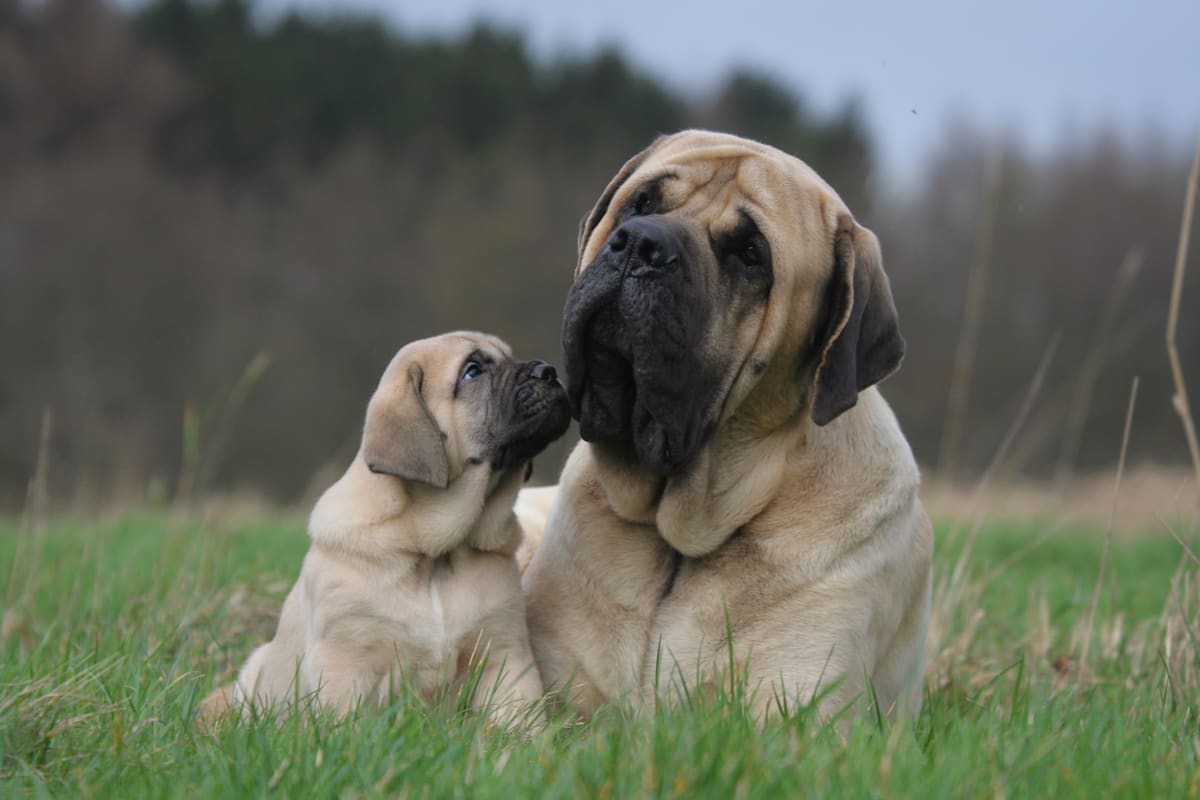
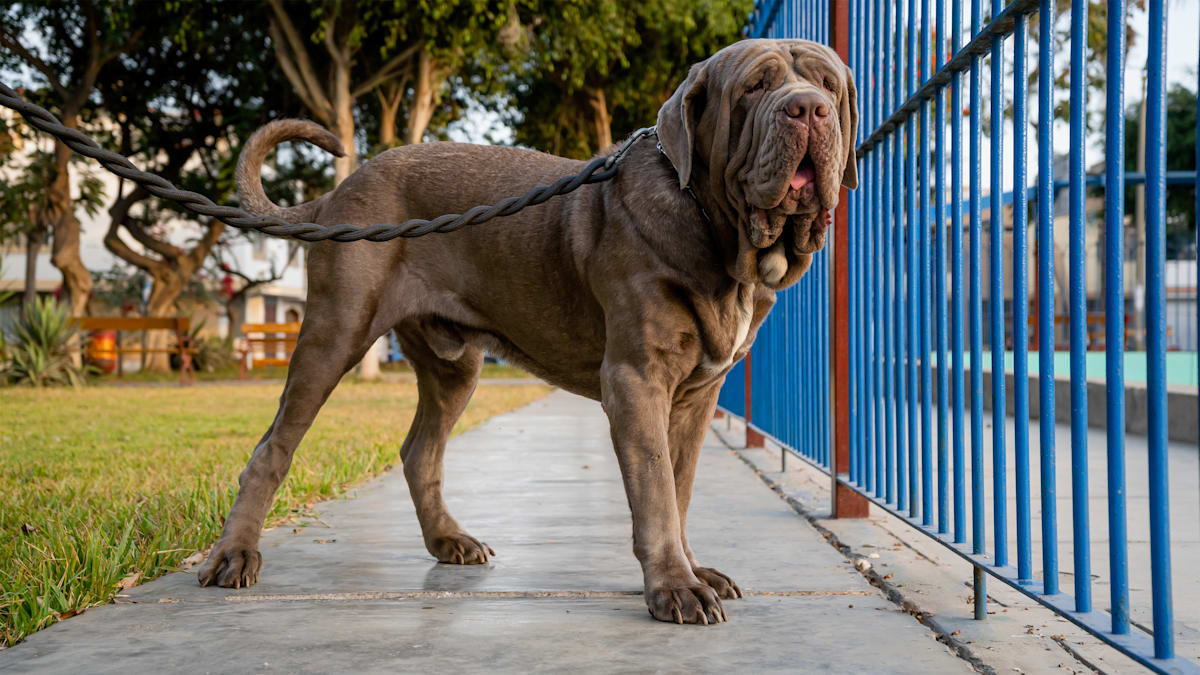
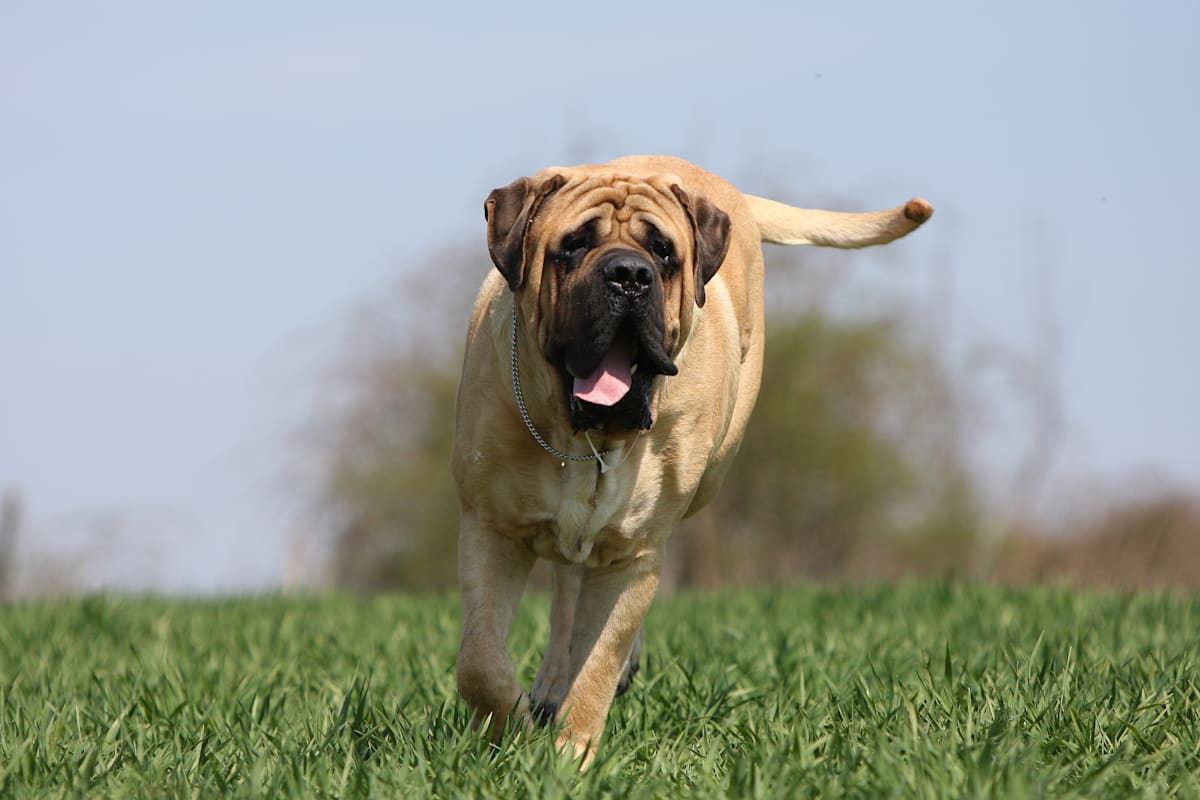
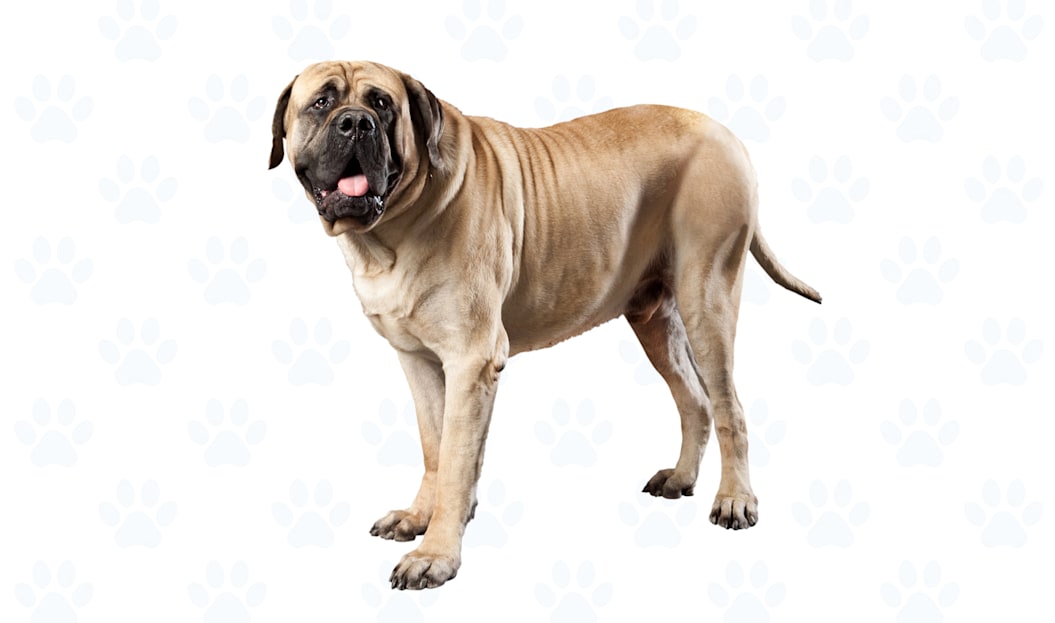
    Mastiffs have a giant body with a big square head. They are usually a bit longer than they are tall. Their distinguishing features are their giant size, massive head, and their mask of black fur around the face and head. Mastiffs are strong and powerful dogs, generally outweighing other taller breeds like the Great Dane and Wolfhound.

    The AKC recognizes three standard colors for the English Mastiff: apricot, brindle, and fawn. The black mask is a standard marking for competition. Their fur is generally short and lies close to the body, but there are rare Mastiffs known as “fluffies” that grow longer hair.

    Size & Weight

    Different varieties of Mastiff grow to different sizes, but the common English Mastiff typically weighs 120 to 230 pounds. They often grow to over 30 inches tall.
    Full Grown
    Female
    27 in. / 120 lbs.
    Male
    32 in. / 230 lbs.
    Height bar
    Female Pet
    Height Figure
    Male Pet
    Height is measured up to the shoulders.

    Mastiff Characteristics

    Size

    Tiny

    Jumbo

    Weight

    Light

    Heavy

    Shedding

    Minimal

    Abundant

    Coat Length

    Short

    Long

    Grooming Frequency

    Occasional

    Frequent

    Living Space

    City apartment

    Ranch

    Exercise

    Couch potato

    Bring it on!

    Climate

    Warm

    Cold

    Personality

    Antisocial

    Outgoing

    Protection

    None

    Bodyguard

    Behavior with Kids

    Always monitor

    Babysitter

    Training

    Headstrong

    Obedient

    Barking

    Mute

    Loud

    How to Care for a Mastiff

    Caring for a Mastiff means providing structured training, portion-controlled nutrition and moderate daily exercise to support their large frame. With early socialization, routine grooming and preventive veterinary care, these gentle giants can thrive as devoted family companions.

    Coat & Grooming: The Mastiff coat is short and lays close to the body. These dogs typically come in one of three standard coat colors (apricot, brindle, or fawn for the English Mastiff). Unfortunately, those little hairs tend to show up easily on carpet and upholstery. A good quality brush and vacuum are well worth the investment.

    Aside from their coat, you should pay attention to the other necessary grooming tasks. You’re your Mastiff’s nails every few weeks and regularly monitor at their eyes, ears and skin for any new changes. Dental care is critical, so try to get in there with a toothbrush as often as possible.

    Shedding: Mastiffs aren’t crazy shedders, but they do produce a fair amount of flying fur. As with any shedding dog, your best defense is a good offense. Invest in the proper tools like a grooming glove and a strong vacuum to pick up the stray hair. Regular grooming sessions are important. You’ll remove any loose or broken hair, and it’s also a powerful bonding experience when done right. If you get your Mastiff puppy used to being groomed and handled, it should help you down the road when they become too big to wrestle.

    Training: Since they are such large and powerful dogs, it’s crucial to develop good habits in your Mastiff. Early socialization and obedience training are very important. There is nothing worse than a poorly-trained and badly-behaved 200 pound dog. Take responsibility for your dog and put the necessary time and effort into a proper training regime. Start training when your Mastiff is a puppy and use positive reinforcement training techniques. Reputable breeders try to avoid hereditary behavior or temperament problems with their puppies by screening their adult breeding dogs. If you can, meet the parents and siblings of your puppy to get an idea of what to expect later in life.

    Barking: This breed isn’t known for being overly loud, but their bark is thunderous and powerful when they do choose to use it. A Mastiff is generally happy and confident in themselves, so they don’t tend to bark aggressively unless something is seriously wrong with the situation.

    There are a few keys to understanding your Mastiff. One of the most common mistakes is playing rough or manhandling your new dog. Despite their strong, powerful bodies roughhousing or aggressive play is something they try to avoid. They are also very sensitive dogs when it comes to conflict or arguing in the home. Mastiffs often play peacekeeper when they see trouble brewing between siblings or couples. One of their favorite tricks to stop fighting from happening is to plant their giant body in between the people in a dispute. It’s impossible to stay mad with a huge dog standing in your way!

    Personality: A well-trained Mastiff should be friendly and good-natured. They don’t like conflict, especially between family members. They will often step in between two warring parties or protect you with their large frame if they sense a threat. Don’t be fooled by their sturdy build – Mastiffs are sensitive to rough play and really don’t like to be manhandled.

    Temperament & Behavior: Mastiffs are gentle and loving dogs, and they often bond strongly with their owners and immediate family. They tend to be docile and aloof, but they also keep a keen ear out for any signs of threat or danger. It’s common for a Mastiff to plant themselves between two arguing siblings – they hate to see conflict or any signs of aggressive behavior. Mastiffs are courageous and unafraid in the face of a threat to themselves or their family.

    Behavior with Kids: This breed is often protective of their family, so it’s important to supervise and educate any new kids around your dog. Mastiffs don’t like rough play, and their huge body can easily knock over a small child. Supervise your dog at all times and don’t rely on your Mastiff’s good nature to avoid any accidents with young children. As a family pet, they are loyal and gentle.

    Protection: Mastiffs are generally aloof and a bit wary of strangers, especially anyone acting erratic or aggressive. They are keen to protect their family members, and they will often mistake “goofing around” with a threat. Make sure your visiting friends and family are aware of your dog and its quirks.

    Life span: On average, Mastiffs live to be around 6 to 10 years old.

    Inherited Health Issues: A number of health conditions have been identified in Mastiffs as a result of either genetics or simply occurring at an increased frequency in the breed. As a giant breed, Mastiffs are prone to developing a variety of joint conditions. Responsible breeders will perform a variety of genetic tests on their breeding dogs to decrease the incidence of genetic conditions in their puppies. These conditions may include, but are not limited to, the following: mitral valve dysplasia, pulmonic stenosis, muzzle folliculitis and furunculosis, cranial cruciate ligament rupture, elbow dysplasia, hip dysplasia, panosteitis, shoulder osteochondrosis, stifle osteochondrosis, ectropion, entropion, progressive retinal atrophy, macroblepharon, persistent papillary membranes, multifocal retinopathy, cystine urolithiasis, vaginal hyperplasia and vaginal prolapse .

    Preventive Care: As a giant breed, Mastiffs are prone to number of joint problems, which can be exacerbated by obesity. Although it may be impossible to definitively prevent these issues, the best thing that you can do for your dog is to keep them at a lean and healthy body weight throughout life. Fish oil supplements can be beneficial to decrease inflammation in the joints associated with arthritis.

    When you adopt a new puppy, head to the vet for a full physical exam, vaccinations, flea & tick prevention, and heartworm prevention to keep your new four-legged friend in tip-top shape. Routine veterinary care is crucial for monitoring your Mastiff for any changes in their health throughout life, allowing for problems to be diagnosed and treated before they become more severe.

    A Mastiff’s large appetite is not a surprise given their imposing size. However, if overfed or under-exercised, Mastiffs can become overweight. Feed a high quality balanced diet with two to three portion-controlled meals per day. Avoid offering too many treats or table scraps because these goodies will quickly pack on the pounds.

    Daily Consumption: Average daily consumption for an adult Mastiff is 4 to 7 cups

    Energy Level: Enjoys some moderate exercise every now and then

    Exercise: Exercise is a big commitment when it comes to owning a Mastiff. They need at least 30 minutes of brisk walking to stay healthy and fit. They eat a lot, so it’s up to you to help them burn off those calories with good long walks. A tough and reliable leash is a must – Mastiffs are very strong with a massive torso and powerful legs.

    Climate: Mastiffs are hearty animals that thrive in cold climates. They aren’t afraid of a little snow or cold rain, but they can easily suffer on a hot day. Their big body doesn’t cool down easily, so make sure you watch out for signs of distress in your dog if you live in a warm climate.

    Cost of Owning

    On average, owning a middle-aged Mastiff costs around $2200 per year
    $500
    Vet Care
    $400
    Grooming & Boarding
    $800
    Food & Treats
    $500
    Other

    Unlock exclusive rewards with Vital Care, or enjoy up to 35% off essentials when you subscribe with Repeat Delivery.

    Enjoy exclusive rewards every time you shop. Get member-only deals, points, and special offers designed to help you save more on what your pet needs.

    Never run out of the essentials. Subscribe and get your pet’s favorites delivered on schedule—with up to 35% off plus the convenience of automatic refills.

    Your love story starts here.

    Find adoptable pets near you with a simple search.

    Fun Facts

    One of the heaviest dogs ever recorded was a Mastiff named Aicama Zorba of La Susa. Zorba weighed 343 pounds in November 1989! Imagine the dog food bills...

    One of the heaviest dogs ever recorded was a Mastiff named Aicama Zorba of La Susa. Zorba weighed 343 pounds in November 1989! Imagine the dog food bills...

    Mastiffs have a long and storied career in Hollywood and television. Members of the breed feature prominently in The Sandlot franchise, Archer, Coronation Street, McDonald’s commercials, Hotel for Dogs, and Marmaduke.

    Mastiffs have a long and storied career in Hollywood and television. Members of the breed feature prominently in The Sandlot franchise, Archer, Coronation Street, McDonald’s commercials, Hotel for Dogs, and Marmaduke.

    A Canadian-bred Mastiff named Beowolf takes credit for reintroducing the breed into the United States around 1918 as part of a slow but steady reestablishment of the breed in American households throughout the twentieth century.

    A Canadian-bred Mastiff named Beowolf takes credit for reintroducing the breed into the United States around 1918 as part of a slow but steady reestablishment of the breed in American households throughout the twentieth century.

    History

    Origin: United Kingdom

    Mastiffs have their roots in ancient times. Images of Mastiff-like dogs appear in bas-reliefs and figurines as far back as Assyria (6th century BC) and even early. One of the ancient breeding programs for the modern Mastiff occurred in Britain before the Roman Conquests.

    The British continued to breed Mastiffs as working dogs and watchdogs throughout modern history. Formalized breeding started in the 1800s, and the Mastiff saw military service in the First World War. Breeding success in the UK took a hit during the rationing of the Second World War, but the Mastiff remains a popular dog around the world.

    In America, a Mastiff club formed in 1879 but disbanded around the turn of the century. In that time, the Mastiff won official recognition by the AKC in 1885. The club reopened later in 1920 and the current Mastiff Club of America began in 1929. The Mastiff is in the top thirty most popular breeds in the United States today.

    Read More

    Sponsored