Petco Text Logo
Petco Pet Logo
Jump To Section

    About Irish Setters

    Known for their affable nature, the Irish Setter is a true family dog and makes a great playmate for children.

    Origin: Ireland   

    Other Names: Red Setter, Irish Red Setter

    Sporting Group

    Dog breeds in the Sporting group are usually remarkable for their instincts in water and woods, and many of these breeds actively continue to participate in hunting and other field activities. Potential owners of Sporting dogs need to realize that most require regular, invigorating exercise.

    Breed Appearance

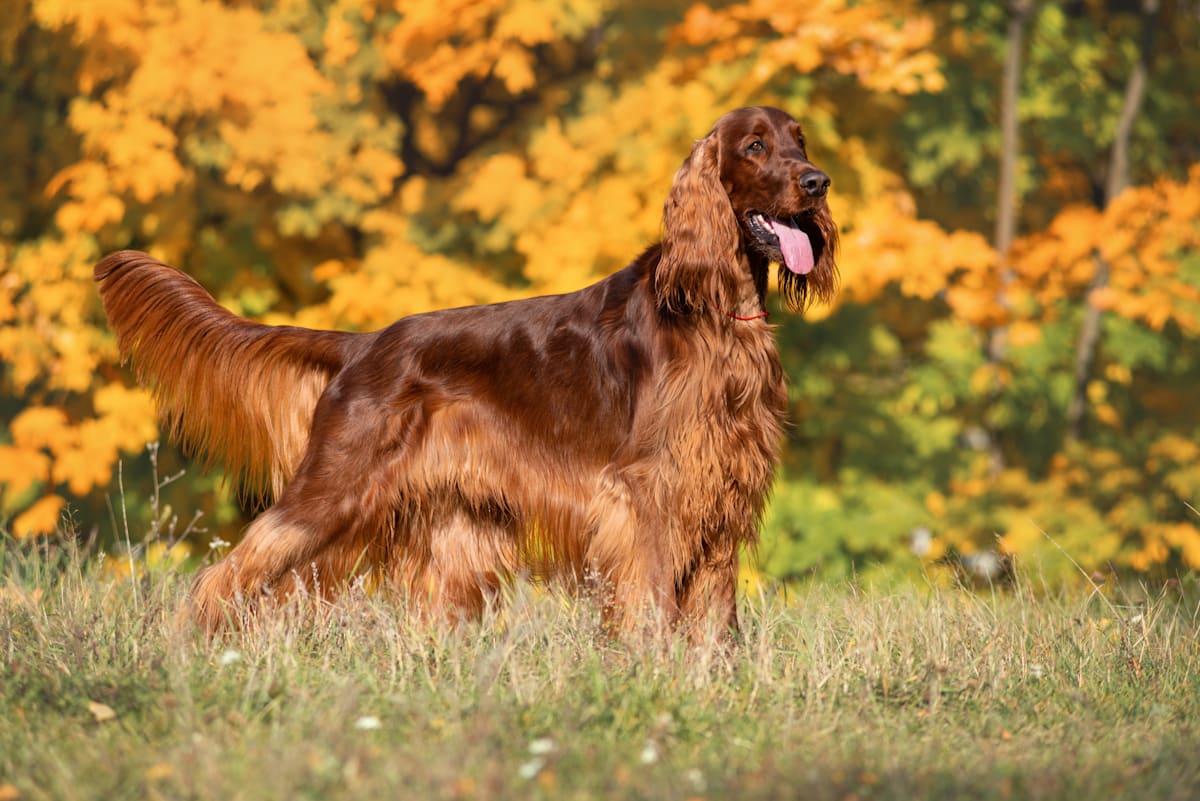
    According to American Kennel Club’s breed standard, the Irish Setter is an active, excitable dog who works hard to impress his owners. Irish Setters are known for their glossy, feathered, red coats, and long ears, both of which give the breed a distinctive, elegant appearance. Setters were bred to work and are quite able hunters and trackers. While at home, these dogs are known for their love and devotion to the family. The Irish Setter comes in three distinct breed colors, chestnut, red and mahogany, occasionally with white markings. The Irish Setter is a true companion—whether you are utilizing their hunting skills or simply want a friend in the house for the kids, an Irish Setter is always a great choice.

    Size & Weight

    Irish Setters are a medium-to-large dog by most breed standards. Males stand around 27 inches tall, while females stand around 25 inches tall. Although most Setters weigh between 60 and 70 pounds, they still consider themselves to be lap dogs.
    Full Grown
    Female
    25 in. / 60 lbs.
    Male
    27 in. / 70 lbs.
    Height bar
    Female Pet
    Height Figure
    Male Pet
    Height is measured up to the shoulders.

    Irish Setter Characteristics

    Size

    Tiny

    Jumbo

    Weight

    Light

    Heavy

    Shedding

    Minimal

    Abundant

    Coat Length

    Short

    Long

    Grooming Frequency

    Occasional

    Frequent

    Living Space

    City apartment

    Ranch

    Exercise

    Couch potato

    Bring it on!

    Climate

    Warm

    Cold

    Personality

    Antisocial

    Outgoing

    Protection

    None

    Bodyguard

    Behavior with Kids

    Always monitor

    Babysitter

    Training

    Headstrong

    Obedient

    Barking

    Mute

    Loud

    How to Care for an Irish Setter

    Caring for an Irish Setter means providing plenty of daily exercise, consistent training and routine coat maintenance. With proper nutrition, regular grooming and mental stimulation, these energetic companions stay happy, healthy and ready for adventure.

    Coat & Grooming: An Irish Setter’s silky coat is one of its most defining features. With long feathering down their backsides, chests, legs and ears, Setters require regular brushing to avoid mats, Bateman says. A pin brush works well on their feathering, while a boar-hair or horse-hair brush works best on their bodies, she adds. The breed requires semi-regular bathing and special attention should be given to their ears, which can often hang into their food or water.

    Coat length: Long
    Grooming: Frequent

    Shedding: Due to their long coats, Irish Setters shed a fair amount. If you live in a climate that enjoys all four seasons, your Irish Setter will shed their winter coat and grow a thinner, lighter coat in the summer. Regular brushing will go a long way to ensure that your pup is comfortable throughout the year and will also help alleviate how much loose hair is in your home.

    Training: A smart, attentive breed, Irish Setters are generally easy to train using positive reinforcement reward-based methods. As with all dogs, it’s recommended to socialize your Setter early and often. Take your puppy to obedience classes to ensure that they grow into happy dogs who are good with both strangers and other animals.

    Barking: The bark of an Irish Setter is short, yet demands attention. Generally, Irish Setters will only bark when annoyed or threatened. Most Irish Setters are well-behaved at home and will not bark if they are properly exercised.

    Temperament & Behavior: “Irish Setters love to romp and play, excel at obedience, like a learning challenge, love to hike and swim, and they love to cuddle with their owners,” says Mary Bateman, an Irish Setter Club of America-recognized breeder based in Maine.

    Setters make wonderful family pets. Although children should always be taught proper dog handling, Irish Setters are generally understanding of the tugging and rough-housing that may occur with a young child. Simply put, an Irish Setter can be a great choice for young families and hunters alike, and their mild attitude and rambunctious energy will rub off on you!

    Behavior with Kids: In general, Irish Setters are one of the best breeds for families with kids. Their devotion and playful nature make them an ideal choice for young families.

    Protection: Irish Setters are great family dogs that develop a strong connection to their people. They will bark when alarmed, but are generally friendly to all people, including strangers

    Life Span: On average, Irish Setters will live 12 to 15 years.

    Inherited Health Issues: As with any breed, a number of health conditions have been identified in the Irish Setter, occurring either at an increased frequency in the breed or through a genetic link. These conditions may include, but are not limited to, the following: Patent ductus arteriosus, Vascular ring anomalies, Atopic dermatitis, Primary seborrhea, Hypothyroidism, Congenital megaesophagus, Gastric dilatation-volvulus, Gluten-sensitive enteropathy, Hypertrophic osteodystrophy, Osteosarcoma, Cerebellar hypoplasia, Globoid cell leukodystrophy, Idiopathic epilepsy, Lissencephaly, Ambylopia and quadriplegia,Cataracts, Entropion, Everted cartilage of the third eyelid,Progressive retinal atrophy, Persistent hyaloid artery and Laryngeal paralysis.

    Preventive Care: Certain health conditions can occur more commonly in Irish Setters than in other breeds. Responsible breeders perform a variety of screening and genetic tests in an attempt to decrease the incidence of some of these conditions in future generations of Setters.

    As with other deep chested dogs, Irish Setters are predisposed to developing gastric dilatation-volvulus, also known as GDV or bloat. With this condition, the stomach fills with gas, fluid and food, and flips on itself so that the contents cannot be emptied. Life-threatening compromise can occur due to the compression of major blood vessels, which can result in cardiac dysfunction and shock. A surgical procedure known as a gastropexy can be performed to prevent this condition. Avoid exercising your dog an hour or two before or after meals and keep food and water bowls on the ground rather than in a raised stand.

    Even if your Irish Setter appears to be healthy at home, continue taking them to the veterinarian for routine wellness care. Your veterinarian has been extensively trained to detect subtle problems before they become more significant. Also monitor your Setter for any changes at home, including weight gain, lethargy, coughing, lameness, seizures, vomiting, diarrhea or regurgitation, and contact your veterinarian with any concerns.

    Irish Setters are an active breed, and as such, require sufficient calories for their energy demand. However, if your Irish Setter is not provided with enough exercise, they can quickly become overweight. Always offer portion-controlled meals of a high quality, balanced diet to keep your Setter at a healthy body weight.

    Daily Consumption: Average daily consumption for an adult Irish Setter is 2-4 cups

    Energy Level: Frisky, energetic breed that is always ready for action

    Exercise: When it comes to exercising your Irish Setter, be prepared for a lot of activity. Setters excel outdoors and will be a bundle of energy in practically any weather condition. Long walks are mandatory for these dogs, and most will need to be run both in the morning and at night.

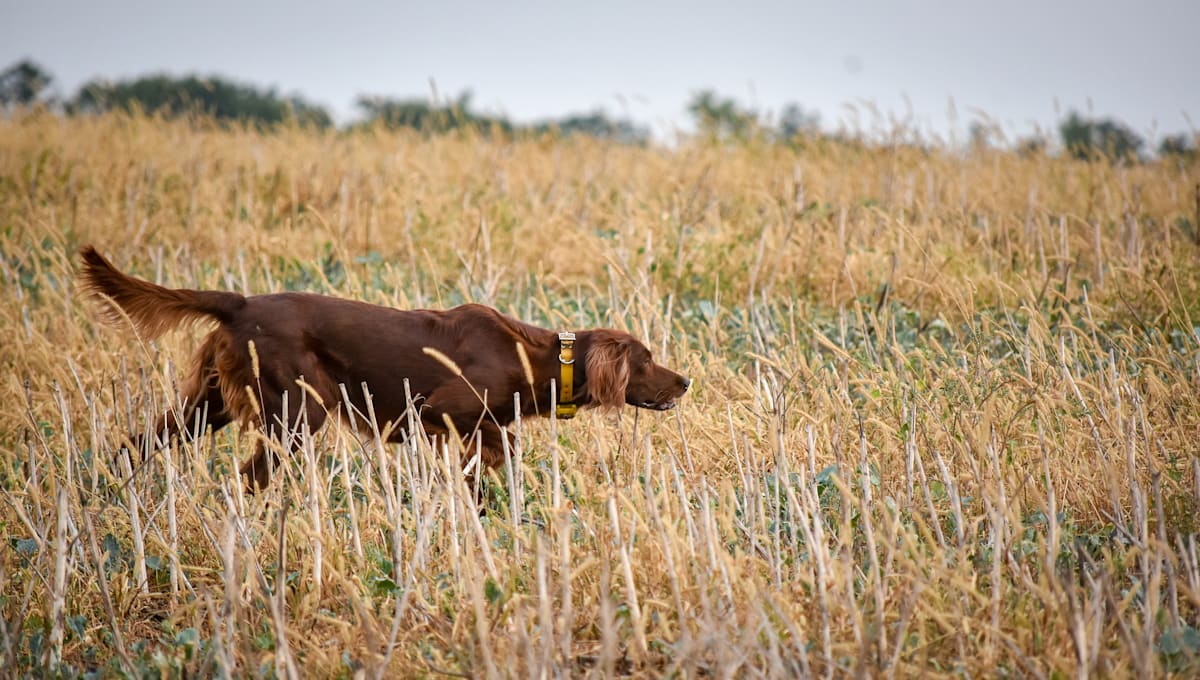
    For owners looking to get their dog involved with competitions, Irish Setters excel at hunting tests and agility competitions. With proper training, all Setters are capable of hunting, but field-bred Setters are often well-suited for field trials where horses and riders keep up with them, Bateman says.


    Climate: Irish Setters were bred with rainy, cool Irish weather in mind. These dogs can handle cold and wet weather, but are also adaptable to warm-weather climates. If you do live somewhere warm, provide your Setter with plenty of opportunities to swim.

    Living space: Irish Setters are active dogs who need plenty of space to play. An ideal environment for this breed is a larger home with a yard or nearby park.

    Cost of Owning

    On average, owning a middle-aged Irish Setter costs around $1,350 per year
    $300
    Vet Care
    $300
    Grooming & Boarding
    $500
    Food & Treats
    $250
    Other

    Unlock exclusive rewards with Vital Care, or enjoy up to 35% off essentials when you subscribe with Repeat Delivery.

    Enjoy exclusive rewards every time you shop. Get member-only deals, points, and special offers designed to help you save more on what your pet needs.

    Never run out of the essentials. Subscribe and get your pet’s favorites delivered on schedule—with up to 35% off plus the convenience of automatic refills.

    Your love story starts here.

    Find adoptable pets near you with a simple search.

    Fun Facts

    Although considered a medium-sized dog, Irish Setters are known to mature very slowly and will only start to age out of the puppy phase around three years old.

    Although considered a medium-sized dog, Irish Setters are known to mature very slowly and will only start to age out of the puppy phase around three years old.

    Arguably, the most famous Irish Setter was, in fact, fictional. Jim Kjelgaard’s 1945 novel “Big Red” featured an Irish Setter that launched the breed into mainstream culture.

    Arguably, the most famous Irish Setter was, in fact, fictional. Jim Kjelgaard’s 1945 novel “Big Red” featured an Irish Setter that launched the breed into mainstream culture.

    President Richard Nixon had an Irish Setter while in office, named after the small town in Ireland where his family had their roots. Known for his sweet tooth, King Timahoe was a consistent presence during Nixon’s time in office.

    President Richard Nixon had an Irish Setter while in office, named after the small town in Ireland where his family had their roots. Known for his sweet tooth, King Timahoe was a consistent presence during Nixon’s time in office.

    History

    According to the AKC, Irish Setters were utilized as early as the 1800s to assist hunters. These dogs were bred to work in the wide, open flatlands of the Irish countryside. Although they are cousins of the Gordon Setter, they are not known for an ability to flourish in rough terrain. The Irish Setter was one of the original dog breeds admitted into the AKC in 1878, and an Irish Setter has won Best in Show at Westminster 11 times.
    Read More

    Sponsored