Working Group
Dogs of the Working Group were bred to perform such jobs as guarding property, pulling sleds and performing water rescues.
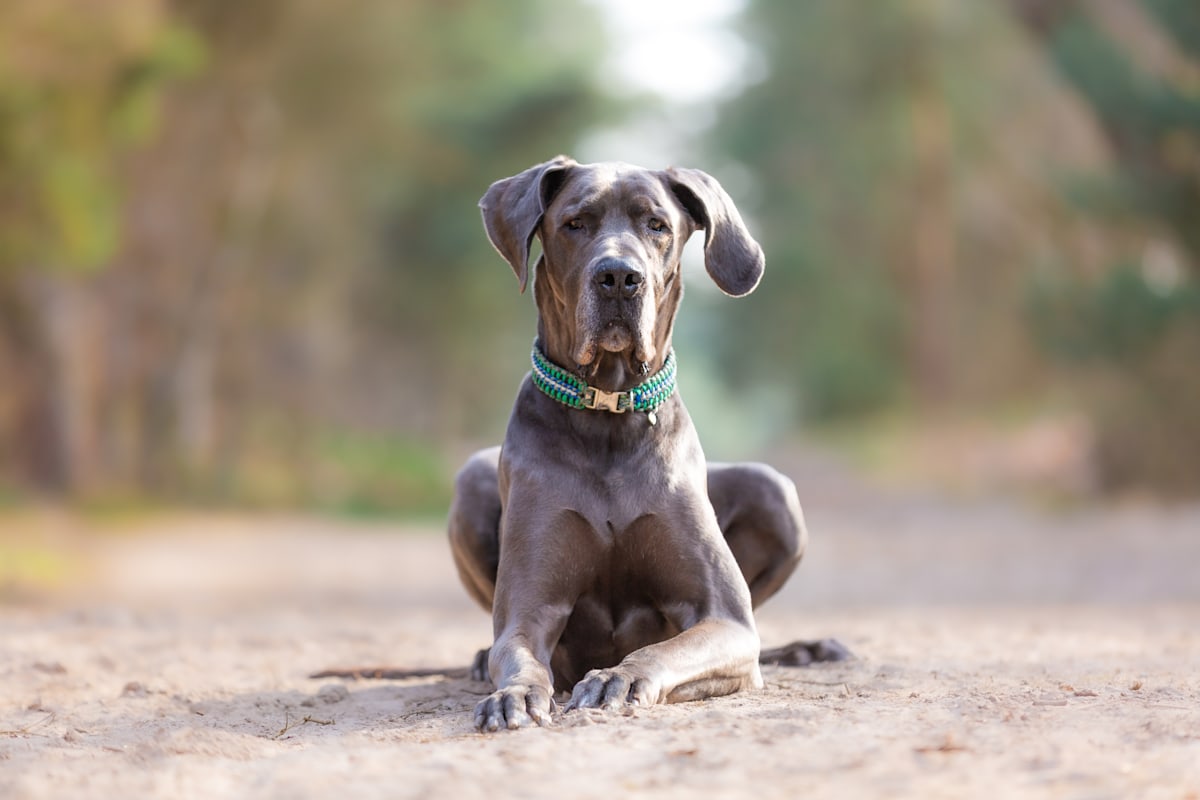
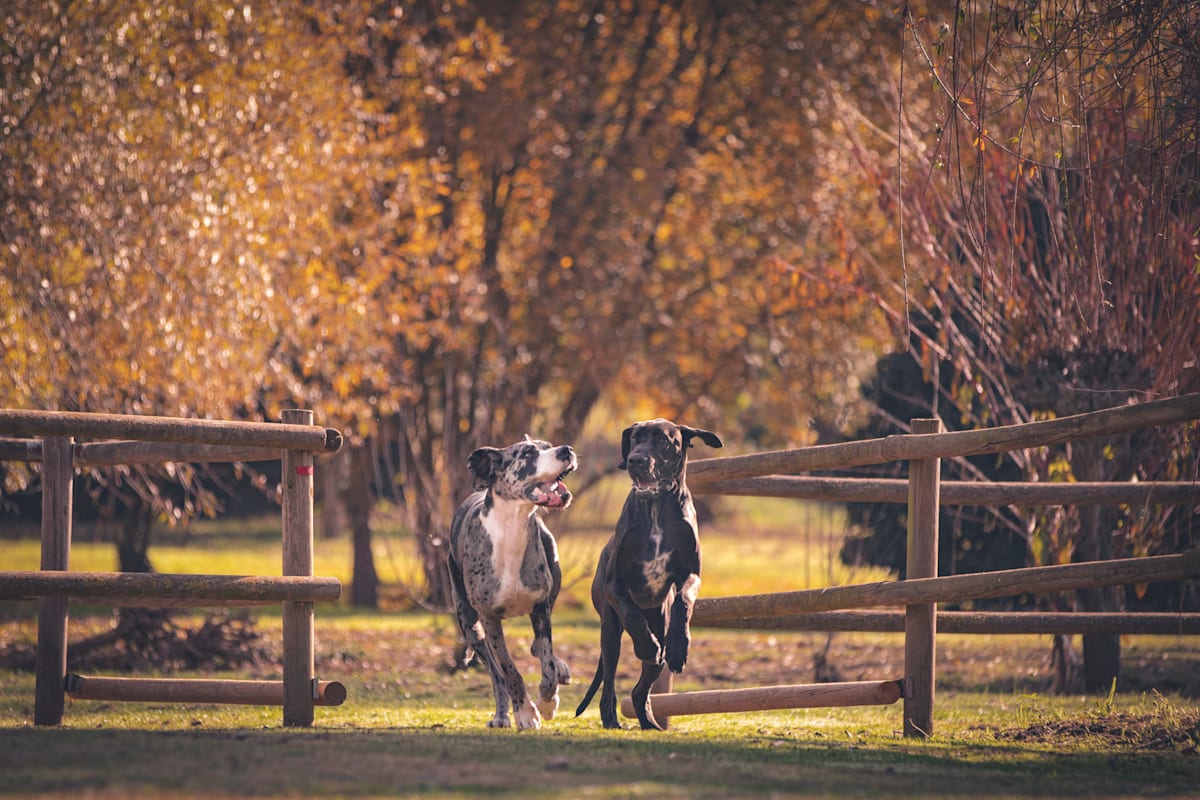
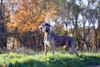
Great Danes are some of the biggest dogs on the planet, but don’t let their size fool you. They are known as the gentle giants of the dog world. Great Danes seek affection and take comfort in human company and attention. With a low prey drive and a loving nature, the Great Dane has won the hearts of dog owners around the world.
Origin: Germany Other Names: German Mastiff, Deutsche Dogge, Gentle Giant, Apollo of Dogs, Dane
Dogs of the Working Group were bred to perform such jobs as guarding property, pulling sleds and performing water rescues.
Working Group dogs have been invaluable assets to man throughout the ages. The Doberman Pinscher, Siberian Husky and Great Dane are included in this Group, to name just a few. Quick to learn, these intelligent, capable animals make solid companions. Their considerable dimensions and strength alone, however, make many working dogs unsuitable as pets for average families. And again, by virtue of their size alone, these dogs must be properly trained.
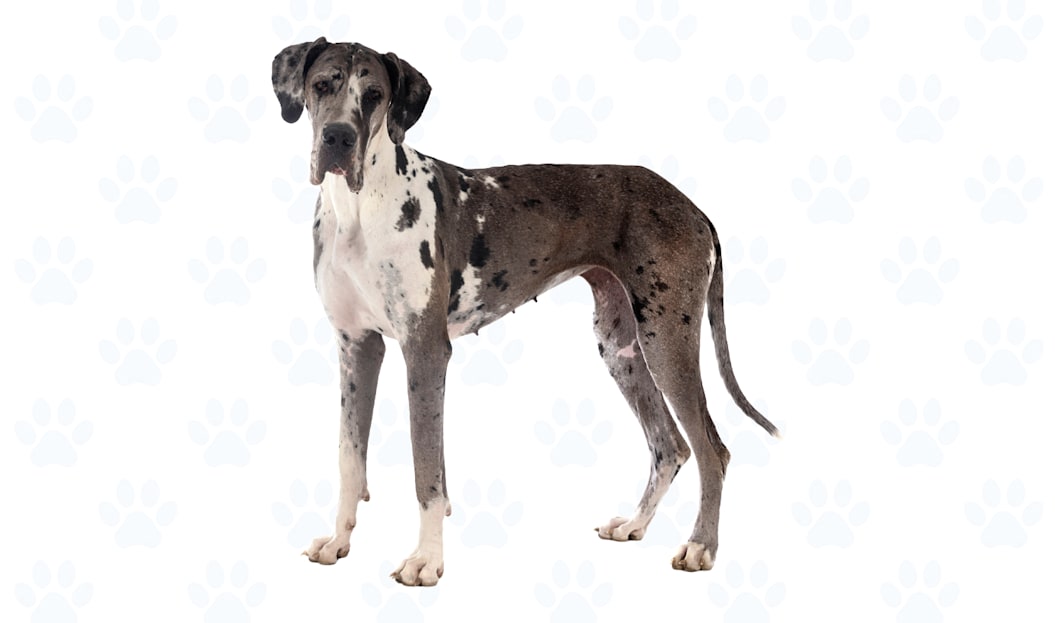
The American Kennel Club (AKC) maintains the breed standard for the Great Dane. These tall, massive dogs exhibit a regal appearance and a dignity that is unmistakable. Their body is smooth and powerful with well-formed limbs and a proud head. They are unique in their graceful and strong movements as they gallop across a field or pull a cart to market.
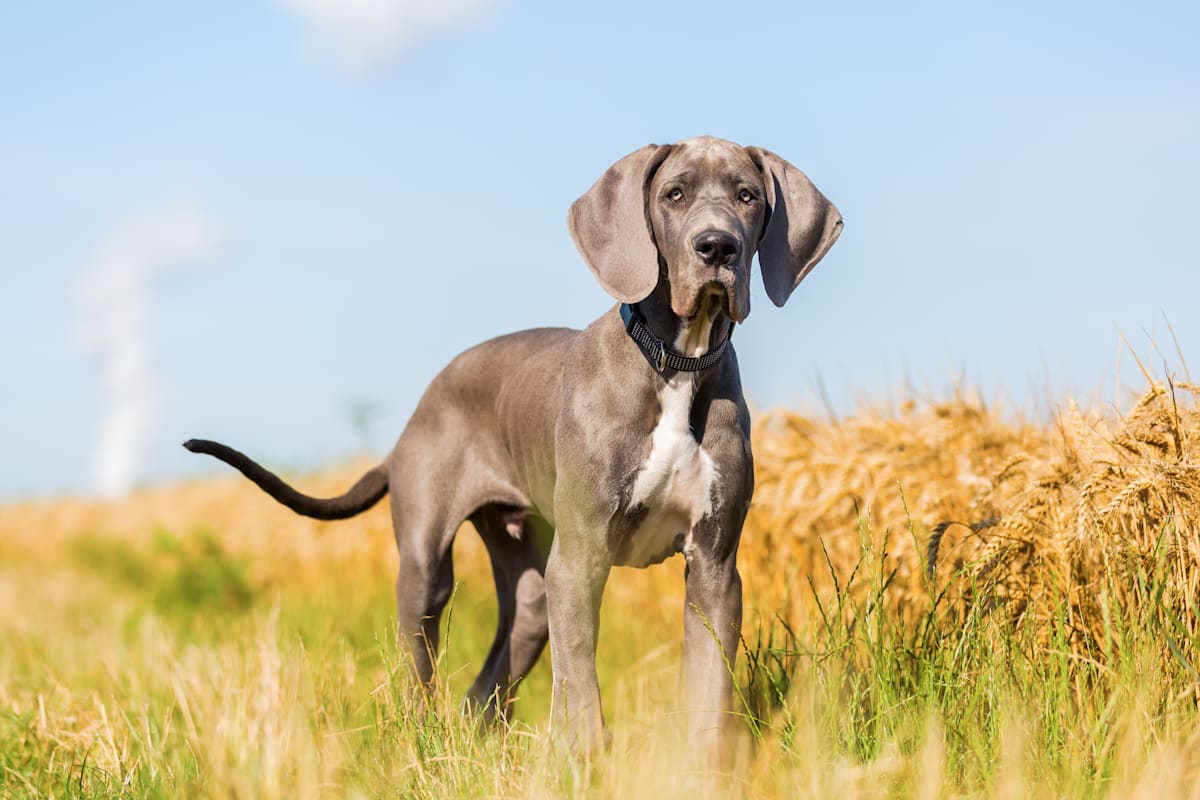
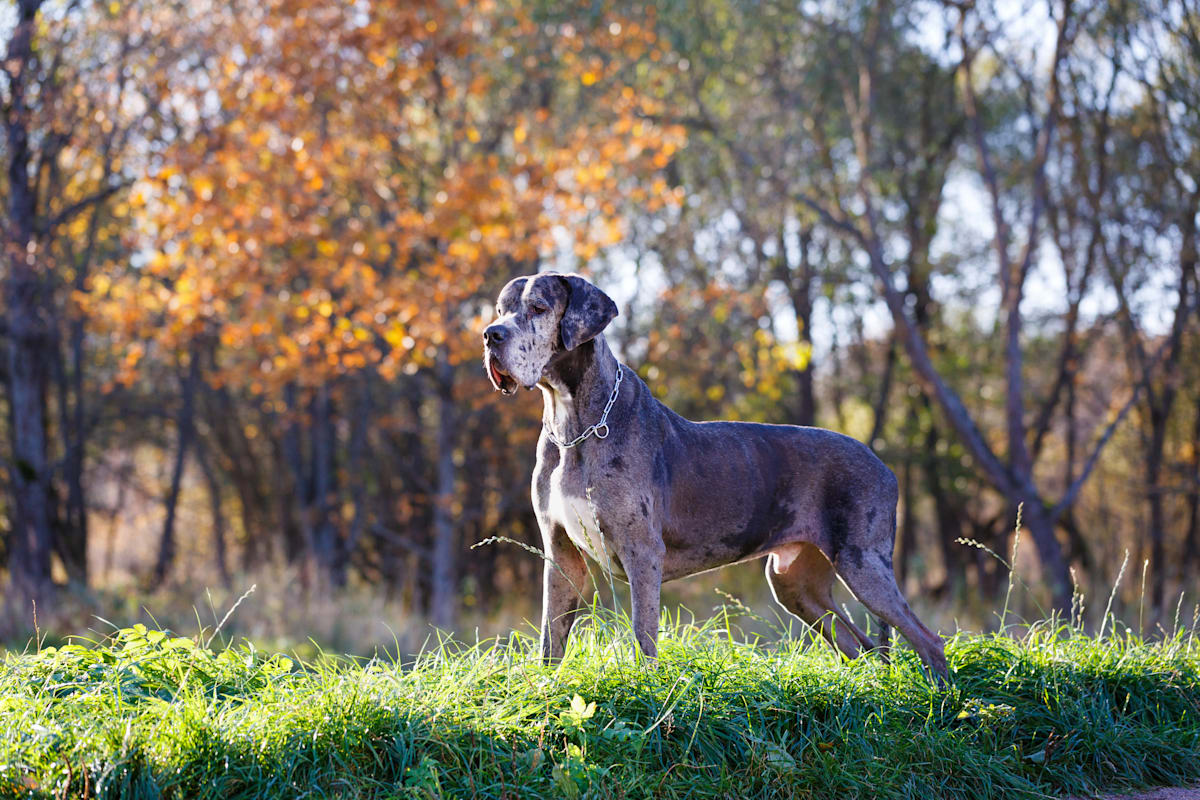
Great Danes come in many shades and styles of coat. The AKC standard colors are black, blue, brindle, fawn, harlequin, mantle, merle, white, and black & white. The breed standards allow for black, blue, and white marking only. Blue mask, chocolate coloring, and other AKC disqualifications are nonetheless beautiful on these magnificent animals.
Great Danes are one of the biggest breeds out there. Most adult males are taller than 30 inches at the shoulder, and the record size for a dog was a Great Dane over 44 inches tall at the shoulder. These are large dogs!
| Full Grown | |
|---|---|
| Female | 28 in. / 100 lbs. |
| Male | 34 in. / 200 lbs. |
Height is measured up to the shoulders.
Great Danes are one of the biggest breeds out there. Most adult males are taller than 30 inches at the shoulder.
Great Danes are also one of the heaviest breeds out there. males can tip the scales at around 200 pounds. Females range between 100 and 130 pounds.
Great Danes are very large dogs, not well suited to small apartments or limited living space. If you have a lot of room and you want a larger dog in your life, the Great Dane is a fine choice. You’ll need a big car, big crate, and big heart to take care of these big, lovable dogs.
Since they are so large, it takes a lot of energy to move around that big Great Dane body. That said, these dogs have a decent sized gas tank, so you should expect lots of vigorous walking in your future. Even though they are very large, a 6-foot fence in the backyard ought to be enough to contain your Great Dane. It’s a commitment to take care of these large dogs, but they don’t need as much exercise as other active breeds.
Great Danes are lovable and seek approval from their companions. They need lots of love and affection to feel happy and stay healthy. They make fast friends with almost everyone they meet.
Even though they are gentle and friendly, Great Danes are protective if things go south. They are always on the lookout for trouble, and no burglar wants to meet a big old Great Dane in the hallway during a break-in.

Great Danes are great family dogs, but their size and weight can cause problems if you aren’t careful. They are protective and loving when it comes to their inner circle. Their size can pose problems around smaller dogs, children, and the elderly. That big frame and whipping tail will take out your loved ones if you aren’t careful. In terms of disposition, you won’t find a friendlier breed.
Great Danes are easy to train. Many owners report that house training a Great Dane is easier than most breeds. They respond well to positive reinforcement.

Great Danes shed a lot, which can be a problem given they have so much surface area of fur. Prepare to clean your vacuum filter on the regular. Regular brushing and bathing can help contain the never-ending onslaught of Great Dane fur.
Great Danes are sporting dogs, used to the cold and wet elements on the hunt. They have a long history of working outside for their human masters, so a little cold and wet weather won’t bother them much. Watch out for overheating in the summer, though.
Great Danes are not overly chatty compared to some other breeds, but they will bark to let you know what is happening. Strange people at the door along with stray wildlife will capture their interest. If you notice your Great Dane is howling all of the time, consider a visit to the local veterinarian to make sure it’s not a medical problem. They are prone to separation anxiety, so make sure you proactively check in with your neighbors to hear the latest about your pet.
Choose a breed from the dropdown to see potential crosses.
Great Danes are known as the gentle giants of the dog world. They have an excellent personality to match their impressive stature. They are sweet and often strive to please their companions. They respond very well to positive reinforcement and obedience training.
They need a lot of space, and one thing you’ll quickly understand is just how much bigger they are than other dogs. Your coffee table is in the path of that large, wagging tail. Your counters and tables are not much of an obstacle for your Great Dane, so use care when leaving food and harmful household items out.
Great Danes can be overly chatty, given a lot of stimulation and excitement. They shouldn’t be howling all night, unless there is something the matter with them in terms of health or anxiety. Invest in early training and the proper diet for your Great Dane.
They are happy to spend most of their time inside, but they often don’t appreciate their size relative to their surroundings. Don’t be surprised if your new Great Dane fancies itself a lap dog and jumps up onto the couch to show his love.
Great Danes are like all big dogs – they simply cost more. Everything is bigger when it comes to your Great Dane. They require a special diet to maintain good health and avoid health problems associated with the breed.
Great Danes are eager to please and fairly intelligent. Training is usually a snap, especially when it comes to house-training. Many people say that Great Danes are one of the easiest dogs to train. That’s probably a good thing, given their size and strength! Invest in early training and maintain a schedule of obedience tasks to maintain a smart and loyal companion for many happy years of ownership.

These big dogs need a moderate amount of exercise. Great Danes have a good amount of energy, but being such a large dog burns a lot of calories just by standing up and breathing. It can take a while for Great Dane bones and joints to form and strengthen enough to support their large frame. Don’t overdo it with jumping and running before their 18-month birthday, as the growth plates on their long bones close later than other dogs, leaving them more prone to bone abnormalities.
These dogs are wonderful to have around, if you have the space. They are loving, affectionate, loyal, and beautiful to behold. Don’t be surprised when your Great Dane follows you from room to room as you move around the house. Great Danes love to be close to their family.
Enjoys some moderate exercise every now and then
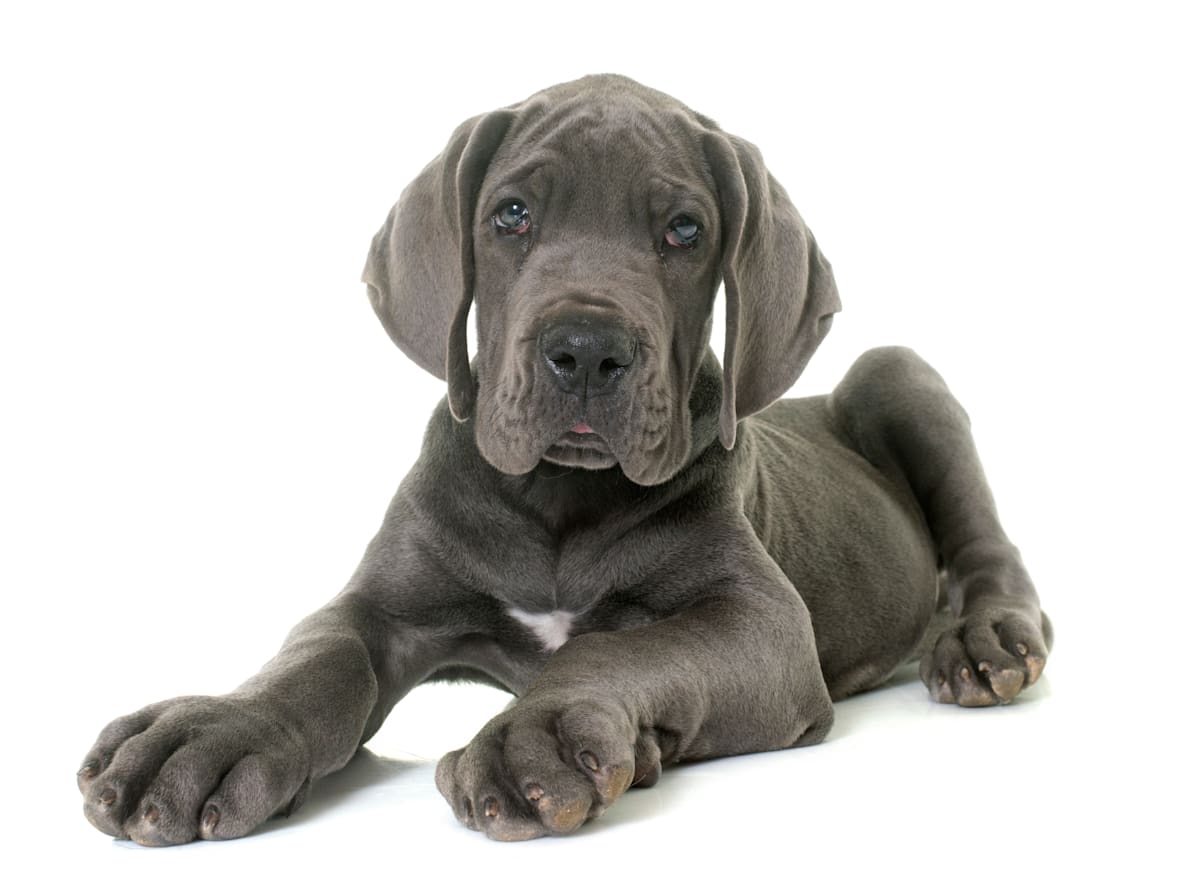
Giant breed dogs like Great Danes do not reach skeletal maturity until at least 18 months of age. It’s critical to feed puppies a food that is formulated for large and giant breed dogs in order to control the rate of growth. Accelerated rates of growth have been correlated with several skeletal diseases, especially hip dysplasia.
Average daily consumption for an adult Great Dane is 3.5-7 cups daily
Form a great relationship with a trusted veterinarian and make sure that your Great Dane has routine visits, in order to identify problems early. Supplementation with omega-3 fatty acids in the form of fish oils may help to lessen the inflammation associated with arthritis that is so common in giant breed dogs. Choose a good quality brand that is developed specifically for veterinary patients, and dose according to label directions.
All large and giant breed dogs have their share of skeletal problems, but Great Danes have more than their share. Testing and certification of breeding pairs for inherited disorders such as heart disease will give prospective Great Dane puppy owners more confidence about their dogs. When interviewing breeders, be sure to ask about genetic testing, and make sure that when problems are identified with breeding dogs that those dogs are no longer bred. These conditions may include, but are not limited to the following: aortic stenosis, dilated cardiomyopathy, mitral valve dysplasia, tricuspid dysplasia, acral lick dermatitis, callus dermatitis, hypothyroidism, megaesophagus, gastric dilatation and volvulus, hip dysplasia, panosteitis, osteochondrosis dissecans, cancer, Wobbler’s syndrome and multiple ocular conditions.
On average, Great Danes live to be about 7 to 10 years old.
Great Danes come in many different colors and markings, but the overall problem remains the same. What do you do with all that hair? A firm bristle brush and a regular grooming schedule are your best defense against the tsunami of Great Dane hair headed your way. Make sure to brush their teeth (three times per week) and clip their nails regularly (once monthly).
Short
Occasional
Great Danes shed... a lot! This can be a problem given they have so much surface area of fur. Prepare to clean your vacuum filter on the regular. Regular brushing and bathing can help contain the never-ending onslaught of Great Dane fur.
European nobility in the Middle Ages prized a good, strong dog for hunting and other pursuits. Many Continental European countries imported large dogs from Ireland and England, including breeds such as the English Mastiff and the Irish Wolfhound. Over time, German breeders developed a unique dog for life in the German countryside, hunting boar, bear and deer.
In the 1800s, the Great Dane was called the German Boarhound in most English-speaking countries in the world. Due to increasing tension and hostility to German culture, English breeders changed the name to the Great Dane. The first appearance of the name “Great Dane”comes from the French naturalist Georges-Louis Leclerc in one of his drawings from 1755.