Petco Text Logo
Petco Pet Logo
Jump To Section

    About Golden Retriever

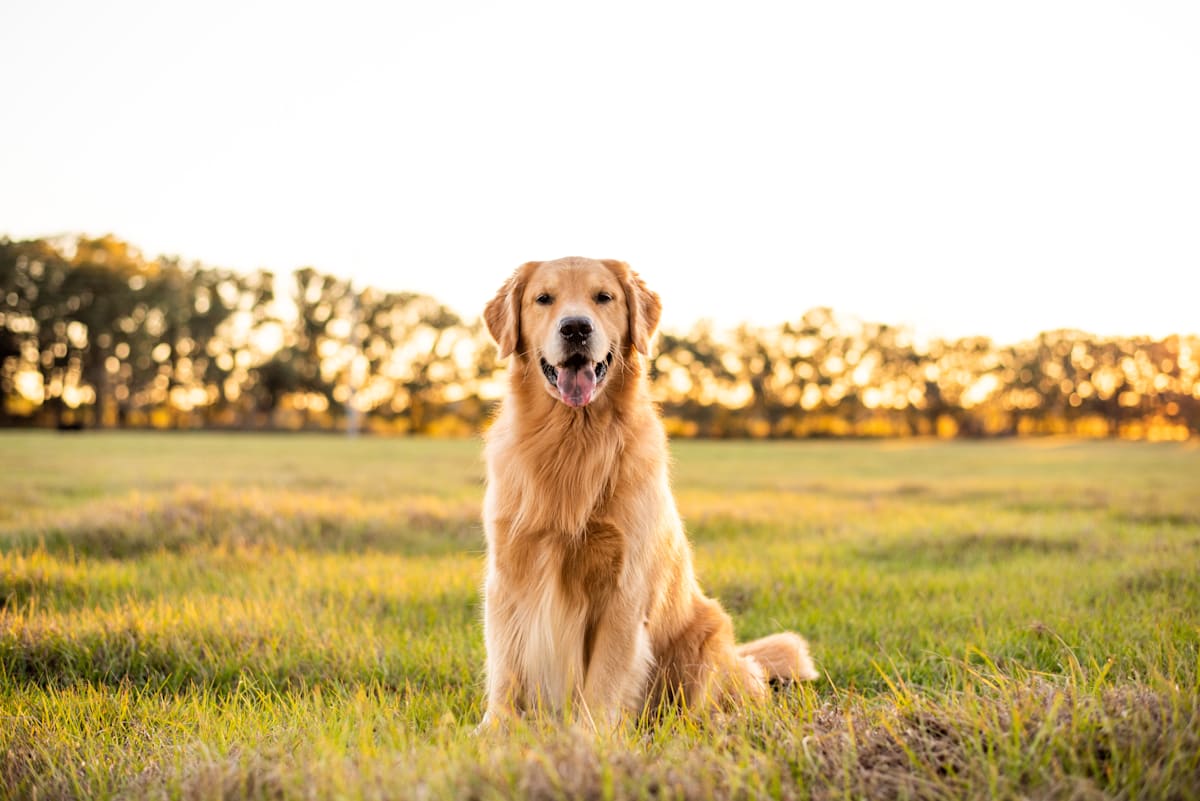
    Golden inside and out! The Golden Retriever is one of the most popular dog breeds for its good looks and wonderful temperament. Devoted, friendly, intelligent, and playful, they are considered to be a perfect family pet. Goldens are mellow around children, strangers, and other animals but high-energy and hearty enough to excel in outdoor sporting activities and professional jobs. They require a significant amount of grooming and attention, offering a lifetime of Golden grins in return.

    Origin: Scotland, United Kingdom   Other Names: Golden

    Sporting Group

    Naturally active and alert, Sporting dogs make likeable, well-rounded companions. Dog breeds in the Sporting group are usually remarkable for their instincts in water and woods, and many of these breeds actively continue to participate in hunting and other field activities. Potential owners of Sporting dogs need to realize that most require regular, invigorating exercise.

    Breed Appearance

    The Golden Retriever appears symmetrical, powerful, and well-balanced. The sum of its appearance —balance, gait, friendly and intelligent expression— is more important than any single feature. They have thick muzzles and broad heads and with triangle-shaped ears that flop down.

    The Golden has a medium length, water-repellant coat consisting of a firm topcoat with an undercoat, and can be either straight or slightly wavy. The hair on the head, paws, and front of the legs is short, while the rest of the coat is longer on the body. A fine feathering of hairs fans out along the back of the forelegs, under the stomach, at the front of the neck, back of the hind legs, and under the tail.

    The American Kennel Club (AKC) recognizes three coat colors in Goldens: dark gold, gold, and light golden. The coat should be one predominant shade, which can often deepen as the dog grows into maturity. Except for a few white hairs on the chest, other markings are penalized in the show ring.

    Size & Weight

    Males typically stand 22.5 to 24.0 inches and weigh 65 to 75 pounds. Females are usually 21.5 to 22.5 inches tall and weigh 55 to 65 pounds.
    Full Grown
    Female
    22 in. / 65 lbs.
    Male
    24 in. / 75 lbs.
    Height bar
    Female Pet
    Height Figure
    Male Pet
    Height is measured up to the shoulders.

    Golden Retriever Characteristics

    Size

    Tiny

    Jumbo

    Weight

    Light

    Heavy

    Shedding

    Minimal

    Abundant

    Coat Length

    Short

    Long

    Grooming Frequency

    Occasional

    Frequent

    Living Space

    City apartment

    Ranch

    Exercise

    Couch potato

    Bring it on!

    Climate

    Warm

    Cold

    Personality

    Antisocial

    Outgoing

    Protection

    None

    Bodyguard

    Behavior with Kids

    Always monitor

    Babysitter

    Training

    Headstrong

    Obedient

    Barking

    Mute

    Loud

    How to Care for a Golden Retriever

    Caring for a Golden Retriever means supporting an active, people-loving companion with consistent exercise, positive training, balanced nutrition, and regular coat care. With the right routine and preventive wellness habits, these devoted dogs can thrive in busy family lifestyles.

    Coat & Grooming:

    While Goldens have a beautiful, lustrous coat that doesn’t require any clipping, it does require bathing, brushing, and trimming. They are known to have that distinctive doggy smell, which can be kept at bay with regular bathing. Be careful not to strip their coat of the natural oils that keep it healthy and water resistant.


    After the outdoor activities a Golden so loves, this medium-coated dog needs more attention, including drying muddy paws and “feathers”, the fluffy long hairs on the backs of the legs. The Golden’s hindquarters and ears need combing to avoid matting. Keep the feathering around their pads and toes short by carefully trimming with scissors.

    Because many Goldens have skin allergies, and because as a breed they are avid swimmers, they are susceptible to ear infections. Keep their ears dry and clean on the inside, and the outside fur combed to help to prevent ear infections. Signs of infection include ear scratching, head shaking as if to dispel water, or holding their head to the side.

    Shedding: 

    Goldens are heavy shedders, especially in spring and winter when their coat transitions to match the temperature outside. Be prepared to find golden hairs and fluff on clothing and around the house. Brushing at least once a week year-round, and bathing (with blowdrying before and after) once a month, will help keep the loose hair manageable.

    Training

    Golden Retrievers are very smart and known for being easy to train. In fact, the first three dogs to win AKC Obedience Trial Championships were Golden Retrievers. Even without an obedience title to strive for, basic obedience is a necessity for this large, friendly breed.

    Their eagerness to please and high intelligence allows them to learn desired behaviors quickly. It can be a challenge to hold their attention, so using gestures and hand signals along with spoken commands can make the process easier. Positive training methods tend to be most successful with this breed and harsh corrections aren’t necessary.

    Goldens are the ideal candidates for many professional jobs as well. You can spot a Golden doing detection work, search and rescue, or wearing a vest that says, “Please don’t pet me, I’m working.”

    Barking: 

    Goldens are one of the more quiet breeds, seldom barking in daily life. But when they do bark, they sure put their size into it! A Golden holds The Guinness World Record for loudest bark at 113.1 decibels—that’s louder than a chainsaw.

    If a Golden notices something curious, they usually issue a quiet ‘woof’ before escalating into their loud, deep, and sharp bark. They can bark when playing games or meeting an approaching stranger. Socializing your Golden, spending time together, and supervised playtimes will help keep their quiet nature intact.

    Personality: 

    Goldens are friendly with everyone, even-tempered, eager to please, and devoted. They tend to have a puppy-like playfulness well into maturity, which makes obedience training an important part of channeling their zest for life.

    Temperament & Behavior: 

    Loyal, forgiving, intelligent, friendly, and gentle are traits that characterize the Golden Retriever temperament. They are considered the quintessential family pet and are the one of most popular breeds in America. A loving disposition makes them ideal around children, strangers, and other animals.

    Goldens don’t tend to have behavioral problems and eager to please. They are happiest together with their owners and are at risk of suffering from separation anxiety if left alone for long stretches of time.

    Behavior with Kids: 

    Goldens are gentle and obedient, thrive on family activity, and are great around children. They do have a mouthing instinct that should be kept in check from a young age.

    Protection: 

    “Protective” is not on the Golden’s list of personality traits. They are bred to be welcoming and social, not defensive and suspicious. However, they can spring into action if imminent danger is present.

    Life span: 

    Golden Retrievers normally live 10-12 years.

    Inherited Health Issues: 

    Golden Retrievers have been shown to be at increased risk for some conditions. If you find yourself becoming interested in looking for a Golden Retriever puppy, ask lots of questions to perspective breeders about whether they perform genetic testing for known heritable diseases on their breeding pairs.

    Common conditions in Goldens include: aortic stenosis, pericardial effusion, allergies, hypothyroidism, portosystemic shunt, elbow dysplasia, hip dysplasia, osteochondrosis of the shoulder, osteochondrosis of the knee, cancer, lymphoma, epilepsy, cataracts and renal dysplasia.

    Preventive Care: 

    Golden Retrievers are prone to a number of disease conditions. Many of these diseases can be successfully treated or managed with early detection, so it’s extremely important that you make wellness examinations a priority for your Golden. Dogs under 7 years of age should be seen and examined yearly, and dogs 7 years of age and older should have wellness examinations every 6 months.

    There is genetic testing available for many of the above-named diseases. Most of these tests are performed on the prospective parents, to ensure they cannot potentially pass inherited conditions on to their offspring. When choosing a breeder, always inquire about genetic testing for common inherited conditions.

    Consider supplementing your Golden’s diet with omega-3 fatty acids. There are several very good quality products made for dogs that come in either capsules or liquid form. Follow the label directions for dosing.

    Golden Retriever puppies should be fed a high-quality large breed puppy food until they reach one year of age. These foods are specifically formulated to control the rate of skeletal growth, which can prevent the development of some musculoskeletal conditions, such as hip dysplasia.

    Also remember that Golden Retrievers tend to be prone to obesity, which can potentiate many other problems, such as the pain associated with arthritis. You should closely monitor your dog’s weight, and feed conservatively, in order to maintain a healthy weight.
    Daily Consumption

    Average daily consumption for an adult Golden is 3-4 cups.

    Energy Level

    Frisky, energetic breed that is always ready for action

    Habits and Exercise:

    Goldens really need consistent physical and mental exercise to stay healthy and happy. Depending on breed lines and individual energy levels, these dogs need an hour of exertion every day. Fetching and swimming are great for a Golden, as their webbed toes and powerful legs propel them through the water. They’re also great companions for other physical activities like jogging and hiking.

    Mental activity is equally as important for this devoted and intelligent breed. Good activities would include hiding and seeking (treats or toys), obedience training, and asking your Golden to perform tasks, like fetching your mail.

    The Golden has a ‘soft mouth’ typical of retrieving dogs that must handle game gently when bringing it to the hunter. They can even use their mouths gently enough to pick up raw eggs without breaking the shell! Because of this fetching fixation it’s important to keep their mouths busy with toys and tasks so they don’t become destructive chewers or mouthy biters.

    Climate

    Goldens don’t require a specific kind of climate although their thick coat makes them better suited to temperate areas and they are less comfortable in hot weather.

    Cost of Owning

    On average, owning a middle-aged Golden costs around $1,350 per year
    $300
    Vet Care
    $300
    Grooming & Boarding
    $500
    Food & Treats
    $250
    Other

    Unlock exclusive rewards with Vital Care, or enjoy up to 35% off essentials when you subscribe with Repeat Delivery.

    Enjoy exclusive rewards every time you shop. Get member-only deals, points, and special offers designed to help you save more on what your pet needs.

    Never run out of the essentials. Subscribe and get your pet’s favorites delivered on schedule—with up to 35% off plus the convenience of automatic refills.

    Cross Breeds

    Select a Breed to Cross

    Choose a breed from the dropdown to see potential crosses.

    Labrador Retriever
    Dropdown Icon

    Fun Facts

    Goldens hold two Guinness World Records—one for the loudest bark (at 113.1 decibels), the other for the most tennis balls held in the mouth by a dog (5 regulation sized balls).

    Goldens hold two Guinness World Records—one for the loudest bark (at 113.1 decibels), the other for the most tennis balls held in the mouth by a dog (5 regulation sized balls).

    Despite his happy-go-lucky-Golden heritage, a Golden Retriever named Angel fought off a cougar to save his 11 year-old owner in 2010.

    Despite his happy-go-lucky-Golden heritage, a Golden Retriever named Angel fought off a cougar to save his 11 year-old owner in 2010.

    The University of Maryland, Baltimore County has a Chesapeake Bay Retriever as their mascot.

    The University of Maryland, Baltimore County has a Chesapeake Bay Retriever as their mascot.

    Oprah, Jackie Chan, Adam Levine, Jimmy Fallon, Nick Jonas, and Emma Stone all own Golden Retrievers.

    Oprah, Jackie Chan, Adam Levine, Jimmy Fallon, Nick Jonas, and Emma Stone all own Golden Retrievers.

    Goldens are one of the breeds that can have ‘snow nose’, which causes pink spots to appear the nose during the winter and disappear in the summer.

    Goldens are one of the breeds that can have ‘snow nose’, which causes pink spots to appear the nose during the winter and disappear in the summer.

    Besides being popular at home, Goldens are also popular on-screen, appearing in blockbusters like Fluke, the Air Bud series, and Homeward Bound.

    Besides being popular at home, Goldens are also popular on-screen, appearing in blockbusters like Fluke, the Air Bud series, and Homeward Bound.

    History

    Just west of Loch Ness, in the highlands of Scotland, Lord Tweedmouth had a vision of the ultimate hunting companion—a dog that was more vigorous and powerful than previous retrievers, yet gentle and highly attuned to the needs of its owner. In the 1860s he crossed a Yellow Coated retriever with a Tweed Water Spaniel and created the first litter of Golden Retrievers.

    Other sporting breeds were incorporated into the development of the modern day Golden, including the Irish Setter, sandy-colored Bloodhound, St. John's Water Dog of Newfoundland, and wavy-coated Black Retrievers.

    Working ability was always the priority when the early Goldens were bred, and they were primarily kept by gamekeepers and as a gentleman’s gun dog. As the breed’s numbers grew, so did its distribution. The breed was first recognized by The Kennel Club of England in 1903 and later by the American Kennel Club in 1925. Today it’s the third most registered dog in the United States.

    Read More

    Sponsored