Non-Sporting Group
The breeds in the Non-Sporting Group are a varied collection in terms of size, coat, personality and overall appearance.
There’s more to a French Bulldog than meets the eye. French Bulldogs aren’t French, they’re only part bulldog, and despite looking so tough and serious, they’re popular and delightful companions. They rarely bark and are champion couch potatoes, although they love to chase a ball and can express great enthusiasm. Small, quiet, and adaptable, French Bulldogs are perfect for city life. Despite their popularity with urbanites, French Bulldogs are considered a rare breed. Purebreds are artificially inseminated and there are long waiting lists to buy a puppy. According to many owners, French Bulldogs are worth the wait. They are easy, mild-mannered dogs that do something to crack you up every day, even if it’s just wearing that classic Frenchie grin.
Origin: France, United Kingdom Other Names: Frenchie, Pigdogs (UK)
The breeds in the Non-Sporting Group are a varied collection in terms of size, coat, personality and overall appearance.
Non-sporting dogs are a diverse group. Here are sturdy animals with as different personalities and appearances as the Chow Chow, Dalmatian, French Bulldog, and Keeshond. Talk about differences in size, coat, and visage! Some, like the Schipperke and Tibetan Spaniel are uncommon sights in the average neighborhood. Others, however, like the Poodle and Lhasa Apso, have quite a large following. The breeds in the Non-Sporting Group are a varied collection in terms of size, coat, personality and overall appearance.
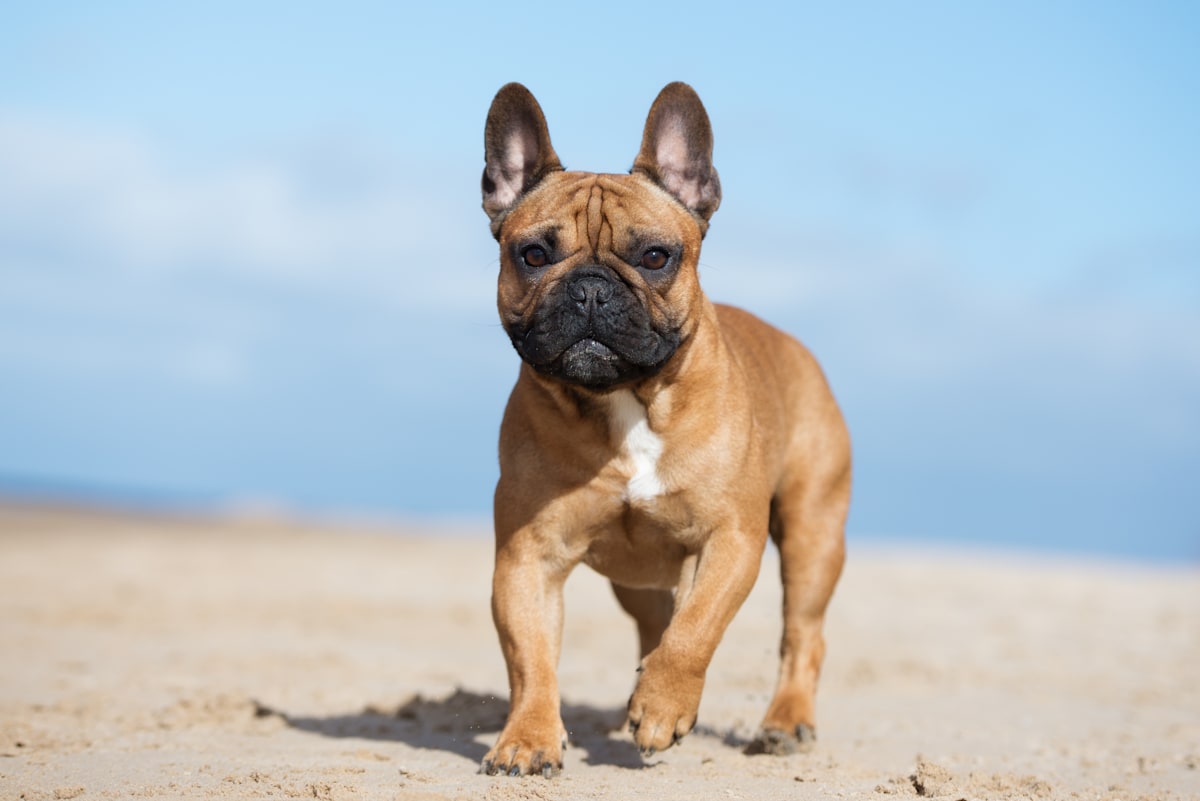
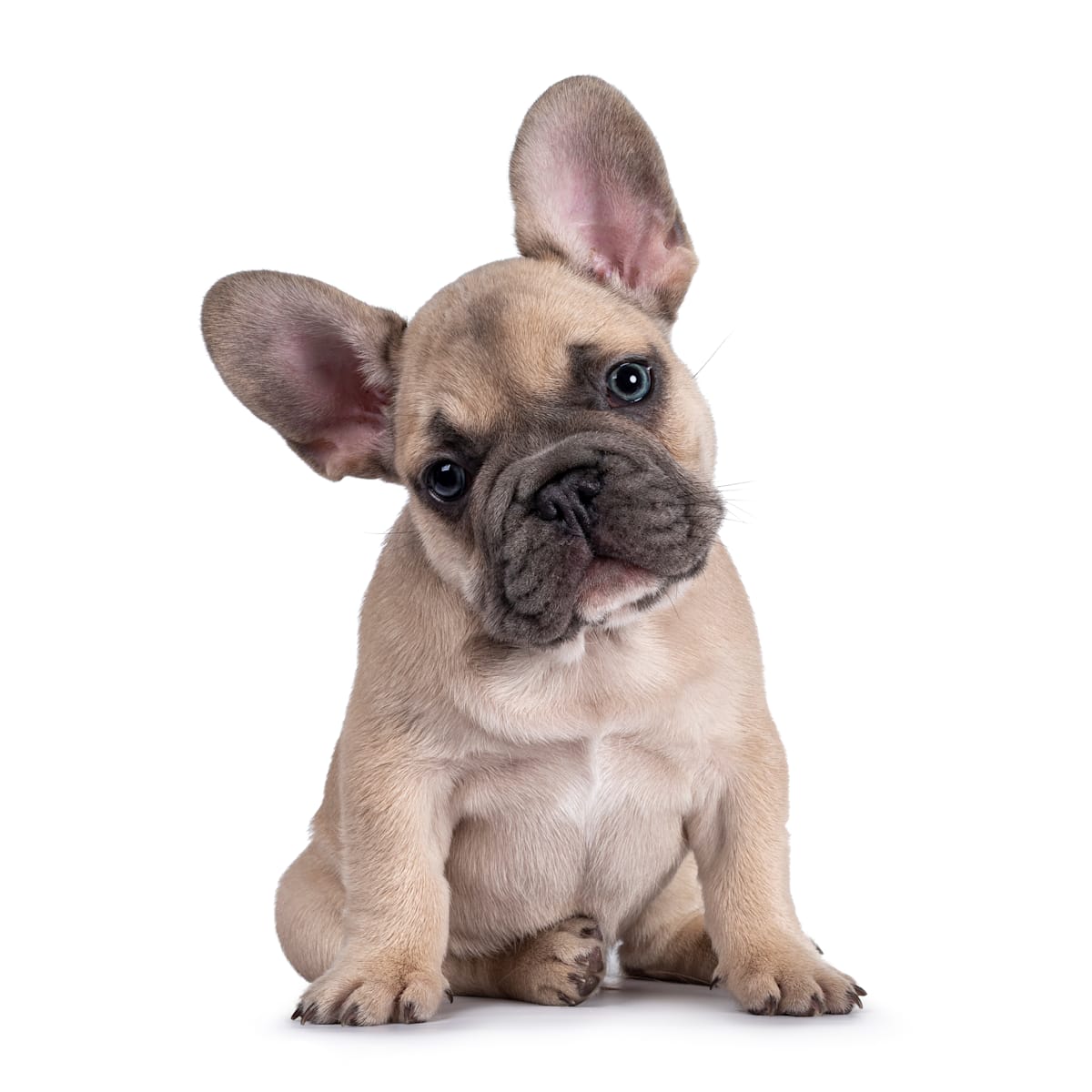
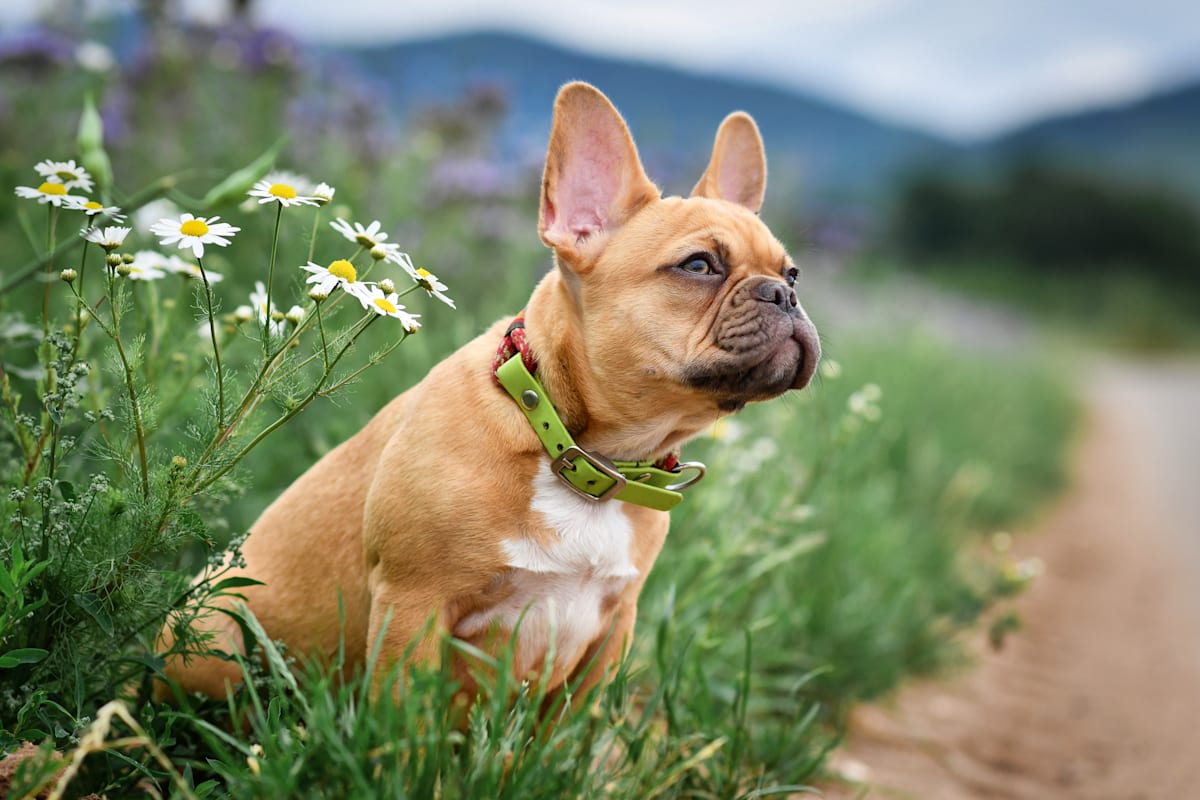
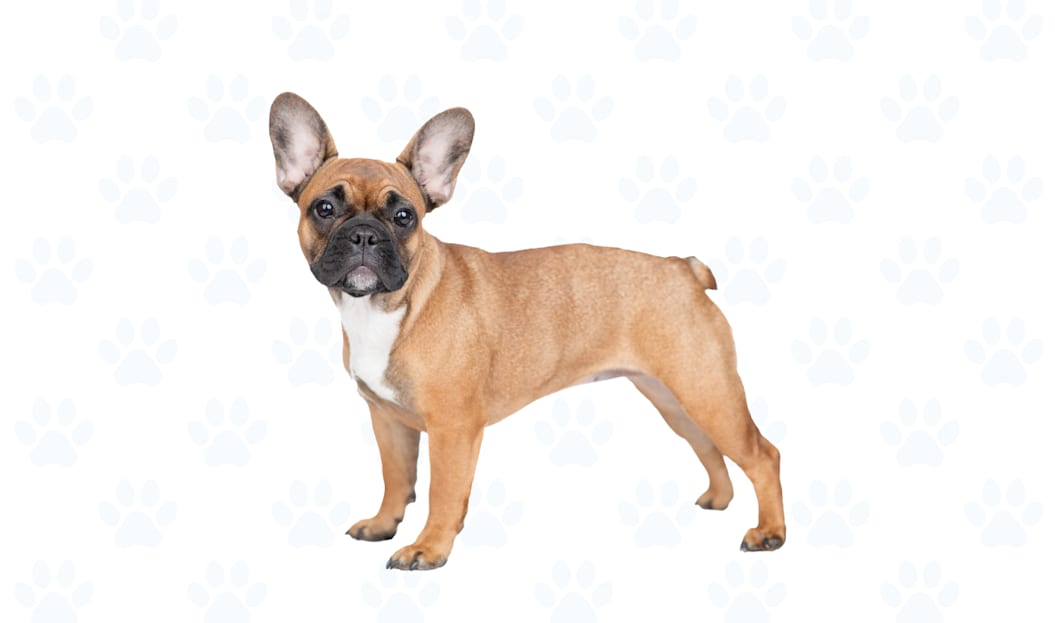
The French Bulldog is a small, hefty breed. They are easily recognized by their big, bat-eared heads, and short, stocky legs. They have a short “brachycephalic” muzzle, like pugs and other bulldogs. The pushed-in snout causes wrinkles on the face, which were actually a bred-in fighting advantage for their English bulldog ancestors. Their eyes are dark and wide set, with an alert, curious, and interested expression.
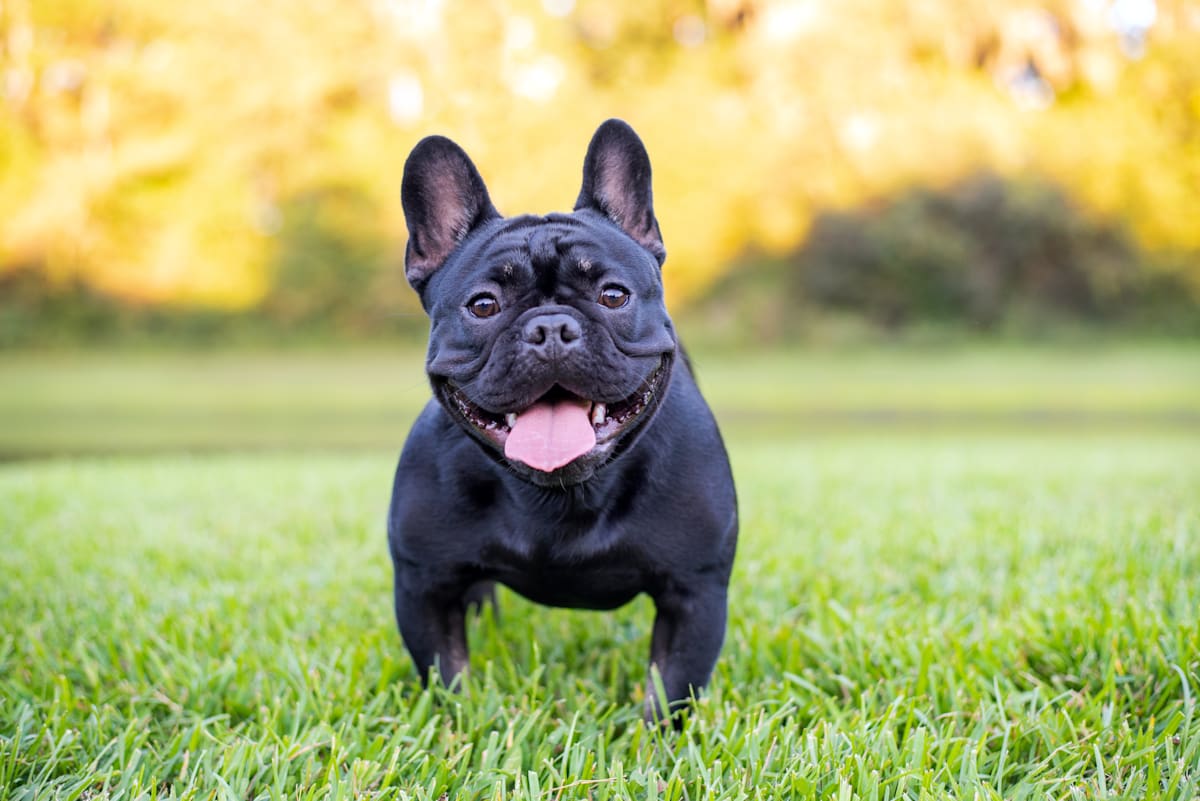
French Bulldogs are top heavy. They’re broader at the shoulder than the hip, with slightly longer back legs, and have a short, nubby tail. They have a thick neck that is well arched with loose skin. They have a single layer fur coat that is short and fine and comes in nine colors, but is most commonly seen in brindle, fawn, white, and black, or a combination of those four.
This breed can be found in a variety of colors. You can check them out below.
French Bulldogs are stocky, compact dogs that stand 11-12 inches tall on average, and weigh between 16-28 lbs.
| Full Grown | |
|---|---|
| Female | 11 in. / 16 lbs. |
| Male | 12 in. / 28 lbs. |
Height is measured up to the shoulders.
French Bulldogs are stocky, compact dogs that stand 11-12 inches tall on average.
French Bulldogs are stocky, compact dogs weighing between 16-28 lbs.
French Bulldogs are perfectly suited for small spaces. They are compact in size, and don’t need much space to roam.
French Bulldogs don’t need intensive exercise. In fact, extreme exertion is not recommended because they can have difficulty breathing due to their short noses and heads. They need to go for regular walks and are reputed to love chasing balls. Their energy level is generally low, but that can vary between individuals.
French Bulldogs are solemn-looking little clowns. They’re relaxed, affectionate, and comical. They can be outgoing but also charmingly disinterested and sometimes stubborn.
French Bulldogs are not an aggressive breed but they are considered adequate small guard dogs for their tendency to announce visitors and feel protective of the home.

French Bulldogs are generally good with children. They’re tolerant, enjoy any extra attention, and aren’t too big or exuberant to cause a problem in size difference.
French Bulldogs can be a challenge to train. They are usually slow to housebreak and don’t boast a wide repertoire of tricks. However, they are still known as well-mannered and generally agreeable.

French Bulldogs are light shedders. They have a short, single coat that doesn’t shed with the seasons.
French Bulldogs are best in a moderate climate. They’re not suited to warm, humid climates because they can easily overheat and their single coat won’t stand up to frigid temperatures, either.
French Bulldogs are fairly quiet and rarely bark, although they sometimes ‘talk’ with yowls and do make a variety of snorts, wheezes and grunts.
Choose a breed from the dropdown to see potential crosses.
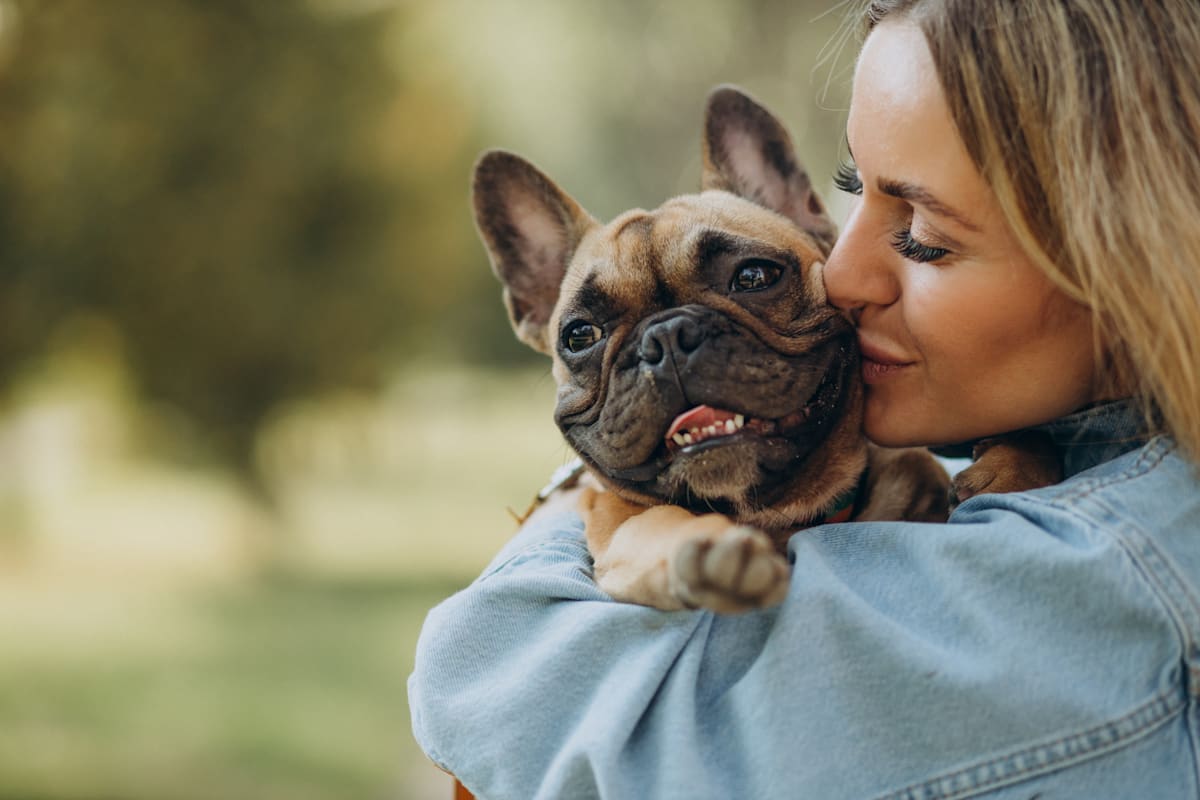
Frenchies are companion dogs that thrive with one-on-one contact. They are relaxed and affectionate, though sometimes aloof or reserved around strangers. Often called a “clown in the cloak of a philosopher”, they have a serious, stoic appearance that belies their comical nature—just imagine these little pig dogs hustling down a hallway to retrieve a tennis ball! They give their all during playtime, but Frenchies spend most of their time snoozing or cuddling with their people. They can be stubborn, territorial, and people-possessive, traits which need to be mediated during their early years.
Frenchies are generally quiet dogs. They have a sharp, low, raspy bark that they may use to announce the arrival of the mail carrier, or playtime, but they’re not really the loud type. Besides barking, Frenchies do make a variety of other sounds. They’re often ‘talkers’ who yowl and yip in communication. They also cough, snort, snore, and just breathe heavy because of their smooshed muzzle. And they can be quite gassy, so expect occasional flatulence.
French Bulldogs can be a challenge to train. They have a specific kind of devotion to their owners, which involves playing and cuddling, but not much else. They are sensitive and earnest and typically slow to housebreak. They will take expectations to heart, though it may take a bit of extra effort on the part of the owner. Treats, in moderation, will definitely help motivate this breed!
French Bulldogs need a minimal amount of exercise. They’re great company for cruising around town and running errands. Just walking with them from A to B will keep their activity at a reasonable level. They’re not terribly athletic, so brisk walks, supplemented with some time playing or running around outside a few times a week, will be adequate. Frenchies are always at risk of overheating when exercising too hard, especially when the weather is warm, because their muzzle doesn’t allow them to ventilate efficiently, like other dogs. And, also unlike other breeds, swimming is not advisable exercise for Frenchies. They need to be actively supervised in the water because they’re usually too top-heavy to swim by themselves.
Not interested in exercise, would rather doze the day away
Like all bulldogs, Frenchies can easily become overweight. Consider feeding a food that is designed to help you carefully manage his weight. Keep careful tabs on weight by visiting the veterinarian’s office for weigh-ins, and adjust food volume accordingly. Being overweight can make it even harder for a Frenchie to breathe, as extra weight in the neck area inhibits the passage of air through already shortened and narrowed passages.
Average daily consumption for an adult Frenchie is 0.5 - 1 cup
If you decide to get a French Bulldog, it’s important to establish a great relationship with your veterinarian when your dog is a puppy. He or she can help you identify issues that may be a problem early in your puppy’s life, and may be easier to correct when he’s young. A great example of this is entropion, or the inward rolling of the lower eyelid. This problem can often be very easily corrected when your puppy is very young, and if it’s addressed early, hopefully it won’t need surgery later on.
Like all bulldog breeds, Frenchies have issues that are directly related to their conformation – namely their short snout and head. Dogs like Frenchies are called “brachycephalic”, which literally means “short head.” This setup creates problems moving air, which results in issues with proper oxygenation and cooling. Other conditions seen in Frenchies may include, but are not limited to the following: cataracts, entropion, urinary stones, dystocia, Brachycephalic airway syndrome and hemivertebrae.
On average, French Bulldogs live to be about 10-12 years old.
The French Bulldog coat is moderately fine, short and smooth. They’re light shedders, and require minimal brushing with occasional bathing. Most grooming attention can be turned toward their wrinkles, ears, and toenails. Wrinkles should be kept dry to maintain healthy condition. They need to be cleansed often with a damp towel or gentle dog shampoo. Redness, odor or sores between the wrinkles are signs of infection and should be inspected further by a vet. Their bat ears can accumulate an excess buildup of wax and debris and need to be rinsed and gently swabbed often. French Bulldogs, especially those who walk less on pavement, have fast-growing toenails which also need to be trimmed regularly to avoid overgrowth and splitting.
Short
Occasional
French Bulldogs’ fine, short coat is very manageable. They are light shedders, and don’t have a double coat, so they don’t lose and grow new layers of fur when the season changes. They should be brushed and bathed regularly to keep stray hairs in check, but there isn’t much maintenance required in this department.
French Bulldogs were first bred in England by crossing dwarfed Bulldogs with Pugs and terriers. Their purpose was to accompany lace makers during the work day. They were perfectly sized, quiet companions, and served to attract fleas away from the owner because of their warmth. When many artisanal workers moved to France from England during the Industrial Revolution, they took these little bulldogs with them. This is where the breed really became recognizable and acquired the name it has today.
Once the French Bulldogs became well-known in France, American tourists also fell in love with them, bringing the dogs back to the United States. In 1898 the AKC recognized the French Bulldog as a breed and they also became extremely popular here. Although their numbers dwindled around WWII, French Bulldogs have enjoyed another resurgence in recent years. They were the 6th most registered breed in 2016.