











Working Group
Dogs of the Working Group were bred to perform such jobs as guarding property, pulling sleds and performing water rescues.
A loyal breed with a long-standing history in France, the Dogue de Bordeaux is infamous for its protective and affectionate nature.
Origin: France Other Names: Mastiff of Bordeaux, French Mastiff, DDB
Dogs of the Working Group were bred to perform such jobs as guarding property, pulling sleds and performing water rescues.
Working Group dogs have been invaluable assets to man throughout the ages. The Doberman Pinscher, Siberian Husky and Great Dane are included in this Group, to name just a few. Quick to learn, these intelligent, capable animals make solid companions. Their considerable dimensions and strength alone, however, make many working dogs unsuitable as pets for average families. And again, by virtue of their size alone, these dogs must be properly trained.
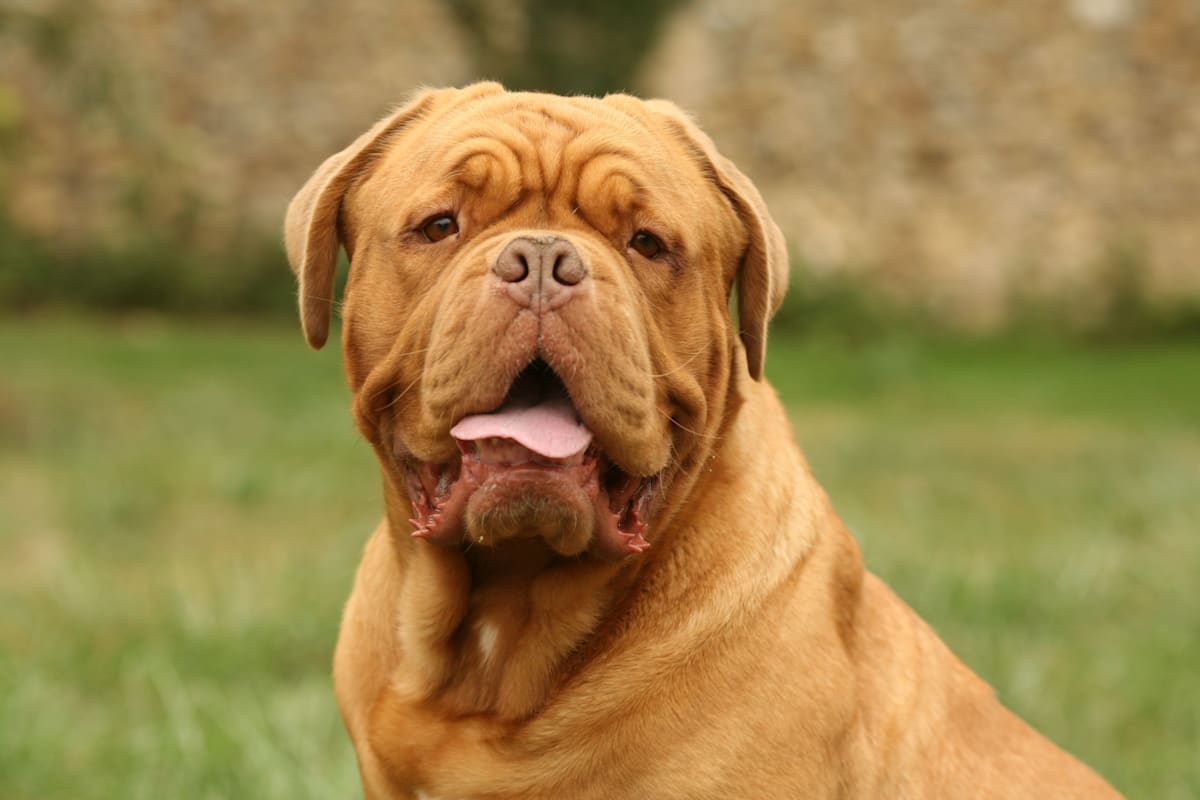
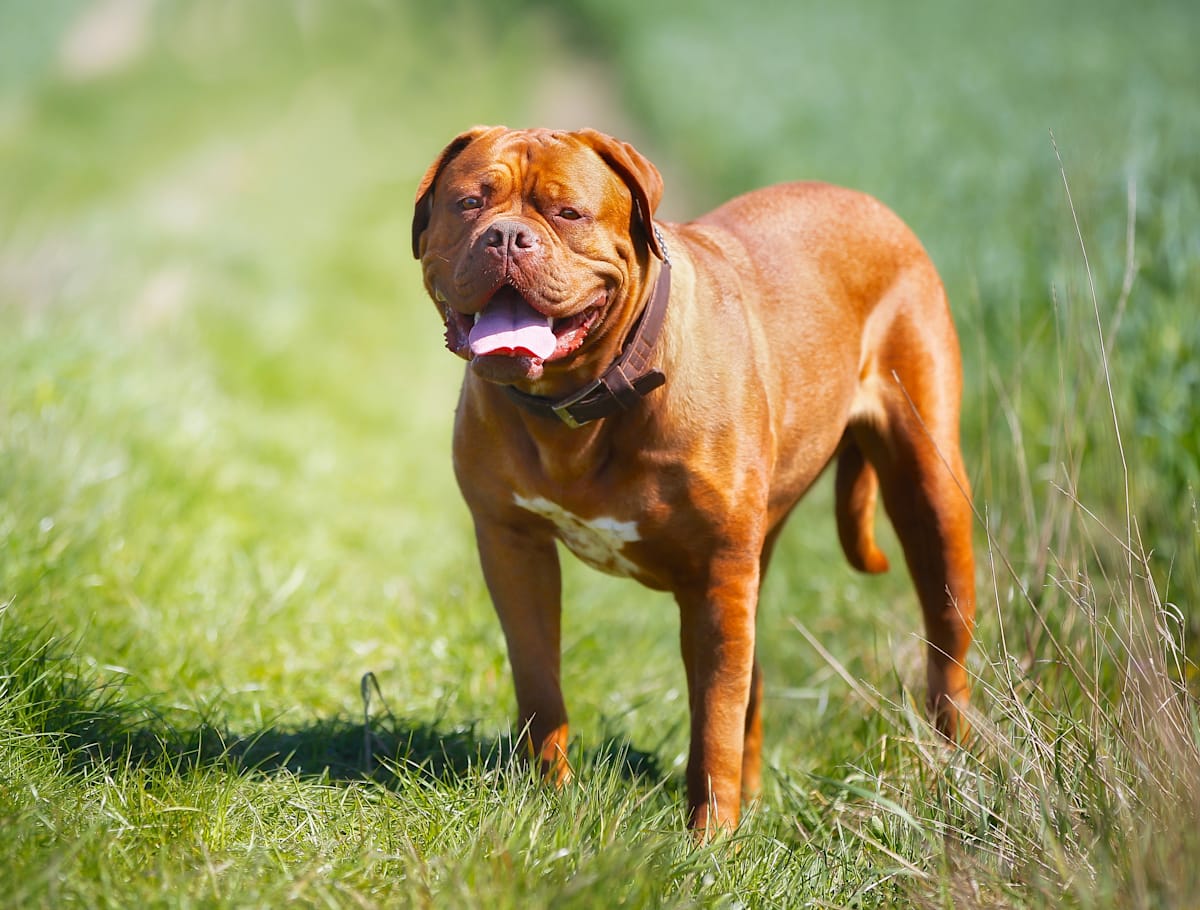
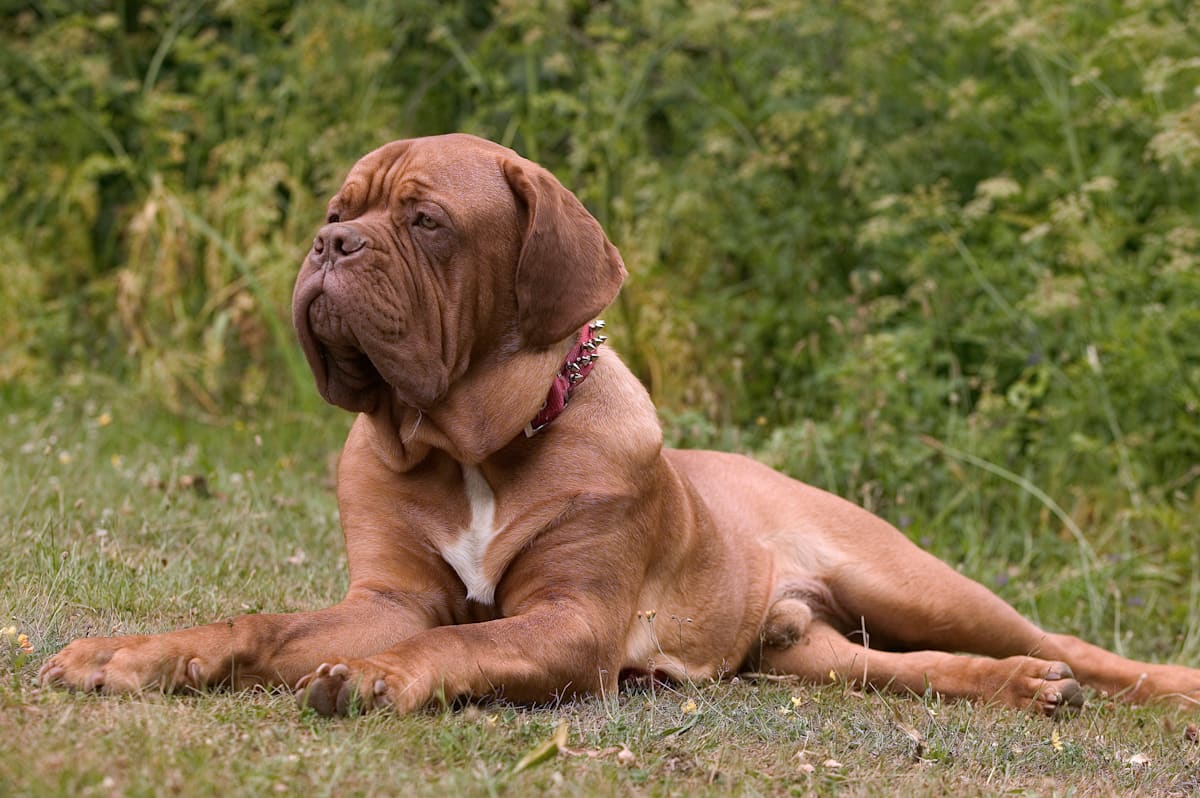
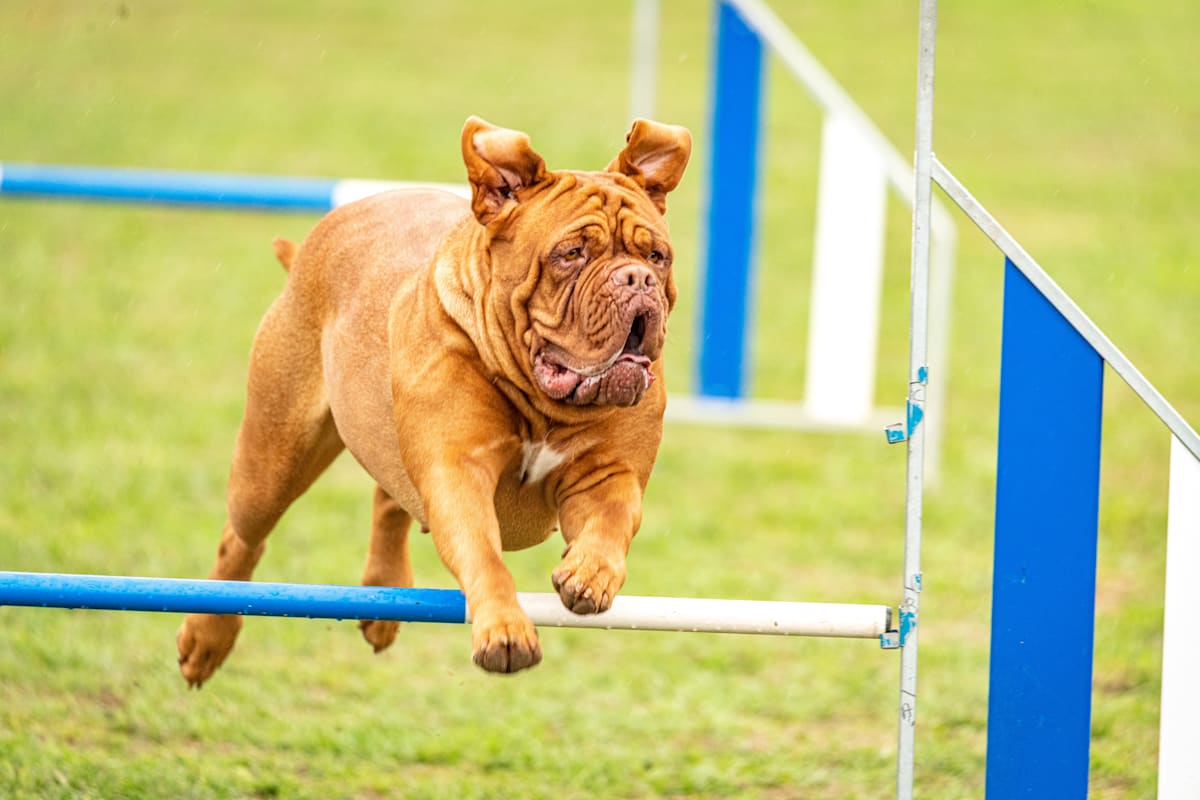
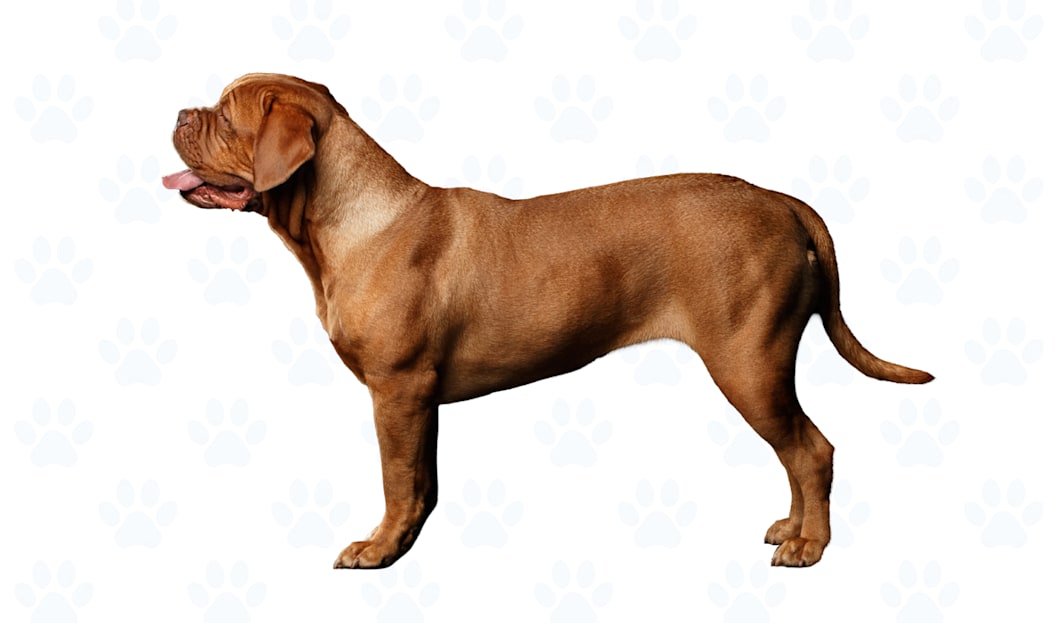
According to the American Kennel Club breed standard, a Dogue de Bordeaux is one of the larger breeds within the working group and is most well-known for having the largest head in proportion to its body size within the canine family. A Dogue de Bordeaux is a very powerful dog with large muscles, but these muscles do not show as the breed has a rather harmonious outline. The breed is built low to the ground, which results in it looking rather stocky when compared to other breeds within the group. The Dogue de Bordeaux has abundant loose skin covered in a short and fine coat. The breed comes in four standard colorings, fawn, isabella (cream), mahogany, and red. A black mask, black mask and white markings, brown mask, or white markings are also part of the breed’s standard.
The Dogue de Bordeaux is not a small dog. A male Dogue de Bordeaux can stand almost 24 inches tall at the shoulders, with females standing between 23 and 26 inches tall. The minimum weight of these dogs is 99 pounds, with many males weighing 145 pounds on average.
| Full Grown | |
|---|---|
| Female | 23 in. / 99 lbs. |
| Male | 26 in. / 145 lbs. |
Height is measured up to the shoulders.
The Dogue de Bordeaux is not a small dog. A male Dogue de Bordeaux can stand almost 24 inches tall at the shoulders, with females standing between 23 and 26 inches tall.
The minimum weight of these dogs is 99 pounds, with many males weighing 145 pounds on average.
The Dogue de Bordeaux can be suited to either city or country living. These dogs need to be limited to low-impact exercises while growing up, so some green space is a necessity and they truly love to be in and around water.
The Dogue de Bordeaux needs special care when growing up and should be limited to low-impact exercises for at least the first 18 months. As an adult, your Dogue de Bordeaux should be never overexerted, and running stairs and jumping should be kept to a minimum. Swimming is an excellent choice of exercise for this breed.
The Dogue de Bordeaux is a sweet, gentle dog at heart, but can dominate owners who fail to train them as a pup. The breed is known to be a little stubborn, but their affection towards all age groups always makes a Dogue de Bordeaux a loving member of the family.
A Dogue de Bordeaux might be a bit relaxed in the home, but when needed, they can move like a lion. The Dogue de Bordeaux is fiercely protective when needed, and their bark will make sure that you are awake if they are startled by an intruder.
The Dogue de Bordeaux is an affectionate breed, but needs to be socialized early and trained well, especially if you have children around. Once they are trained, they are great dogs with kids. Always use caution, however, because poorly trained and socialized individual dogs can be lethal.
Training and socialization are key to ownership of a Dogue de Bordeaux. These dogs need a gentle but firm hand in training to ensure that they learn how to behave in all situations.
The coat of a Dogue de Bordeaux is known to shed throughout the year, but is easy to maintain with weekly brushing via a rubber curry brush or shedding blade. In addition, you will need to pay attention to your dog’s facial area to ensure that their wrinkles are kept clean and dry.
Bred to work in the French countryside, Dogue de Bordeaux are at their best in a cool climate with plenty of access to the great outdoors.
The bark of the Dogue de Bordeaux is not heard often, but when they do decide to bark, it is hard to miss. They generally only yelp when in pain, and bark if they are startled or feel threatened. It is a deep bark and will ensure that you and everyone around you are aware that your Dogue de Bordeaux wants to be heard.
The Dogue de Bordeaux is truly an affectionate dog, and although they can be a little tough to train, a well-trained Dogue de Bordeaux will never want to leave your side, says Canadian breeder Pauline De Silve. The Dogue de Bordeaux is known for their old man-esque traits—you can often find them moving a little slowly and naturally loving a good nap in a comfy chair. They might weigh around 150 pounds, but they love to climb up onto the couch to cuddle on a rainy Saturday night.
The deep, powerful bark of the Dogue de Bordeaux is not heard often, says Ottawa Humane Society spokesperson Keri Nelson. Generally, a Dogue de Bordeaux does not bark unless startled or alarmed, and if well socialized and trained, they will not be a bother to you or your home. However, if your Dogue de Bordeaux is spooked, Nelson says that they won’t hesitate to vocalize their concerns.
When training your Dogue de Bordeaux, you need to both attend obedience class and socialize your pup at every single opportunity. This breed is quite sensitive, and although discipline should be firm, it should never become harsh. These pups need plenty of attention, especially when they are younger, and if you are looking for an easy dog to train, a Dogue de Bordeaux is not it.
One of the major things you need to remember about exercising your Dogue de Bordeaux is that you need to be extremely careful not to overexert your pup. These dogs are big, and when it comes to exercise, Nelson suggests taking them on long walks, or even better, swimming. Dogue de Bordeaux love the water, and swimming is easy on their joints. You will need to ensure that your pup limits their stair climbing and jumping, as continual high-risk activity will hurt their joints.
Enjoys some moderate exercise every now and then
If the Dogue de Bordeaux is overfed or under exercised, they can readily become overweight, which will place additional unnecessary strain on their joints. Feed your Dogue de Bordeaux portion-controlled meals of a high quality, balanced diet. Avoid offering table foods or too many treats, as these can quickly pack on the pounds. Growing Dogue de Bordeaux puppies benefit from eating a large breed puppy food until they are 18-24 months old, since it takes them longer to reach their full adult size relative to small or medium sized dogs.
Average daily consumption for an adult Dogue de Bordeaux is 4-7 cups
As a large breed, the Dogue de Bordeaux are prone to developing a variety of problems, which can include heart disease, orthopedic conditions, and eye conditions. While none of these conditions can be definitively prevented, it is important to take your Dogue de Bordeaux to a veterinarian once or twice a year for examinations. Veterinarians have been extensively trained to detect subtle changes before they become more significant, including the development of new heart murmurs, joint changes, or changes within the eye.
Maintaining a healthy body weight is crucial to minimizing the placement of excessive stress on the Dogue de Bordeaux’s joints. Omega 3 fish oil supplements have some anti-inflammatory effects that can be beneficial if minor joint problems are present.
Certain health conditions can be inherited or occur at increased frequency in the Dogue de Bordeaux. Many of the more common health conditions are associated with heart disease, and genetic testing is often performed by responsible breeders in an attempt to decrease the frequency of these conditions within the breed. These conditions may include, but are not limited to, the following: Aortic stenosis, Ectropion, Tricuspid valve dysplasia and Canine multifocal retinopathy
On average, the DDB lives to be about five to eight years old.
The coat of the Dogue de Bordeaux is extremely short and is relatively easy to maintain. A simple brush with a rubber curry brush or a shedding blade will help to eliminate most of the stray hairs, but it should be noted that the Dogue de Bordeaux sheds year round. Occasional baths are necessary from time to time to keep their skin and coat clean and healthy. The Dogue de Bordeaux is also famous for its drool, so keep a drool cloth handy and make sure your dog’s facial wrinkles are kept clean and dry.
Short
Occasional
The Dogue de Bordeaux sheds year round, but due to their fine hair, it is typically not a problem for most owners. If you take the time to brush out stray hairs, you will be hard pressed to find clumps or hairballs around your home. One thing to remember is that a good lint roller is a must. Regardless of how much you brush or bathe your Dogue de Bordeaux, their fine hairs will always find their way on your black pants or dress.
According to the Dogue de Bordeaux Club of America, the Dogue de Bordeaux has been bred in France since before France was even a country. Although their origin is still somewhat unknown, the Dogue de Bordeaux is thought to have been introduced to France in the first century BC by Roman legions occupying the territory. These dogs were massive and proved to be a great war companion to the ever expanding Roman Empire. Over time, the breed became popular not as fighters, but as guard dogs on the massive French estates in the 1700s. After the French Revolution, the Dogue de Bordeaux found work as a livestock driver and remained a working dog in the French countryside for years. It was only after the 1989 movie Turner and Hooch that the Dogue de Bordeaux became popular around the world, with several clubs popping up around North America. The Dogue de Bordeaux received admittance into the American Kennel Club in the Working Group in 2007.