Petco Text Logo
Petco Pet Logo
Jump To Section

    About Doberman Pinscher

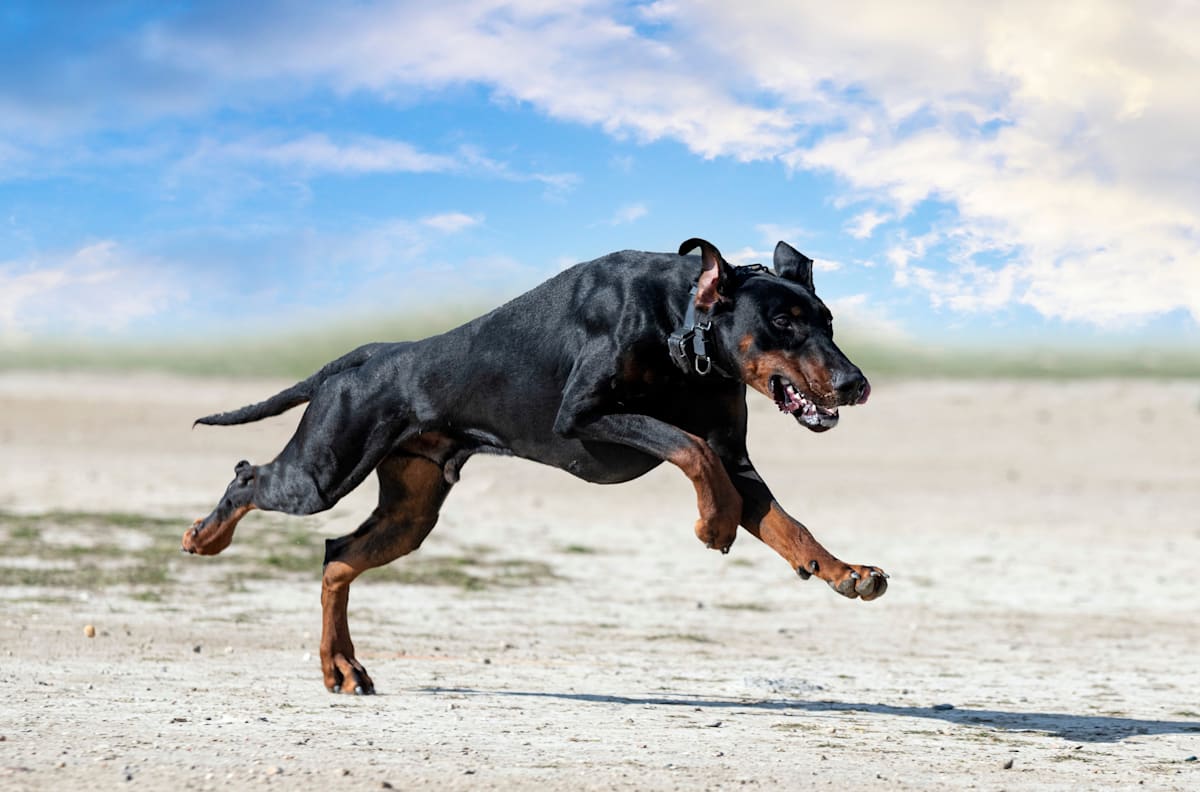
    The Doberman Pinscher is a faithful companion with high intelligence and alertness. They are commonly associated with military, police, and personal defense uses, although Doberman Pinschers also enjoy a loyal following with dog enthusiasts around the world. Modern breeders have worked to curb the aggressiveness and ferociousness of the breed to enhance their abilities as companion animals, but Doberman Pinschers in general retain some of these characteristics.. They respect and protect their owners and territory, but Doberman Pinschers still make good family pets with the proper training and early socialization.

    Origin: Germany   Other Names: Doberman, Dobermann, Dobie

    Working Group

    AKC Working Group dogs have been invaluable assets to man throughout the ages. The Doberman Pinscher, Siberian Husky and Great Dane are included in this Group, to name just a few. Quick to learn, these intelligent, capable animals make solid companions. Their considerable dimensions and strength alone, however, make many working dogs unsuitable as pets for average families. And again, by virtue of their size alone, these dogs must be properly trained.

    Breed Appearance

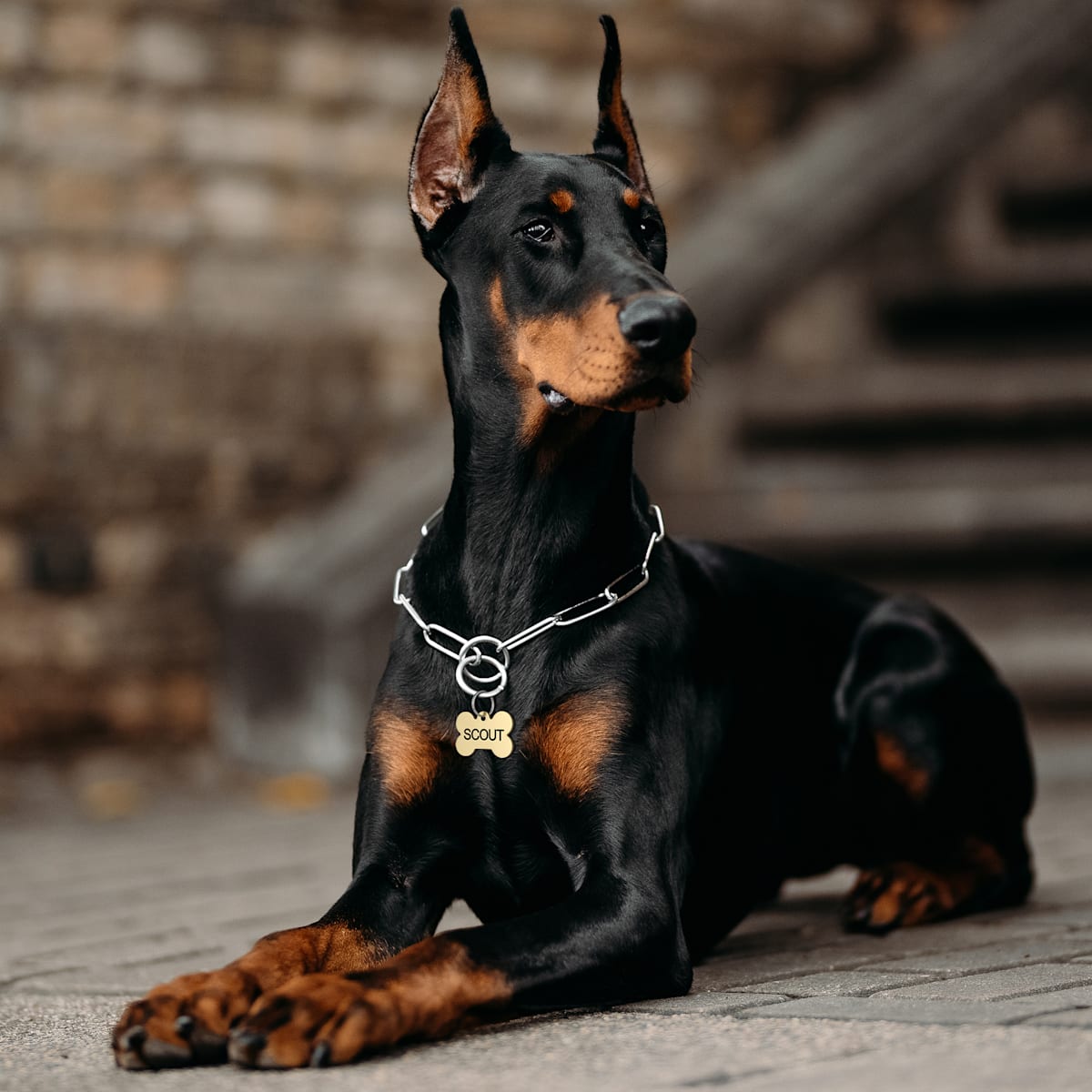
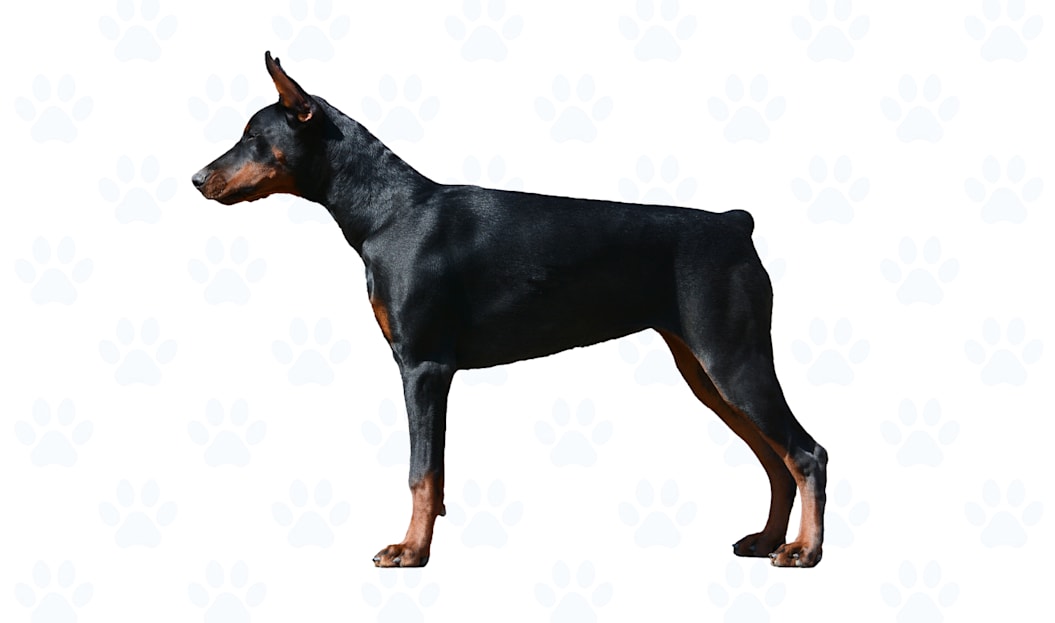
    The American Kennel Club (AKC) holds control of the breed standard for the Doberman Pinscher. Standards vary between countries and kennel clubs, but the American Doberman Pinscher standard is 26 to 29 inches tall for males. The length from forechest to the upper thigh should be about the same as the height. The Doberman Pinscher is a beautifully-proportioned dog with athletic limbs and proud complexion. These proud, fearsome dogs have an alert look about them.


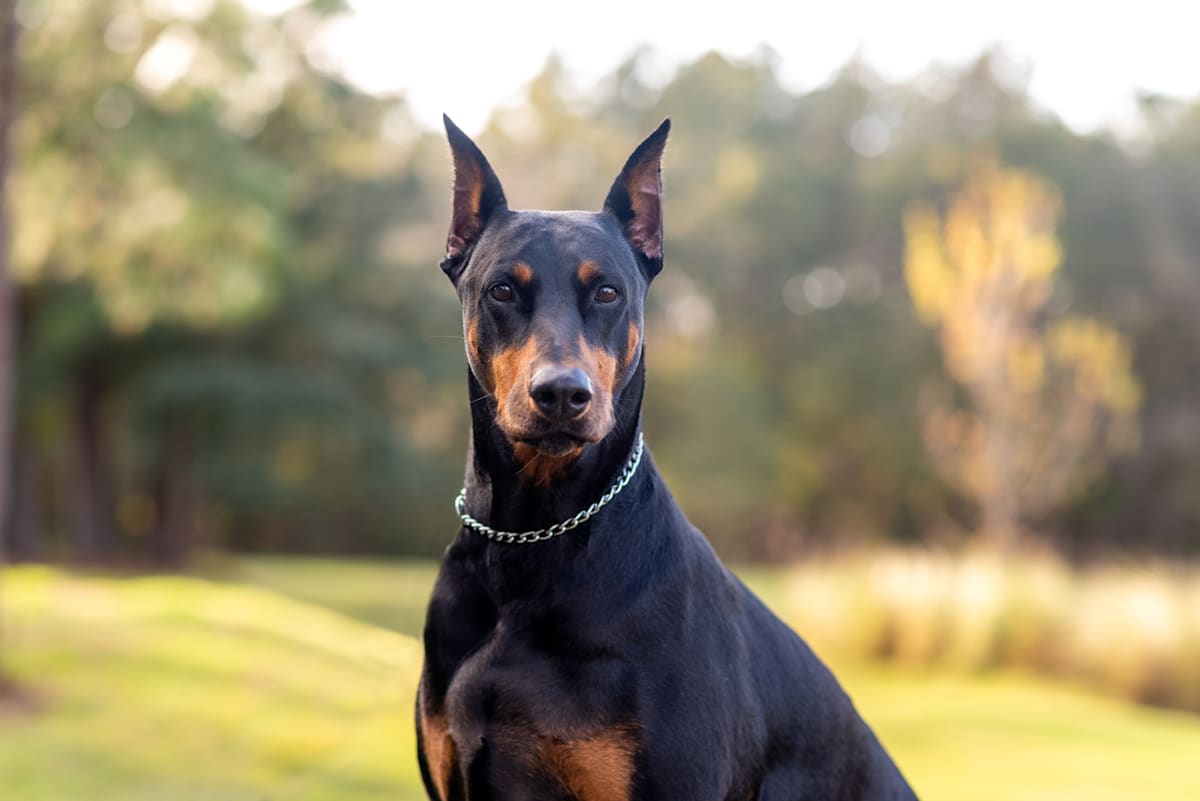
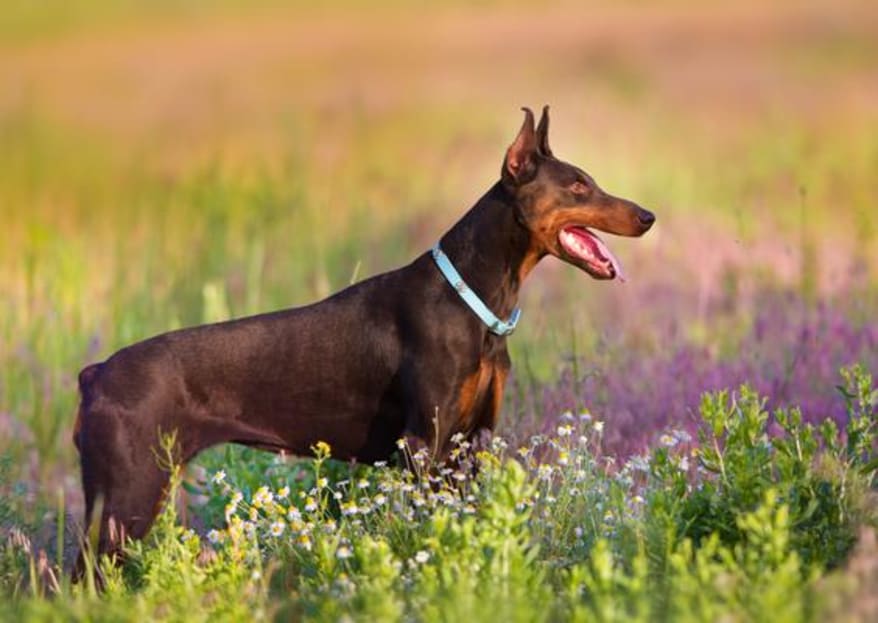
    The Doberman Pinscher has a square body with dark fur marked with rust-colored patches. The AKC recognizes four variations: black & rust, blue & rust, fawn & rust, and red & rust. Some white Doberman Pinschers exist, but they are not eligible for competition.


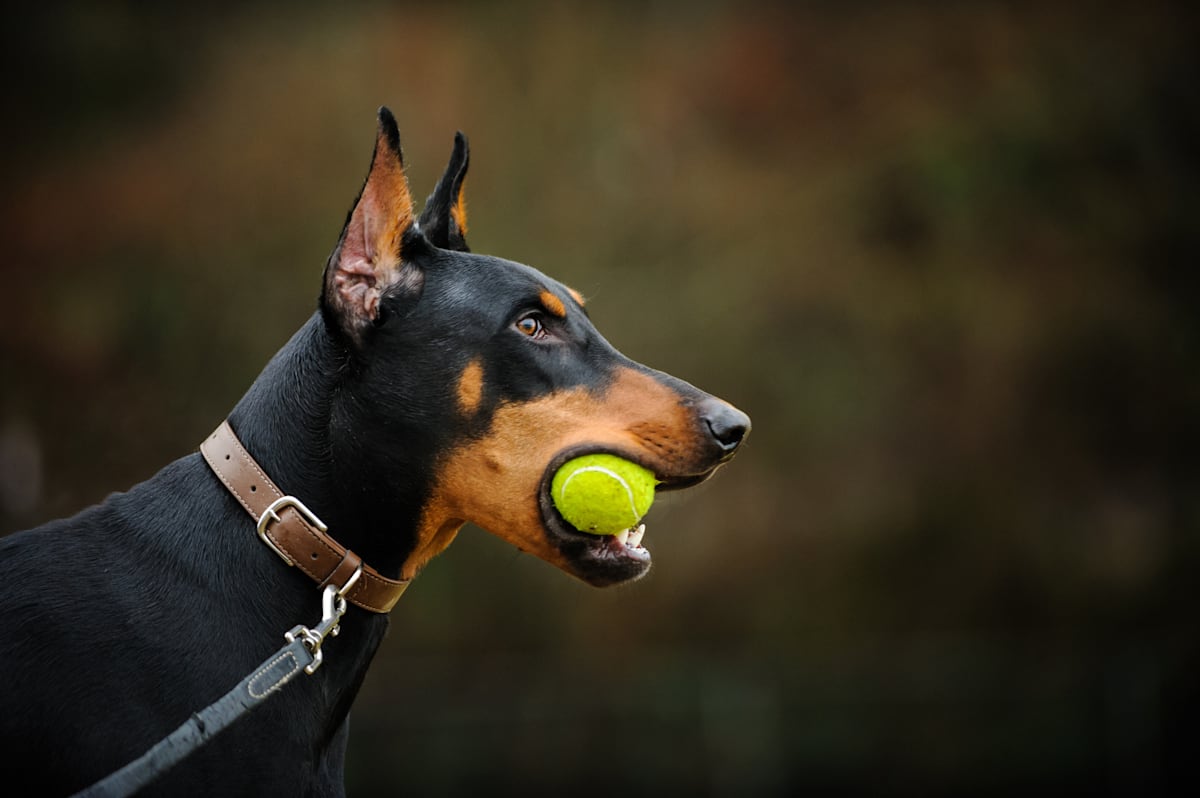
    Depending on the country where they live, Doberman owners may crop the ears. It was believed this practice aided in sound location for guard duty, but the practice is now banned (along with tail docking) in many countries. The AKC calls for a tail docked at the second vertebra.

    Size & Weight

    Doberman Pinschers are a large dog breed. Typically, adult males are between 24 and 29 inches tall at the shoulder. An adult Doberman may range between 70 and 100 pounds.
    Full Grown
    Female
    24 in. / 70 lbs.
    Male
    29 in. / 100 lbs.
    Height bar
    Female Pet
    Height Figure
    Male Pet
    Height is measured up to the shoulders.

    Doberman Pinscher Characteristics

    Size

    Tiny

    Jumbo

    Weight

    Light

    Heavy

    Shedding

    Minimal

    Abundant

    Coat Length

    Short

    Long

    Grooming Frequency

    Occasional

    Frequent

    Living Space

    City apartment

    Ranch

    Exercise

    Couch potato

    Bring it on!

    Climate

    Warm

    Cold

    Personality

    Antisocial

    Outgoing

    Protection

    None

    Bodyguard

    Behavior with Kids

    Always monitor

    Babysitter

    Training

    Headstrong

    Obedient

    Barking

    Mute

    Loud

    How to Care for a Doberman Pinscher

    Caring for a Doberman Pinscher means supporting an active, intelligent companion with the right balance of exercise, training, nutrition, and routine care. With consistent attention to their physical and mental needs, Dobermans thrive as devoted, confident dogs and deeply connected family members.

    Coat & Grooming:

    Doberman Pinschers have a smooth and sleek coat with black, red, blue, or fawn fur. You’ll also see rust markings around the muzzle, paws, neck and paws. Don’t worry too much about frequent bathing – a weekly brush and a bath if something stinky gets into the fur is enough care for most owners.

    Trim the nails monthly and keep an eye out for buildup in the ears. Do a weekly exam (during brushing is a good time) and look for sores and any signs of health problems.

    Shedding: Doberman Pinschers shed a fair bit but they aren’t the worst offenders in the dog kingdom. Expect to do regular brushing and bathing to maintain a healthy coat on your Doberman Pinscher. This will help keep the dog hair around your home to a minimum.

    Training: Doberman Pinschers can be easy to train with the right trainer and program. Many owners think they are one of the smartest and most “trainable” breeds you’ll find. Traditional working roles for the Doberman Pinscher meant breeders prized intelligence and obedience for their dogs.

    Consistently across many studies over decades of research, the Doberman Pinscher scores very high on canine intelligence tests. Obedience, playfulness, and trainability come naturally with your Doberman Pinscher. It’s up to you to train them well and instill the proper respect and compliance required for a happy life around their human companions and their friends. Along with the Poodle, Collie, and Rottweiler, the Doberman Pinscher is one of the smartest dogs you’ll ever find.

    Barking: Doberman Pinschers will sound the alarm, just like their ancestors did, when they want you to know that they see, hear, or smell something wrong. They are fearless but obedient, so if properly trained they likely will just bark and not chase. “Respect and Protect” is a common trait of the Doberman Pinscher. They love to please their owners and will do anything to make sure they are safe and secure at home. That said, they are usually sociable and very unlikely to be aggressive with members of the family.

    Expose your Doberman Pinscher to a variety of people, places, and experiences to build confidence and help them learn to react appropriately. Always provide love, affection, and support to your pet – they will keep you safe without hurting (almost) anyone who comes to call. However: late-night burglars beware.

    Personality: Doberman Pinschers are known as intelligent and aggressive guard dogs, but they can be lovable and affectionate given the right conditions. They have a low prey drive and will usually stay close to their owners. The Doberman Pinscher is a reliable companion and loyal almost to a fault.

    Temperament & Behavior: Doberman Pinschers were bred as stalwart and ferocious guard dogs, but modern breeding helped to morph their personalities into something more suitable for human companionship. The breed has a reputation for being mean and aggressive, but this isn’t always the case. Use by police forces and military units around the world is largely due to the Doberman Pinscher’s powerful physique and trainability. Hollywood adopted the stereotype and the reputation stuck. Any breed can be trained to be aggressive or not with the proper instruction and encouragement. Doberman Pinschers today can be docile and well-suited to life in a family with early obedience training and socialization.

    Behavior with Kids: Doberman Pinschers are great family dogs, but their size and weight can cause problems if you aren’t careful. They are protective and loving when it comes to their inner circle. Their size can pose problems around smaller dogs, children, and the elderly, but with proper socialization and supervision, Dobies make great family dogs.

    Protection: Doberman Pinschers are very protective and alert when it comes to guarding their turf. They are constantly on the lookout for anything that deserves their attention. German royalty and junkyard owners can both appreciate the loyalty and aggressive protection that a Doberman Pinscher provides. These dogs are one of the classic guard breeds and preferred by many police and military K-9 units around the world.

    Life span: Doberman Pinschers live to be 9 to 12 years old in most cases.

    Inherited Health Issues: Just like any other breed, there are certain diseases that are common in Dobermans. If you are considering getting a Doberman puppy, be sure and discuss genetic health concerns with any prospective breeder and ask whether genetic testing for these diseases is performed on breeding pairs. Not all genetic diseases can be isolated on genetic tests, however reputable breeders will not breed dogs that have conditions that have been proven to be inherited. Multiple dermatologic conditions including acral lick dermatitis and color dilution alopecia, sulphonamide drug reaction, hypothyroidism, chronic hepatitis, gastric dilatation and volvulus Von Willebrand’s disease,, panosteitis, cancer, Wobbler’s syndrome, Dancing Doberman disease, narcolepsy-cataplexy and glomerulonephritis are just a few conditions seen more often in Doberman Pinschers as compared to other breeds.

    Preventive Care: Due to the high prevalence in Dobermans of the life threatening condition known as gastric dilatation and volvulus, in which the stomach fills with air and/or food and then flips over on its axis, many veterinarians recommend a prophylactic procedure known as a gastropexy when these dogs are very young, preferably at the time of spaying or neutering. This procedure involves tacking the side of the stomach to the wall of the abdomen, so that it cannot flip over, essentially preventing volvulus. The Doberman’s deep chest makes it prone to this condition.

    Dobermans have a number of skin-related issues, and although there is no proof that omega-3 fatty acids can prevent these conditions, they do promote healthy skin. Consider supplementing your Doberman’s diet with a high quality veterinary-specific fish oil product throughout his life.

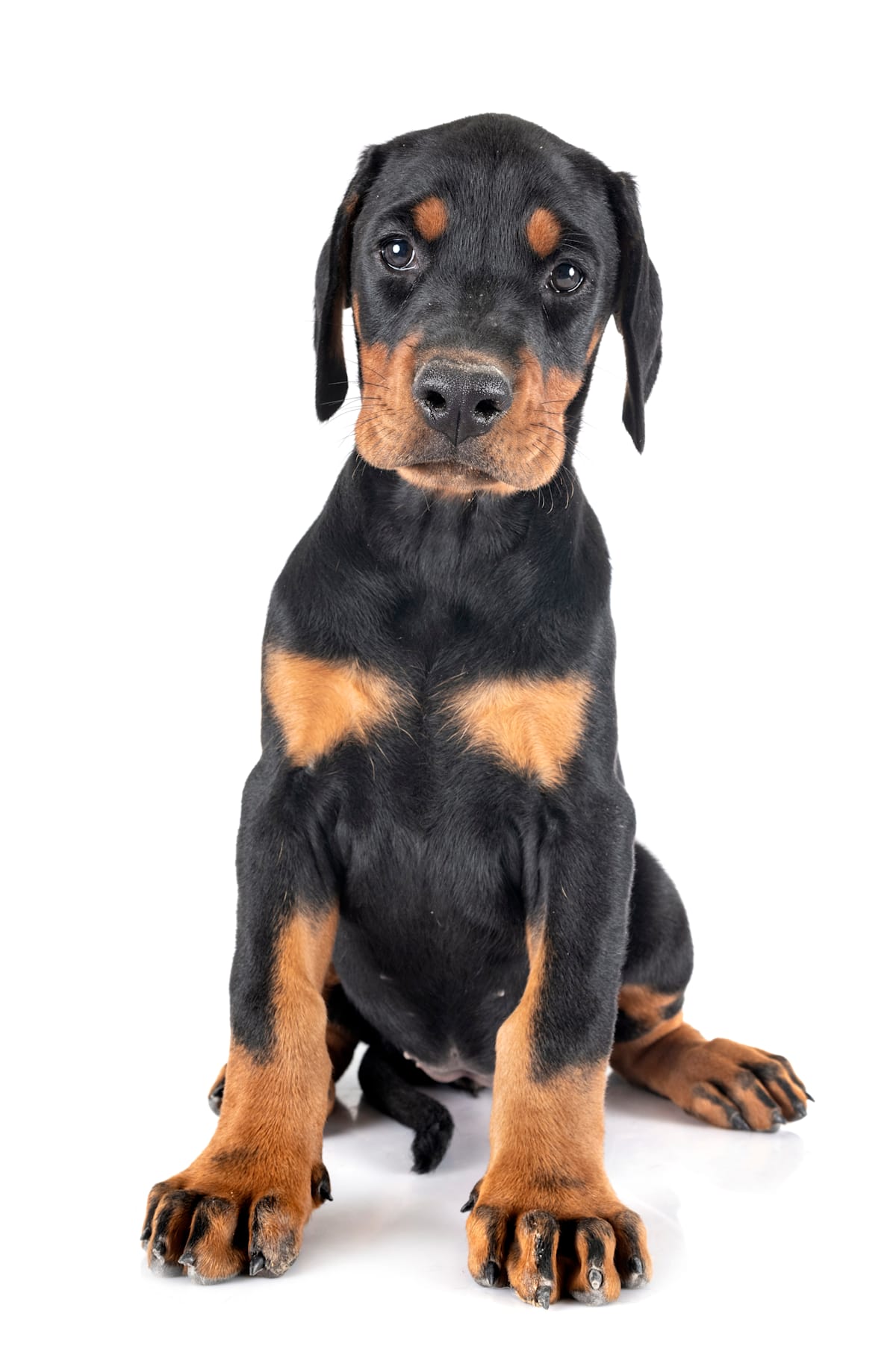
    When your Doberman is a puppy, feed a high quality large breed puppy food. Large breed foods are designed to discourage rapid growth rates, which have been linked with certain orthopedic issues common in large breed dogs. At approximately one year of age, switch to an adult formula.

    Daily Consumption: Average daily consumption for an adult Doberman is 2.5-4 cups

    Energy Level: Frisky, energetic breed that is always ready for action

    Habits and Exercise: Studies into canine personality often use Doberman Pinschers due to their high levels of intelligence and emotional complexity as animals. Doberman Pinschers are very playful even compared to other breeds of dogs, and they exhibit personality traits that seem similar to humans. They love to sit by the fire and be close to their owners at all times.

    Since they were bred as working dogs, Doberman Pinschers have a big gas tank. They eat a lot and need to burn a lot of energy. It’s good for their physical health, but it can be even more crucial to maintain good mental health and low anxiety. Doberman Pinschers learn thing very quickly, so make sure you constantly introduce new skills, experiences, and exposure to different environments to keep them engaged.

    Climate: Doberman Pinschers are sporting dogs, but their short fur leaves them a bit exposed in chilly weather. They much prefer a temperate or hot climate to a cold one.

    Cost of Owning

    On average, owning a middle-aged Doberman costs around $1,600 per year
    $400
    Vet Care
    $400
    Grooming & Boarding
    $500
    Food & Treats
    $300
    Other

    Unlock exclusive rewards with Vital Care, or enjoy up to 35% off essentials when you subscribe with Repeat Delivery.

    Enjoy exclusive rewards every time you shop. Get member-only deals, points, and special offers designed to help you save more on what your pet needs.

    Never run out of the essentials. Subscribe and get your pet’s favorites delivered on schedule—with up to 35% off plus the convenience of automatic refills.

    Your love story starts here.

    Find adoptable pets near you with a simple search.

    Fun Facts

    A Doberman named Cappy saved 250 lives as a war dog in the U.S. Marine Corps during WWII. Despite mortal wounds from a grenade, Cappy alerted his countrymen to the presence of a group of Japanese soldiers in Guam.

    A Doberman named Cappy saved 250 lives as a war dog in the U.S. Marine Corps during WWII. Despite mortal wounds from a grenade, Cappy alerted his countrymen to the presence of a group of Japanese soldiers in Guam.

    Champion Rancho Dobe’s Storm won back-to-back Best in Show at the Westminster Kennel Club dog show in 1952 and 1953. He also won Best of Breed in 25 consecutive show competitions. He went on to sire over 300 puppies and join the Hall of Fame at the Museum of the Dog in St. Louis.

    Champion Rancho Dobe’s Storm won back-to-back Best in Show at the Westminster Kennel Club dog show in 1952 and 1953. He also won Best of Breed in 25 consecutive show competitions. He went on to sire over 300 puppies and join the Hall of Fame at the Museum of the Dog in St. Louis.

    There’s a ridiculous movie from the early 1970s about a gang of bank-robbing Doberman Pinschers. Six dogs, each named after famous bandits like Dillinger, Bonnie, and Baby Face Nelson, go around robbing banks and hording cash. Can you believe they made two sequels? Here’s hoping for a remake soon.

    There’s a ridiculous movie from the early 1970s about a gang of bank-robbing Doberman Pinschers. Six dogs, each named after famous bandits like Dillinger, Bonnie, and Baby Face Nelson, go around robbing banks and hording cash. Can you believe they made two sequels? Here’s hoping for a remake soon.

    Breeders continue to move the breed away from guard dog qualities to become more effective as a human companion dog. Despite its tough reputation, the Doberman Pinscher is a truly beautiful and intelligent dog that will only get better over time as its personality softens with good breeding practices.

    Breeders continue to move the breed away from guard dog qualities to become more effective as a human companion dog. Despite its tough reputation, the Doberman Pinscher is a truly beautiful and intelligent dog that will only get better over time as its personality softens with good breeding practices.

    History

    Karl Friedrich Louis Dobermann was a German tax collector and dog pound manager in the German town of Apolda around 1900. He used his access to the city dog pound to breed a worthy companion for his tax-collecting journeys across the countryside. It’s likely this made his job easier, given the bandits and disgruntled taxpayers in the area. He bred the Doberman Pinscher to become the perfect blend of strength, intelligence, loyalty, speed, and fighting spirit. Two breeders named Goeller and Greunig continued Dobermann’s work and produced the modern version of the Doberman Pinscher. The US Army and many other government organizations around the world used the Doberman Pinscher as a working breed during the early-to-mid 20th century. We almost lost the breed after WWII to a big drop in popularity and breeding. A man named Werner Jung used Miniature Pinschers and a variety of other Doberman relatives to bring the breed back to life.

    The first registered Doberman Pinscher was a German dog in 1898. The American Kennel Club followed a decade later with its first registration of the breed in 1908. The Doberman Pinscher Club of America began in 1928 with the help of George Earl III, an American enthusiast.

    Read More

    Sponsored