Petco Text Logo
Petco Pet Logo
Jump To Section

    About Cane Corso

    The Cane Corso is a Mastiff-type dog with a long history of military service. As far back as the Roman Empire, these dogs were a staple of European campaigns in the Legion. They were bred to guard, hunt, and do anything else required of them. Cane Corsos have a lot of energy, so you need to be ready to devote 45-60 minutes to exercise each day. They are eager to please and enjoy working alongside their human family.

    Origin: Italy
    Other Names: Italian Mastiff, Italian Corso Dog, Cane Corso Italiano

    Working Group

    AKC Working Group dogs have been invaluable assets to man throughout the ages. The Doberman Pinscher, Siberian Husky and Great Dane are included in this Group, to name just a few. Quick to learn, these intelligent, capable animals make solid companions. Their considerable dimensions and strength alone, however, make many working dogs unsuitable as pets for average families. And again, by virtue of their size alone, these dogs must be properly trained.

    Cane Corso Appearance

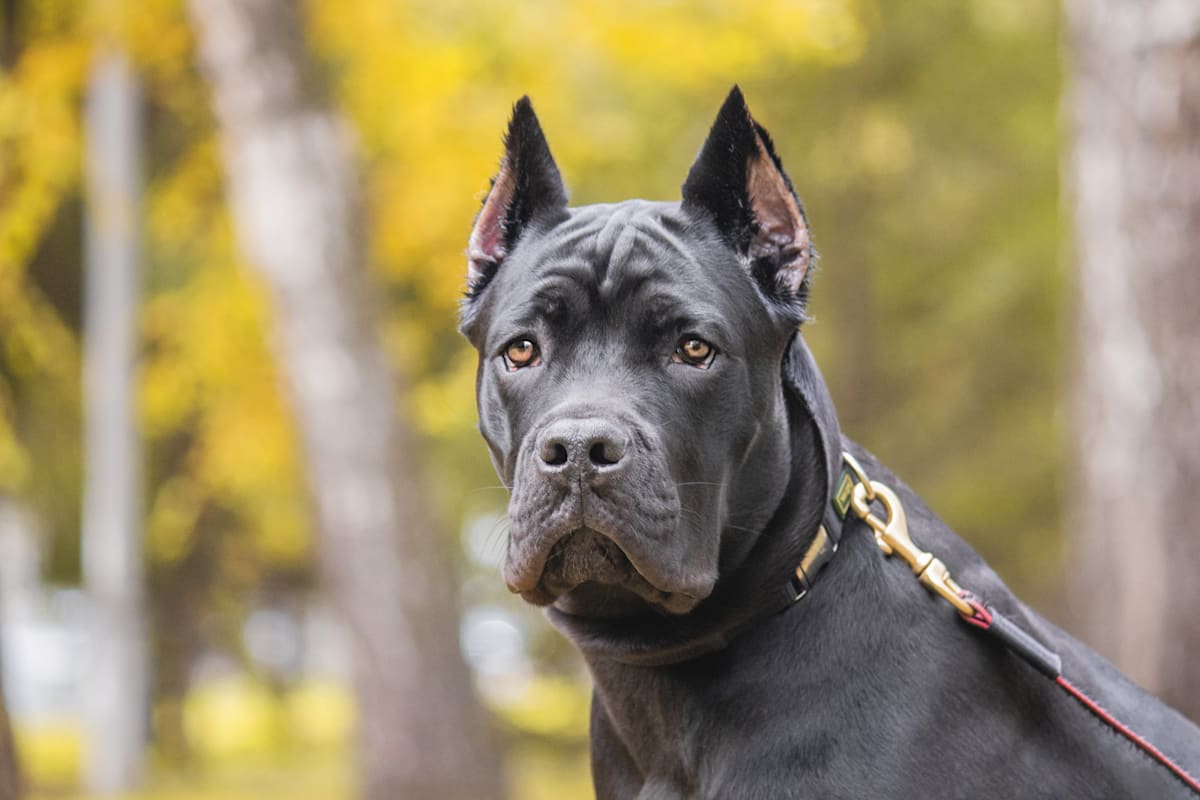
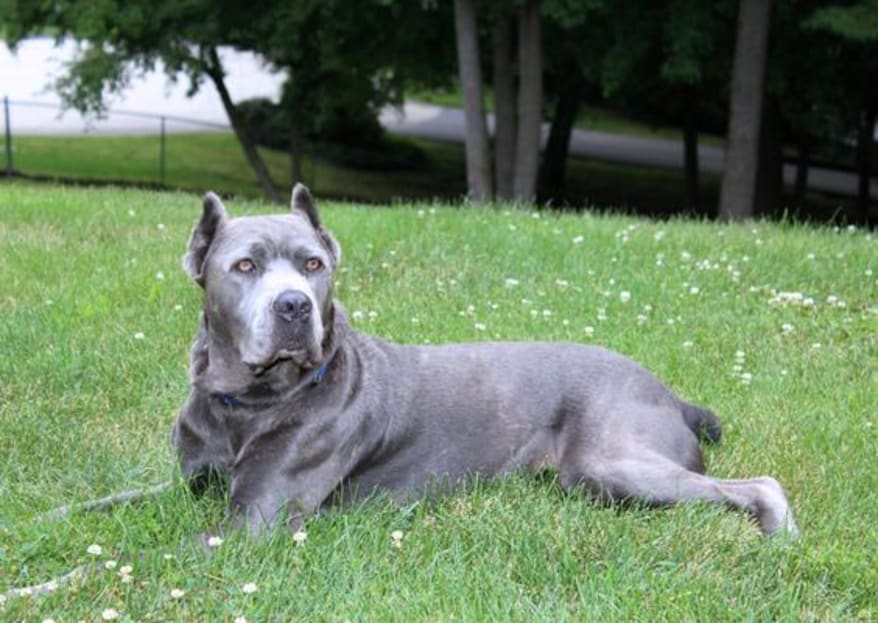
    The Cane Corso is closely related to the Mastiff family of European working dogs. You know it’s a Cane Corso when you see the giant, boxy and imposing head with a powerful body. Their skin is thin and not too tight to the body. One look at a Cane Corso, and you’ll understand why they were used as war dogs or members of an ancient hunting party. They usually have docked tails around the fourth vertebra.


    The American Kennel Club recognizes seven coat colors: black, black brindle, chestnut brindle, fawn, gray, gray brindle, and red. Other colors may exist, but those dogs are not eligible for competition. The AKC also lists two standard markings: black masks and gray masks.

    Size & Weight

    Cane Corso puppies are small and cute, but they quickly grow into large adult dogs. Mature males can weigh up to 120 pounds, and they can grow to be over two feet tall at the shoulders.
    Full Grown
    Female
    26 in. / 100 lbs.
    Male
    28 in. / 120 lbs.
    Height bar
    Female Pet
    Height Figure
    Male Pet
    Height is measured up to the shoulders.

    Cane Corso Characteristics

    Size

    Tiny

    Jumbo

    Weight

    Light

    Heavy

    Shedding

    Minimal

    Abundant

    Coat Length

    Short

    Long

    Grooming Frequency

    Occasional

    Frequent

    Living Space

    City apartment

    Ranch

    Exercise

    Couch potato

    Bring it on!

    Climate

    Warm

    Cold

    Personality

    Antisocial

    Outgoing

    Protection

    None

    Bodyguard

    Behavior with Kids

    Always monitor

    Babysitter

    Training

    Headstrong

    Obedient

    Barking

    Mute

    Loud

    How to Care for a Cane Corso

    The Cane Corso requires consistent care that supports their physical strength, intelligence, and protective nature. From exercise and nutrition to training, grooming, and preventive health, a thoughtful routine helps this powerful breed stay balanced and well-adjusted.
    Coat & Grooming: Grooming can be a great bonding time between dog and owner, and it’s important to start early. Get your Cane Corso used to being handled, especially for a bath and nail trim. A weekly brushing session with the right tools (grooming glove, specialized dog brush) is a must. Trim their nails on a bi-weekly basis to avoid tears, broken nails, and the risk of infection. Daily tooth brushing will help to maintain healthy teeth and gums.

    Coat length: Short
    Grooming: Occasional

    Shedding: Cane Corsos tend to shed a lot around the change of seasons, so make sure you have the vacuum ready. Regular bathing and lots of brushing can help keep the hair at bay, but expect to pick up after them if you invite one into your home.

    Training: Early socialization is extremely important with Cane Corsos. They need a lot of instruction and encouragement to develop the proper social graces. A common problem in training is a lack of confidence as the trainer. If you aren’t ready to stand up to your dog, you might want to consider a different breed. Consistency is key when it comes to obedience lessons. Make sure the whole family is on the same page when it comes to laying down the law.

    Barking: The Cane Corso isn’t known as an overly loud barking dog. They will sound the alarm if they feel threatened or they want your attention quickly, but tend not to bark just to hear themselves talk.

    One thing to always remember is the Cane Corso hides a sensitive and gentle heart beneath their strong and powerful body. They are very intelligent and perceptive, especially when it comes to family dynamics. Be careful of their overzealous protective nature around roughhousing children or other dogs. A Cane Corso is eager to play the peacekeeper, but the often underestimate their size and strength as they intervene.

    Temperament & Behavior: Since they are a traditional working breed, the Cane Corso needs a lot of exercise to maintain their mental and physical health. Given the exercise requirements and their strong personalities, this is not a recommended breed for novice dog owners. If you have a lot of experience with large dogs and modern positive reinforcement training methods, don’t be afraid of the Cane Corso. With the right mix of obedience lessons and a firm grip on your authority, you can achieve good results with early socialization. A properly-trained Cane Corso shouldn’t be timid or aggressive – more aloof than anything. They are loyal and fierce protectors if they recognize a threat.

    Behavior with Kids: A well-raised Cane Corso should get along fine with the smaller two-legged members of the family, but keep in mind that they have a strong prey drive. Small children making high-pitched noise can easily be mistaken for prey, so always be vigilant around strangers, other pets, and all small children. If you expect a lot of loud play, it’s best to confine your dog somewhere safe and away from the action.

    Protection: The Cane Corso comes from a long line of military and guardian animals, so they are typically very protective of their home and family. Early socialization can improve their social graces, but it’s nearly impossible to remove all traces of their past lives as war dogs. They have a high prey drive, so be careful with cats and other small animals in the neighborhood.

    Life Span: On average, Cane Corsos live to be about 9-12 years old.

    Inherited Health Issues: As with any breed, several health conditions have been associated with the Cane Corso via either a genetic link or simply occurring at an increased frequency in the breed. These may include the following: hip dysplasia, ectropion, entropion, prolapsed gland of the third eyelid, gastric dilatation-volvulus, distichiasis and multi-focal retinopathy.
    Preventive Care: As a large, deep-chested dog, Cane Corsos are prone to developing gastric dilatation-volvulus (GDV; more commonly known as bloat). With this condition, the stomach fills with air and food, and then twists on itself so that the contents of the stomach are stuck, posing a life-threatening condition. A preventative surgical procedure (gastropexy) can be performed to prevent the stomach from twisting, but this does not prevent a simple bloat or stomach distension. Avoid strenuous exercise for at least one hour before or after meals, and keep all food and water bowls on the ground rather than in raised stands.

    Keeping your Cane Corso at a healthy body weight is crucial to avoid placing extra stress on their joints. Fish oil supplements can be beneficial in decreasing inflammation associated with arthritis or hip dysplasia.

    Maintaining a healthy body weight is critical for all breeds of dogs, and the Cane Corso is no exception. Specially formulated large breed diets can be beneficial for these sizable, active dogs. Feed properly portioned meals to help keep your Cane Corso at a healthy, lean body weight and avoid offering excessive quantities of treats or table scraps because these quickly pack on extra pounds.

    Daily Consumption: Average daily consumption for an adult Cane Corso is 3 to 4 cups

    Energy Level: Frisky, energetic breed that is always ready for action

    Exercise: Cane Corsos have a high prey drive and a confidence in their abilities. They are eager to please their owners, and they especially love to perform a useful job (guarding, carting, hunting, etc.) If you don’t own a working farm, you need to get creative with your Cane Corso to ensure they feel respected, valued, and trusted. They form strong bonds with their family. Cane Corsos have a big gas tank, so it’s very important that you give them plenty of opportunities for exercise. If you can’t devote at least 45 to 60 minutes per day of mile-long walks, you need to come up with a plan to get help. Always use a leash and a strong enclosure to manage their prey drive and eagerness to chase small animals and other dogs.

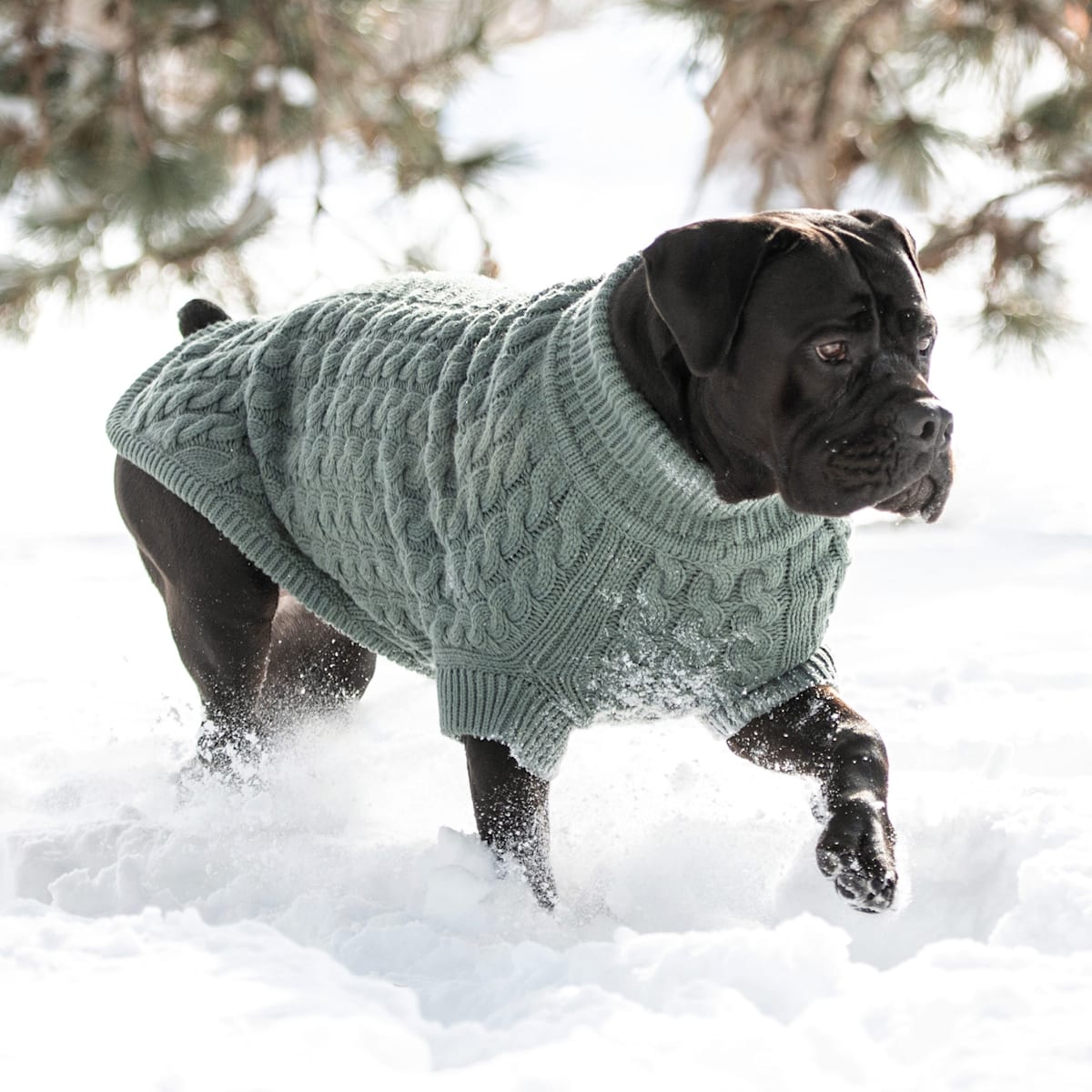
    Climate: Those long Roman Army campaigns with rainy marches and cold nights made the Cane Corso a tough customer. They thrive in almost all climates, and the Cane Corso is a fine companion for any outdoor activity. Always monitor their condition if it’s very hot or cold outside, but you don’t need to worry about them most of the time.

    Living space: These are working dogs with tons of energy and a strong willingness to work. If you don’t own a farm or a large property, be prepared to spend your time endlessly walking and playing with your dog to maintain their health and happiness. They don’t do well when left alone for long periods of time, so keep that in mind when choosing a Cane Corso.

    Cost of Owning

    On average, owning a middle-aged Cane Corso costs around $1500 per year
    $400
    Vet Care
    $300
    Grooming & Boarding
    $500
    Food & Treats
    $300
    Other

    Unlock exclusive rewards with Vital Care, or enjoy up to 35% off essentials when you subscribe with Repeat Delivery.

    Enjoy exclusive rewards every time you shop. Get member-only deals, points, and special offers designed to help you save more on what your pet needs.

    Never run out of the essentials. Subscribe and get your pet’s favorites delivered on schedule—with up to 35% off plus the convenience of automatic refills.

    Your love story starts here.

    Find adoptable pets near you with a simple search.

    Fun Facts

    The Cane Corso nearly went extinct by the 1970s. A concerted breeding effort brought them back from the brink. Today, the breed’s popularity continues to grow in Europe and North America.

    The Cane Corso nearly went extinct by the 1970s. A concerted breeding effort brought them back from the brink. Today, the breed’s popularity continues to grow in Europe and North America.

    The name Cane Corso comes from two Latin words: canus (dog) and cohors (close space). Together, they formed a phrase that took the meaning of bodyguard dog.

    The name Cane Corso comes from two Latin words: canus (dog) and cohors (close space). Together, they formed a phrase that took the meaning of bodyguard dog.

    Many celebrities proudly owned Cane Corsos. Movie star Vin Diesel has owned several, along with many other actors, sports figures, and politicians.

    Many celebrities proudly owned Cane Corsos. Movie star Vin Diesel has owned several, along with many other actors, sports figures, and politicians.

    History

    The Cane Corso comes from a long line of Roman war dogs. They are technically an Italian Molosser, a close cousin of the Neapolitan Mastiff (another large Italian dog). Roman soldiers used the dogs as cattle herders, hunting dogs, carters, and drovers. They also found work as guard dogs and social companions for the troops out in the field.

    The Cane Corso managed to survive many centuries after the fall of the Roman Empire. As rural life evolved and mechanized farming took hold, the Cane Corso transitioned primarily into a hunting and companion animal. The Italian Kennel Club didn’t recognize the breed until 1994. It later earned a place in the French club in 1997 and recently in the AKC in 2010.

    Read More

    Sponsored