Petco Text Logo
Petco Pet Logo
Jump To Section

    About Bulldog

    Owning a Bulldog is an incredibly rewarding experience, as these are true family dogs that are devoted to their owners. Despite their rather formidable expression, the Bulldog is an affectionate breed that loves attention. They are also brilliant with children, of whom they can become quite protective.

    While the Bulldog would quite happily become a couch potato if allowed, it is important that they receive a moderate amount of exercise each day in order to maintain a healthy weight and body conformation. The breed is prone to a number of health issues, and because of this they tend to require a higher than average amount of spending on veterinary care. Prospective owners should make themselves aware of these health conditions in order to not only select a dog from a good breeder who actively tries to breed healthy dogs, but also to ensure that they are prepared for the financial commitment of owning one of these dogs.

    Origin: United Kingdom   Other Names: Bulldog or British Bulldog

    Non-Sporting Group

    Non-sporting dogs are a highly diverse group, ranging widely in size, coat type, personality, and appearance. This category includes everything from compact companions to sturdy, medium-sized breeds, with coats that can be short, curly, or long and flowing. Some breeds are common household favorites, while others are less frequently seen, making the group one of the most varied in the dog world.

    Breed Appearance

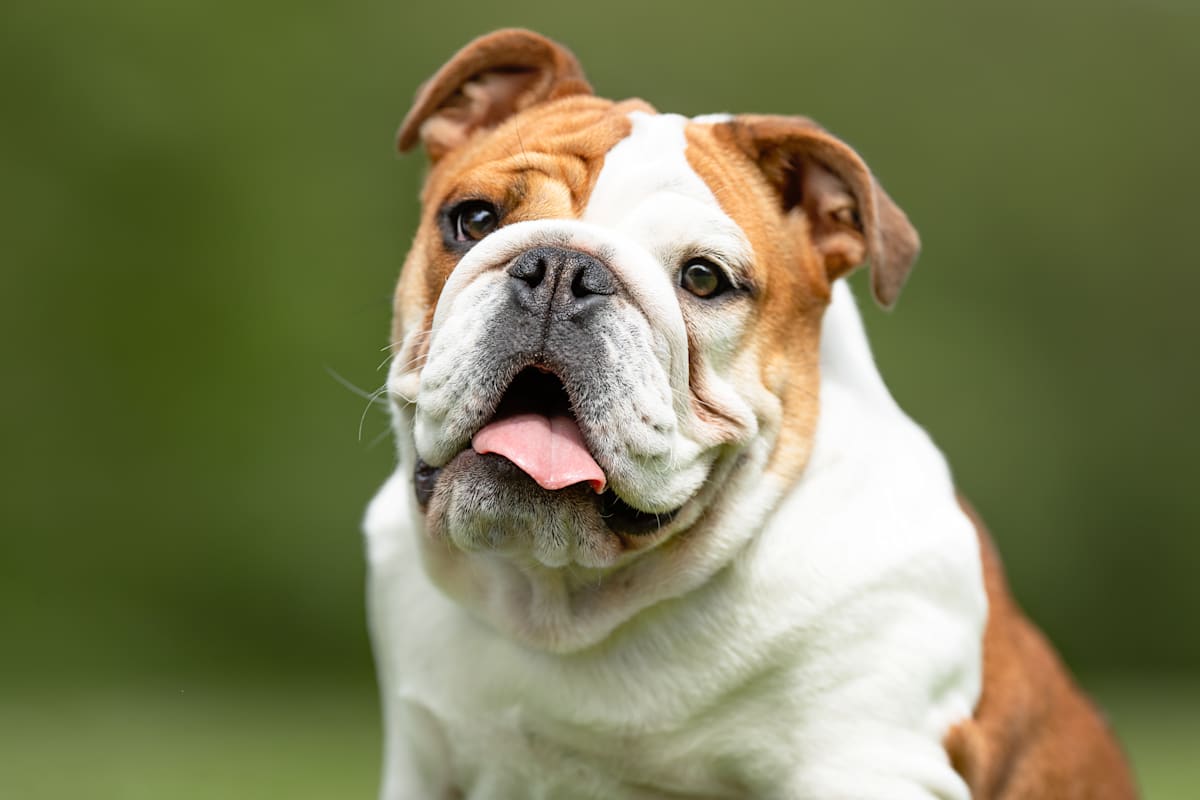
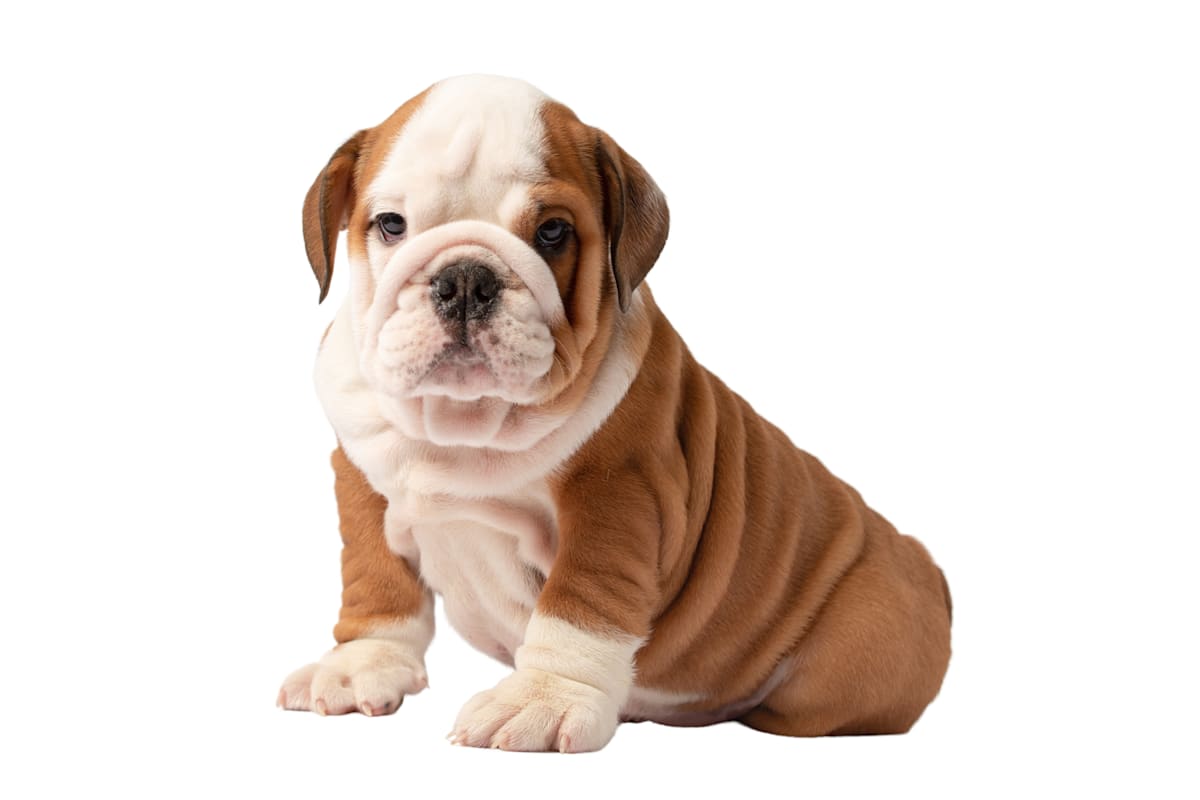
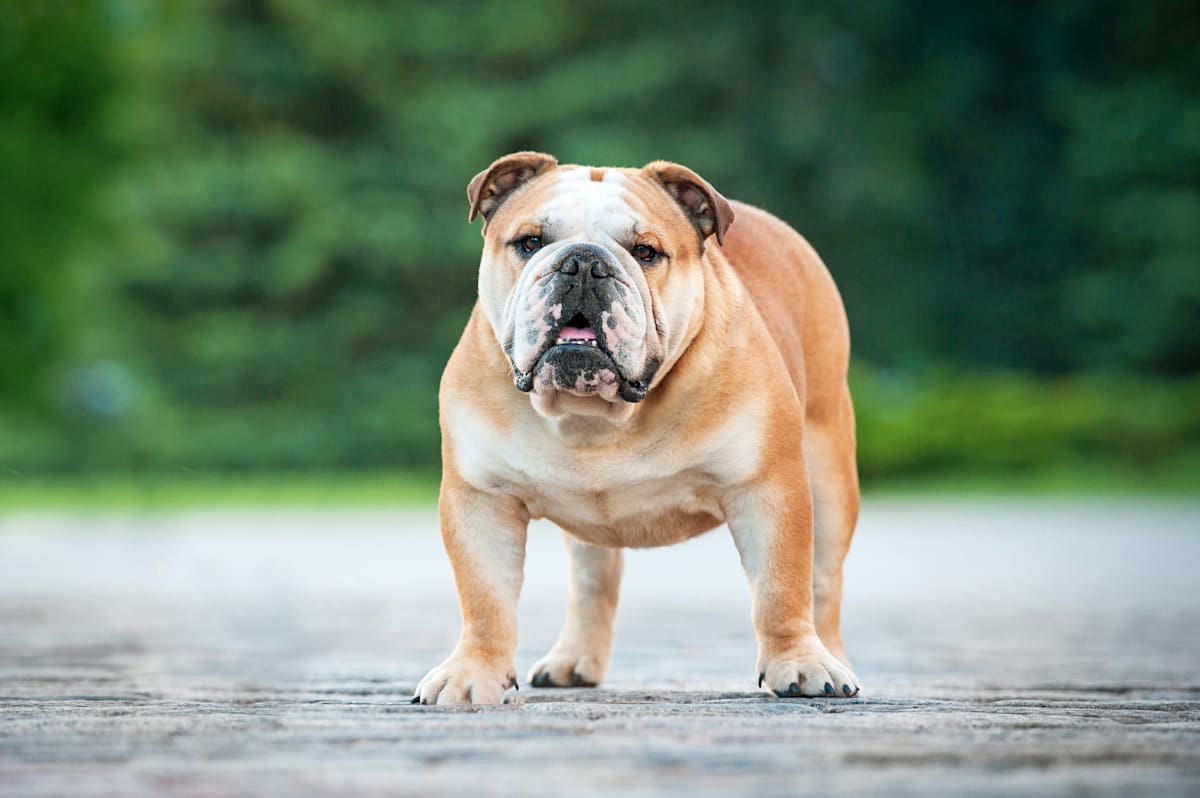
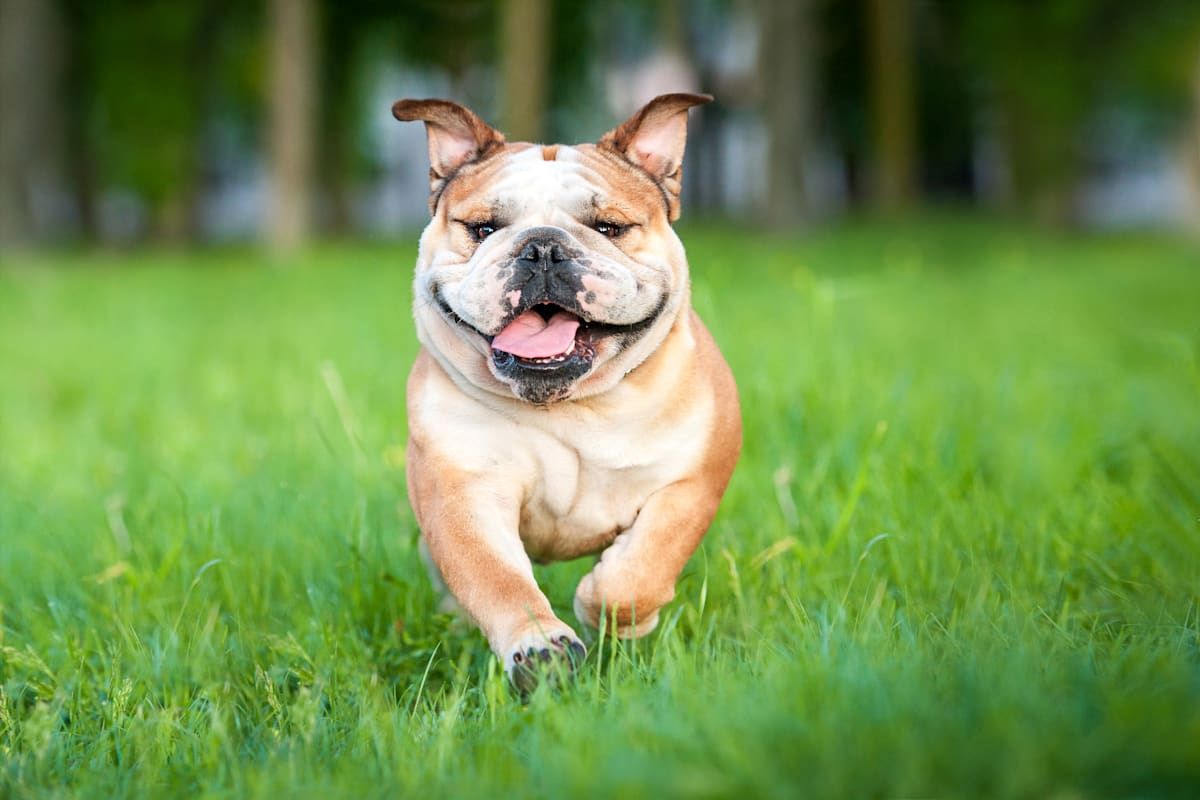
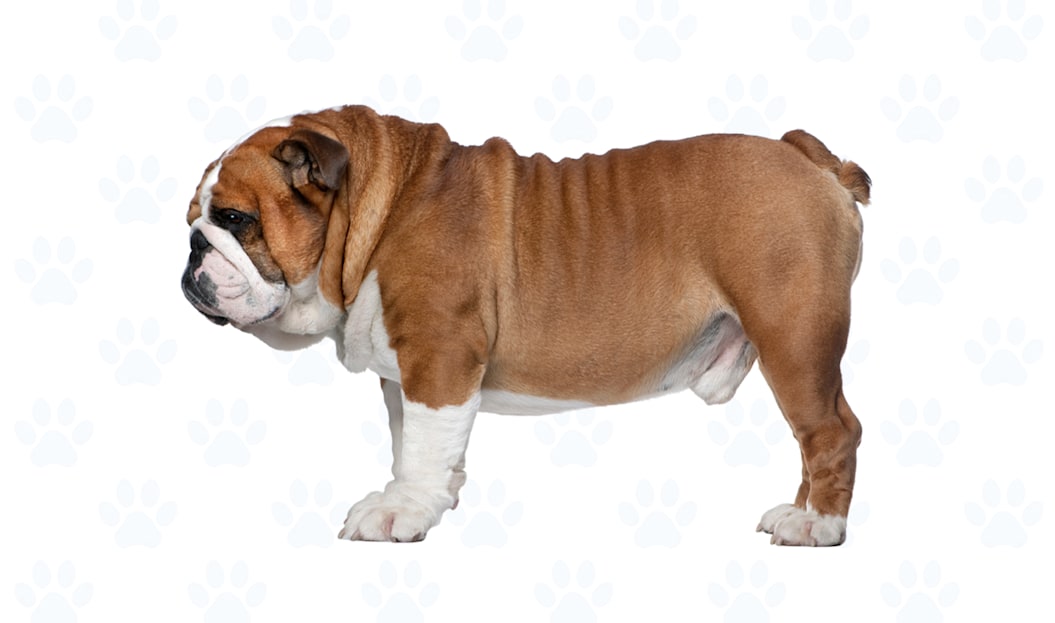
    The Bulldog is a medium sized breed with a broad, powerful body, and a large head. It should be a muscular dog, but never fat. The thick legs are able to support its weight, with the overall appearance being a dog of strength. The tail is naturally short and held low and close to the body.


    Bulldogs have a short coat, which is fine and glossy. The American Kennel Club (AKC) recognizes the Bulldog in several different coat colors, including red, white, fallow, fawn, or any of these colors combined together. They also recognize several patterns such as piebald, brindle, black masks, ticking, and a small portion of solid black in the piebald. While Bulldogs are found in other colors, these colors are not recognized as “standard” by the AKC.

    Size & Weight

    Bulldogs are medium-sized dogs. Males are slightly larger at maturity, reaching approximately 50 pounds, whereas females are typically around 40 pounds. Both sexes can measure between 12 and 16 inches at the shoulder.
    Full Grown
    Female
    12 in. / 40 lbs.
    Male
    16 in. / 50 lbs.
    Height bar
    Female Pet
    Height Figure
    Male Pet
    Height is measured up to the shoulders.

    Bulldog Characteristics

    Size

    Tiny

    Jumbo

    Weight

    Light

    Heavy

    Shedding

    Minimal

    Abundant

    Coat Length

    Short

    Long

    Grooming Frequency

    Occasional

    Frequent

    Living Space

    City apartment

    Ranch

    Exercise

    Couch potato

    Bring it on!

    Climate

    Warm

    Cold

    Personality

    Antisocial

    Outgoing

    Protection

    None

    Bodyguard

    Behavior with Kids

    Always monitor

    Babysitter

    Training

    Headstrong

    Obedient

    Barking

    Mute

    Loud

    How to Care for a Bulldog

    Caring for a Bulldog means balancing their love of relaxation with the daily routines that keep them feeling their best. With mindful exercise, consistent training, proper nutrition, and regular grooming and health care, this devoted companion can thrive as a happy, comfortable member of your family.

    Coat & Grooming:

    Bulldogs have a low maintenance coat that is short and easy to maintain. It is naturally oily, which provides them with an effectively waterproof outer layer. The hair is fine and glossy. A quick brush each day is all that is needed to remove the loose hair. Because Bulldogs typically have a significant underbite, they are especially prone to dental disease, so it’s important to brush their teeth 2 – 3 times per week with a canine toothbrush and toothpaste, available from your veterinarian. Bulldogs typically do not require frequent bathing.

    Make sure you routinely trim or grind your Bulldog’s nails. The end of the nail should reach no further than just past the associated pad. Long nails can make it difficult for them to achieve proper footing, and can also get caught in gaps and be ripped out, which is incredibly painful. If you are not confident at cutting your dog’s yourself, take him to a veterinarian to have it done. If you do try yourself, be careful not to cut the quick. This is the blood supply to the nail and if it is cut, it is very painful and can bleed profusely.

    Shedding: 

    Most Bulldogs shed all year round. Although short, this fine hair can easily stick to clothing and furniture. Brush them daily to remove loose hair with a grooming mitt or soft brush.

    Training: Bulldogs have a reputation for stubbornness, but they are an intelligent breed and can learn basic obedience, if you are willing to employ both patience and repetition, as well as offer frequent rewards. Despite their stubbornness, many Bulldog owners state that this is part of their charm, and only adds to their character!

    Barking: The Bulldog has a deep, husky bark that is an effective deterrent to most intruders. They will issue a warning to perceived intruders and other potential threats. Because Bulldogs are so closely accustomed to their home environment, they can also protest if their world is changed, barking at new furniture or items that have been moved!

    Like many dogs, Bulldogs can become anxious if left alone for long periods of time, and will sometimes resort to barking when this occurs. The Bulldog is particularly sensitive to this, as it loves to spend time with its family, and is a very sociable breed.

    Appropriately socialized Bulldogs rarely growl unless they feel threatened. They sometimes make groaning or purring noise when happy, which can be mistaken for a growl. Because of their anatomy and the associated breathing difficulties, Bulldogs are very loud snorers, so if you’re a light sleeper you might want to consider whether having one of them in your bed is a good idea.

    Personality: The Bulldog is known for its affectionate nature, and prefers the company of its human family to spending hours alone. If properly socialized from a young age Bulldogs get on well with other dogs.

    Temperament & Behavior: Bulldogs are loyal, affectionate dogs that adore their owners. Despite their bulky build, they are often known for being “clown-like,” providing their owners will hours of amusement. They are great with children, and are highly protective of the smaller members of the family. Bulldogs greet their owners with enthusiasm after a long day, wagging their stubby tails and backsides enthusiastically before happily spreading out on the sofa.

    Behavior with Kids: Bulldogs love children! Responsible breeders take pains to make sure the puppies are well socialized and trained to play well with children when they go to their lifelong homes. Although not huge, Bulldogs are powerful animals, and care should be taken when they are around toddlers, as they may inadvertently knock them over.

    Protection: The Bulldog’s loyalty is one of its defining characteristics. They can beinitially wary of strangers but soon warm up. Perceived intruders will be greeted with a deep bark, and a typical Bulldog will become protective if it feels its owner (especially children) is threatened.

    Life span: On average, Bulldogs live to be about 8-10 years old.

    Inherited Health Issues: There have been many conditions identified in Bulldogs that are either inherited or occur at increased frequency in the breed. Many of the latter are secondary to the Bulldog’s unusual conformation; namely the large head and short snout. They include but are not limited to: aortic and pulmonic stenosis, Tetralogy of Fallot, ventricular septal defect (VSD), Brachycephalic airway syndrome, hip dysplasia, cranial cruciate ligament rupture, cancer, congenital deafness, entropion, Keratoconjunctivitis Sicca (KCS aka dry eye), cherry eye, urinary stones and dystocia.

    Preventive Care: Many of the Bulldog’s common health problems involve the conformation of the head and nose. Brachycephalic upper airway syndrome, as it is commonly referred to, occurs in other breeds, but seems to be most profound in its expression in Bulldogs. The complications associated with the disease can become life threatening, especially when the dog becomes overheated, and this can happen in relatively mild temperatures. There are a number of surgical procedures that are designed to improve airway function in these dogs, and for severely affected patients owners are encouraged to consider these procedures to improve quality of life and lessen risk of respiratory failure.

    Because Bulldogs can suffer from various joint issues, fish oil supplements may be useful in reducing the inflammation associated with the signs of arthritis. It is also useful to consider using a veterinary anti-fungal wipe product to routinely clean the inner aspects of the folds of skin on the face and near the tail to improve comfort and reduce the possibility of yeast infections.

    Bulldogs have a propensity to become overweight, so pet parents should feed carefully and manage weight scrupulously. Frequent weigh-ins are important to gauging the amount of food that should be fed. Consider a food designed for healthy weight maintenance for this breed.


    Daily Consumption: Average daily consumption for an adult Bulldog is 1.5 to 2 cups

    Energy Level: Enjoys some moderate exercise every now and then

    Habits and Exercise: Your Bulldog may protest that they are far happier on the sofa than going outside, but he does still need regular walks. Bulldogs do best in a house that has access to a small yard at least. Because they can suffer from a number of orthopedic issues, they can struggle with stairs, so multi-story houses and apartment complexes with stairs are not optimal. When it’s raining, or especially hot, your Bulldog with love spending time with you in the house.

    Bulldogs love toys, although they have such powerful jaws that care needs to be taken when choosing the appropriate ones. Use highly durable hard toys that will not break. If they do break, then your Bulldog can easily swallow the pieces, and that could cause a life-threatening intestinal obstruction. As an alternative, provide a durable soft toy that is difficult for them to destroy. Toys with squeakers should be avoided, as dogs will often remove and swallow this piece.

    Provide a comfortable sleeping area for your Bulldog as they can struggle sleeping on hard flooring. The pressure from the hard surface can create callouses and fluid buildup around the elbows.

    Climate: Although Bulldogs are kept in a variety of climates, you should give careful consideration to yours when deciding whether to purchase a Bulldog. Bulldogs are known as a “brachycephalic” breed, which means they have a relatively short snout. This renders them unable to effectively cool themselves, and they can easily overheat on warm days, especially when exercising.

    Cost of Owning

    On average, owning a middle-aged Bulldog costs around $1350 per year
    $400
    Vet Care
    $300
    Grooming & Boarding
    $400
    Food & Treats
    $250
    Other

    Unlock exclusive rewards with Vital Care, or enjoy up to 35% off essentials when you subscribe with Repeat Delivery.

    Enjoy exclusive rewards every time you shop. Get member-only deals, points, and special offers designed to help you save more on what your pet needs.

    Never run out of the essentials. Subscribe and get your pet’s favorites delivered on schedule—with up to 35% off plus the convenience of automatic refills.

    Cross Breeds

    Select a Breed to Cross

    Choose a breed from the dropdown to see potential crosses.

    Boxer
    Dropdown Icon

    Fun Facts

    President Warren G. Harding had a pet Bulldog called “Oh Boy.”

    President Warren G. Harding had a pet Bulldog called “Oh Boy.”

    Over 80% of Bulldogs are born by Caesarean section. Due to their wide shoulders and large heads, it is almost always impossible for them to be delivered naturally.

    Over 80% of Bulldogs are born by Caesarean section. Due to their wide shoulders and large heads, it is almost always impossible for them to be delivered naturally.

    Bulldogs are popular pets with celebrities. Zac Efron, David Beckham, Reese Witherspoon, and Leonardo DiCaprio have all owned one at some point.

    Bulldogs are popular pets with celebrities. Zac Efron, David Beckham, Reese Witherspoon, and Leonardo DiCaprio have all owned one at some point.

    History

    The origin of the Bulldog is rather mysterious, with many disagreeing on the breed’s beginnings. Some claim the breed was created by crossing the pug and the mastiff, while others claim it was bred from the Alaunt, an old type of mastiff seen in the 17th century. We do know that the breed originated in the British Isles.

    Bulldogs were used in the cruel sport of “bull baiting.” Bull baiting involved encouraging dogs to attack a bull that was tethered on a very short line, or placed into a pit. The dogs were set on the bull one by one until the bull was rendered immobile. The Bulldog was trained to grab and hold the bull’s nose. Bulldogs were bred specifically for this purpose in 16th century England, when the sport was practiced.

    Later, the Bulldog was used for dog fighting. After 1835, selective breeding took place to change the Bulldog into the flat-faced, compact dog seen today. They were first shown in 1860. The breed was recognized by the AKC in 1886 and today they are the fourth most popular breed in the US.

    Read More

    Sponsored