Petco Text Logo
Petco Pet Logo
Jump To Section

    About Bull Terrier

    Bull Terriers are lively and fun-loving dogs with a long history in the United States. They have abundant energy and love to be around their family. Bull Terriers can be independent and stubborn, so they aren’t recommended for timid or first time dog owners. They don’t do well in cramped quarters, and Bull Terriers need a lot of exercise to stay healthy and happy.

    Origin: United Kingdom   Other Names: English Bull Terrier, Bully, White Cavalier, Gentleman's Companion

    Terrier Group

    Terriers are spirited, energetic dogs ranging from small companions to larger working breeds. Known for their bold, determined personalities, many have strong prey drives and may be less tolerant of other animals. Their coats are often wiry and may require hand-stripping to maintain appearance. While lively and engaging pets, terriers typically do best with confident owners who can match their strong will and active nature.

    Breed Appearance

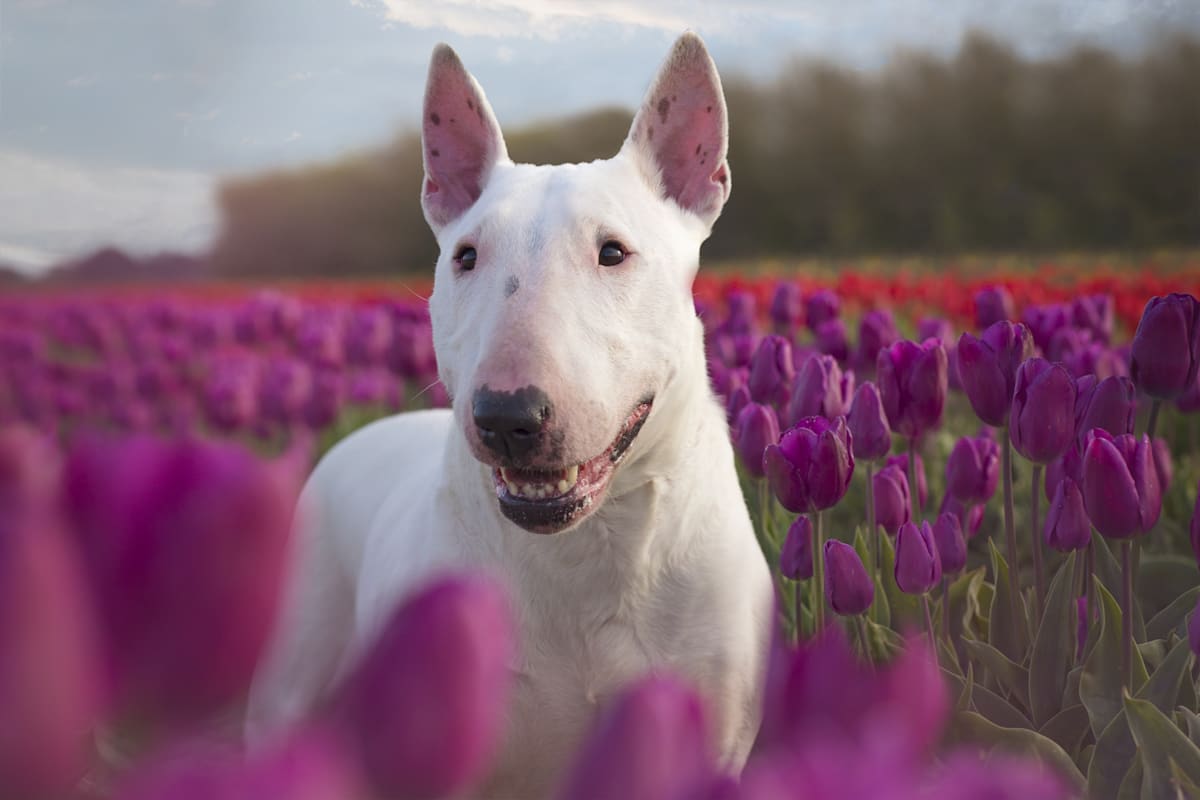
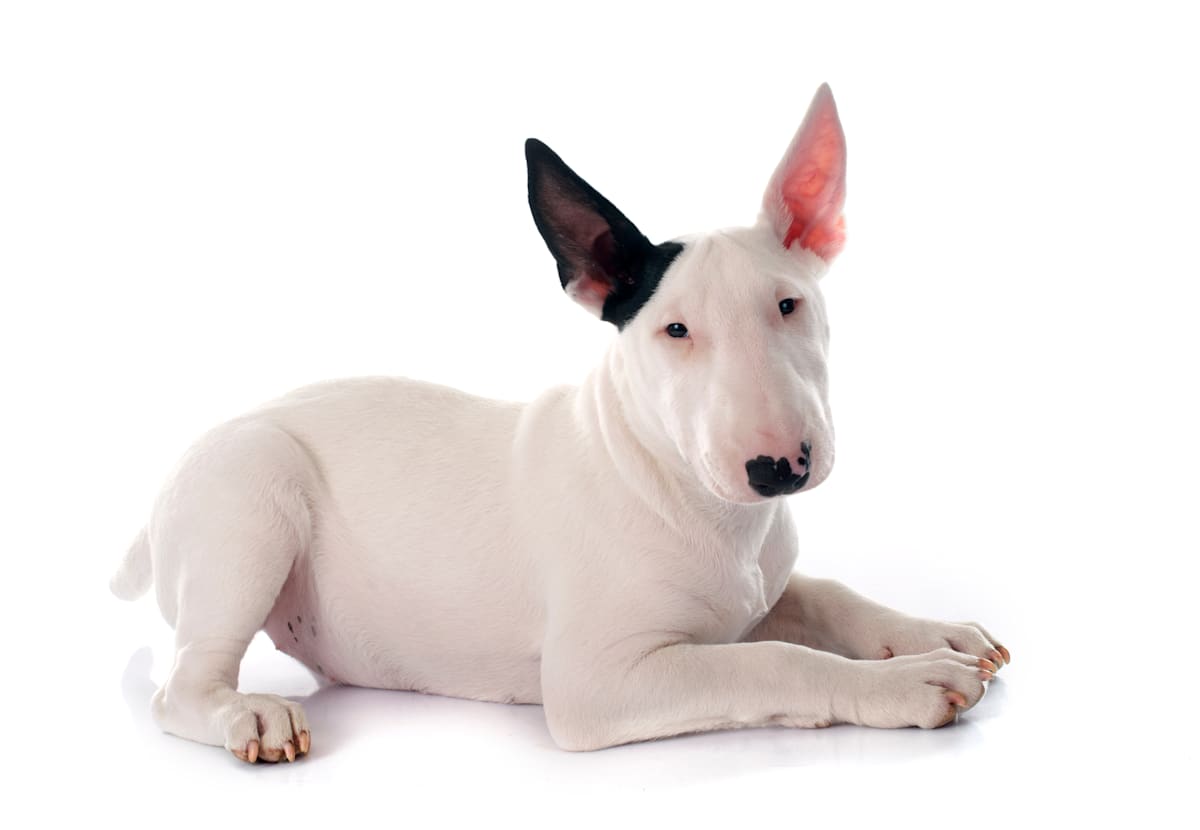
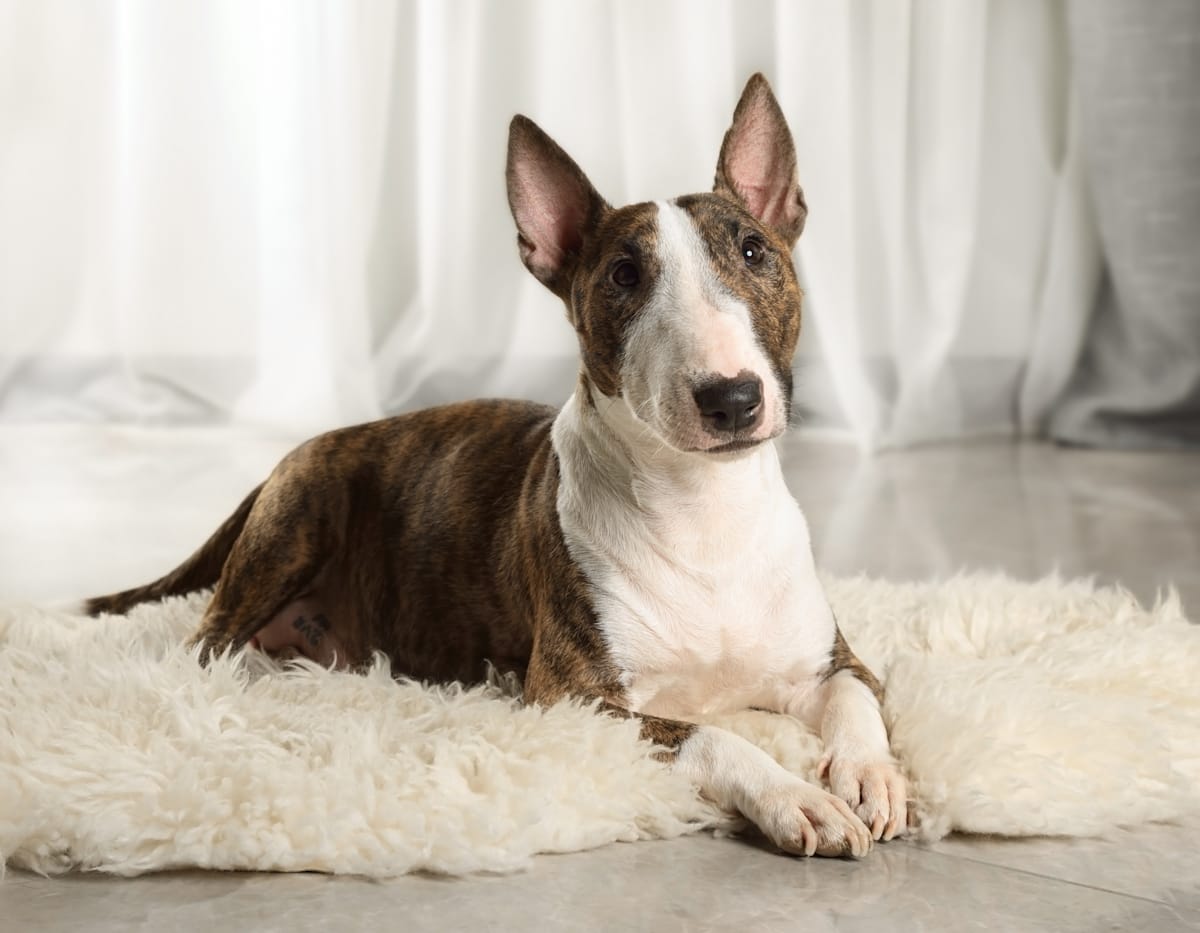
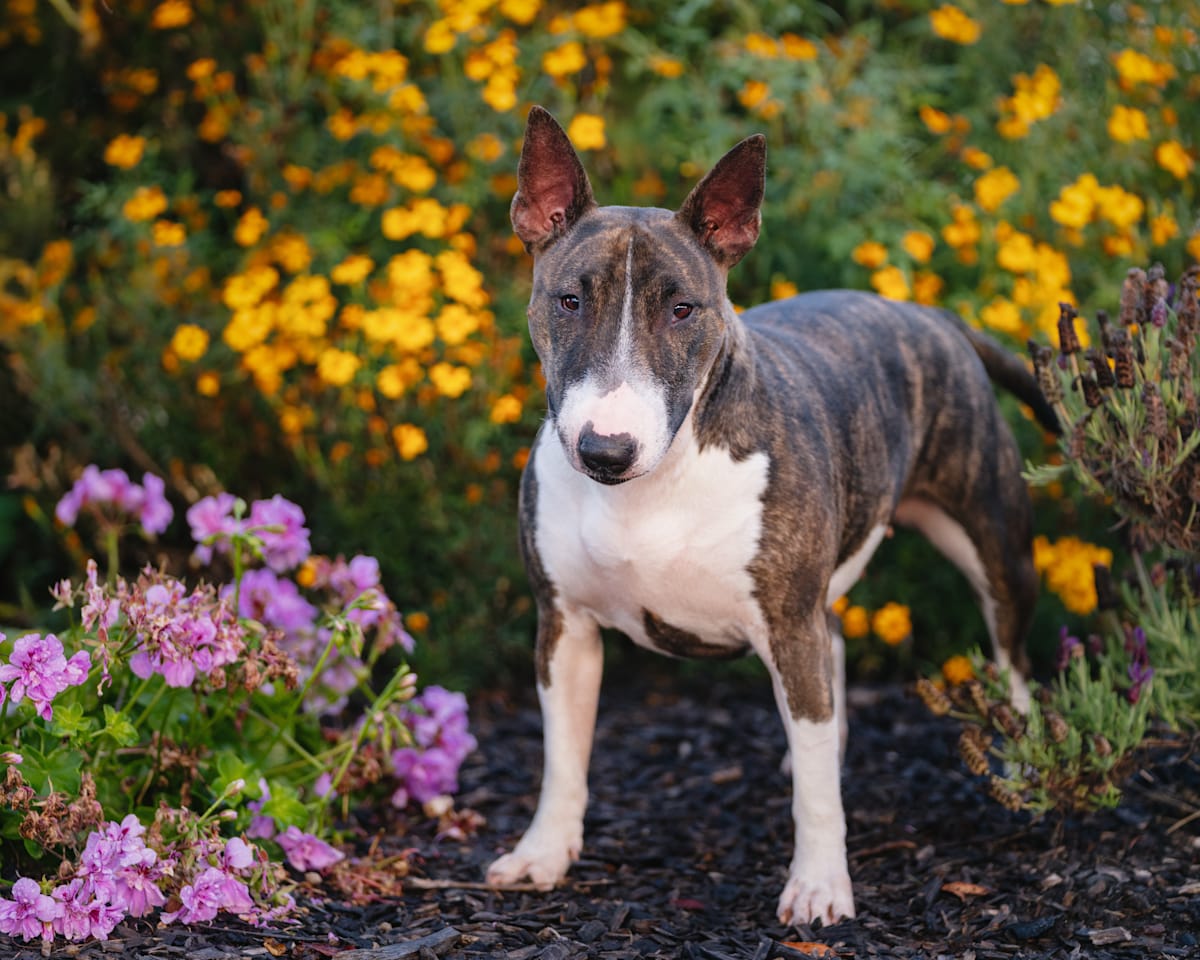
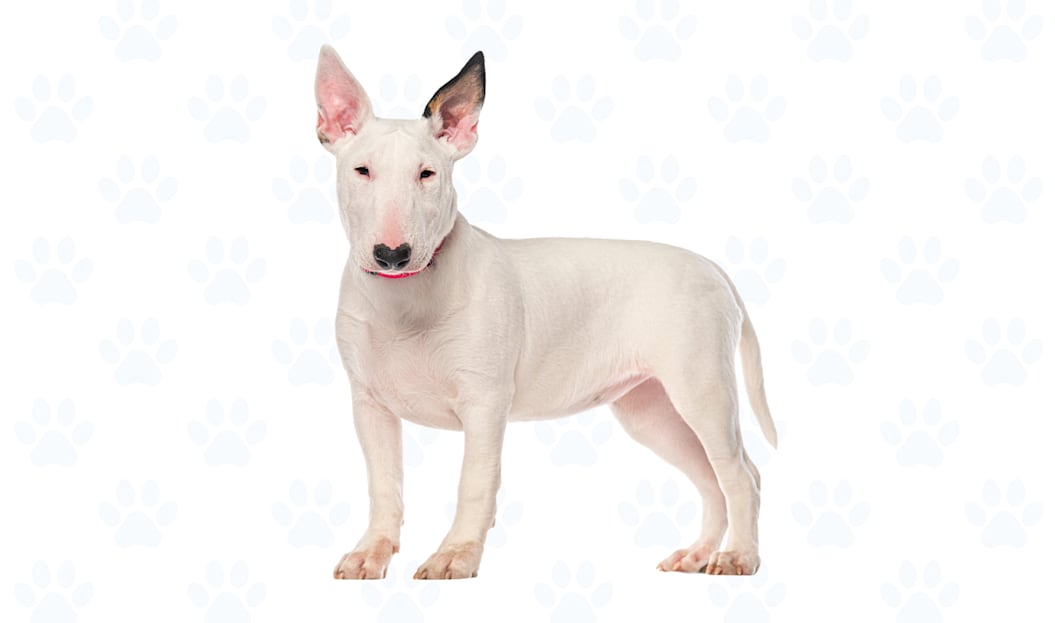
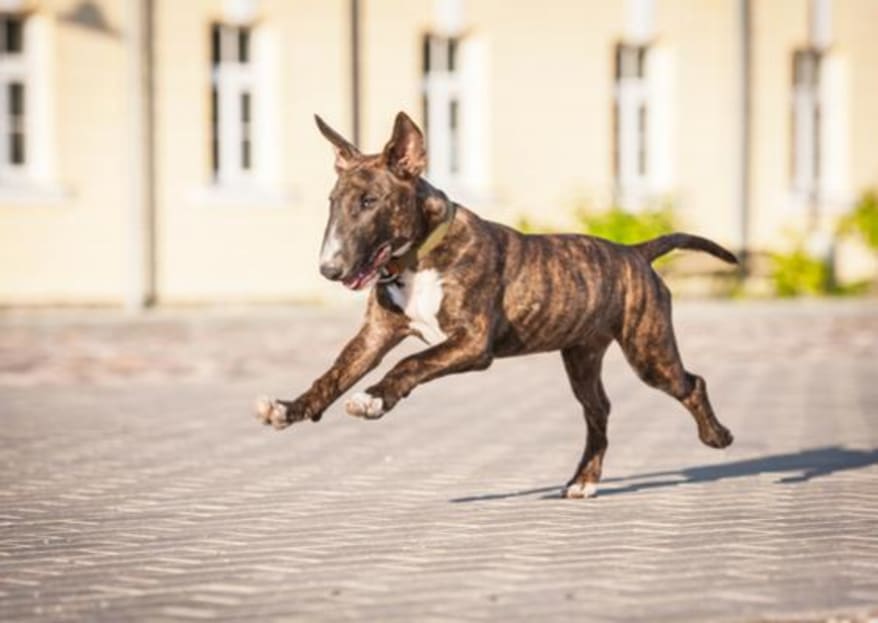
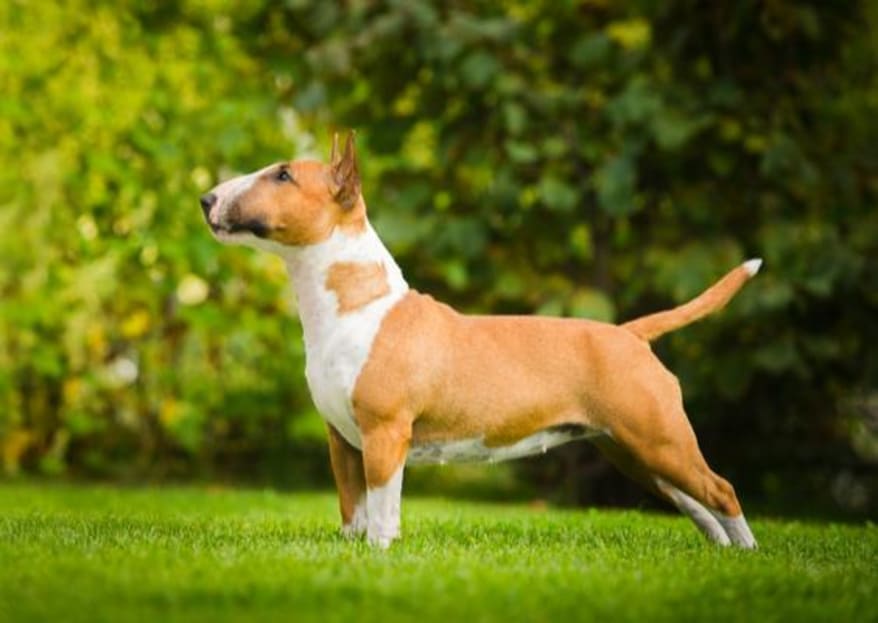
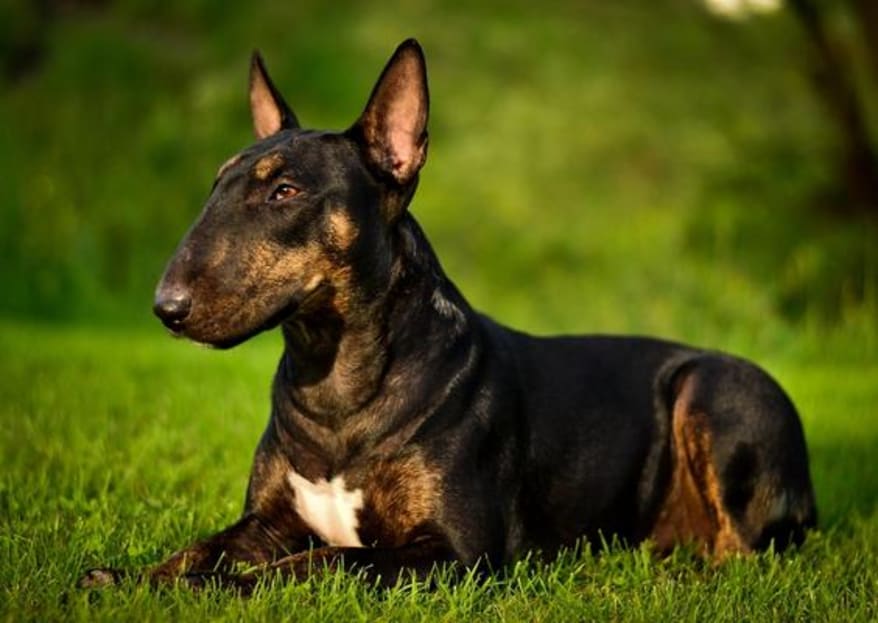
    The American Kennel Club (AKC) recognizes 13 coat colors in Bull Terriers: black & tan, black brindle, black brindle & white, black tan & white, brindle, brindle & white, red, red & white, white, white & black brindle, white & brindle, white & red, and white black & tan. Many members of the breed have markings on their head, and the AKC allows some markings on competition dogs.

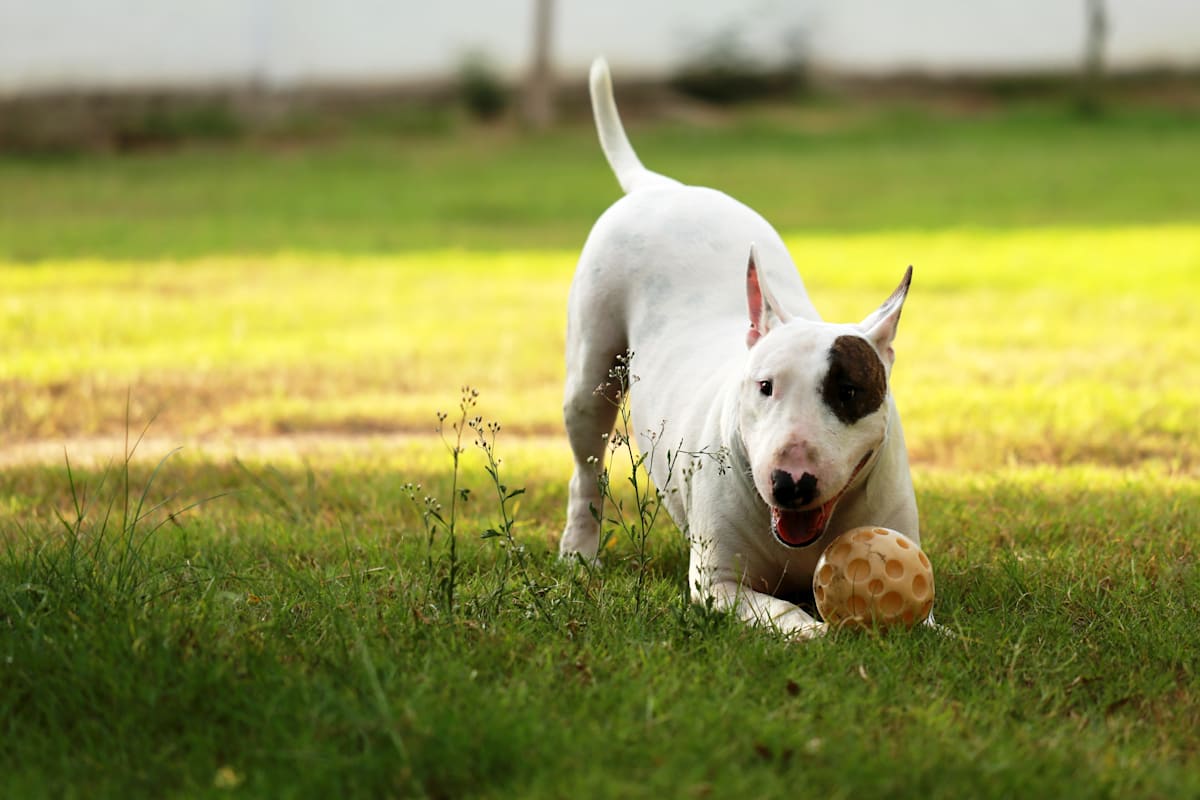
    The Bull Terrier coat is short, hard, and glossy. They are stocky and muscular with big egg-shaped heads. Bull Terriers are the only dog breed with triangular-shaped eyes. Their body is round and solid. They carry their tail horizontally, and they usually have a big, goofy smile!

    Size & Weight

    Bull Terriers are medium-sized dogs. A smaller variation of the breed exists, and it’s often referred to as Miniature Bull Terrier. They often weigh 40-70 pounds, and Bull Terriers are usually between 18 and 22 inches tall at their shoulders.
    Full Grown
    Female
    18 in. / 40 lbs.
    Male
    22 in. / 70 lbs.
    Height bar
    Female Pet
    Height Figure
    Male Pet
    Height is measured up to the shoulders.

    Bull Terrier Characteristics

    Size

    Tiny

    Jumbo

    Weight

    Light

    Heavy

    Shedding

    Minimal

    Abundant

    Coat Length

    Short

    Long

    Grooming Frequency

    Occasional

    Frequent

    Living Space

    City apartment

    Ranch

    Exercise

    Couch potato

    Bring it on!

    Climate

    Warm

    Cold

    Personality

    Antisocial

    Outgoing

    Protection

    None

    Bodyguard

    Behavior with Kids

    Always monitor

    Babysitter

    Training

    Headstrong

    Obedient

    Barking

    Mute

    Loud

    How to Care for a Bull Terrier

    Caring for a Bull Terrier means supporting their active lifestyle with consistent training, balanced nutrition and regular exercise, while keeping grooming simple with routine upkeep. With the right structure, enrichment and preventive care, these spirited companions can stay healthy, confident and happy at every life stage.

    Coat & Grooming:

    The short, hard coat of the Bull Terrier is a piece of cake to maintain. A wipe-down with a damp cloth and the odd brushing is enough grooming to keep your Bully looking great. Be sure you stay on top of brushing their teeth and cleaning out their ears.

    Shedding: 

    Bull Terriers are one of the easiest breeds to maintain and groom. At most, weekly brushing with a grooming glove or a dog brush is plenty to keep them looking good. They don’t need frequent bathing – a damp cloth or dry shampoo is sufficient on a monthly schedule. Bull Terrier shed twice a year, and it’s worth doing daily brushing during this time to keep the dog hair under control.

    Training

    Since they are strong-willed and often stubborn in the face of timid people, Bull Terriers can be difficult to train without the right approach. Early socialization and exposure to different people and places are crucial steps to develop the right habits in a Bull Terrier. Without proper training, they can develop independence and disrespect for authority.

    Barking: 

    If you hear a Bull Terrier bark, you ought to pay attention. They rarely use it, and it’s often to announce something (or someone) that seems out of place to them. These dogs are courageous and vivacious, but they can also develop a stubborn streak without proper training and socialization. If you are a novice dog owner or a timid person in general, a Bull Terrier might not be the best choice for you.

    Personality: 

    Bull Terriers are very social and love to spend time around their human family. People often refer to this breed as “a kid in a dog suit” because they are so goofy and playful. Bull Terriers are loving and devoted companions. Without proper early socialization, they can develop aggressiveness towards other dogs, but this can be avoided with the right training regime.

    Temperament & Behavior: 

    Bull Terriers are social butterflies and happy to share their enthusiasm for life with their family and friends. Shyness and timidity are very rare. This breed needs a lot of stimulation and loves to play games. Early socialization and exposure to different people/environments are crucial to develop a confident and well-mannered companion. Obedience classes are a must to help them learn proper habits and respect for authority. If you are a timid person, your Bully may decide they are in charge. Generally, they are sweet and gentle with everyone they meet, although they can be suspicious and standoffish with other dogs and smaller pets. Generally, they don’t like cats.

    Behavior with Kids: 

    Bull Terriers are a great choice for families, but they are a bit rough at play for very small children. They are protective of their family, so they may decide to intervene if the play gets too rough with children outside of their family. Always keep a close eye on your dog with any unfamiliar kids or people who aren’t used to handling dogs.

    Protection: 

    Bull Terriers are very protective of their family, and they are always ready to jump into the fray. Sometimes, they overreact around rough-housing children, so it’s important to supervise your companion at all times. A timid and shy Bull Terrier is very rare, and it’s up to you to develop proper habits to help you control your pet.

    Life span: 

    On average, Bull Terriers live to be 11-13 years old.

    Inherited Health Issues: 

    Many conditions have been identified in Bull Terriers that either occur at increased frequency or are inherited. These conditions include, but are not limited to: aortic stenosis, mitral valve dysplasia, atopic dermatitis, solar dermatitis, Zinc responsive dermatosis, Osteochondritis dissecans, compulsive tail chasing behavior, congenital deafness, mast cell tumor, cutaneous histiocytoma, congenital cataracts and polycystic kidney disease.

    Preventive Care: 

    One of the most important aspects of keeping your Bull Terrier as healthy as possible is assuring that your dog stays at a healthy body weight by closely controlling food portions and making certain that these energetic dogs receive plenty of exercise. Regular veterinary care is necessary even when your Bull Terrier appears to be healthy. Your veterinarian will be able to closely evaluate your dog for even the subtlest changes. It is always better to identify a little problem before it becomes a big and more significant problem. Close home monitoring, particularly for changes in skin conditions or lumps and bumps are beneficial.

    Bull Terriers are active dogs and require a balanced diet to provide them with plenty of energy. Portion controlled feeding is crucial to maintaining a healthy body weight. In dogs with food allergies triggering atopic dermatitis, prescription hydrolyzed protein diets or novel protein diets may be necessary.


    Daily Consumption

    Average daily consumption for an adult Bull Terrier is 1.5 - 2.5 cups

    Energy Level

    Frisky, energetic breed that is always ready for action

    Habits and Exercise:

    Bull Terriers love to play and run around with their family. They have a big gas tank, so it’s up to you to provide sufficient exercise to maintain a sound body and mind. If you can’t commit to 30-60 minutes of vigorous exercise every day, it’s a good idea to hire a dog-walker to help you with your dog’s exercise needs.

    Climate

    Bull Terriers can survive happily in almost all warm climates, but their fur doesn’t offer much protection from cold, damp conditions. Invest in a warm coat if you live in a cool climate with damp weather conditions. Always monitor your companion for signs of distress in extreme weather conditions including very hot or cold days.

    Cost of Owning

    On average, owning a middle-aged Bull Terrier costs around $1000 per year
    $300
    Vet Care
    $200
    Grooming & Boarding
    $350
    Food & Treats
    $150
    Other

    Unlock exclusive rewards with Vital Care, or enjoy up to 35% off essentials when you subscribe with Repeat Delivery.

    Enjoy exclusive rewards every time you shop. Get member-only deals, points, and special offers designed to help you save more on what your pet needs.

    Never run out of the essentials. Subscribe and get your pet’s favorites delivered on schedule—with up to 35% off plus the convenience of automatic refills.

    Fun Facts

    General George Patton owned a beloved Bull Terrier named Willie. Willie shared in the glory of Patton’s campaign to liberate France during WWII, and the dog even had his own set of regulation US Army dog tags.

    General George Patton owned a beloved Bull Terrier named Willie. Willie shared in the glory of Patton’s campaign to liberate France during WWII, and the dog even had his own set of regulation US Army dog tags.

    In the late 1980s, beer giant Budweiser used a Bull Terrier in a popular series of television commercials. Spuds MacKenzie, the female dog actor portrayed in the campaign, deserves some credit for the popular resurgence of the breed.

    In the late 1980s, beer giant Budweiser used a Bull Terrier in a popular series of television commercials. Spuds MacKenzie, the female dog actor portrayed in the campaign, deserves some credit for the popular resurgence of the breed.

    Rocky Top’s Sundance Kid won Best in Show at the 2006 Westminster Dog Show, the first Colored Bull Terrier to win the coveted championship.

    Rocky Top’s Sundance Kid won Best in Show at the 2006 Westminster Dog Show, the first Colored Bull Terrier to win the coveted championship.

    Famed hockey coach and Canadian hockey commentator Don Cherry received a Bull Terrier as a gift from the 1970s-era Boston Bruins. The dog named Blue became a celebrity in his own right, and the popular TV show Hockey Night in Canada featured footage of Blue in the opening credits for the popular Saturday night national hockey broadcasts.

    Famed hockey coach and Canadian hockey commentator Don Cherry received a Bull Terrier as a gift from the 1970s-era Boston Bruins. The dog named Blue became a celebrity in his own right, and the popular TV show Hockey Night in Canada featured footage of Blue in the opening credits for the popular Saturday night national hockey broadcasts.

    History

    The Bull Terrier is a product of the “bull-and-terrier” breeding programs in the early 1800s in the UK. Breeder saw a strong demand for vermin-control animals as well as the “blood sport”arenas of the day. The Old English Bulldog and the Old English Terrier mixed to form the first Bull Terriers. In the mid-1800s, a breeder named James Hinks started breeding Bull Terriers with English White Terriers to improve the look of the breed. The dog was an instant hit, and breeders continued to mix other dogs into the Bull Terrier line such as Dalmatians, Spanish Pointers, Borzois, and Rough Collies. The first modern Bull Terrier was “Lord Gladiator” from the early 1900s. Breeders continued to select animals for their chivalry, gentleness, and social graces. The first AKC recognition came in 1885.
    Read More

    Sponsored