Toy Group
The diminutive size and winsome expressions of Toy dogs illustrate the main function of this Group: to embody sheer delight.
Smart and sensitive, loyal and funny, the Brussels Griffon takes himself very seriously — when he isn’t busy entertaining, that is — and expects his owners to as well.
Origin: Belgium Other Names: Griffons, Griffon Bruxellois
The diminutive size and winsome expressions of Toy dogs illustrate the main function of this Group: to embody sheer delight.
Don't let their tiny stature fool you, since many Toys are tough as nails! If you haven't yet experienced the barking of an angry Chihuahua, for example, well, just wait. Toy dogs will always be popular with city dwellers and people without much living space. They make ideal apartment dogs and terrific lap warmers on nippy nights.
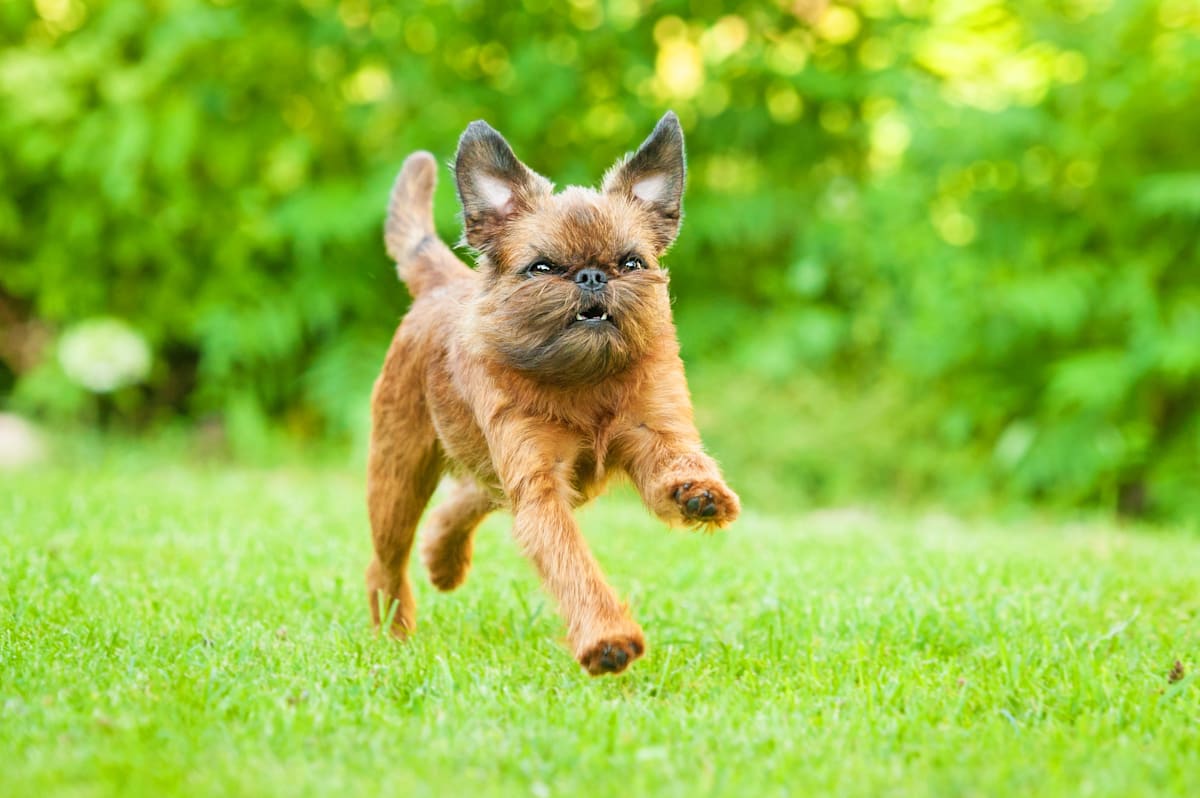
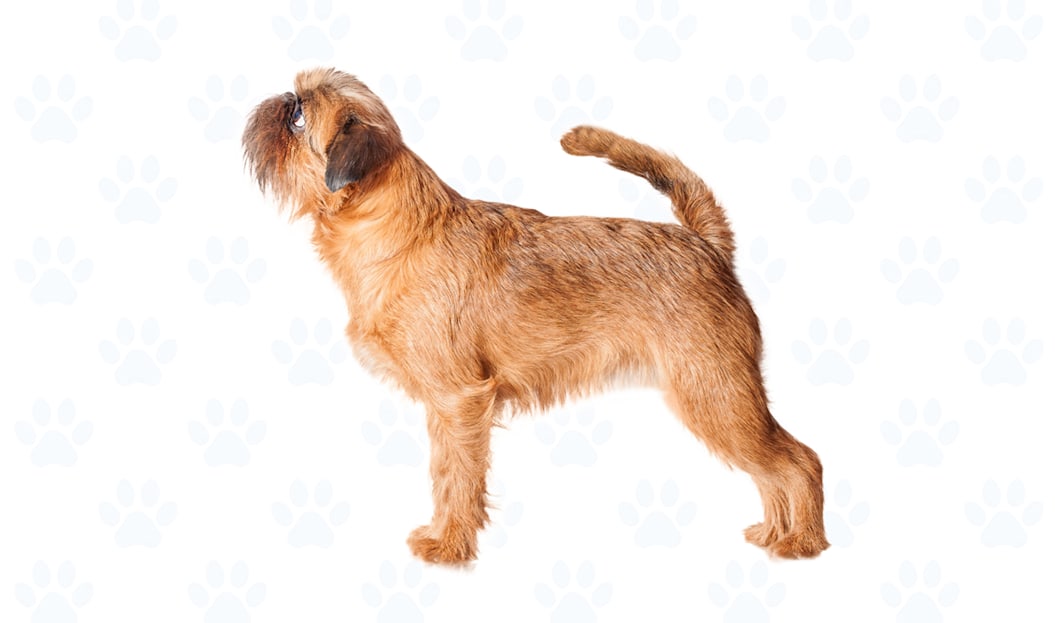
The big-eyed, thick-bodied Brussels Griffon comes in four common colors, including red, black, belge (red and black banded on the same hair shaft), and black and tan, says Kathy Robbins of National Brussels Griffon Rescue, Inc., a former breeder and show person. Their fur can be either smooth or rough in texture, and most red-coated smooth Brussels Griffons have a characteristic black mask, Robbins says.
This breed can be found in a variety of colors. You can check them out below.
The Brussels Griffon is a small breed, generally weighing between 8 and 10 pounds, although that weight can fluctuate up to 15 or 20 pounds. They reach 7 to 10 inches at the shoulder when fully grown.
| Full Grown | |
|---|---|
| Female | 7 in. / 8 lbs. |
| Male | 10 in. / 10 lbs. |
Height is measured up to the shoulders.
The Brussels Griffon is a small breed, generally reaching 7 to 10 inches at the shoulder when fully grown.
An adult Brussels Griffon typically weighs between 8 and 10 pounds, although that weight can fluctuate up to 15 or 20 pounds.
Although they’re full of spunk, the highly-entertaining Brussels Griffon comes in a tiny package and doesn’t need a large living space. That said, if you have an outdoor area, it needs to be fenced in, as the Brussels Griffon is known for being a bit of an escape artist.
Don’t let their small size fool you, the Brussels Griffon is a high-energy breed that requires at least 30 minutes of moderate movement every day to stay healthy and happy.
Loving, energetic and intelligent, the Brussels Griffon is also known for their fondness for being naughty and stubborn at times. They prefer hanging out with their people to being alone, and they require plenty of activity, preferably interactive play with their people every day.
While their diminutive size isn’t going to scare anyone away, the breed is cautious of strangers and can be quite noisy. They are great at letting you know when someone new is around.

Although they possess many character traits that would make them a good mate for kids, the Brussels Griffon actually prefers to be the center of attention. As a result, they aren’t a big fan of being rough-housed with, so a household with young kids wouldn’t make the best match.
A highly-intelligent breed that loves to spend time with its people, Brussels Griffons also have a fondness for being bossy and naughty, which can make training tricky.
The Brussels Griffon comes in either a smooth or rough coat. Smooth-coated Griffons require weekly brushing to keep their coat in top shape. The rough-coated Griffon sheds very little, but still requires some grooming attention.
The Brussels Griffon’s short snout makes them sensitive to high temperatures and heatstroke.
This breed has been known to be quite vocal, especially when not properly trained.

There’s a lot to learn about a Brussels Griffon before taking one home. This funny and quirky dog makes a great companion for people who have the patience to train them and the time to spend exercising and loving them. Because of their neediness, they don’t make the best fit for families with young kids, although they can get along fine with other animals as long as they have been properly socialized. “Griffons are true Velcro dogs,” says Robbins. “You may never be in the bathroom alone again.”

The Brussels Griffon can be barky at times, especially when they feel they aren’t receiving the attention they deserve or when they’re around new people.
While this breed is highly intelligent and loves to spend time with its people, it can also be stubborn, bossy and sensitive. As such, it’s important to be patient and understanding when undertaking training. As with most breeds, the earlier you can start, the better.
This small breed is high on energy, and they require at least 30 minutes of activity every day to stay happy and healthy. In addition, the Brussels Griffon can easily find a way to dig under or jump over most outdoor fences, so always be sure to supervise your dog when you’re outdoors.
Proper exercise will also keep your Brussels Griffon from getting into trouble. This breed has been known to knock over trash cans, bark excessively or cause other disturbances when they aren’t happy. “Brussels Griffons do very well in agility,” says Robbins. “Obedience, however, is more of a challenge.”
Frisky, energetic breed that is always ready for action
With proper diet and exercise, it is generally not too difficult to keep a Brussels Griffon in good body condition. Avoid offering table scraps or excessive quantities of treats, as these goodies can quickly pack on the pounds. Instead, feed portion-controlled meals of a high quality, balanced diet to keep your Brussels Griffon in peak condition.
A Brussels Griffon will eat 1/4 to 1/2 cup of dry food per day.
The Brussels Griffon is generally a healthy breed, yet as with all dogs, certain health conditions can arise. A Chiari-like malformation occurs when portions of brain material extend towards the spinal cord due to a relatively small skull opening. Clinical signs can lead to obsessive scratching of the shoulders, neck pain or paresis of all four limbs. This condition can be diagnosed with magnetic resonance imaging (MRI). As with all dogs, it is important to maintain routine exams with a veterinarian so that any new or subtle changes can be detected before they become more significant.
Several conditions have been identified as occurring at an increased frequency in Brussels Griffons. Responsible breeders perform a variety of screening tests prior to breeding in an attempt to decrease the incidence of many medical conditions within the breed. These conditions may include, but are not limited to, the following: Chiari-like malformation with syringomyelia, Cataracts, Persistent hyaloid artery and Vitreous degeneration.
On average, the Brussels Griffon lives to be between 12 and 15 years
The Brussels Griffon comes in two varieties, smooth or rough coated. The smooth-coated version requires weekly brushing, and daily brushing can help keep shedding at bay during the spring and fall shedding seasons. Rough-coated versions of the breed shed less than smooth-coated ones, but their rough coat still requires stripping several times a year.
Short
Occasional
While smooth-coated Brussels Griffons shed a minimal to average amount, rough-coated Griffons shed a bit less, says Robbins. “Rough coats, like a terrier, need to be stripped several times a year to maintain color and texture,” she adds. “Otherwise, they can be clipped, but the coat becomes softer and lighter in color.”
It’s no surprise that the Brussels Griffon has so many distinctive personality traits, considering how many types of dog are blended into the breed. The Brussels Griffon was created in Belgium in the 1800s as a blend of Affenpinscher, Pug and English Toy Spaniel. The original Griffons were popular with farmers and peasants because of their ability to catch rats, and they were so common in daily life that their ancestors were portrayed in art as early as the 16th century.
The breed has come a long way from its rat-catching days. In the 1870s, Belgian royalty took a liking to the breed, and since then they have grown in the ranks. The AKC first registered the Brussels Griffon in 1910.