Petco Text Logo
Petco Pet Logo
Author Profile Photo
Written by Cheryl Lock

About Border Terrier

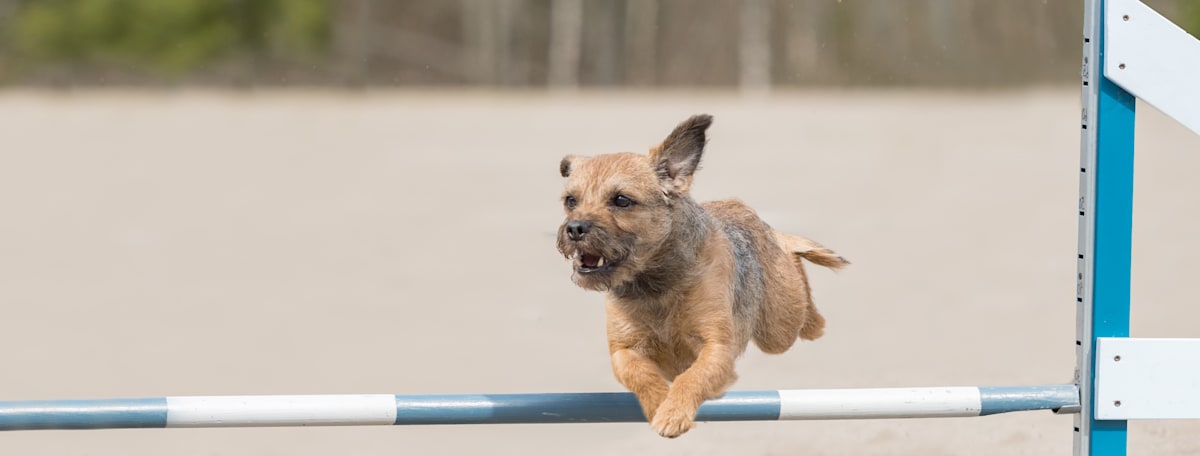
While the Border Terrier is known for its energy and work ethic, this breed transforms into an affectionate and happy companion at home. While perfect for families with kids and even other dogs, its hunting instincts makes it a tricky companion for cats or other small pets.


Origin: England, Scotland   Other Names: Border

Terrier Group

These are feisty, energetic dogs whose sizes range from fairly small, as in the Norfolk, Cairn or West Highland White Terrier, to the grand Airedale Terrier.

People familiar with this Group invariably comment on the distinctive terrier personality. Terriers typically have little tolerance for other animals, including other dogs. Their ancestors were bred to hunt and kill vermin. Many continue to project the attitude that they're always eager for a spirited argument. Most terriers have wiry coats that require special grooming known as stripping in order to maintain a characteristic appearance. In general, they make engaging pets, but require owners with the determination to match their dogs' lively characters.

Petco Pet Education Center

General appearance

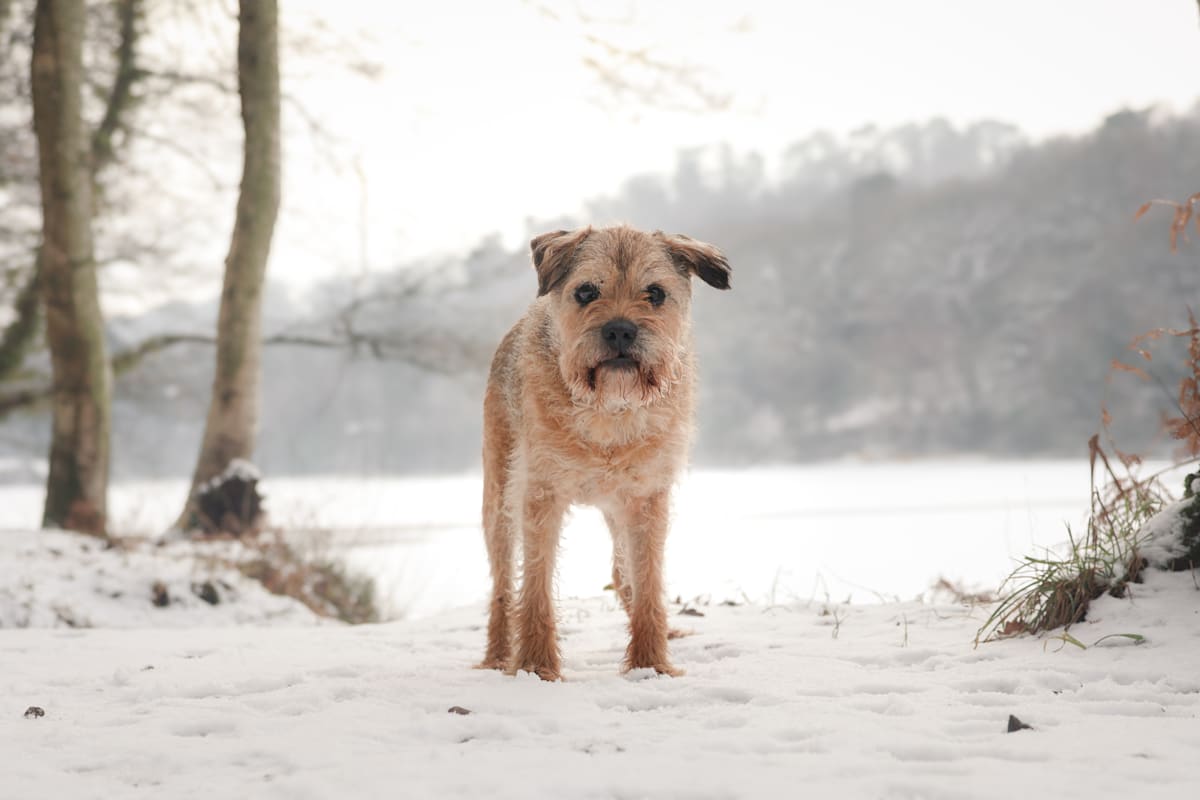
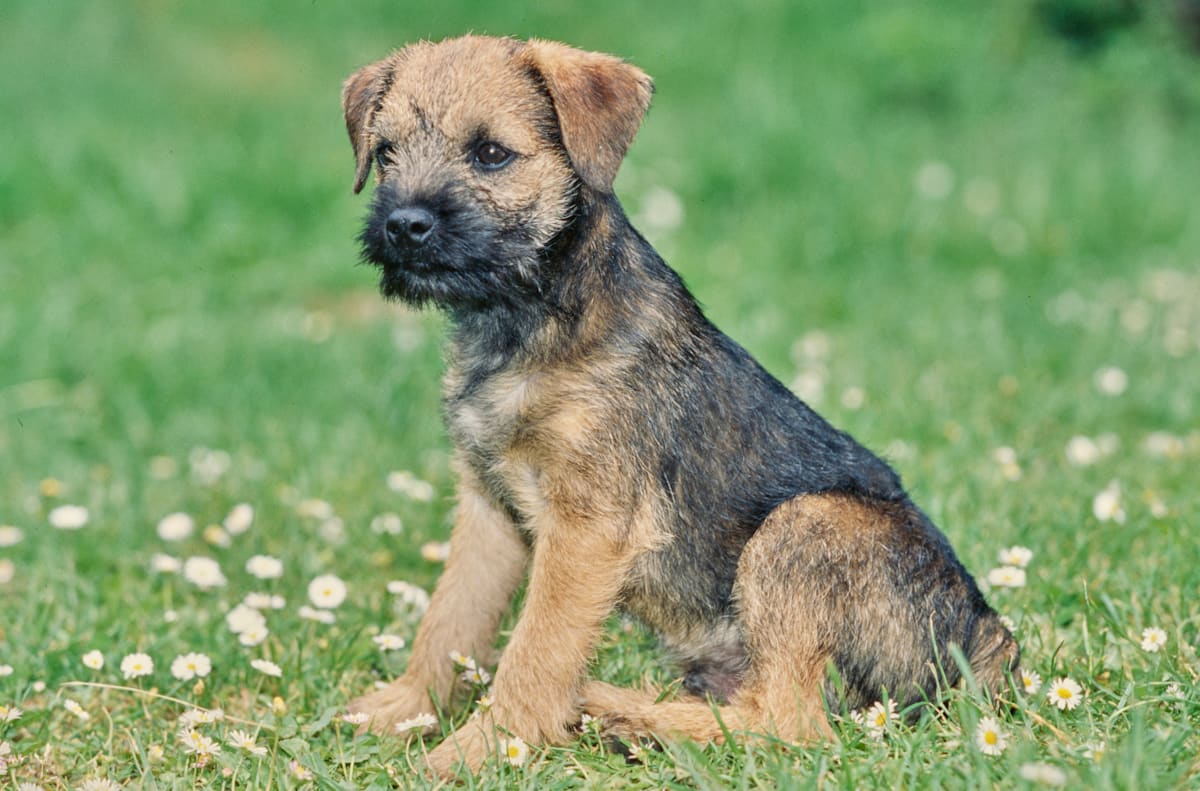
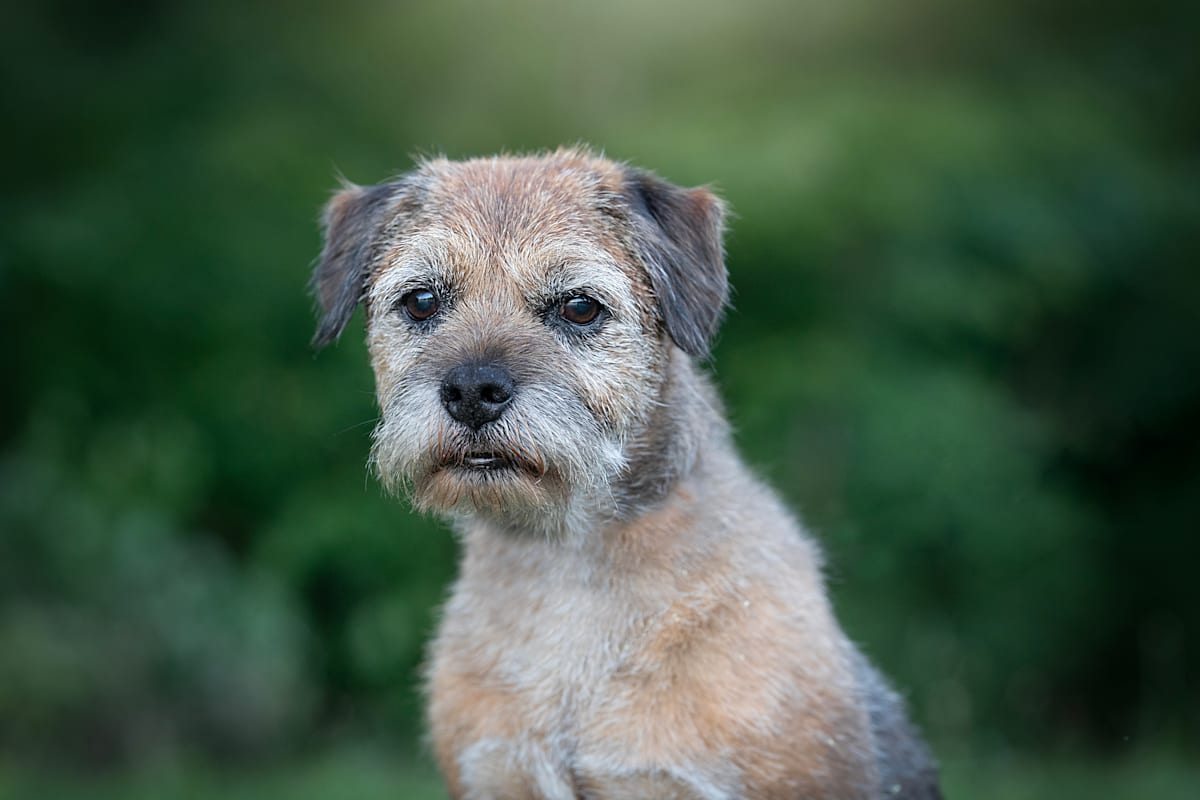
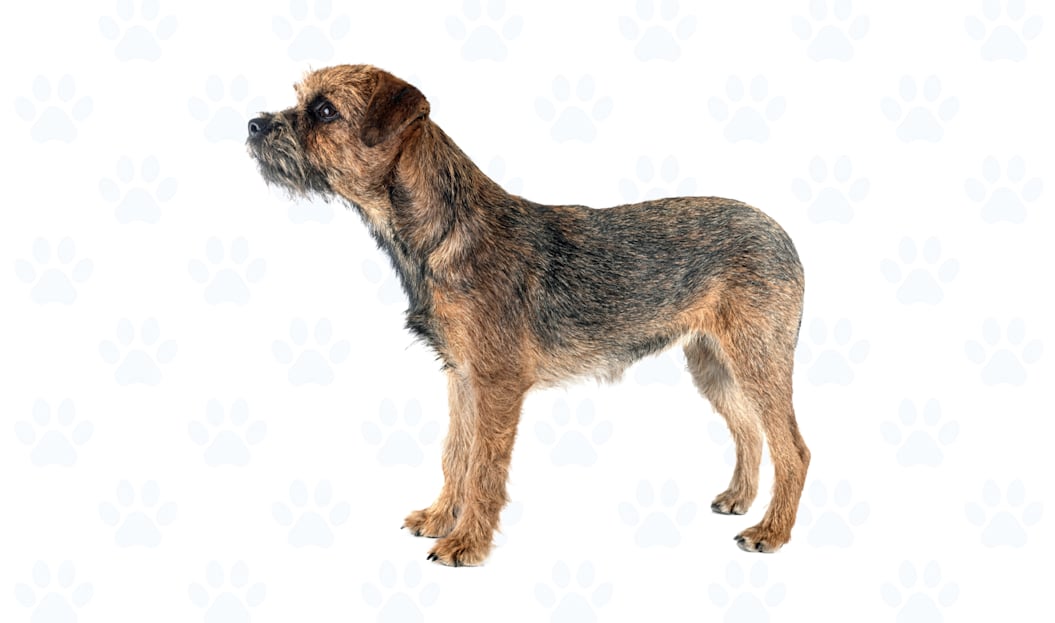
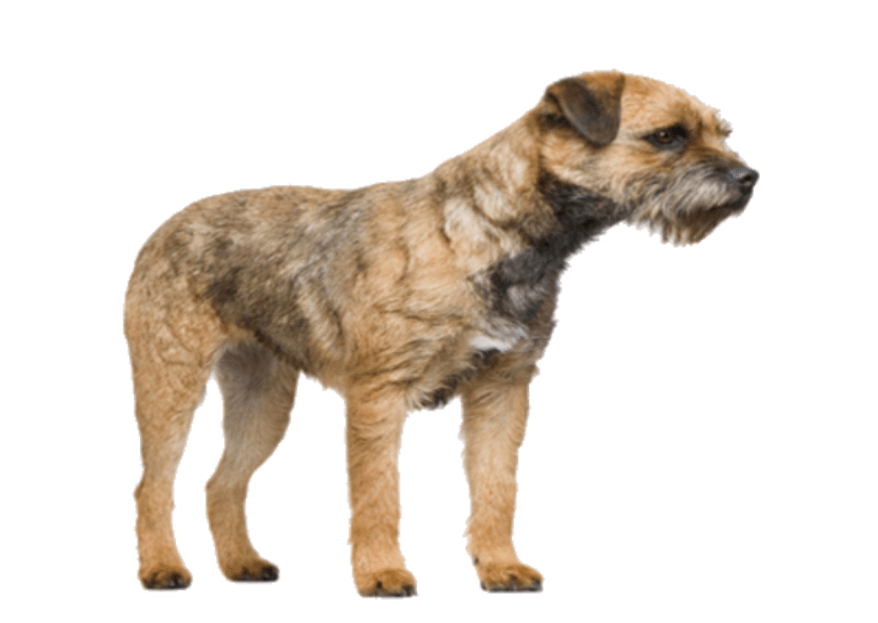
While a terrier by name, the Border Terrier can often be differentiated from its other terrier family members by its unique head shape and longer-than-normal terrier legs. “The breed is known for its distinct ‘otter head,’ which is a broad, flat skull with full cheeks and a short, well-filled muzzle with distinctive whiskers,” says American Kennel Club executive secretary Gina DiNardo. Their harsh, wiry outer coat comes in grizzle and tan, blue and tan, wheaten and red colors, and they are usually anywhere from 11 to 16 inches in height at the shoulder.

Size & Weight

Border Terriers are usually anywhere from 11 to 16 inches in height at the shoulder and range between 11 and 16 pounds.

Full Grown
Female 11 in. / 13 lbs.
Male 16 in. / 16 lbs.

Height is measured up to the shoulders.

Female Size Chart
Height Figure
Male Size Chart
6 ft. 4 ft. 2 ft.

Cost of Owning

On average, owning a middle-aged Border Terrier costs around $1000 per year
$300
Vet Care
$200
Grooming & Boarding
$250
Others
$250
Food & Treats

Characteristics

Size

Border Terriers range anywhere from 11 to 16 inches in height at the shoulder.

Tiny
Jumbo

Weight

Border Terriers are usually anywhere from 11 to 16 pounds when fully grown.

Light
Heavy

Living space

The small and easily-adaptable Border Terrier tends to be happy in any size home as long as it has plenty of exercise and companionship.

City apartment
Ranch

Exercise

This active breed requires plenty of daily exercise to stay happy and healthy.

Couch potato
Bring it on!

Personality

Border Terriers are known for their affectionate and happy attitude in addition to their strong work ethic.

Antisocial
Outgoing

Protection

Friendly by nature, the Border Terrier isn’t a natural guard dog.

None
Bodyguard

Behavior with kids

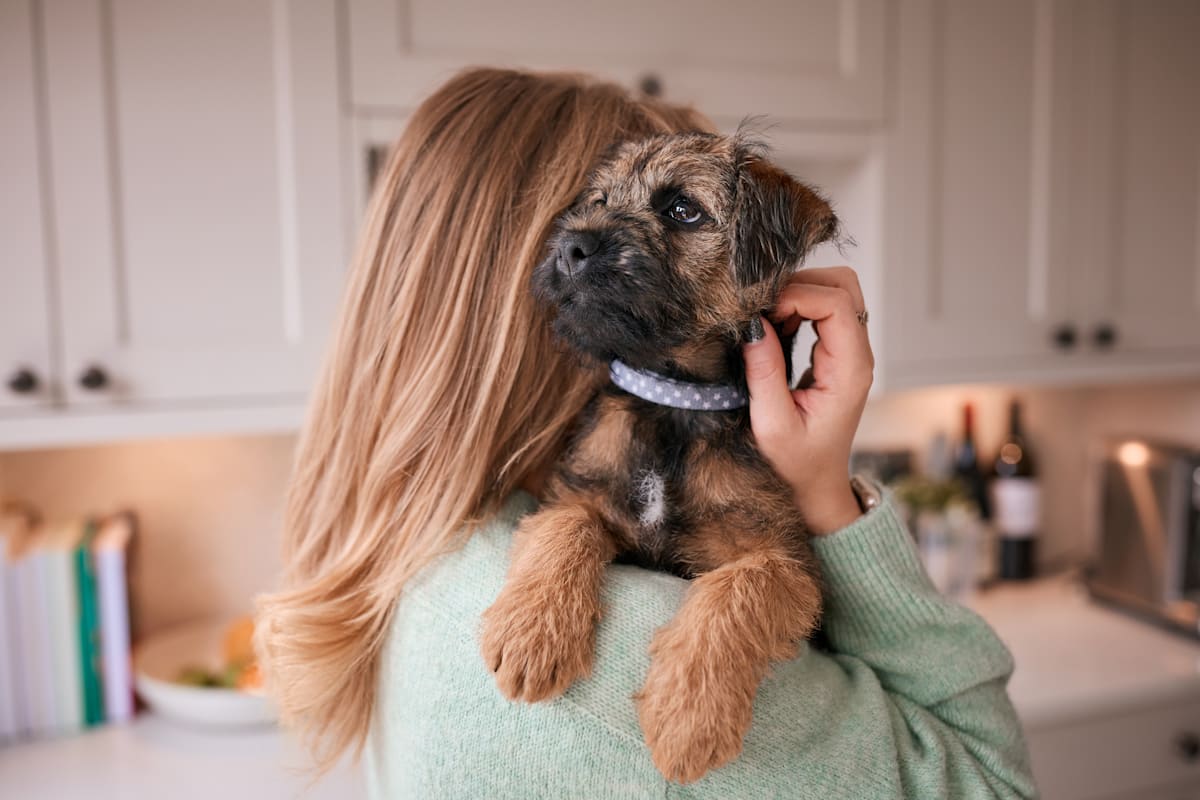
Sociable by nature, Border Terriers tend to get along well with kids, although their high energy and tendency toward rough play means they should be constantly supervised around small children.

Always monitor
Babysitter

Training

While they are eager to please, other aspects of the Border Terrier’s personality, namely a slight selfishness and tendency to chase smaller animals, makes him harder to train than other breeds.

Headstrong
Obedient

Shedding

Borders shed seasonally, but their wiry outer coat and fluffy undercoat only require a moderate amount of maintenance.

Minimal
Abundant

Climate

A smaller breed with a short, weather-resistant coat, the Border Terrier can tolerate both cold and warm weather, but caution should be taken in either extreme.

Warm
Cold

Barking

The Border Terrier isn’t known to be particularly noisy.

Mute
Loud

Temperament & Behavior

This high-energy terrier requires plenty of play and exercise, and they relish spending time with their owners. The Border Terrier gets along well with other dogs, too, says DiNardo, but introductions should be closely supervised. Smaller animals may appear as prey to Borders and they may be tempted to chase them, so bringing a Border Terrier into a home with cats should be approached with extreme caution. Border Terriers are considered to be hard-working, affectionate and happy, although they should be constantly watched when around young children since they can be rough and tumble with their play.

Barking: Understanding your dog

The Border Terrier isn’t a particularly loud or yappy dog, although as with most breeds, if left to their own devices for too long or if not properly exercised, they can become bored and destructive.

Training

Most Border Terriers do very well when they are trained and socialized at an early age. However, they do tend to be a bit selfish at times, which can get in the way when it comes to training. “The breed is trainable and eager to please, but is an independent thinker, which can make training difficult at times,” says DiNardo. “Border Terriers can’t resist a good chase, so training sessions and exercise should always be done on a leash or in a secure area.”


Habits and Exercise

The Border Terrier is a highly-energetic breed that requires daily stimulation. “Border Terriers have plenty of energy and stamina and like to work,” says DiNardo. Because they have a strong instinct to chase and hunt prey, Border Terriers should always be kept on a leash or in an enclosed area for play.

Energy Level

Frisky, energetic breed that is always ready for action

Energy Level

Nutrition

With a high energy level, Border Terriers are less likely to become overweight than some other breeds of dogs. However, if overfed or under exercised, Borders can still become overweight. Feed portion-controlled meals of a high quality balanced diet and avoid offering table scraps or too many treats.

Daily Consumption

Average daily consumption for an adult Border is 1/2 - 3/4 cups

Daily Consumption

Preventive care

Like all dogs, Border Terriers should be examined by a veterinarian once or twice per year. These preventative visits can aid in detecting new or subtle changes before they become more significant problems. Discuss the use of regular preventative flea and tick medications, as well as heartworm prevention with a veterinarian.

Inherited health issues

Despite being a generally healthy breed, certain health conditions can occur at an increased frequency within the breed or can have a genetic association. Responsible breeders generally perform a number of screening and genetic tests in an attempt to decrease the incidence of health problems within the breed. These conditions may include, but are not limited to, the following: Leukodystrophy.

Life Span

On average, Border Terriers live between 12 and 15 years.

Life Span

Did you know?

  • The Border Terrier has a weather-resistant coat that repels most dirt.
  • The first registration of the Border Terrier in the U.S. was in 1930.
  • Famous Border Terriers include Puffy from the movie "There's Something About Mary" and Baxter in the movie "Anchorman : The Legend of Ron Burgundy".

Coat and Grooming

The Border Terrier’s double coat consists of a wiry outer layer and a fluffy undercoat, which sheds seasonally and requires a quick brushing every week or two to keep the coat in good shape. During shedding season, however, daily attention is required to avoid excessive shedding.

Coat length

Short

Coat length

Grooming

Occasional

Grooming

Shedding

Most of the time, the Border Terrier can get by with a weekly brushing, but during shedding season it’s best to provide this breed with a daily brushing to remove excess hair.

History

Bred by farmers and shepherds on the Scottish-English border to help rid the area of fox, the Border Terrier was prized for its relentless energy, work ethic and a weatherproof coat that protected it from the harsh borderland terrain. It is thought that this background is what gives the Border Terrier its strong work skills and unrelenting drive to never give up.


The Kennel Club of England first recognized the Border Terrier in 1920, while the AKC followed 10 years later.