








Hound Group
Most hounds share the common ancestral trait of being used for hunting.
Bloodhounds are a sweet and unique breed with a storied history and loyal following around the world. Despite their dopey appearance, this is an active breed with working-dog level energy. If you live in a small space, there are other dogs you might consider. Since Bloodhounds are a pack breed, it helps to have other dogs or even a cat to accompany your new Bloodhound.
Origin: Belgium Other Names: Chien de Saint-Hubert, St. Hubert Hound, Sleuth Hound
Most hounds share the common ancestral trait of being used for hunting.
Most hounds share the common ancestral trait of being used for hunting. Some use acute scenting powers to follow a trail. Others demonstrate a phenomenal gift of stamina as they relentlessly run down quarry. Beyond this, however, generalizations about hounds are hard to come by, since the Group encompasses quite a diverse lot. There are Pharaoh Hounds, Norwegian Elkhounds, Afghans and Beagles, among others. Some hounds share the distinct ability to produce a unique sound known as baying. You'd best sample this sound before you decide to get a hound of your own to be sure it's your cup of tea.
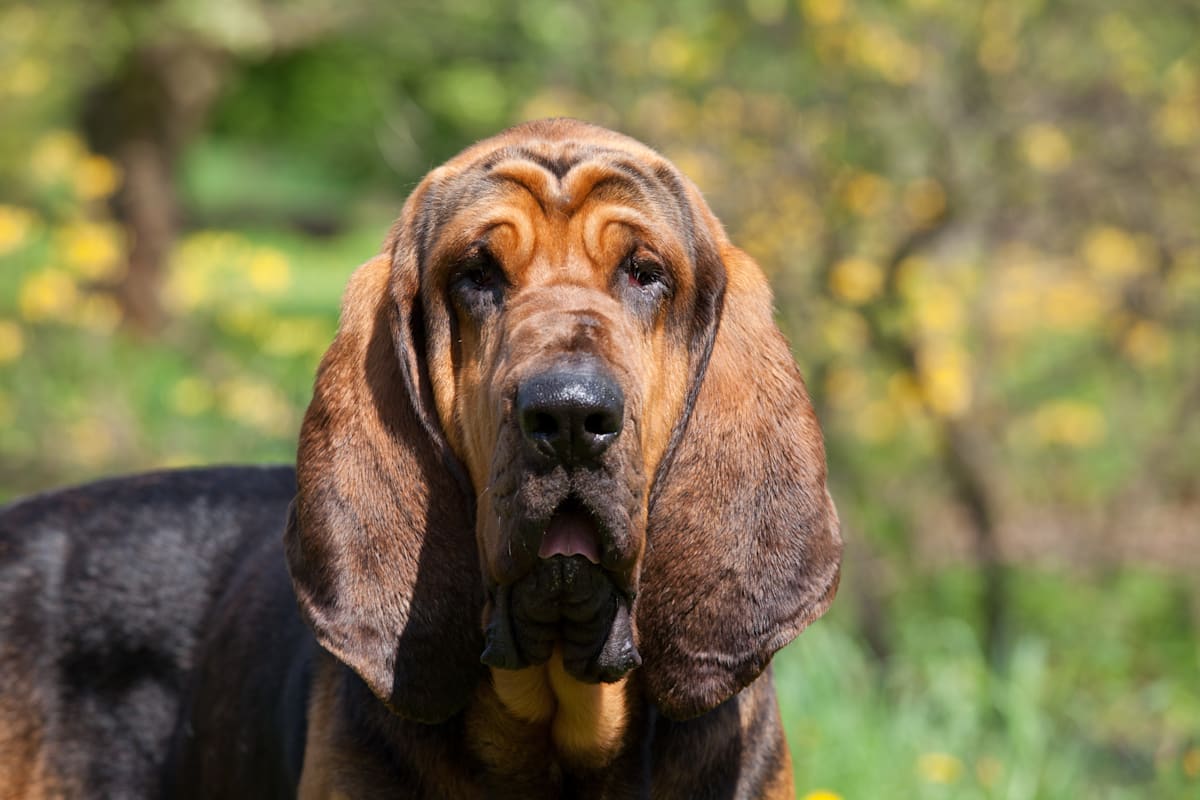
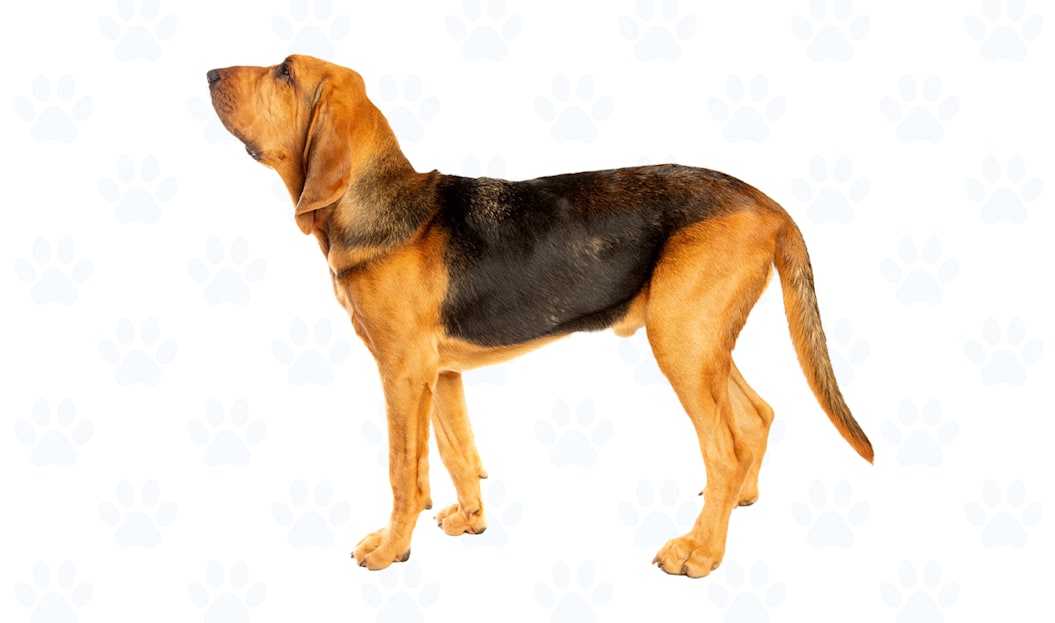
The American Kennel Club (AKC) recognizes 3 coat colors in Bloodhound: black & tan, liver & tan, and red. The historical coat colors were more varied, but the modern Bloodhound color range is far more restricted. You may see the odd Bloodhound with white markings.
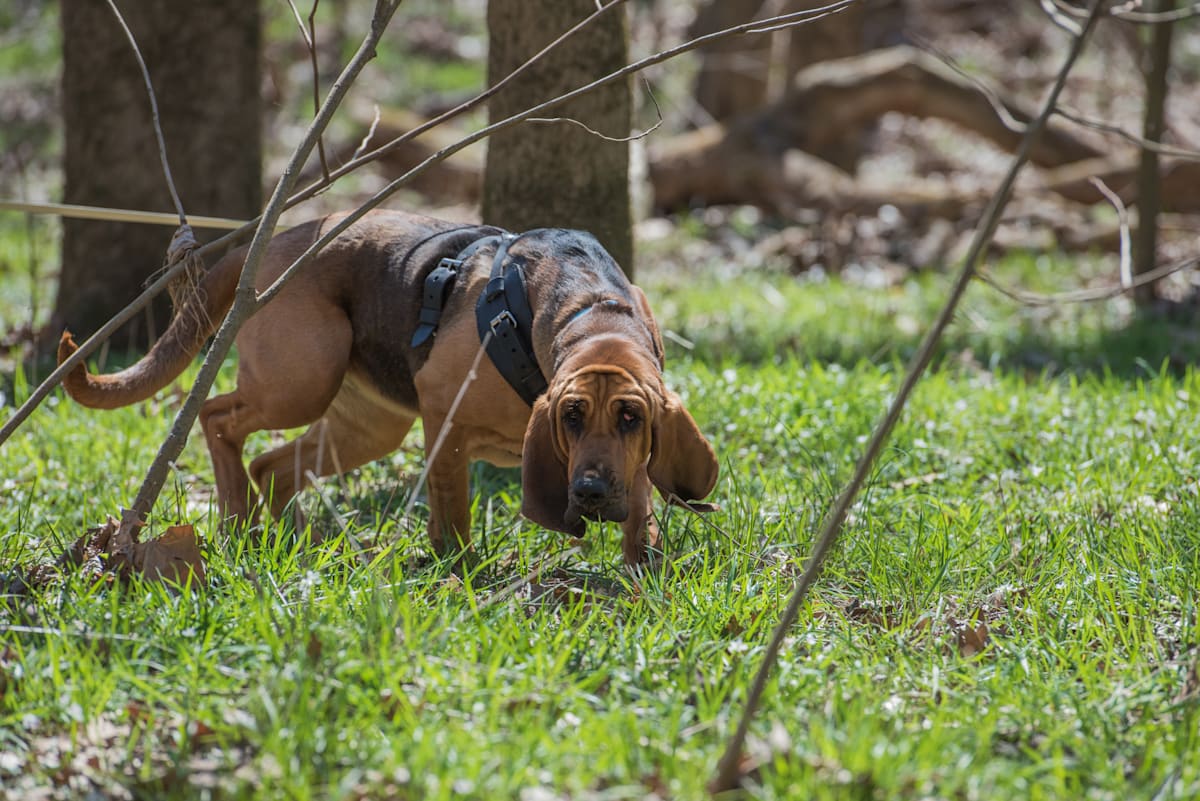
The Bloodhound coat is short and a bit coarse with light oil to it. They carry most of their weight in their bones with a large and thick frame. Their skin hangs loose and feels thin to the touch.
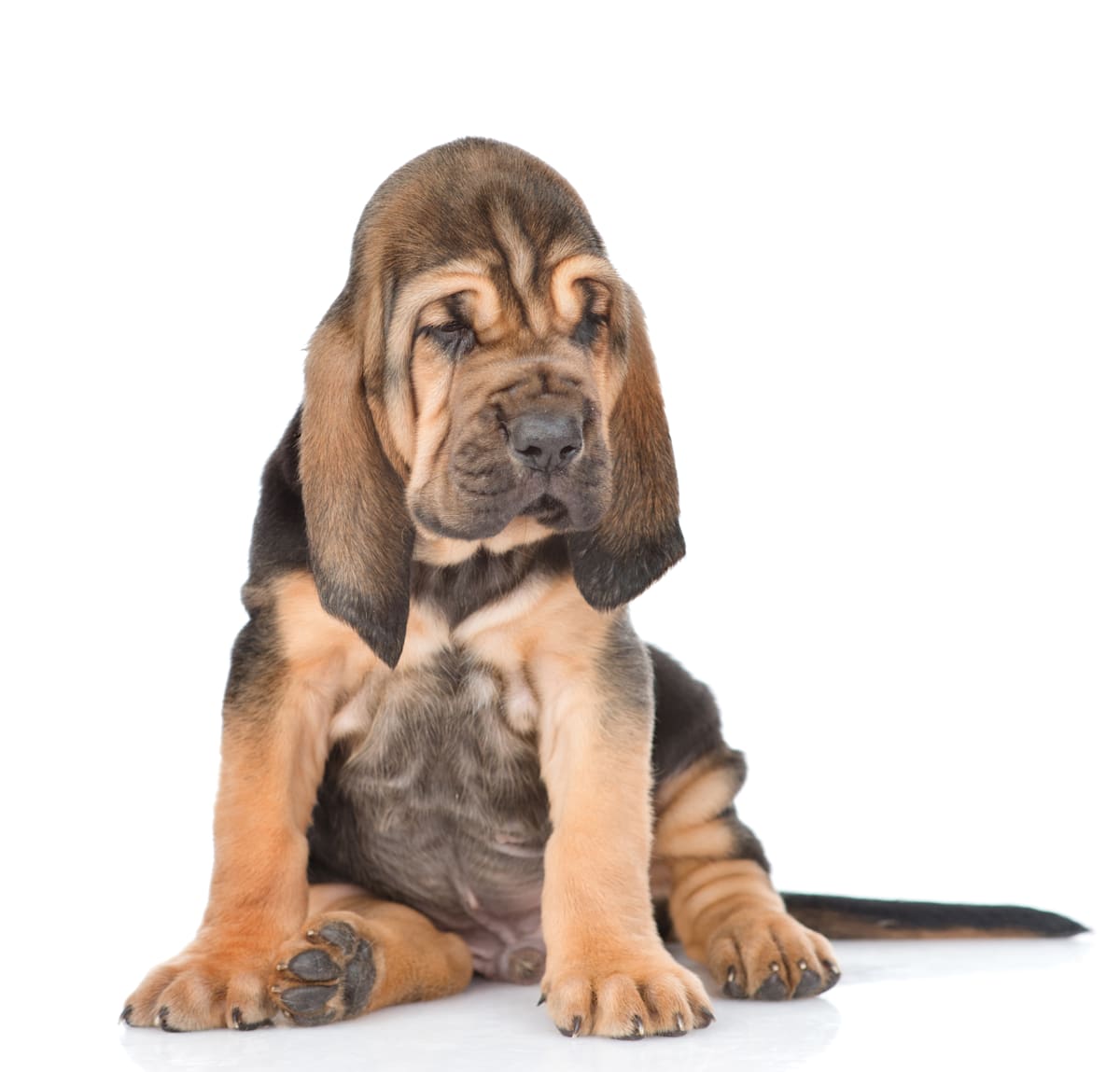
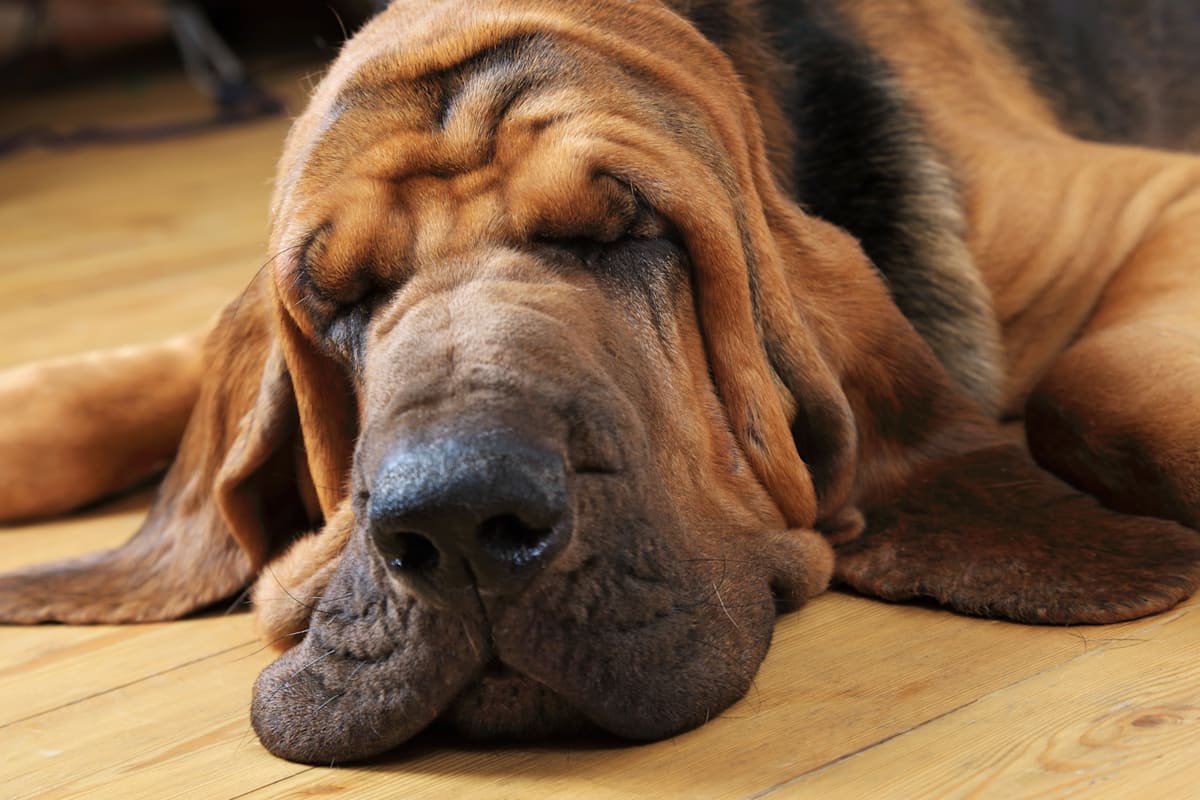
Bloodhounds have big heads and big floppy ears to help them with scent hunting. Their wrinkles and distinctive droopy face make for an iconic look, recognized the world over.
Bloodhounds are large dogs and typically weigh 80-110 lbs. Adult males often stand 24-28 inches tall. Larger dogs are preferred in competition.
| Full Grown | |
|---|---|
| Female | 24 in. / 80 lbs. |
| Male | 28 in. / 110 lbs. |
Height is measured up to the shoulders.
Bloodhound males often stand 24-28 inches tall.
Bloodhounds are large dogs and typically weigh 80-110 lbs.
Bloodhounds need considerable space for their daily exercise. Don’t stick a Bloodhound in a small condo in the sky or you’ll risk an unhappy and restless dog. Make sure your backyard has a good fence because that famous hound dog nose will get your companion into trouble.
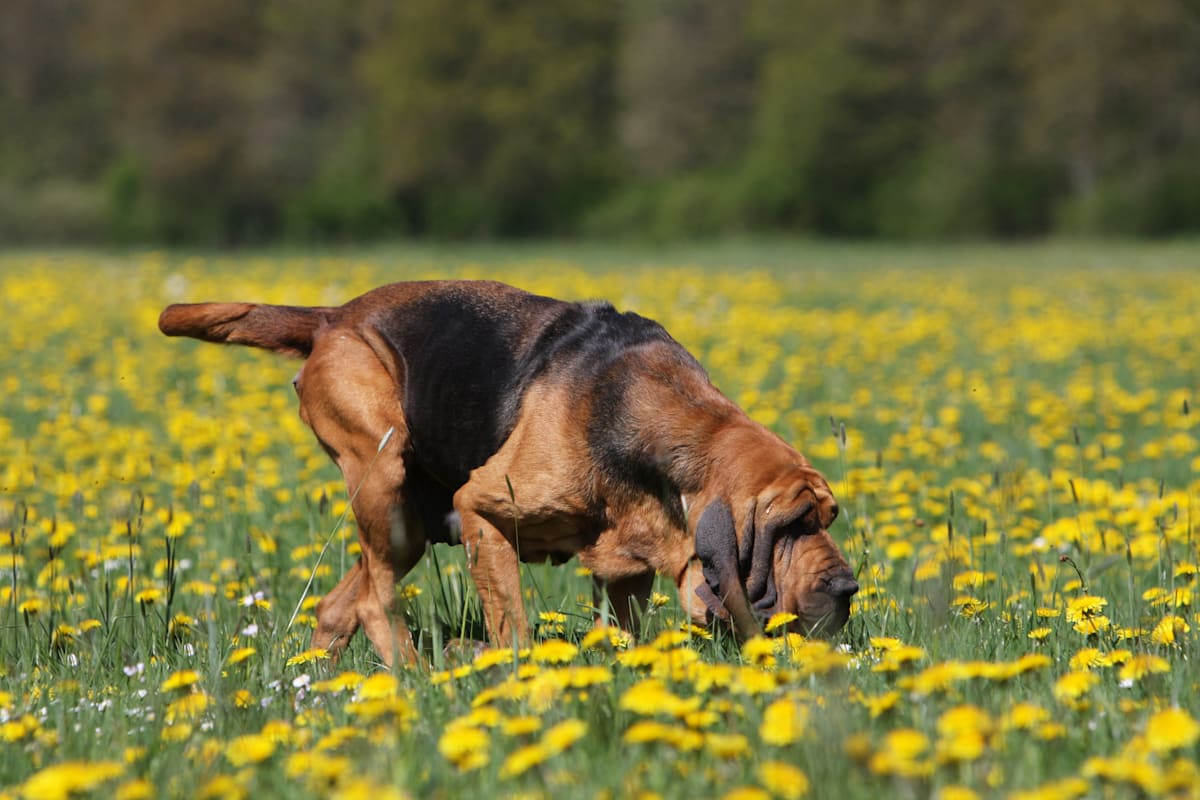
Bloodhounds thrive when they can put in work outside. Smelling the world and getting some fresh air are key to happy living with your Bloodhound. Always use a leash – once they catch a scent, it’s up to you to restrain their curiosity. A couple of good walks or playtime outside are necessary to keeping your Bloodhound happy.
Bloodhounds are friendly and lovable. They are all too happy to share some of their slobber and affection. As always, supervise your dog around small children and be aware that they are often unaware of their large size and may accidentally knock over a toddler in their excitement. Rest assured that the Bloodhound is a sweetheart with nothing but love to give. They are a bit stubborn, so it’s important to be firm with your dog.
The friendliness in your Bloodhound companion is one of the big selling points. Bloodhounds won’t chew on any strangers unless they smell really good, and they make terrible guard dogs. This is a breed built for loving, not protecting.
Bloodhounds are a great breed for families since they have a super-friendly manner and they love to be the center of attention. Always keep an eye out with any small children around, but you can rely on your Bloodhound to be a gentle giant around kids and other pets.
The Bloodhound is a smart dog and always ready to play. Since they possess a strong prey drive, it’s crucial to develop good habits early. Leash training is a must because their sensitive noses will win over your commands without proper training habits. It’s also a good idea to invest in very durable toys due to powerful chewing. Bloodhounds can be a bit stubborn, but can be trained relatively easily.
Bloodhounds shed a lot and drool excessively thanks to their large jowls. Invest in a good vacuum and sanitary wipes. A good quality brush will come in handy for regular weekly brushing sessions.
Bloodhounds do well in most places. If you live somewhere very hot or cold, pay close attention for signs of distress outside. Their coats are built for time outside in nature, but they will suffer with extreme temperatures over a long period.
Bloodhounds will bark and howl, and it’s not going to stop without dedication and patience. Before bringing a Bloodhound home, be aware that this is a bark-prone breed. The Bloodhound has many good qualities, but respecting silence isn’t one of them.
Bloodhounds are faithful companions with a lovable personality and an affectionate nature. They can be stubborn, and Bloodhounds are tireless on the hunt with a scent to follow. They can be slightly stubborn to train, but the results are worth it. With a good heart and a gentle nature, Bloodhounds make excellent family pets.
Bloodhounds have a bark and they aren’t afraid to use it. They tend to mark their territory with sound and won’t shy away from making regular announcements. Since the breed was traditionally a pack hunting animal, they are used to friendly competition and arguing over scraps. Crate training can be very useful, and always walk your Bloodhound on a leash.
Training a Bloodhound depends on your intended use for your dog. There are very specific and regimented programs to develop your Bloodhound into a tracking dog, but most readers will prefer a companion animal curriculum. Positive reinforcement and a firm resolve are your best tools when training your Bloodhound. Start early, don’t be timid, and make sure you pay close attention to your companion’s mood. It helps to keep enthusiasm high and don’t let the training sessions run too long.
As you begin your dog training adventure, one key ingredient is high enthusiasm. Work your way up to longer sessions and more complex obedience tasks. Learning to read your Bloodhound is a key part of the training process – pay attention! Positive reinforcement and a wide exposure to environments with help you instill good habits in your Bloodhound. Take some time every day to share experiences with your Bloodhound. Exercise and playing games are good for both you and your pet.
Enjoys some moderate exercise every now and then
Since Bloodhounds are prone to developing both elbow dysplasia and hip dysplasia, keeping your dog at a healthy body weight is critical to reduce the stress placed on these joints. Closely measure your dog’s food portions for their ideal body weight. Feeding at least 2-3 meals per day and pacing the rate at which your dog eats can also be helpful to try to decrease the incidence of bloat (GDV; gastric dilatation-volvulus). Special bowls can be purchased to encourage slower eating, but other options include offering kibble in muffin tins or spreading out kibble on baking sheets.
Average daily consumption for an adult Bloodhound is 3-5 cups daily
Since Bloodhounds are at an increased risk for hip and elbow dysplasia, keeping your dog at a lean and healthy body weight is the best way to lessen the stress placed on these joints. Be sure to feed your dog properly portioned meals and avoid excess treats or table scraps. Fish oil supplements can be beneficial to decreasing any inflammation in the joints that could be related to arthritis. Regular veterinary care will also monitor the joints for palpable changes during a physical exam.
Keeping your Bloodhound’s skin folds clean with veterinary anti-fungal wipes can be beneficial to avoiding more significant yeast infections. Routine veterinary exams will continue to evaluate your Bloodhound’s eyes for signs of inherited ocular conditions because many of a Bloodhound’s eye conditions require surgical correction.
As a deep-chested breed, Bloodhounds are at an increased risk of developing bloat (GDV; gastric dilatation-volvulus). A surgical procedure called a gastropexy can be performed to tack the stomach to the body wall, preventing it from flipping. However, this does not prevent a “simple bloat” (GD; gastric dilatation), whereby the stomach distends with food and/or fluid. Even with this procedure, keep your dog’s food bowls on the floor, feed several smaller meals through the day, encourage your dog to eat slowly and avoid strenuous exercise immediately before or after eating.
There are many conditions in the Bloodhound that are either inherited or occur at an increased incidence in this breed. The conditions occurring at increased incidence mostly occur due to their deep-chested and droopy-eyed conformation. Following is a partial list: gastric dilation and volvulus (GDV aka Bloat), hip dysplasia, aortic stenosis, ectropion, entropion, prolapse of the gland of the nictitating membrane (Cherry Eye), macroblepharon, cutaneous squamous cell carcinoma and elbow dysplasia.
Bloodhounds live to be about 10-12 years old.
A Bloodhound will do its best to shed all over your home, so this can be a slightly high maintenance breed. Their coats are coarse and they drop fur quite easily. Regular weekly brushing and a consistent bathing schedule will help you keep the fur at bay. Be prepared to do a lot of vacuuming and wiping to clean up after your Bloodhound. If you aren’t able to invest in a lot of grooming time at home, don’t be afraid to rely on professional help from a local groomer.
Short
Frequent
Shedding and drool are the two big drawbacks of the Bloodhound adventure. If you are prepared to maintain a good grooming schedule, you can gain the upper hand. Let things slip and get ready to do a lot of vacuuming and cleaning up after your dog at home. Special tools, such as shedding blades, can help with your grooming routine. Any Bloodhound owner will rapidly become accustomed to cleaning and managing drool.
No one knows exactly how the Bloodhound came to be, but most scholars connect the modern breed to the St. Hubert hound from the Saint-Hubert monastery in modern Belgium. Some experts argue that the Bloodhound is a dog of mixed breeding with similar genes to many modern hounds. The monks of Saint-Hubert would send several hounds to the King of France every year, a tradition that spanned the Middle Ages.
The first Bloodhound reference in English writing appeared in the 14th century. Most experts agree the dog came over in the Norman invasion, and Bloodhounds found work in the fields of England. Although the breed has a long history as a game tracker and hunter, they likely found work as tracking people back into early history. References to “sleuth hounds” go back as far as the 1200s. A 16th century physician named John Caius takes credit for the first modern description of a Bloodhound breed standard.
The Bloodhound had a popular following in America before the Civil War. While there is some debate the specific breeds used, many historians believe Bloodhounds tracked runaway slaves across the United States. Law enforcement agencies continued to use the breed to track fugitives and missing persons up to present day. The first Westminster showing of the breed took place in 1888, three years after Bloodhound recognition in 1885.