Petco Text Logo
Petco Pet Logo

About American Pit Bull Terrier

While the term “Pit Bull” conjures a specific image in many dog lover’s heads, the Pit Bull is not an "official" breed. Most people consider the Pit Bull to be more of a “type” of dog, and include breeds such as the American Staffordshire Terrier, the American Pit Bull and the Staffordshire Bull Terrier in this group. The term “Pit Bull” unfortunately has acquired a negative connotation, as several cities and municipalities in the United States and Canada have enacted bans on these types of dogs out of concern for increased aggression in the breed. The inability to definitively visually identify any one dog as a “Pit Bull” calls these concerns into question, however, and dogs of the Pit Bull type can make wonderful family dogs, as well as serve faithfully as police dogs, service dogs for the handicapped, and therapy dogs.


Origin: England, 19th c.   Other Names: American Pit Bull, APBT, Pittie, Pit Bull

Terrier Group

These are feisty, energetic dogs whose sizes range from fairly small, as in the Norfolk, Cairn or West Highland White Terrier, to the grand Airedale Terrier.

People familiar with this Group invariably comment on the distinctive terrier personality. Terriers typically have little tolerance for other animals, including other dogs. Their ancestors were bred to hunt and kill vermin. Many continue to project the attitude that they're always eager for a spirited argument. Most terriers have wiry coats that require special grooming known as stripping in order to maintain a characteristic appearance. In general, they make engaging pets, but require owners with the determination to match their dogs' lively characters.

Petco Pet Education Center

General appearance

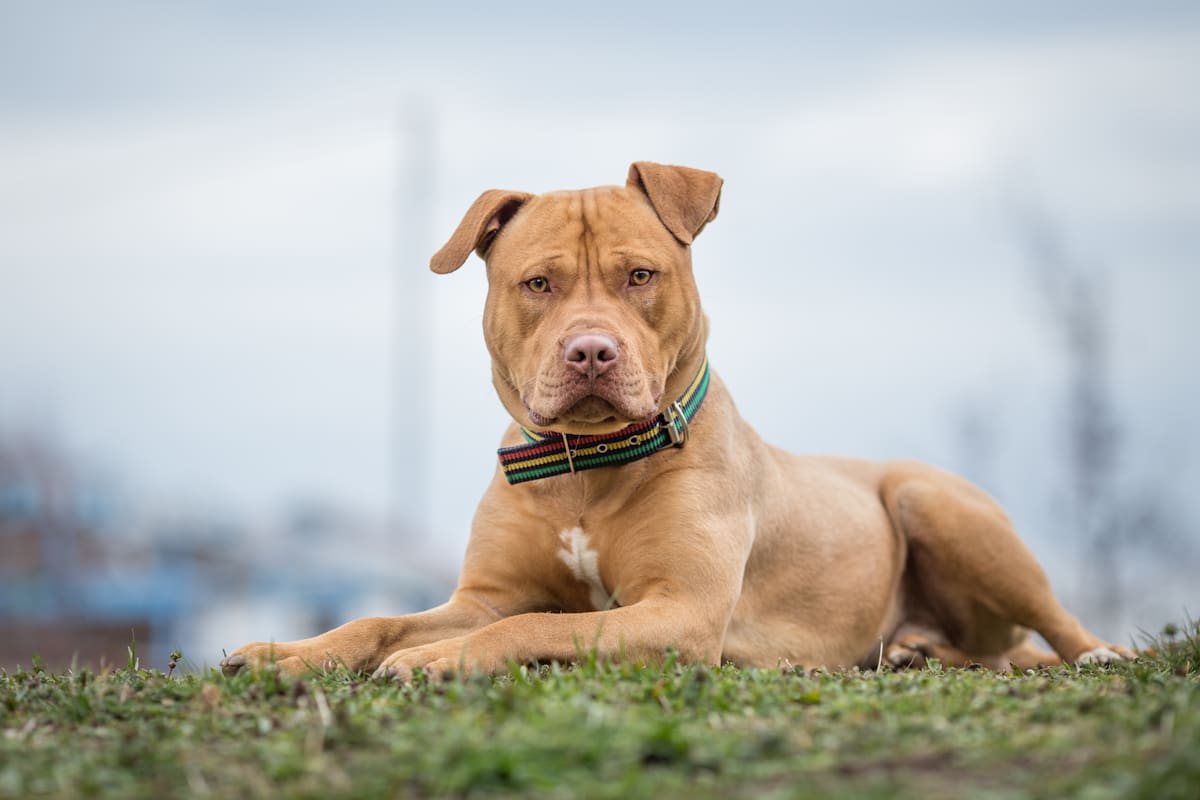
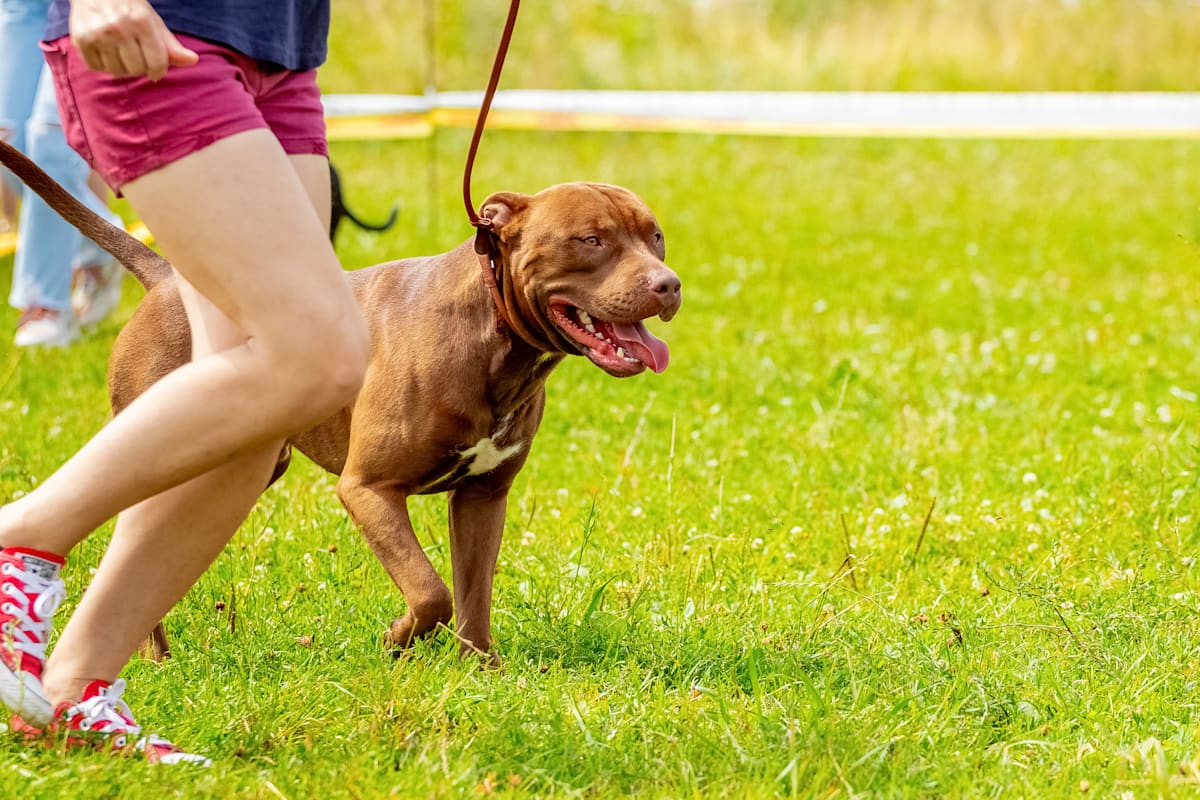
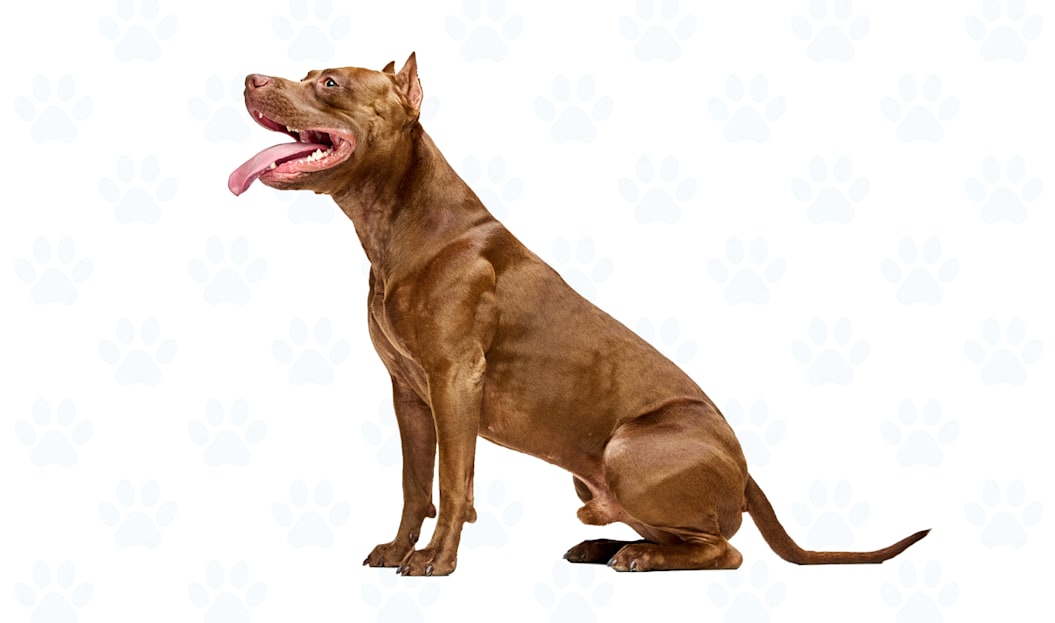
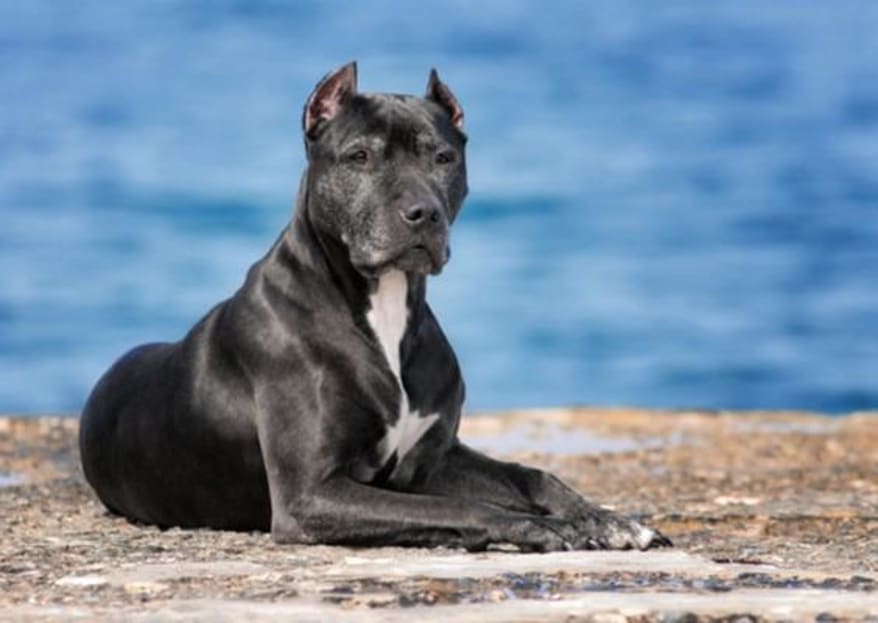
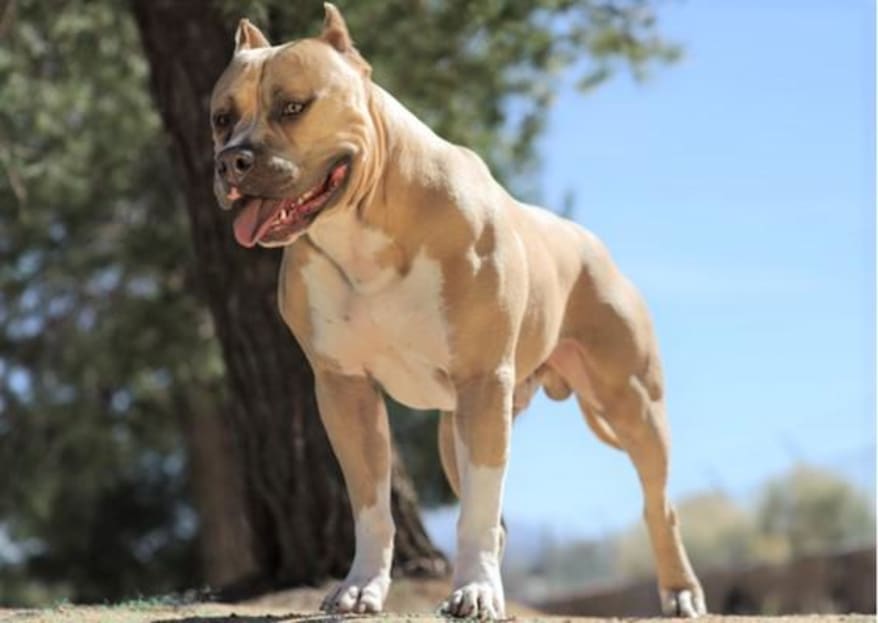
Pit Bull-type dogs typically have a powerful, blockish head with pronounced masseter (cheek) muscles that unfortunately have historically contributed to their use as fighting dogs. Their necks are thick and well-muscled, and lead to a powerful, deep chest. Pit Bulls are stocky dogs with powerful bodies and strength that exceeds their size.


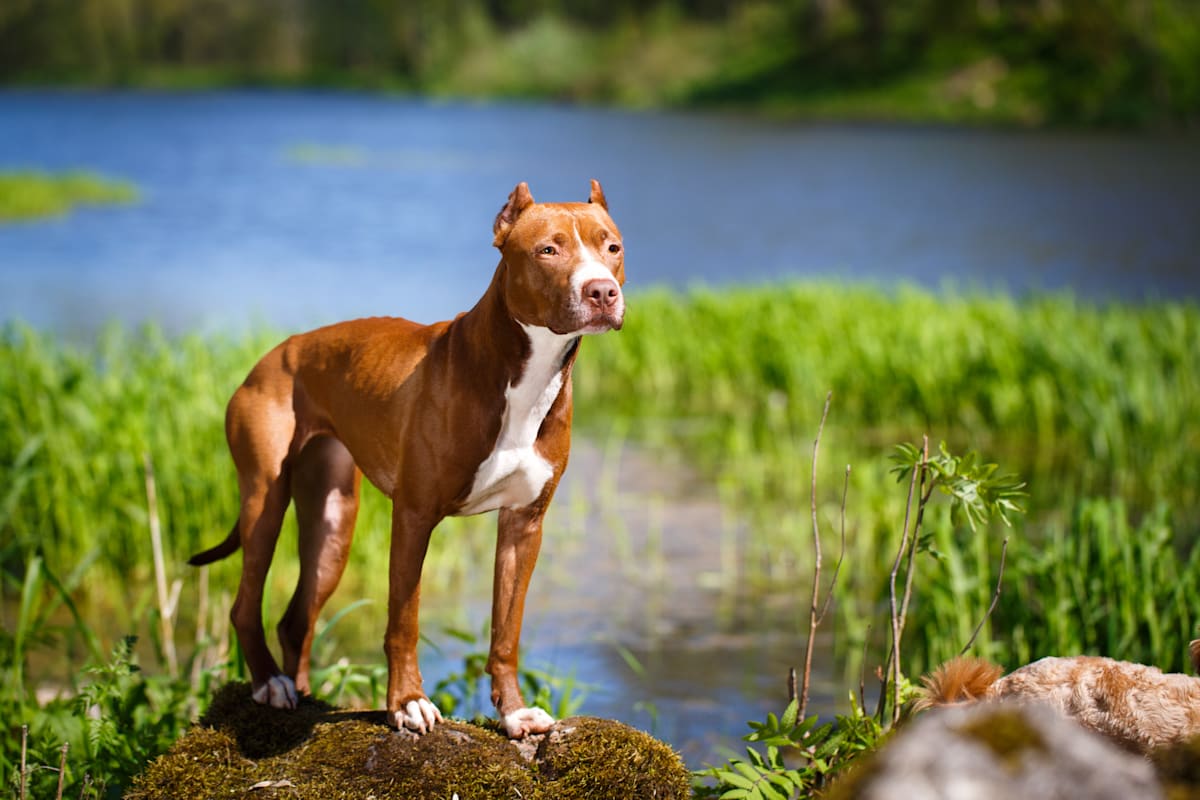
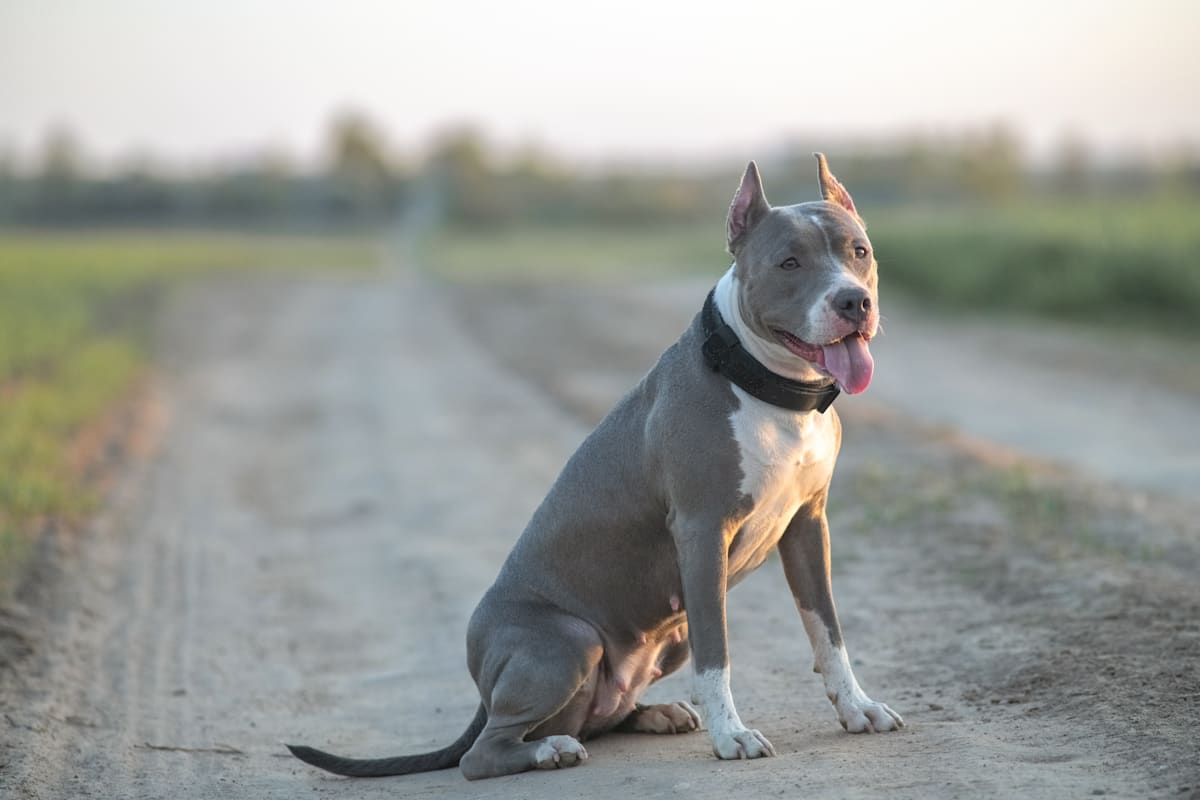
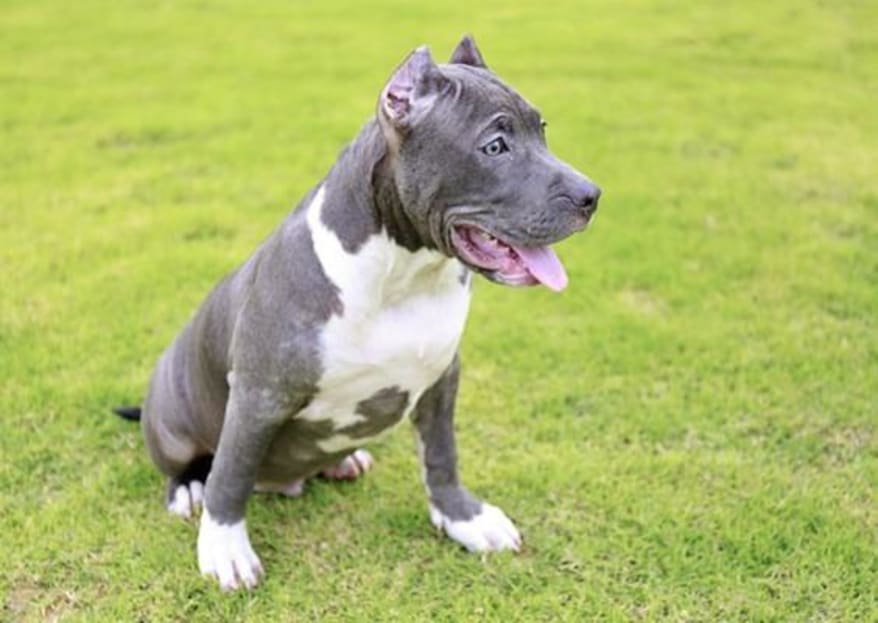
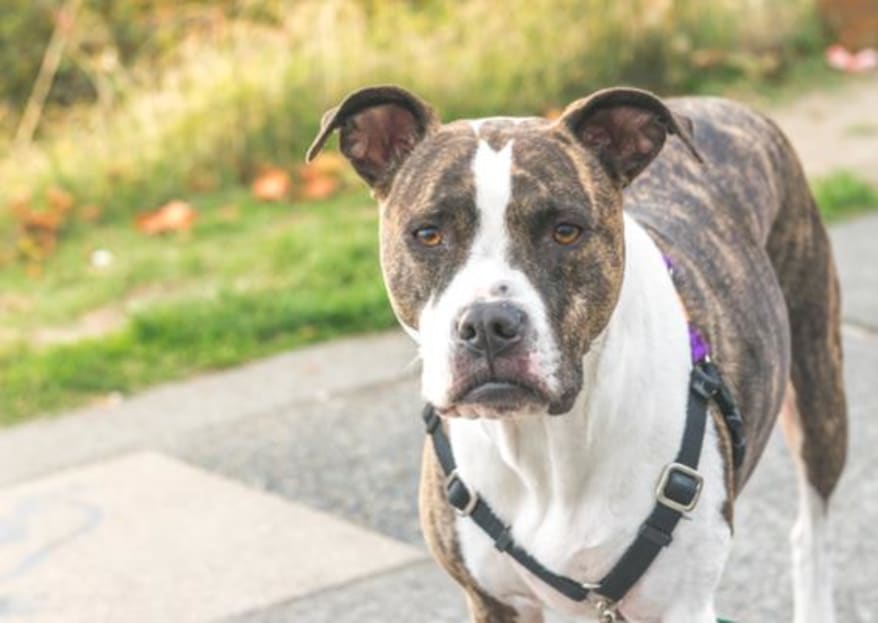
The UKC’s breed standards specify that these dogs have a medium-length head with a broad, flat skull and wide muzzle. The ears are small and wide set. The ears of these dogs have traditionally been cropped, however this practice has fallen out of fashion as it has no practical purpose and inflicts unnecessary pain. The tail is long and tapers to a point. The coat is short, and comes in nearly every color of the rainbow!

Colors

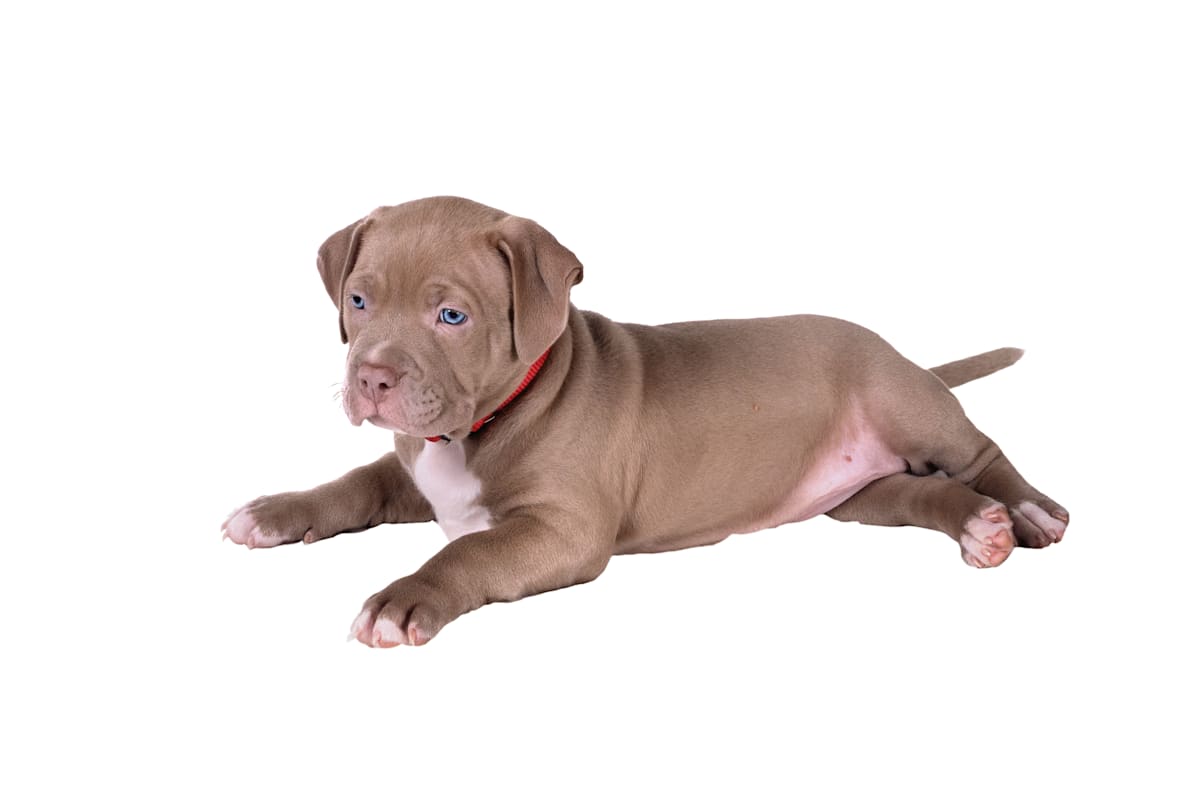
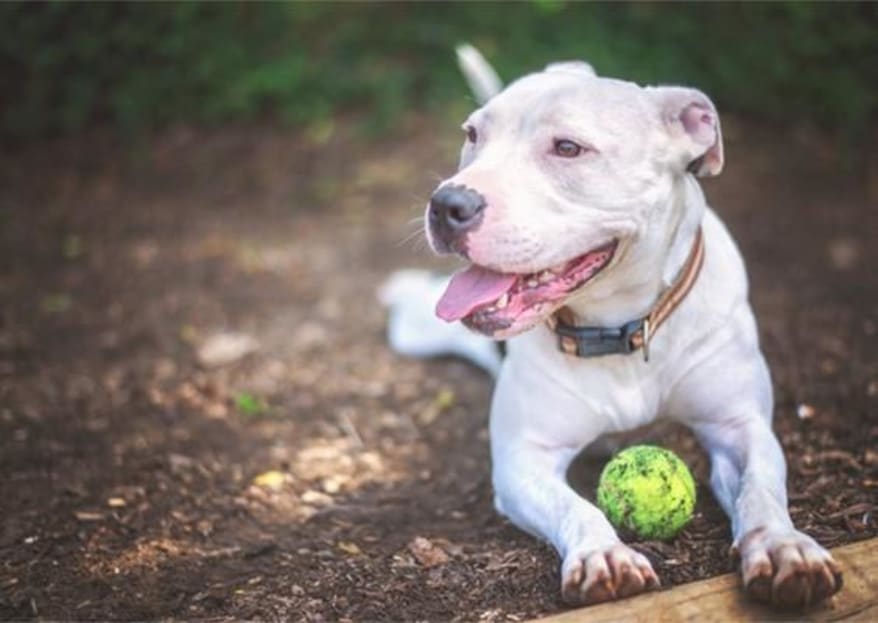
This breed can be found in a variety of colors. You can check them out below.


Size & Weight

Males typically stand 17.0 to 19.0 inches and weigh 50 to 80 pounds. Females are normally smaller: they stand 16.0 to 17.5 inches and weigh 30 to 60 pounds.

Full Grown
Female 17 in. / 60 lbs.
Male 19 in. / 80 lbs.

Height is measured up to the shoulders.

Female Size Chart
Height Figure
Male Size Chart
6 ft. 4 ft. 2 ft.

Cost of Owning

On average, owning a middle-aged Pit Bull costs around $950 per year
$250
Vet Care
$150
Grooming & Boarding
$150
Others
$400
Food & Treats

Characteristics

Size

Dogs recognized as being of the Pit Bull type can vary greatly in size and weight. They range in size from approximately 16 to 19 inches at the shoulder. Males tend to be a good bit larger than females, with the average weight range of all of these dogs being between 30 and 80 pounds.

Tiny
Jumbo

Living space

Pit Bull-type dogs need a fair amount of space to ensure that they get sufficient exercise. They have a propensity to gain weight, so a common exercise routine is critical to keeping them fit. They also have a propensity to develop anxiety disorders if left alone or unoccupied too frequently.

City apartment
Ranch

Exercise

Pit Bulls love to play, and they excel at many sports, including Frisbee and agility. They also make great companions for runners. They need a solid exercise routine to ensure that they stay at a healthy weight.

Couch potato
Bring it on!

Personality

Pit Bulls are known for their fierce loyalty to their families, but can be aloof to strangers and especially to strange dogs. As with any dog, they should be carefully monitored around small children, but most make excellent family dogs.

Antisocial
Outgoing

Behavior with kids

No small child should be left alone with any dog, because even the most mild-mannered dog becomes unpredictable when subjected to the good-natured torment that a child can inflict. While most Pit Bull-type dogs are devoted to all of the family members, make a point to closely watch your children with these dogs, and never leave them unattended.

Always monitor
Babysitter

Protection

One of the key character traits of Pit Bull-type dogs is their fierce dedication to the humans in their family. They seem to have an uncanny ability to know when something isn’t right, and there are many stories in the media about these dogs providing protection for their family members.

None
Bodyguard

Training

Pit Bull-type dogs love training and learning. Because these dogs pack a lot of power into their compact frame, and because they can be somewhat strong-willed, it’s critical that you establish good training habits early, and continue to reinforce them throughout your Pit Bull’s life.

Headstrong
Obedient

Barking

Pit Bull-type dogs tend to be quiet, and only bark when they are alarmed by what’s going on in their environment.

Mute
Loud

Shedding

The short coat of the Pit Bull is relatively low maintenance, however they do tend to shed with the change in seasons twice yearly. Luckily their hairs are not long, so they don’t make a big mess in the house, and routine brushing will remove loose hairs and keep their coats shiny.

Minimal
Abundant

Climate

Pit Bull-type dogs have a very high discomfort and pain tolerance, and seem to thrive in conditions that other dogs would be uncomfortable in. Having said this, their short coats can make it difficult for them to stay adequately warm in harsh winter conditions, so bring them inside when the mercury falls, and make sure they have a coat or jacket for enjoying outdoor activities on colder days. The American Staffordshire Terrier, which is a common component of many of these mixed breed dogs, has a somewhat short snout and thus is prone to breathing abnormalities that may make it difficult for these dogs to cool themselves in extreme heat.

Warm
Cold

Temperament & Behavior

Pit Bulls are frequently seen with a big, sloppy tongue hanging from the side of their mouths, seeming to “grin,” using their massive heads to show that all is right in their world. They are probably the most misunderstood dog out there, and unfortunately have a reputation with many people as being aggressive and fearsome, and prone to attacking even when unprovoked.


Pit Bull-type dogs have a bit of a strong will, but with proper socialization and training are loyal and loving. They are highly intelligent, but need a strong hand to guide them towards proper behavior when they are young. It’s important to carefully “test” your new Pit Bull around cats and other dogs, and closely monitor their interactions. With a firm, loving, and committed “pack leader” (i.e. pet parent) your Pit Bull-type dog will settle happily and confidently into the pack.


Pit Bulls are eager to please, and capable of great acts of strength and protection when a member of their pack is threatened. They are amusing and fun-loving and make excellent family dogs, as well as committed working dogs.

Barking: Understanding your dog

Pit Bulls tend to be rather quiet, and don’t bark unless they are alarmed – so pay attention when they do bark. Pit Bulls that are poorly trained and socialized are known to attack without even issuing a warning, such as a growl, and because of this it’s imperative that you work with your Pit Bull to establish his position in your pack, and yours as pack leader.

Training

Your Pit Bull wants to please you more than you know! It’s vital that you take advantage of this trait and provide appropriate socialization and training as without it, these strong-willed dogs will attempt to exert their dominance. Cesar Milan, A.K.A the “Dog Whisperer,” has written extensively about the need to establish “pack leader” status with these dogs, and his writings will likely be beneficial to anyone who is considering making a Pit Bull part of their tribe.


Because Pit Bulls do well with structure and routine, Pit Bull owners should consider whether they can devote the time and attention to activities like volunteer search and rescue training, agility training, or therapy work. Pit Bull-type dogs have so many gifts and much to give, when they have the proper training. They also excel at many sports, including dock-jumping, lure-coursing, and weight-pulling.

Habits and Exercise

Pit Bull-types love playing and exercise. They make great companions for owners who like to walk, hike, and run, and they are agile and also excel at games of fetch and Frisbee. Pit Bulls do best in homes with yards, but if you’re committed to a daily exercise schedule (which you should be with one of these dogs!) you can make multiple daily walks and a game or two of fetch work just fine.


Because Pit Bulls are playful and love toys, you’ll no doubt find yourself amassing an impressive collection. Make sure to choose toys that are durable, since these dogs are powerful chewers. Pieces of toys, or the squeakers from inside soft fabric toys, pose a serious intestinal obstruction risk.


Games of fetch with tennis balls are a great way to keep your Pit Bull occupied and entertained, but be sure to choose non-abrasive tennis balls made specifically for dogs, as “regular” tennis balls can wear down the enamel on the teeth with repetitive use.

Energy Level

Frisky, energetic breed that is always ready for action

Energy Level

Nutrition

Start your Pit Bull-type puppy off right with a high quality large breed puppy food, and feed this until skeletal maturity at approximately one year of age. After this point, continue to feed a high quality food in an amount that is appropriate to ensure that he maintains a healthy weight.


Since Pit Bulls are prone to developing allergies, supplementation with fish oil may be beneficial in order to ensure healthy skin. Choose a high quality brand developed for veterinary patients, and dose according to label directions.

Daily Consumption

Average daily consumption for an adult Pit Bull is 1.5 to 3 cups

Daily Consumption

Preventive care

One of the most crucial aspects to owning a Pit Bull-type dog is to ensure that he or she maintains a healthy weight. Being overweight predisposes these dogs to cranial cruciate ligament ruptures, and can cause breathing difficulties. Establish an exercise routine early in your relationship with your Pit Bull, and you’ll help keep him fit, and also help to ward off behavioral problems associated with inactivity and boredom.


All Pit Bull puppies should visit the veterinarian early in life, preferably by 8 weeks of age (if not sooner). They should receive all the necessary canine vaccinations, including rabies, parvovirus, and distemper. It’s believed that these dogs are more susceptible to contracting parvo, but luckily this devastating gastrointestinal virus can be prevented with adequate vaccination.


Deworming is critical during puppyhood and adulthood. Pit Bulls should receive heartworm prevention, as well as flea and tick prevention, their entire lives.


Because these dogs exhibit a high tolerance for pain, don’t rely on them to let you know when they’re hurting and need to see a vet. Remember to adhere to a regular schedule of wellness visits with your Pit Bull, in order to ensure that problems are identified before they become serious.

Inherited health issues

Since Pit Bulls are not recognized as a specific breed, there is no formal information as to what specific diseases these dogs are predisposed to developing, and no way to identify the likelihood of these dogs passing on certain conditions to their offspring using currently available genetic testing. However, as these dogs are closely related to American Staffordshire Terriers, we often see them developing the same types of health problems, including the following.


Common health conditions in Pit Bulls include allergies, cranial cruciate ligament rupture, panosteitis, cancer, cataracts and entropion.

Life Span

On average, the life span of a Pit Bull is about 12 years.

Life Span

Did you know?

  • A Pit Bull-type dog called Banddog Dread holds more working dog titles than any other dog of any breed.
  • Contrary to what many believe, Pit Bulls do not possess “locking jaws.” Like any terrier they can be seen to bite, clench, and hold, and at times refuse to release, but there is no physiologic locking mechanism in the jaws of a Pit Bull or any other dog.
  • The ASPCA (American Society for the Prevention of Cruelty to Animals) has cited both over-reporting and false reporting of attacks as factors that have contributed to the negative public perception of Pit Bull-type dogs.

  • Popsicle, a 5 month-old Pit Bull-type puppy that was found nearly dead in a freezer, went on to become one of the U.S.’s most important police dogs.

Coat and Grooming

If it weren’t for the shedding, Pit Bulls would likely be the ultimate low-maintenance dog! Their coats are short, and don’t require much in the way of upkeep. A bath every one to two months should be sufficient to keeping them clean – more often that that may deplete the coat of important natural oils and moisture.


Make sure to keep your Pit Bull’s nails trimmed short. You can use a standard canine nail trimmer, or a Dremmel rotary sanding tool. The later makes it less likely that you’ll cut into the “quick,” or blood supply to the nail. It’s also easy to sand the end of the nail to a smooth finish that makes splitting less likely.


Don’t forget brushing! Keeping your Pittie’s teeth clean with brushing 2 – 3 times per week is essential to good oral health. Use a toothpaste formulated for use in animals, since human toothpaste can contain xylitol and fluoride – both dangerous to dogs if swallowed.

Coat length

Short

Coat length

Grooming

Occasional

Grooming

Shedding

Pit Bull-types tend to shed twice yearly. Their relatively short fur length means that you won’t have a big mess during these times, but you will likely find extra hair on the couches and floors, and you’ll need to vacuum more often. Be sure to wash bedding and brush frequently to remove loose hairs.

History

The Pit Bull traces its origins back to 19th century England, when dog lovers started to try to breed a dog that incorporated the gameness of the Terrier with the strength of the Bulldog. The resulting dog possessed many wonderful traits, including bravery, loyalty, strength, and gentleness with loved ones. It’s believed that immigrants brought these bulldog/terrier mixes to America. Farmers became interested in the many desirable working qualities of these dogs, and began to use them for catching semi-wild cattle and pigs, for hunting, driving livestock, and as family dogs.


The American Kennel Club does not recognize the Pit Bull as a breed, but the dogs have been recognized by the United Kennel Club since 1898 when its founder, C.Z. Bennett, registered his own Pit Bull, “Bennett’s Ring.”