















Terrier Group
These are feisty, energetic dogs whose sizes range from fairly small, as in the Norfolk, Cairn or West Highland White Terrier, to the grand Airedale Terrier.
This sturdy terrier is a favorite for outdoorsy people seeking an all-around working breed. The Airedale Terrier has a long lineage of hunting ancestors. It’s an essential practice to train and socialize your Airedale to instill good manners. For an experience trainer, this breed is a wonderful companion with a loving disposition. The Airedale is a fun-loving and curious dog, but they can be a handful for a novice owner.
Origin: Yorkshire, England Other Names: Bingley Terrier, Airedale, Waterside Terrier, King of Terriers
These are feisty, energetic dogs whose sizes range from fairly small, as in the Norfolk, Cairn or West Highland White Terrier, to the grand Airedale Terrier.
People familiar with this Group invariably comment on the distinctive terrier personality. Terriers typically have little tolerance for other animals, including other dogs. Their ancestors were bred to hunt and kill vermin. Many continue to project the attitude that they're always eager for a spirited argument. Most terriers have wiry coats that require special grooming known as stripping in order to maintain a characteristic appearance. In general, they make engaging pets, but require owners with the determination to match their dogs' lively characters.
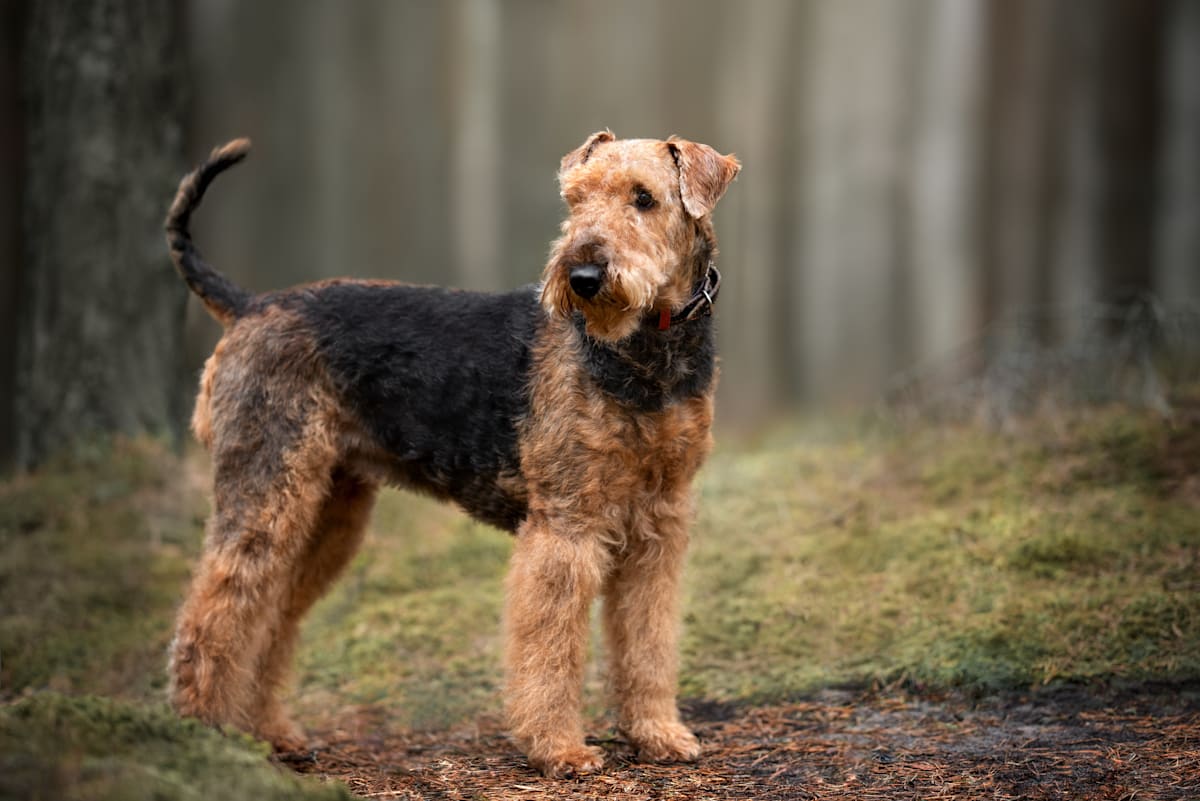
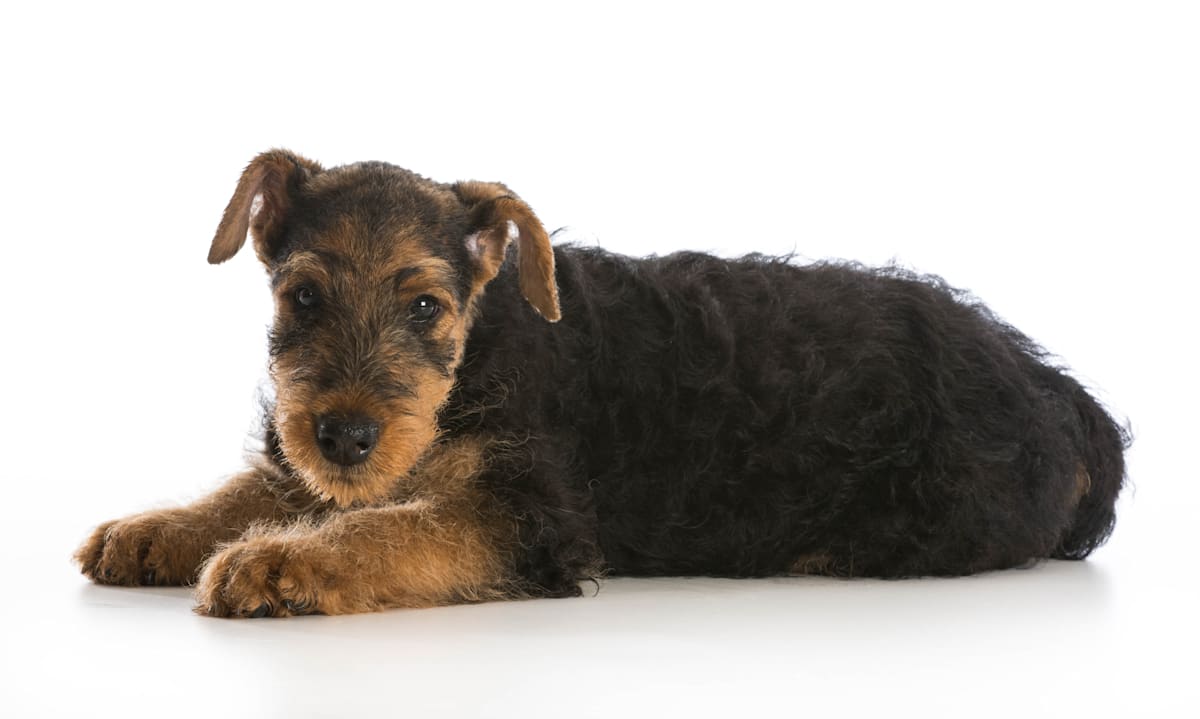
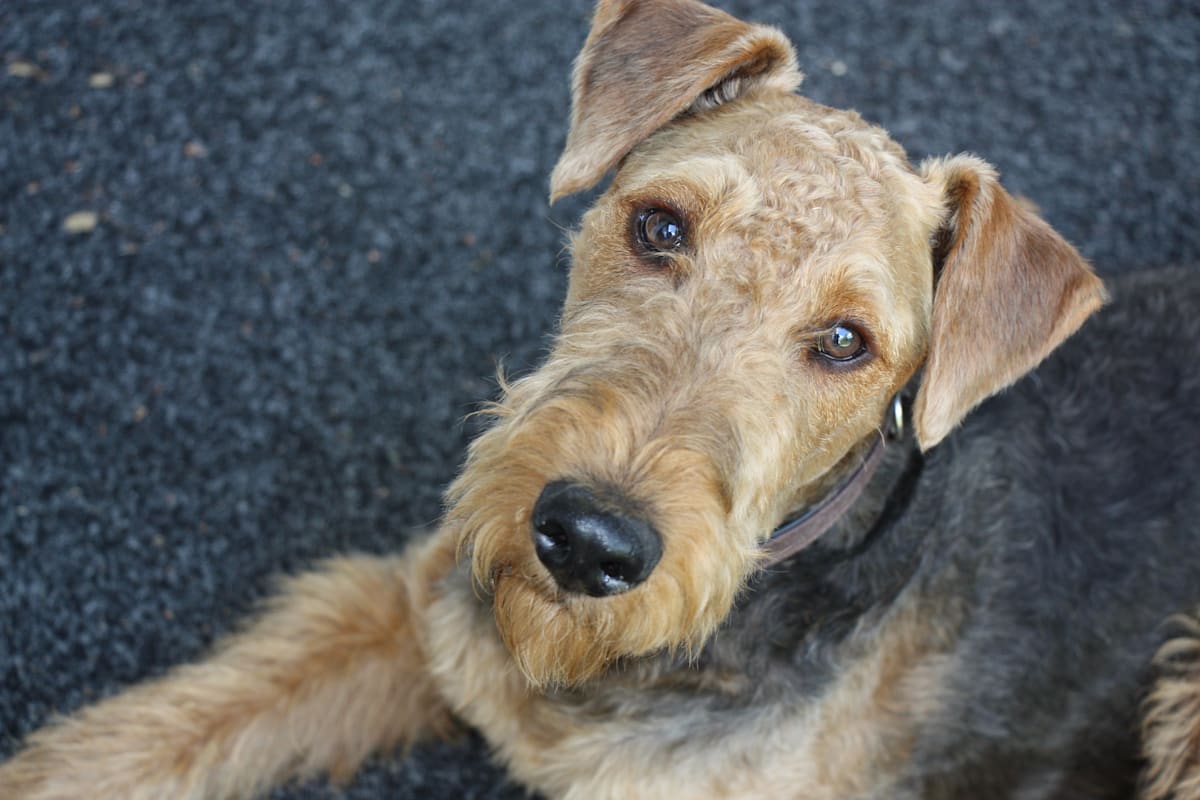
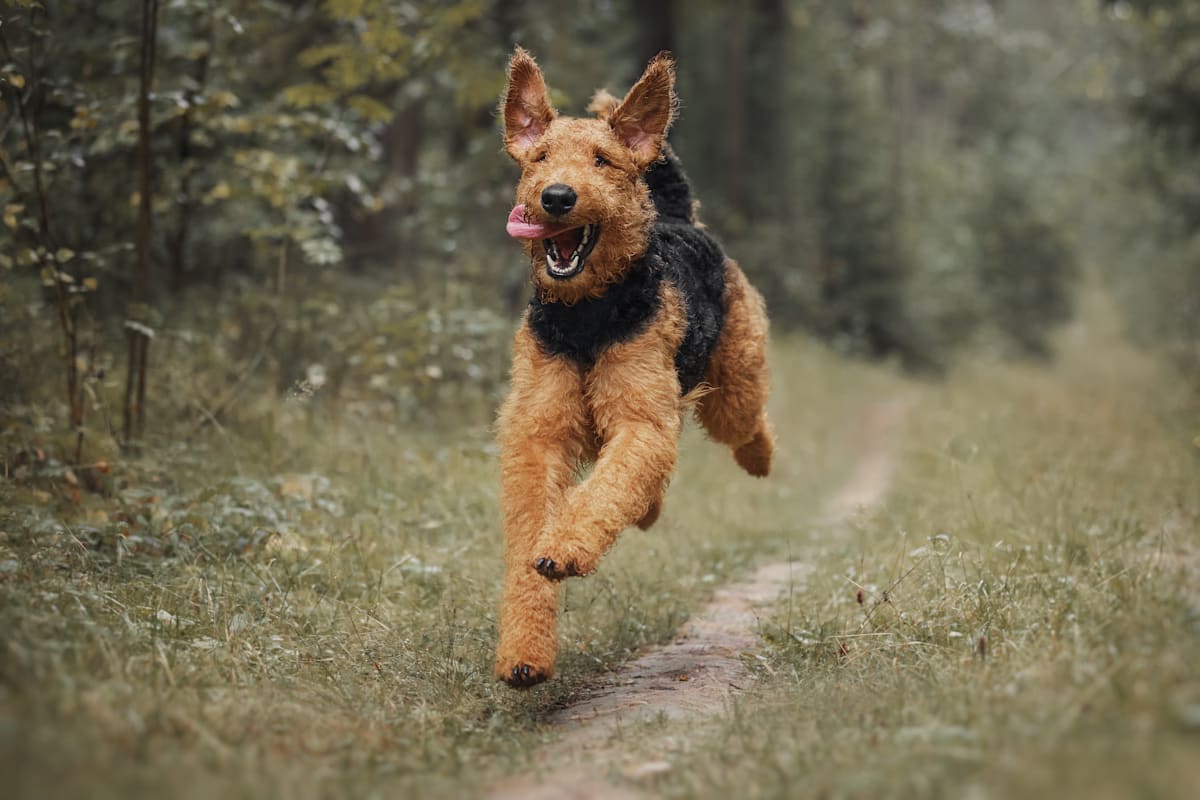
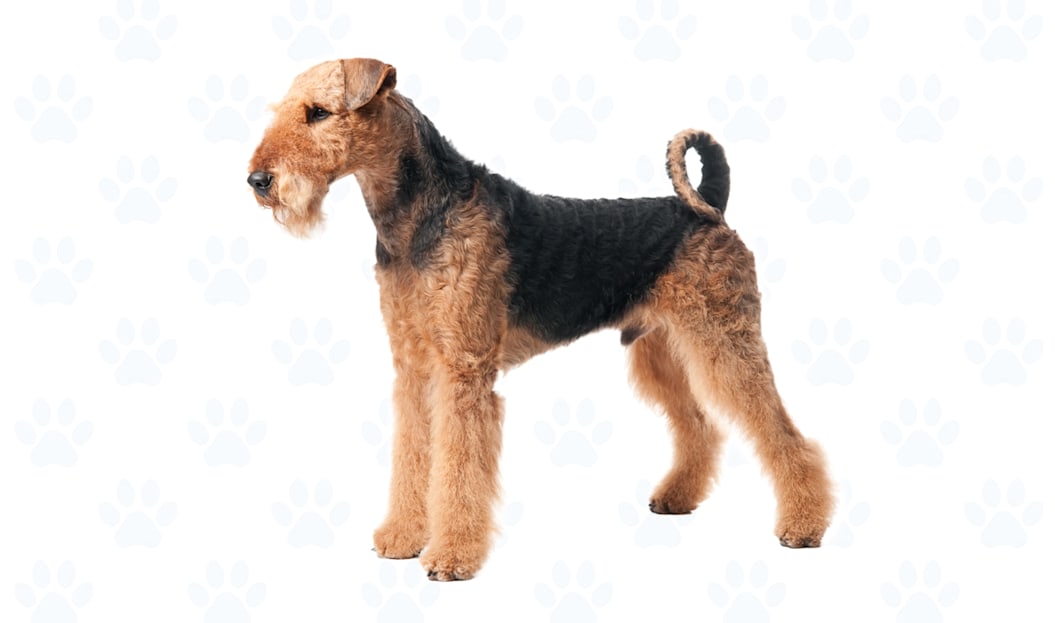
As the largest of the terriers from Great Britain, the Airedale Terrier stands proud and tall. They have a medium coat with black and tan shades. The topcoat is typically harsh or broken, but the undercoat is soft. Their ears are folded to the side to frame a happy, expressive face. This working breed is powerful and muscular under the shaggy coat, and Airedales seem to walk with a royal self-importance.
Airedales can grow to be medium-sized dogs, weighing around 50-70 pounds. On average, they usually grow to be 23 inches tall at the shoulders.
| Full Grown | |
|---|---|
| Female | 23 in. / 65 lbs. |
| Male | 25 in. / 70 lbs. |
Height is measured up to the shoulders.
On average, they usually grow to be 23 inches tall at the shoulders. With boundless energy and medium-sized frame, Airedales are built for long days as a working dog.
Airedales can grow to be medium-sized dogs, weighing around 50-70 pounds.
An Airedale Terrier needs sufficient exercise to maintain a sunny attitude and healthy living. It’s not a good choice for apartment living, and it’s crucial to provide a fenced arena to contain their rambunctious energy. Airedales are a traditional working breed, and they have the gas tank to match.
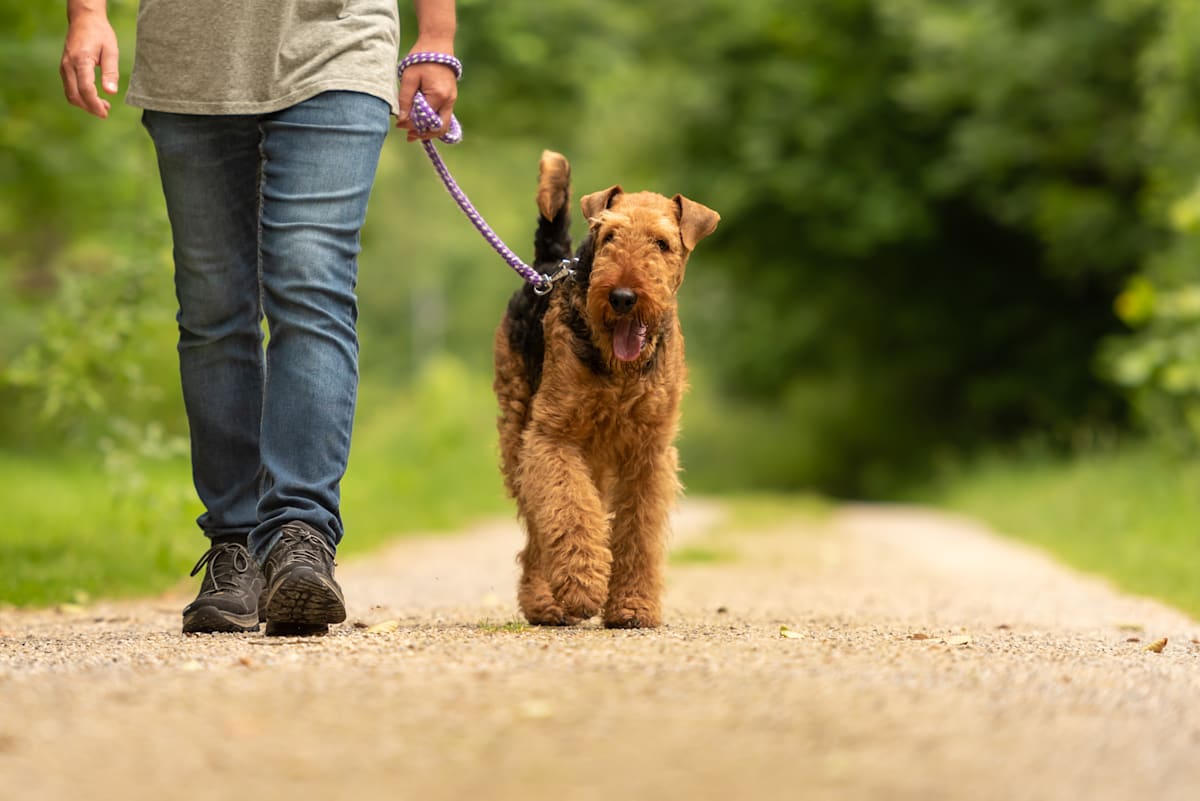
One of the biggest challenges of owning an Airedale Terrier is the necessary exercise regime. This breed needs a lot of daily walking and time to run around. A fenced in yard is a must at home, and a strong leash is preferable. Airedales love a challenge and mental exercise, too. Games are always a good thing to incorporate into their daily activity.
Brimming with confidence and self-esteem, the Airedale is a proud companion of many farmers. They are very intelligent and affectionate with their family and friends, but also alert at all times to danger and anything to chase. Airedales can make a great family dog, but always supervise children and strangers with your dog.
Farming breeds, such as the Airedale Terrier, are protective when it comes to their home turf. Their love of digging and chasing can cause problems, but they are stubborn and loyal protectors.
The Airedale Terrier is a great family dog with the proper early socialization and training for obedience. They are loving and loyal companions, but it’s always a good idea to keep an eye on any small children or strangers around your dog.
Terriers are generally obedient and eager to please, but the Airedale can be a bit of a challenge due to its exercise demands. The breed is smart and quick to learn, but it takes a devoted trainer to maintain their patience through the daily walks and playtime.
Airedale Terriers are not prolific shedders, but they can deposit their fair share of fur around the home. It’s nothing too onerous, and a weekly grooming session helps keep the mess to a minimum.
As a sturdy working breed, the Airedale Terrier does well in cold weather. A sunny day is no problem either. It’s important to keep an eye on your canine companion in extreme conditions (either hot or cold) for signs of distress, but your Airedale is perfectly happy to spend plenty of time outside.
While they do bark from time to time, Airedale Terriers are not known as a particularly loud breed. It’s usually enough to announce their presence without wearing out their welcome with too much barking. If your dog seems to bark all the time, it might be a sign of behavioral or health problems. A trip to the vet is never a bad idea if things seem out of sorts.
A typical working dog like the Airedale Terrier is usually assertive and curious. A life of farm work alongside large cattle is a great match for their bravery and strong work ethic. Proper training is key, and regular daily exercise is a must with Airedales. They can be stubborn with prey animals and digging projects, so it’s always good to supervise them in a safe and contained area when off-leash. Airedales are excellent family companions, getting along well with cats and other small pets.
Excessing barking is rare, but your Airedale may feel the need to express himself every now and again. They don't like being left alone outside for too long – being with their family is what they love best.
Understanding the history of the British terrier breed helps to shed some insight on their manners and behaviors. A proper training regime and early socialization are key to develop good habits in your Airedale. It’s crucial to provide ample opportunities for exercise, mental stimulation, and playtime for your dog.
As a large and muscular working breed, your Airedale Terrier needs solid instruction and socialization to build a winning personality. Training is important, and it requires a commitment from their human companions to stick to the plan. Regular exercise, games, and goofing around are all key ingredients to keep your Airedale happy and healthy. Keep your training sessions short (10 minutes or less) for younger Airedales, and don’t be shy with the positive reinforcement. Airedales are keen to learn and impress their owners, but they are curious and get bored quickly.
Airedale Terriers have some strange habits, but they only add to the charm and lovability of this wonderful breed. They love to dig and bury their toys, which includes pretty much anything they can get their teeth into. Socks and underwear are particular favorites of the Airedale. Chewing is another common issue with Airedales, so it pays to invest in robust and chew-safe toys for your new companion.
Frisky, energetic breed that is always ready for action
Airedales are generally active dogs, but with overfeeding or under-exercising, they can easily become overweight. Measuring portion-controlled meals of a high quality, balanced dog food is the best way to keep your Airedale Terrier in prime condition. Limit people foods and treats, since these can quickly pack on the pounds.
Average daily consumption for an adult Airedale is 2.5 - 3.5 cups
Maintaining routine visits to your veterinarian is the best way to keep your Airedale Terrier in the best condition possible. Airedales can experience some skin conditions associated with hair loss or skin tumors. Veterinarians are extensively trained to pick up on very subtle details that may aid in earlier diagnosis and subsequent treatment of some conditions. At home, regularly evaluate your dog’s skin and coat for any changes, and seek veterinary attention if anything abnormal is noted.
Female Airedale Terriers are more prone to developing a pyometra, which is a serious and potentially life-threatening uterine infection. Fortunately, this hormone-driven condition can be entirely prevented by spaying your female dog to remove her ovaries and uterus.
Health conditions can occur in Airedale Terriers, as with any breed. Some of these conditions occur at an increased frequency in the breed, and others have a genetic link. Responsible breeders can have genetic testing performed on their breeding dogs in an attempt to decrease the frequencies of some of these conditions.
Common conditions among Airedales include: follicular dysplasia, Hemophilia B, cauda equina, cutaneous hemangiosarcoma, nasal cavity tumors, pyometra, and flank alopecia.
On average, Airedale Terriers live to be about 11-14 years old.
The broken coat of the Airedale Terrier can be a handful for a novice owner. Airedales require “hand stripping” three or four times per year to remove hair from the undercoat. It’s a challenge for home groomers, so don’t be afraid to seek professional help. A good dog groomer will help you maintain a beautiful coat on your Airedale, and your companion will appreciate the special attention.
The American Kennel Club recognizes two standard colors for Airedales: black & tan or grizzle & tan. There are no standard markings contained in the AKC breed standard.
Medium
Frequent grooming
Shedding isn’t a major issue with Airedale Terriers. Weekly grooming can help, but the breed can be challenging to brush without causing damage to their broken hair coat. Invest in the proper tools, take them to the groomer regularly, and don’t wait too long before their coat gets out of hand.
Airedale is a valley in Yorkshire, England. Its name derives from the River Aire, and it proudly boasts to be the home of the famous Airedale Terrier. Breeders in the mid-1800s wanted a larger, more powerful terrier for farm work around cattle and other large animals. Several other terrier breeds combined to create the Airedale we know and love today. The breed won a loyal following with local farmers and miners. Sporting enthusiasts would often compete with rat-hunting races using their beloved Airedales to catch vermin along the riverbanks. The Airedale was perfect for the mix of agility and strength needed to catch a river rat.
The Airedale Terrier came to North American later in the 19th century. The first member of the breed to compete is America was Bruce, an instant hit and a champion terrier on the New York circuit. The AKC recognized the breed in 1888. The Airedale Terrier Club of America began a trophy event for prize Airedales in 1910, and the competition continues to this day. After some military service in World War I, the Airedale became an invaluable resource for the police and military. As the German Shepherd and other breeds took over as the preferred choice for this type of work, the Airedale Terrier became a favorite of American families as a loyal companion animal.