Petco Text Logo
Petco Pet Logo
Author Profile Photo
Written by Cheryl Lock

About Russian Blue

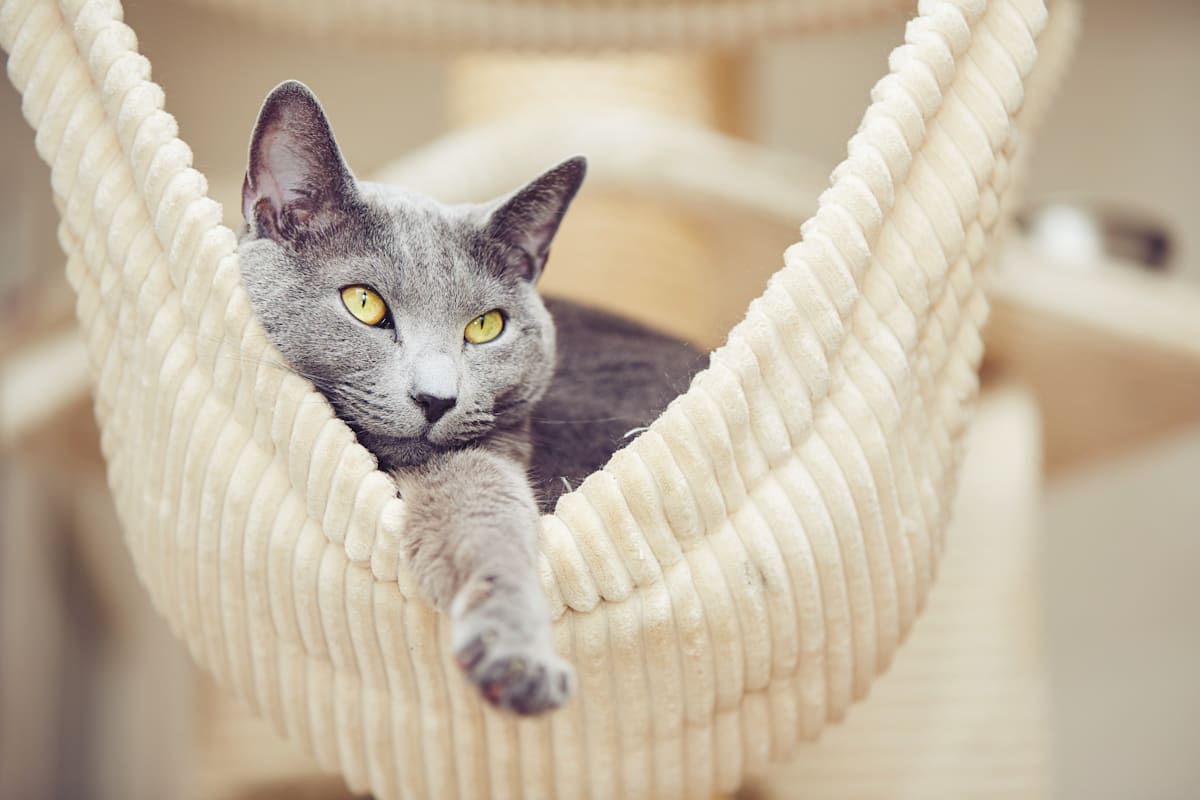
Shy and careful around strangers, the Russian Blue is anything but reserved with its owner. This cat is a devoted and affectionate breed, likely to greet its owner at the door and partake in a game of fetch. They are also very intelligent and make for loving companions, even in households with other pets and older children who aren’t overly rambunctious.


Origin: Russia   Other Names: Archangel Cat

Petco Pet Education Center

General appearance

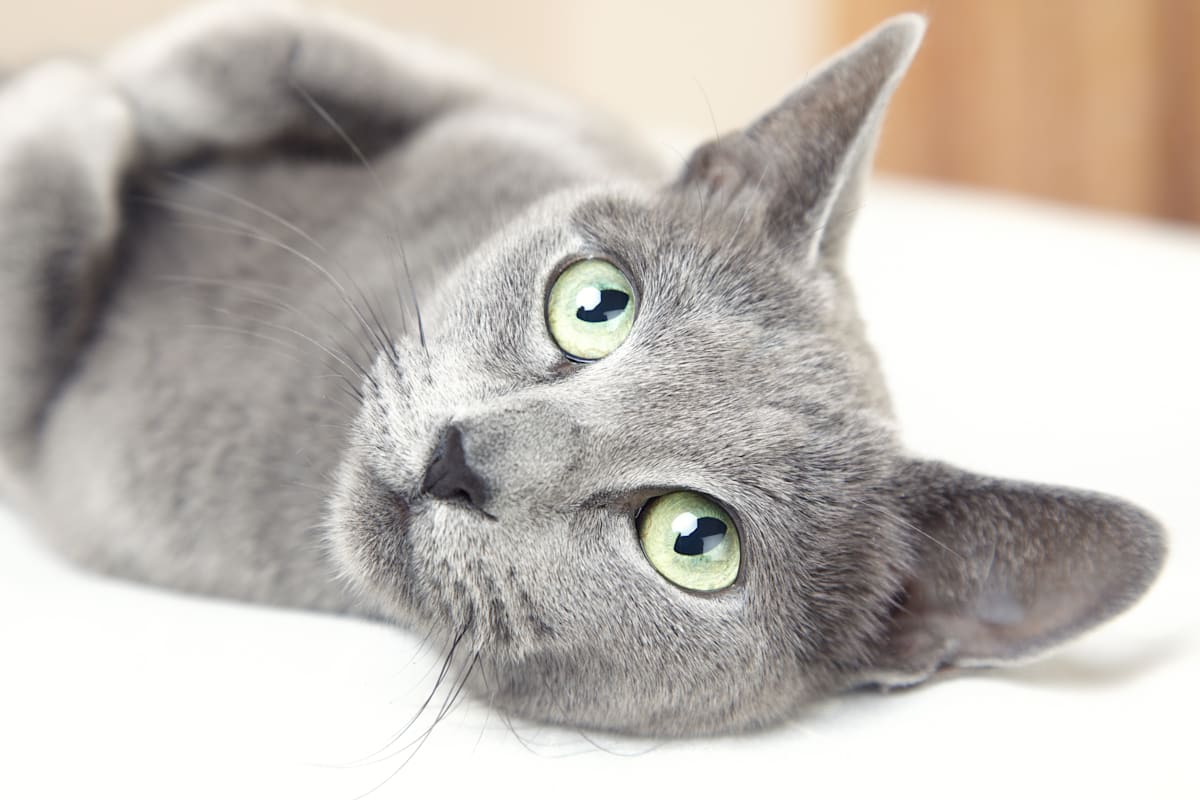
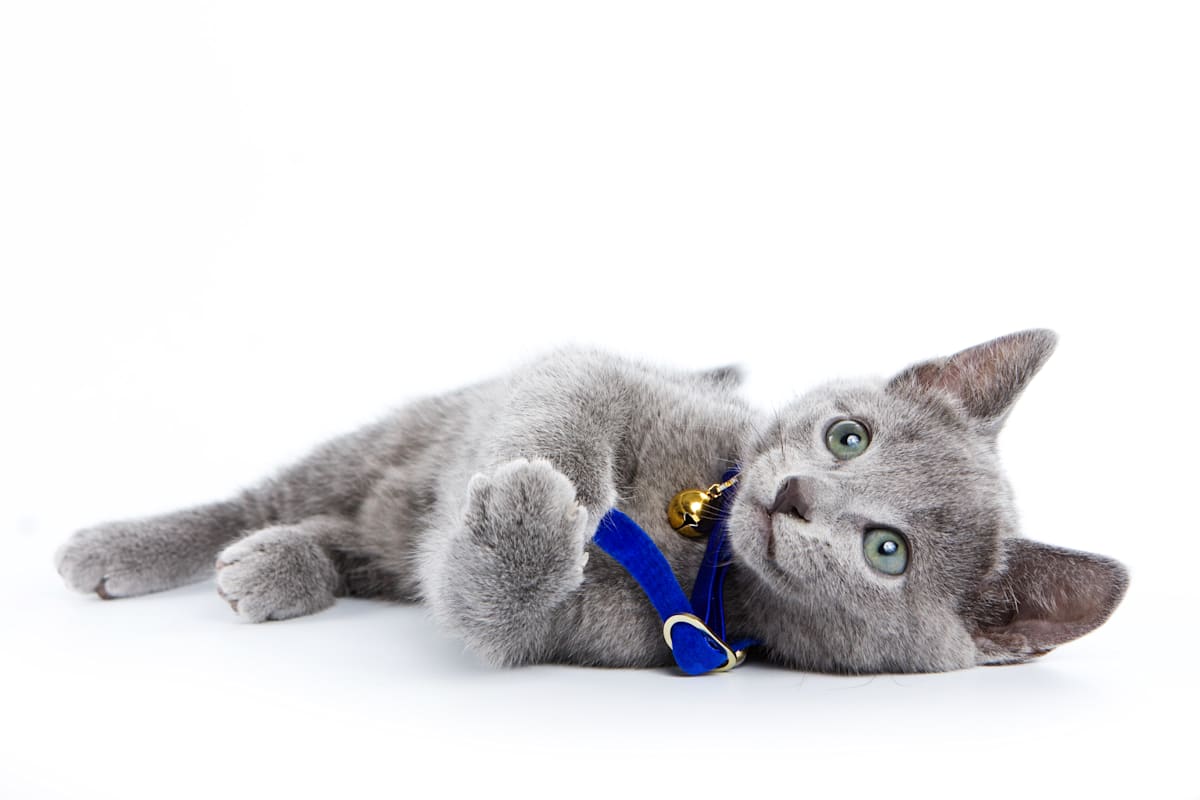
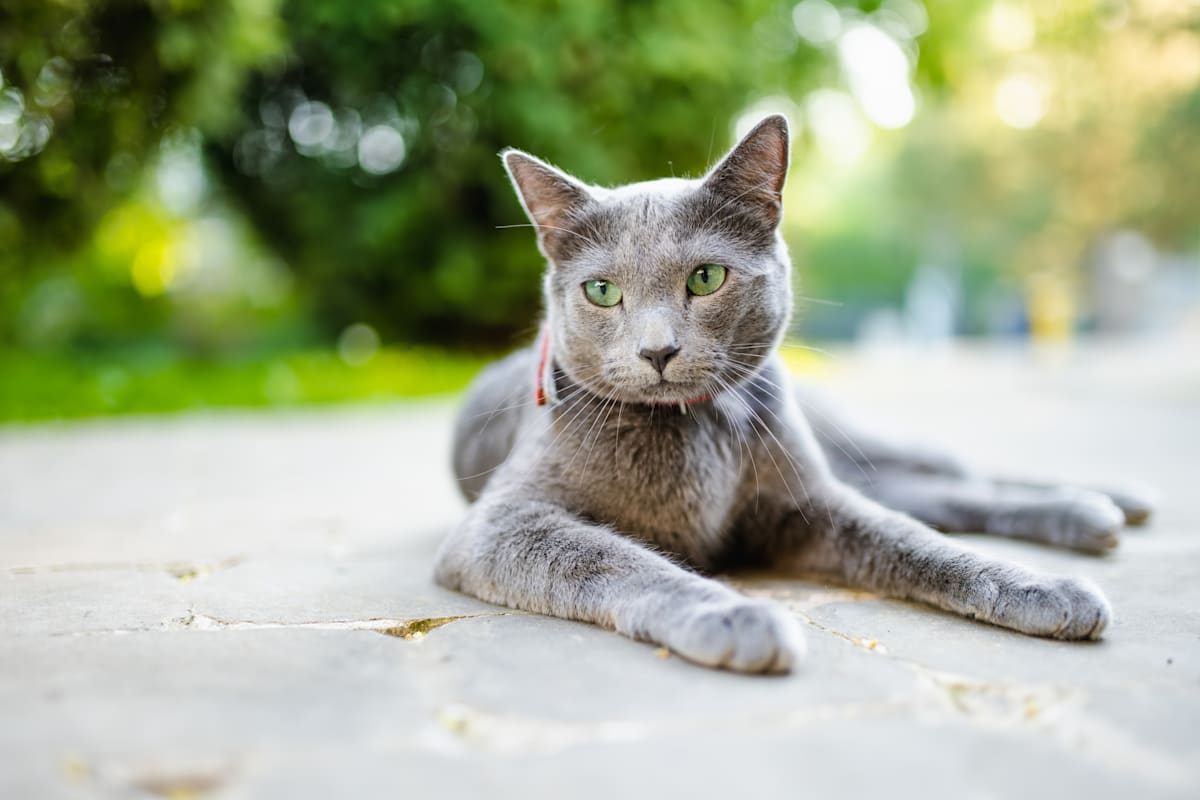
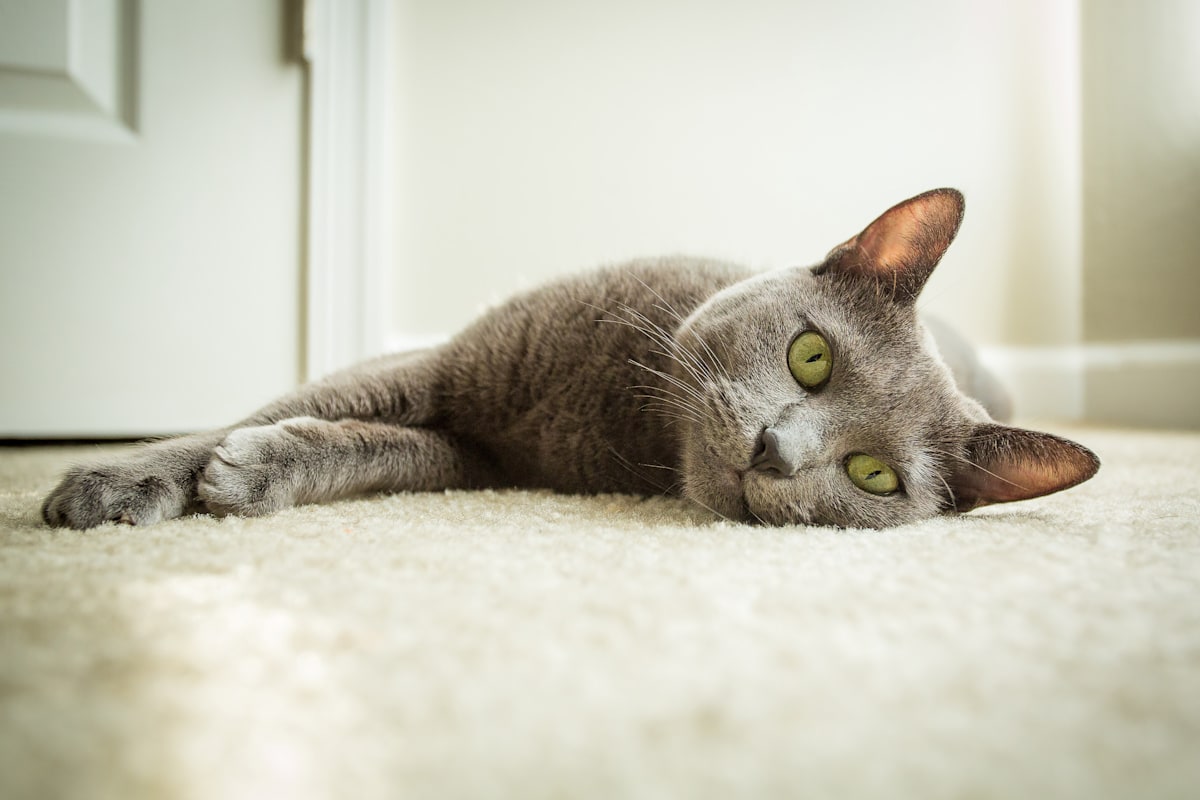
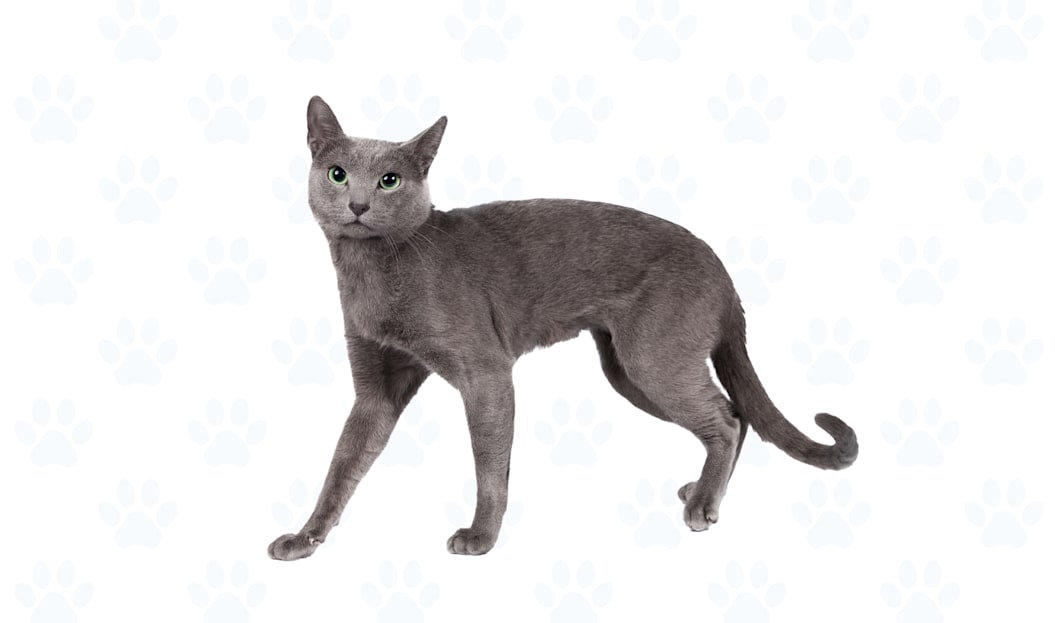
Russian Blues are easily recognized by their short, silvery blue coat and wide-set, bright green eyes. “The silver-tipped coat really enhances the regal and muscular appearance of the Russian Blue,” says Teresa Keiger, a Russian Blue breeder with [The Cat Fanciers’ Association (CFA)](http://cfa.org/). “Many people have noted that they look like statues.”


Most Russian Blues have coats that are even in color, and the guard hairs give them a characteristic silvery and lustrous look. Overall, the breed is a medium size with a long, firm and muscular appearance.

Size & Weight

Russian Blues are medium sized cats and weigh between 5 and 11 pounds.

Full Grown
Female 10 in. / 8 lbs.
Male 10 in. / 11 lbs.

Height is measured up to the shoulders.

Female Size Chart
Height Figure
Male Size Chart
6 ft. 4 ft. 2 ft.

Cost of Owning

The average cost of owning a Russian Blue is $800 per year
$250
Vet Care
$200
Grooming & Boarding
$150
Others
$200
Food & Treats

Characteristics

Weight

Russian Blues are a medium sized breed, weighing between 5 and 11 pounds.

Light
Heavy

Living space

The Russian Blue can be happy in most places, as long as he has room to stretch in the sun and to escape when he needs a moment of solitude.

City apartment
Ranch

Exercise

Russian Blues love playing with toys, but their favorite game is fetch. Their high intelligence means that they do best with daily doses of exercise and stimulating entertainment.

Couch potato
Bring it on!

Personality

Although loving and affectionate with their owners, Russian Blues aren’t overly needy and are fine on their own for short periods of time. Russian Blues will also likely ignore or be slightly wary of strangers.

Antisocial
Outgoing

Behavior with kids

This breed tends to do better with older kids who aren’t overly rambunctious, although if properly trained or raised around younger kids, all can go well.

Always monitor
Babysitter

Shedding

Although its short, dense coat doesn’t shed much, the Russian Blue still requires weekly brushing to maintain a healthy coat.

Minimal
Abundant

Climate

While short, their robust and sturdy coat suggests they can handle colder climates.

Warm
Cold

Temperament & Behavior

Loving and affectionate with their owners, Russian Blues are not overly demanding and can be perfectly happy alone while you’re off at work, as long as you provide toys for entertainment and proper attention once you get back home.


“Russian Blues really crave affection from their owners and prefer to spend their evenings curled up in a warm lap,” says Krieger. “It’s hard to say no to those big green eyes.”


Russian Blues aren’t overly noisy, either, although they can get vocal around feeding time. They also do well in houses with older children or other pets.

Barking: Understanding your cat

Training

The Russian Blue is happy to spend stretches of his day relaxing in the sun or being pet by his owner, but his high intelligence and agile body means that he also craves daily exercise and mental stimulation. If you have two Russian Blues, they can play with each other, then curl up for a mutual bathing session, says Krieger.


Russian Blues are also known to particularly enjoy a game of fetch and are likely to bring you a favorite toy to start one up. “They also enjoy watching birds and other outside creatures from a convenient window,” Krieger adds. “Good, sturdy cat trees for them to run up and play in are also excellent forms of exercise.”

Habits and Exercise

While the Russian Blue can be adaptable, this breed craves habit and a schedule whenever possible. They are affectionate and loving with their family (and they aren’t likely to play favorites), but when strangers show up, you may be more likely to find them hiding under the bed. Once a Russian Blue has decided that a newcomer is not a threat, however, he will approach for a head scratch or three, says Krieger.


Russian Blues prefer to be indoor cats, and as long as they have room to play and a lap to sleep in, they are content, Krieger says. They are also a pretty quiet breed, except for when food is on its way. “They are very good about sticking to their own food bowls, though, and understand that the human’s ‘food bowls’ are not for them,” Krieger says. “But do watch out during meal preparation, as they might decide to do a little foraging on their own.”

Energy Level

Enjoys some moderate exercise every now and then

Energy Level

Nutrition

As with any cat, Russian Blues can become overweight if they are overfed or insufficiently exercised. Offer portion controlled meals of a good quality balanced diet to keep your Russian Blue in peak condition. Canned foods are generally a good higher protein and lower carbohydrate option for most cats, which is often beneficial in weight management. Avoid offering table foods or too many treats, as these can quickly pack on unnecessary weight.

Daily Consumption

An adult Russian Blue eats 1/4 to 1/2 cup of dry food per day

Daily Consumption

Preventive care

The best way to keep a Russian Blue in peak health is with regular trips to the veterinarian once or twice per year. Veterinarians are extensively trained in detecting subtle changes before they become bigger problems. Owners of Russian Blues should keep an eye on their cats at home for any new developments, such as an increase in their water consumption and urine volume, weight loss or lethargy, all of which could be be associated with chronic kidney disease, as well as a number of other health problems. Although many of these conditions cannot be definitively prevented, offering plenty of water or canned foods can be helpful in slowing the progression of chronic kidney disease.


Regular dental care at home is beneficial in keeping a Russian Blue’s teeth healthy. While daily toothbrushing can be challenging for some cats, it can still be accomplished for many cats. This simple process can significantly minimize the accumulation of tartar on a cat’s teeth. Dental cleanings under general anesthesia may still be needed and with the help of dental x-rays, can detect the presence of tooth resorption, which can be managed with the extraction of the affected teeth.

Inherited health issues

As with any breed, certain health conditions can occur through genetics or simply at an increased frequency in Russian Blues. These conditions may include, but are not limited to, the following: Chronic kidney disease, Urolithiasis and Tooth resorption.

Life Span

On average, Russian Blues live to be between 15 and 20 years old.

Life Span

Did you know?

  • The origination of the Russian Blue is unknown, but there are many educated guesses about the breed. One such rumor is that the Russian Blue is descended from pets owned by Russian Czars.
  • Russian Blue kittens may be born with “ghost stripes” that usually disappear as they mature.
  • The Russian Blue is one of three “blue only” breeds, with the other two being the Korat and the Chartreux, said Krieger

Coat and Grooming

While the Russian Blue has a short, dense coat that doesn’t shed much, it’s still a good idea to give your cat a weekly combing to keep things in tiptop shape. “The thick undercoat that gives the coat that luxurious feel can also become matted and really needs to be combed out to be at its best,” Krieger adds.

Coat length

Medium

Coat length

Grooming

Occasional

Grooming

Shedding

Russian Blues don’t shed much, but do require regular grooming to keep their coats in good condition. “The double coat – consisting of straight guard hairs and then finer rippled hairs of the undercoat which provide some loft – would keep it warm in the colder climate,” says Krieger.

History

The origin of the Russian Blue is a bit of a mystery, although the legends surrounding the breed are fun to follow. According to the Cat Fanciers’ Association (CFA), some believe that the breed originated from the Archangel Isles in northern Russia, while others say it descended from cats kept by Russian Czars. If either are true, the breed likely made its way to other areas around the world from Russia on ships around the mid-1860s. Russian Blues were imported into the U.S. in the early 1900s, but didn’t become popular until the 1960s.