











Petco Text Logo
Petco Pet Logo
Author Profile Photo
Written by Cheryl Lock

About British Shorthair

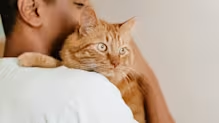
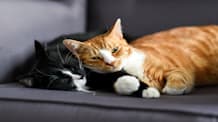
Loyal and happy, relaxed and affectionate, the British Shorthair makes the perfect family pet for any home. While this particular breed isn’t likely to curl up in your lap, they are very happy to lounge right next to you and accompany you from room to room. British Shorthairs are smart and are happy to entertain themselves until their family returns home. These cats can do well in homes with other pets and children, as long as they aren’t often picked up (they like to stay firmly planted on the ground) and have the ability to pick and choose when they play.


Origin: Great Britain   Other Names: Brit

Petco Pet Education Center

General appearance

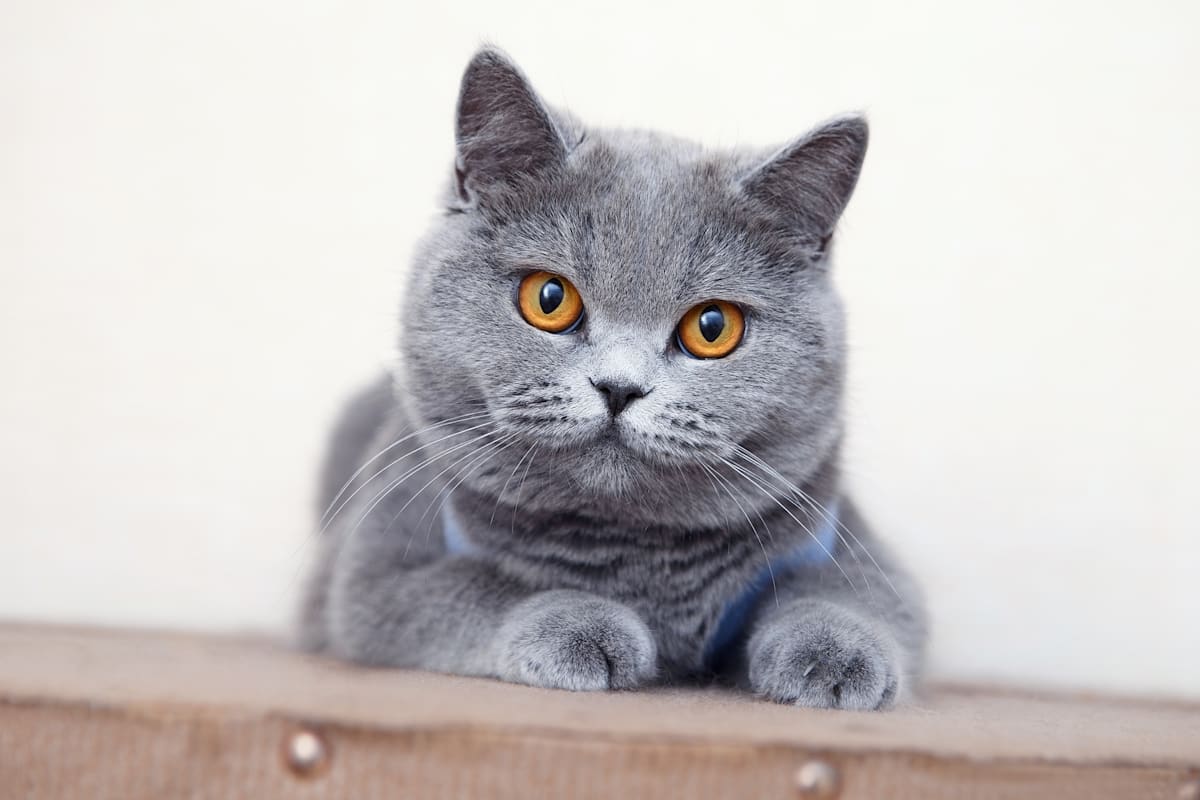
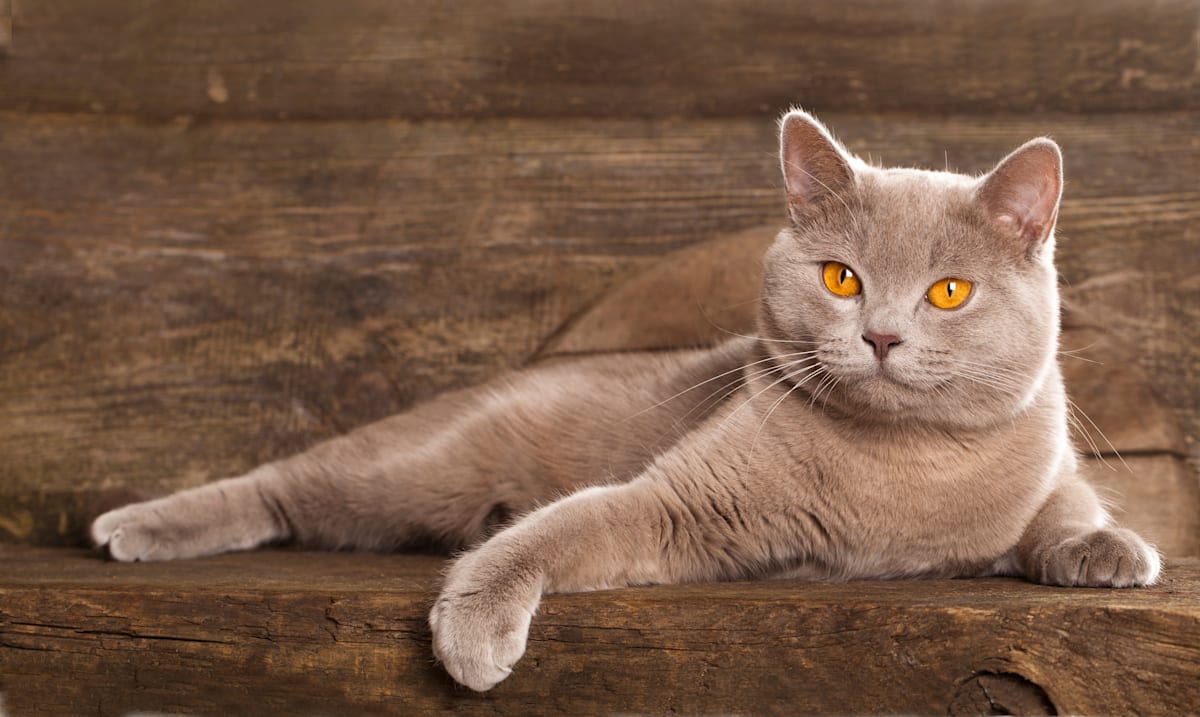
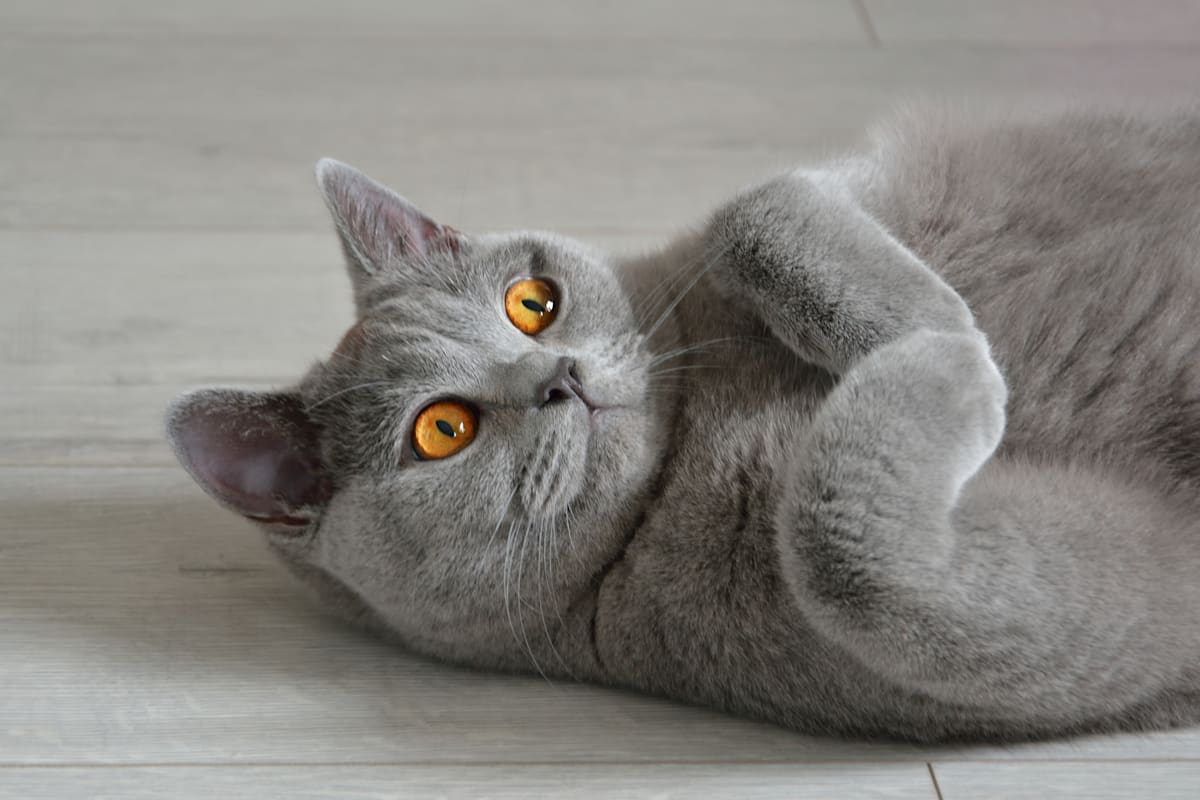
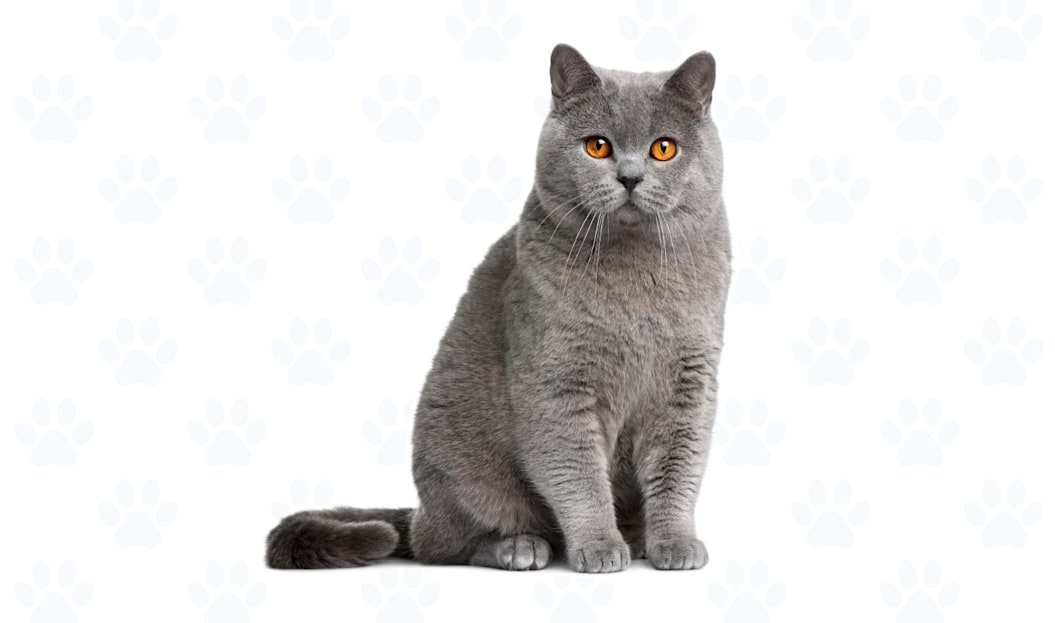
Easily distinguished by its chubby face and plush, dense coat, the British Shorthair comes in most colors, with the most popular being blue. They have large, round eyes that are usually deep gold or copper, and are rarely blue or green. With a weight of up to 17 pounds, the British Shorthair is a medium to large cat with a compact and muscular build.

Size & Weight

A medium to large breed, a British Shorthair male can weigh between 9 and 17 pounds, while females tend to weigh between 7 and 12 pounds.

Full Grown
Female 12 in. / 12 lbs.
Male 14 in. / 17 lbs.

Height is measured up to the shoulders.

Female Size Chart
Height Figure
Male Size Chart
6 ft. 4 ft. 2 ft.

Cost of Owning

The average cost of owning a British Shorthair is $800 per year
$250
Vet Care
$200
Grooming & Boarding
$150
Others
$200
Food & Treats

Characteristics

Weight

Male British Shorthairs weigh between 9 and 17 pounds, while females tend to weigh between 7 and 12 pounds.

Light
Heavy

Living space

A medium to large breed, the British Shorthair can be perfectly happy in smaller living spaces, as long as it has plenty of room to sprawl and explore.

City apartment
Ranch

Exercise

British Shorthairs tend not to be overly active, but a little exercise and play is needed to keep them healthy.

Couch potato
Bring it on!

Personality

Genial and affectionate, quiet, friendly and calm, the British Shorthair is the whole package.

Antisocial
Outgoing

Behavior with kids

The British Shorthair’s easy going attitude makes it a great breed for kids, although owners should take caution to ensure children don’t pick it up too often and carry it around, as it prefers to keep its feet firmly planted on the ground.

Always monitor
Babysitter

Shedding

The British Shorthair has a short, dense, plush coat that is beautiful both to look at and touch. While the coat does not tangle, it will shed more heavily in the spring and fall.

Minimal
Abundant

Climate

The British Shorthair’s fluffy coat keeps it warm in cold weather, while warmer weather can be tolerated with the proper shade and hydration.

Warm
Cold

Temperament & Behavior

You’ll rarely see a British Shorthair jumping through the air and they can be on the clumsy side, so the breed gravitates towards a couch potato lifestyle. Generally, British Shorthairs are affectionate, loving, calm and easygoing. They are very intelligent and train easily, and some will even learn to fetch their toys by name, says Cynthia Byrd, a Cat Fanciers’ Association certified British Shorthair breeder. Their personalities make them a great match for homes with other pets or calm children.


While the British Shorthair is affectionate and friendly, they aren’t lap cats, per se, and they don’t love to be held or carried. Instead, provide your cat the attention she craves by letting her curl up next to you on the couch for some scratches. Female British Shorthairs tend to be quite intelligent and more serious, although still warm, while males are more ostentatious in their affection. “British Shorthairs find it their duty to supervise the home,” says Byrd. “You will find them always nearby, appearing to supervise, but never to judge.”

Barking: Understanding your cat

Training

Habits and Exercise

The British Shorthair loves food and isn’t much of an exercise fanatic, which can be a problematic combination. Be sure to encourage play throughout the day with toys and entertainment, such as a game of fetch or chase the laser pointer. Take caution when it comes to overfeeding. “It’s wise to consult your veterinarian on a diet to maintain a healthy weight for a maturing Brit,” Byrd adds.

Energy Level

Not interested in exercise, would rather doze the day away

Energy Level

Nutrition

The British Shorthair loves food and isn’t much of an exercise fanatic, which can be a problematic combination. Be sure to encourage play throughout the day with toys and entertainment, such as a game of fetch or chase the laser pointer. Take caution when it comes to overfeeding. “It’s wise to consult your veterinarian on a diet to maintain a healthy weight for a maturing Brit,” Byrd adds.

Daily Consumption

An adult British Shorthair eats 1/3 to 1/2 cup of dry food per day

Daily Consumption

Preventive care

While generally a healthy breed, British Shorthairs can develop certain health conditions, like any cat. The majority of these issues revolve around different blood disorders, largely stemming from the fact that many British Shorthair cats often have type B blood. The general cat population, including many of the more popular breeds, often have type A blood. Problems can arise with the British Shorthair if blood type mismatches occur during breeding or blood transfusions.


Obesity can be a problem for British Shorthairs due to their love of food but disdain for physical activity. As with people, obesity in cats is associated with an increased risk of diabetes, heart disease and the exacerbation of joint problems. Owners of Brits must remember to only feed their cats portion controlled meals and avoid conveying their love and affection for their cat with food. Using treat dispensing or hunting toys, or a game of chase the laser pointer are great ways to keep a Brit up and moving.

Inherited health issues

British Shorthairs are generally a healthy breed, but as with all cats, certain conditions can occur through genetics or at an increased frequency within the breed. These conditions may include, but are not limited to, the following: Hemophilia B, Neonatal isoerythrolysis, Blood transfusion reactions and Polycystic kidney disease.

Life Span

On average, British Shorthairs live to be between 12 and 20 years old

Life Span

Did you know?

  • The Cheshire Cat in “Alice in Wonderland” was a British Shorthair.
  • British Shorthairs come in every color and pattern you can find in cats, says Byrd. Perhaps with the exception of the pink and purple tabby of Disney’s Cheshire Cat!
  • The British Shorthair is one of the oldest breeds of English cats.
  • Brits are said to have more hairs per square inch than any other breed of cat.

Coat and Grooming

The British Shorthair is known for its gorgeous short, dense and plush coat. In fact, “Brits are said to have more hairs per square inch than any other breed of cat,” says Byrd. As an added benefit, the coat does not tangle and only requires a regular quick comb through to remove loose hair, which most Brits tend to enjoy as part of bonding time with their owners, Byrd adds. The British Shorthair will shed more in the spring and fall, with minimal shedding in summer and winter.

Coat length

Short

Coat length

Grooming

Occasional

Grooming

Shedding

“Breeders will tell you that Brits ‘change their outfits’ twice each year,” says Byrd. The British Shorthair sheds seasonally in the spring and fall to prepare for a new coat.

History

According to The International Cat Association (TICA), the British Shorthair history began with cats from Egypt that accompanied the Romans when they invaded Great Britain. Over the centuries, the breed has evolved, and a longhair gene was introduced between 1914 and 1918. After World War II, most of the original British Shorthair lines disappeared and breeders were forced to cross domestic shorthairs, Russian Blues and Persians together to sustain the breed. In June 1979, the British Shorthair gained TICA championship status, with CFA recognizing the British Shorthair in 1980.