


Bearded Dragon Lighting: Your Guide to Essential UVA & UVB for Health
Published on September 18th, 2023
Updated on April 2nd, 2026

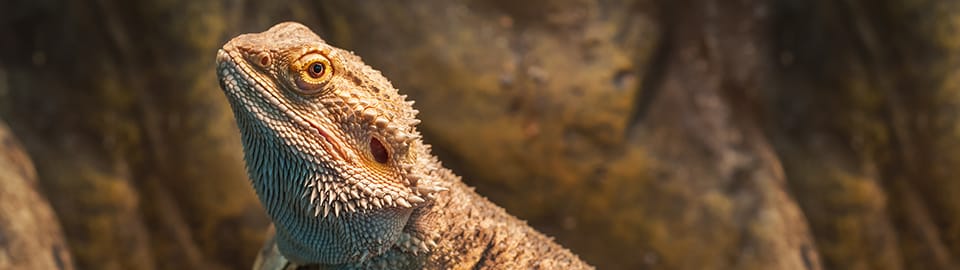
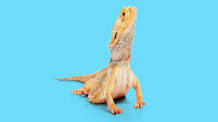
Bearded dragons are arguably one of the most popular reptile species for beginners and seasoned enthusiasts alike. With their ease of care and fun personalities, it is no wonder they’re a favorite addition to any family! To ensure your bearded dragon has lighting that meets its health and wellness needs, let’s take a closer look into UVA and UVB lighting in relation to the bearded dragon’s natural environment.
What lights do bearded dragons need?
Bearded dragons need 10-12 hours of simulated sunlight every day. Pet parents can use UVA and UVB lights in tandem to recreate daylight for their bearded dragons. There are different types of bulbs that can provide these types of light, depending on your preference and your reptile’s needs, including incandescent, halogen, and fluorescent.
In Nature
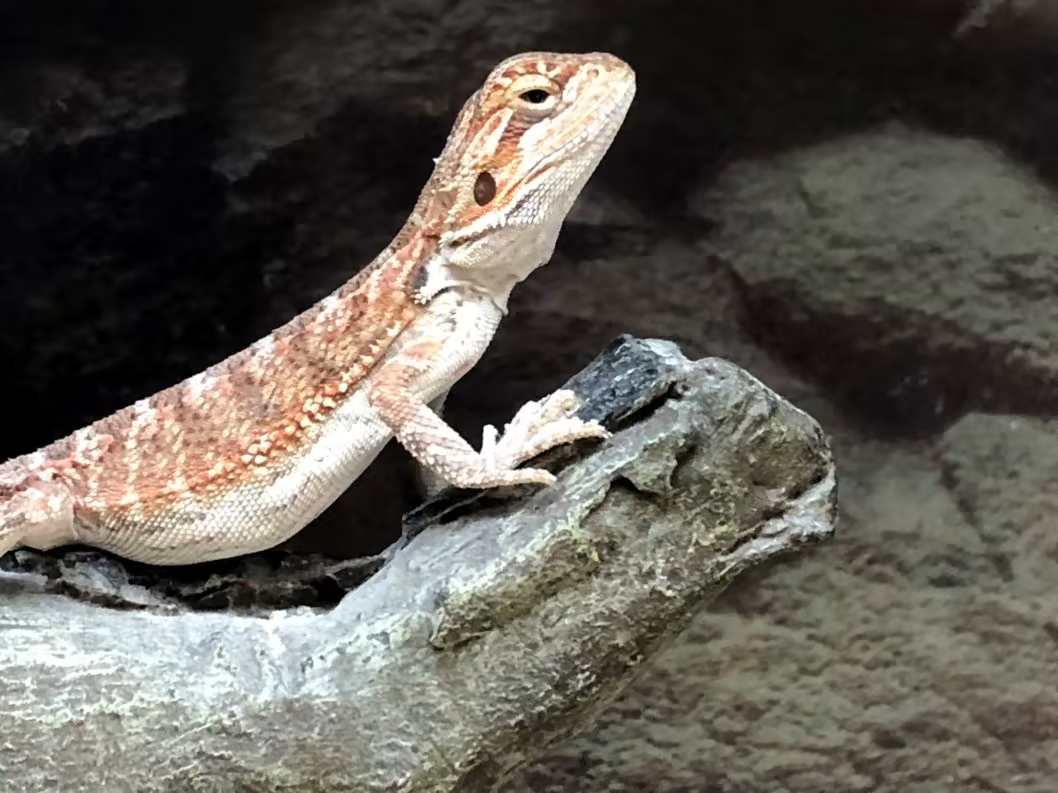
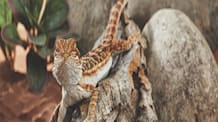
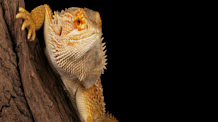
Bearded dragons are native to Australia’s warm and dry climate. They spend most of their day perched on a rock or surface, taking in the sun. The sun offers UVA and UVB rays; combined, they aid in digestion and absorption while warming their body temperature.
Temperature and Lighting Requirements
Bearded dragons are happiest when they have a thermal gradient in their habitat: cooler end around 75 °F, warmer area around 90 °F, and a basking area around 100 °F. Being diurnal, you’re going to want to give your bearded dragon 10‑12 hours of “daylight” and 10‑12 hours of rest with either no lights, red light, night light, or ceramic heat emitters. It’s important to remember that since they’re in a warmer environment, their nighttime temperature shouldn’t fall below 70 °F; if it does, you should compensate with one of the prior mentioned nighttime bulb types.
Ultraviolet A (UVA)
UVA – Provides heat and stimulates appetite, mating, and sleeping, while helping reptiles see the world more clearly. These bulbs come in many different colors to benefit diurnal and nocturnal reptiles alike.
Ultraviolet B (UVB)
UVB – Helps reptiles synthesize vitamin D3 and absorb calcium, crucial for healthy growth and development. It’s important to remember that a UVB bulb should be changed every 6 months to ensure the output of UVB is adequate for the reptile; visible light emission is not an indicator that the UVB bulb is working correctly.
Types of Bulbs
- Incandescent – Available in UVA & UVB; this is the most common bulb used for heating and basking areas, available in all shapes and sizes for any enthusiast’s needs.
- Halogen – Available in UVA & UVB; these bulbs are relatively new to the hobby compared to their older brother, the incandescent heat bulb. Halogen bulbs are more efficient, resulting in less energy consumption, and come in a standard and mini size, which helps fit the needs of most reptile habitats.
- Metal halide – Available in UVA & UVB; this bulb can be very high powered and needs a ballast to work.
- Linear Fluorescent – Most commonly a UVB bulb; these are the longer horizontal tube bulbs that are common in the reptile hobby.
- Compact Fluorescent – Available in UVA & UVB; these bulbs are known for their coil design and smaller form, which helps save space!
- Mercury Vapor – Available in UVA & UVB; these bulbs produce a fair amount of heat, so ensuring you have a quality lamp fixture is important.
- Ceramic – Very durable and offer a high amount of heat with little to no light emitted. Ensure the use of a ceramic lamp fixture as these bulbs produce a high amount of heat. Use caution, as the bulb may appear off, so extra care must be taken when attempting to handle the bulb.
As temperature is a critical component to your reptile’s health, always be sure to have a working temperature gauge to monitor your heat source to ensure it is working efficiently and safely!

Bearded Dragon Lighting FAQs
Do bearded dragons need their lights left on at night?

No, UVA and UVB bulbs used to simulate daylight shouldn’t be used more than 12 hours a day. Bearded dragons need dark so they can get adequate sleep. However, if your home drops below 70 degrees Fahrenheit at night, you will need to use a heat bulb that doesn’t emit visual light to help your pet stay warm.
How many hours of light do bearded dragons need?
10 to 12 hours. This is roughly the same amount of time they’d spend basking in the sun of their natural desert habitat. Sunlight—real or simulated—is essential for bearded dragons to metabolize calcium and create vitamin D3, as well as regulate important biological functions. Any less will cause health issues, and any more will disrupt their sleep cycle.
Where do you put bearded dragon lights?
Bearded dragon lighting should be placed at the top of your pet’s habitat or attached to a lid for even coverage. You should also position and arrange your lights and heat lamps to create two zones in your habitat: one that’s at least 100 degrees Fahrenheit for basking and one that’s at least 70 degrees for normal daytime living.

Is a photoperiod light schedule truly essential for my bearded dragon?
Which UVB light is best for my bearded dragons, and can it wait?
Is my bearded dragon's tank setup good for their health and safety?

How many crickets, what veggies, and UV light for my bearded dragon?
What temperature and lighting does my bearded dragon need at night?
What UVB light wattage is right for my 20-gallon bearded dragon tank?
How to make my bearded dragon comfortable, happy, and bond after prolapse?
Best lighting for red eared sliders: UVA, UVB, and heat explained?
Bearded dragon hurricane prep: Power outage lights and heat?
Bearded dragon tank temps, humidity, and misting: Am I doing it right?


Book an appointment with the pros – our expert vets are here to help.
