Related Articles


Setting Up an African Dwarf Frog Tank
Published on January 23rd, 2026
Updated on February 25th, 2026


About African dwarf frogs
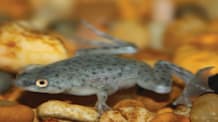
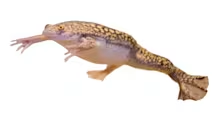
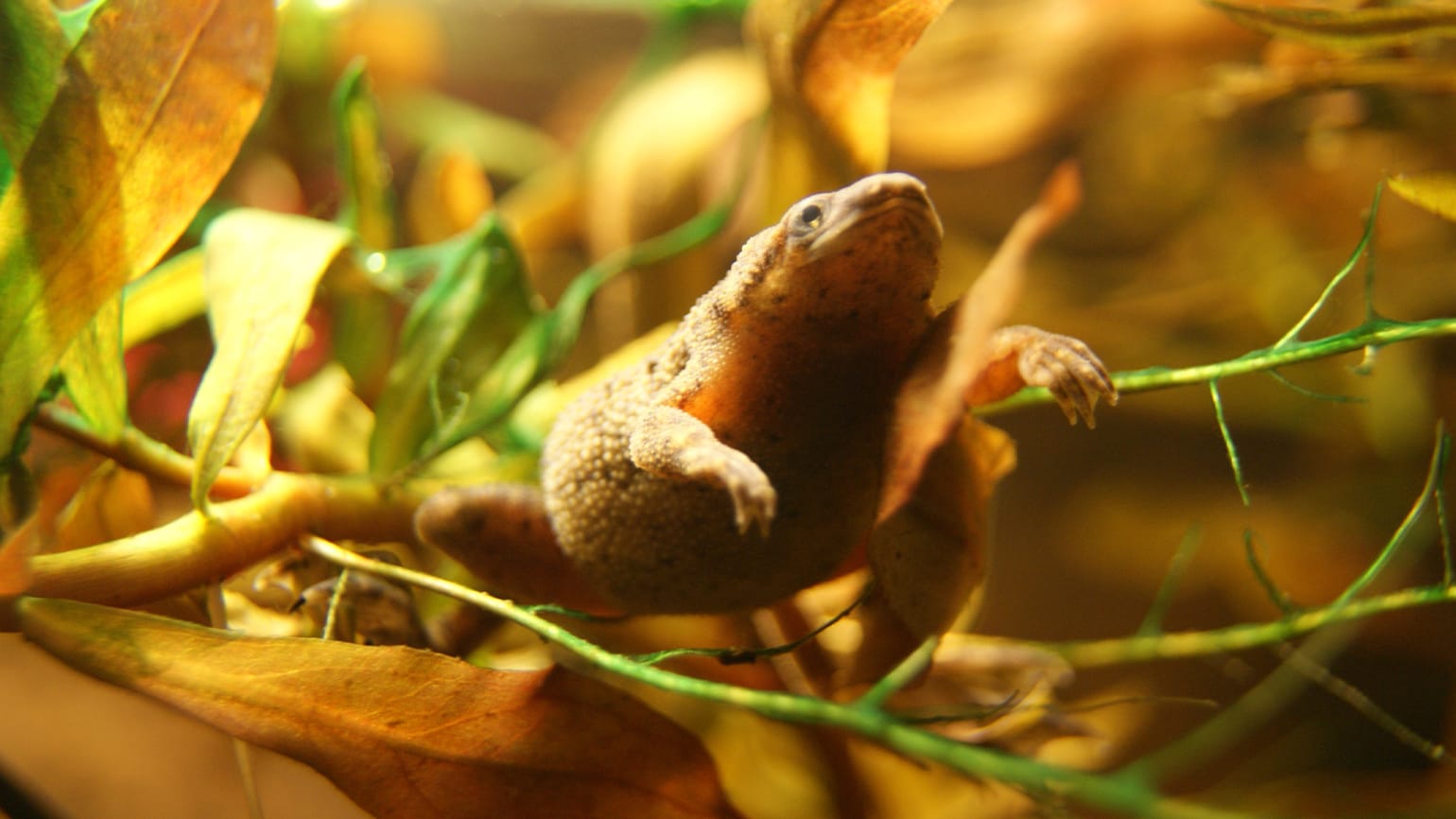
African dwarf frogs (ADFs) are fascinating, fully aquatic amphibians who can thrive for many years in the right environment. Their gentle nature, unique behaviors and long lifespan make them rewarding pets for pet parents who enjoy a calm, underwater world. With proper care from you and the right reptile supplies from Petco, these frogs can live comfortably and display their natural behaviors in a well-maintained home aquarium.
Ideal experience level
African dwarf frogs are best suited for intermediate hobbyists who are already familiar with basic aquarium care. Although small at less than 3 inches when fully grown, they still require stable water parameters and a carefully planned habitat. With good care, these frogs often live up to 5 years, making them a middle-term commitment.
Compatibility with tankmates
African dwarf frogs do best in pairs or small groups, with two usually recommended for companionship, and typically maxing out at four. (If you really want to get seven to name them after some very famous other dwarves, that could be OK with a much larger tank.) They can share space with small, peaceful tropical fish as long as everyone is well fed, since hungry frogs may attempt to hunt. (“Fish are friends, not food!”) Adult frogs may eat eggs, tadpoles or smaller fish. That can be especially distressing to children, which is another reason African dwarf frogs aren’t considered beginner pets.
Fun froggy facts:
African dwarf frogs are fully aquatic but breathe air, requiring them to surface regularly.
They are most active at night, so feeding and observing them is often done after dark.
How to set up your African dwarf frog tank
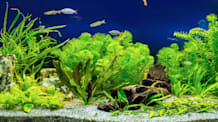
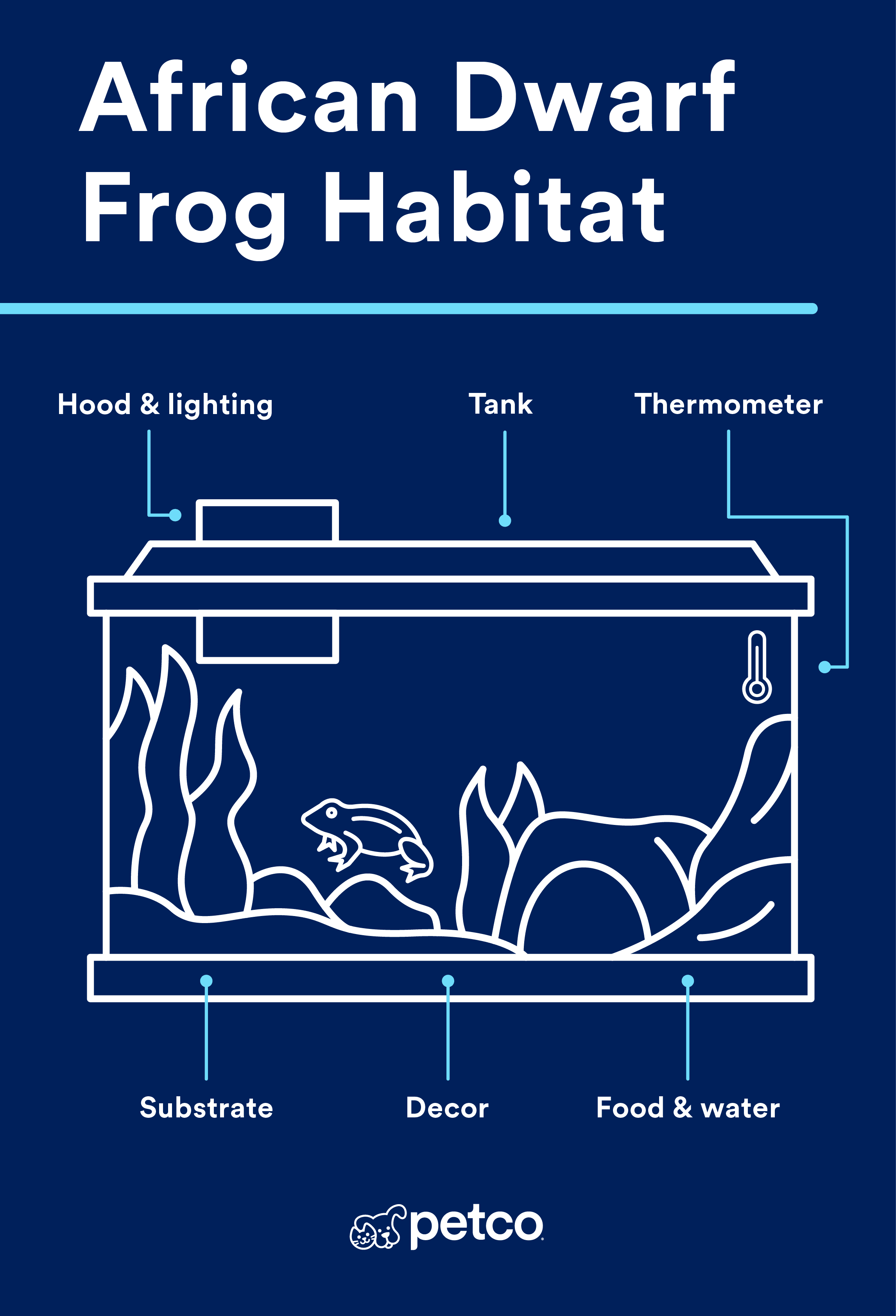
African dwarf frogs thrive in shallow, warm, low-current tanks filled with hiding spaces and planted areas for enrichment. A 10-gallon aquarium is the minimum for two to four African dwarf frogs; it gives them room to explore and helps maintain stable water quality. If you are looking at five or more frogs, a 15-to-20-gallon tank is better. A shallow water column (no more than 12 inches), smooth substrate and a gentle filter create a habitat that mimics their natural environment.
Shopping list
Before your new African dwarf frogs can get home and hopping, you’ve got to do some shopping! As always, Petco can assist you with both online and in-person purchases.
Appropriate food (dry and frozen)
Frozen brine fish
Bloodworms for food
Full-spectrum lighting—T5 recommended
Freshwater substrate (large enough that it cannot be swallowed)
See our care sheet for more African dwarf frog care sheet for more requirements.
Choosing the right tank size
A minimum 10-gallon tank suits two frogs, but even they can benefit from a larger space. Water parameters will be easier to maintain and there are more areas to explore. Remember, unlike dogs or cats who have access to most of your home, the tank is where your African dwarf frogs will spend 100% of their time. Though that’s not for lack of trying! African dwarf frogs are notorious escape artists, so whatever size tank you get, make sure it includes a tight-fitting lid without any openings a frog could squeeze through. That’s a must-have, not a nice-to-have item when it comes to a tank.
Fun froggy fact:
Yes, your frogs will stay in their tank, but it still matters where you put the tank. It should be away from drafts, direct sunlight and high-traffic locations. These factors can stress the frogs and destabilize water temperature.
Substrate and decor
Now it’s time to decorate. This is for two reasons: An aquarium is almost big enough to be considered furniture, so of course you want it to look nice. More importantly, decorative items such as caves, wood and rock structures create safe hiding places. Your frogs will benefit from some visual interest, as well.
Every aquarium also needs substrate to cover the bottom. To help avoid impaction, it should be smooth and large enough that your frogs can’t eat it. The substrate should also be big enough to cover and support plant roots. Speaking of which…
Plants
Live or artificial plants create shelter and help reduce stress. Avoid fertilizers since many are unsafe for frogs. African dwarf frogs breathe air and must be able to reach the surface without struggling.
Include broad leaves, floating plants or decor pieces that give them “rest stops.”
Leave space between the water and the tank lid—frogs need room but also a secure top since they can jump.
Heating and lighting
As already mentioned, lighting and water temps matter to your frog’s health and wellbeing. Maintain a water temperature of 72–82°F with a submersible heater to help ensure stability. Your frog needs 8–12 hours of light per day; consider a timer to keep the schedule consistent.
Filtration and water quality
Not surprisingly, a clean tank is vital to your frog’s health. To set up an African dwarf frog tank properly, filtration must prioritize gentleness and safety.
African dwarf frogs are messy eaters, so filtration and testing tools are extremely helpful in preventing ammonia spikes.
Choosing a filter
Hang-on-back or under-gravel filters work well as long as the flow is gentle. African dwarf frogs are not strong swimmers. Choose a low-flow filter or baffle the output so the current doesn’t exhaust them.
Sponge filters are ideal—they’re quiet, gentle and great for biological filtration.
Avoid power filters that create strong suction or fast water movement.
Testing tips
Use beneficial bacteria supplements to support the nitrogen cycle. Test the water regularly. Petco offers in-store water testing that can help you catch issues early.
Fun froggy fact:
Not all clean is keen. Never use soap or detergents when cleaning the tank, its equipment or its decor. African dwarf frogs have very permeable skin and can absorb chemicals. Soap residue also can wreak havoc on the tank’s beneficial bacterial.
9 steps to construct your tank
Below is a full build guide that walks you through each stage of creating a stable, enriching frog habitat.
Prepare the tank
Rinse the aquarium with fresh water only (never use soap).
Position it on a sturdy stand intended for the weight of an aquarium (remember, a 10-gallon aquarium full of water will weigh nearly 100 lbs.) near an outlet so equipment can be plugged in safely.
Double-check that the lid fits securely.
Add substrate
Rinse it thoroughly beforehand to reduce cloudiness.
Spread the substrate evenly along the bottom, building slight slopes or raised areas if desired. This gives frogs options for resting spots and makes the tank look more natural.
Avoid small gravel since ADFs can easily ingest it.
Plan equipment placement
Before installing plants or decor, decide where to place the equipment.
Sponge filter: Back corner to help ensure gentle flow and aeration.
Heater: Near the filter for even heat distribution.
Leave space for plants to hide equipment without blocking functionality.
Build hiding structures
Arrange caves, smooth stones and wood pieces to create sheltered areas.
Make sure everything is stable so nothing can shift and trap your frogs.
Include several hideaways since ADFs appreciate shaded spaces and will retreat to them during the day. Spread these around so each frog has the ability to hide and get some alone time.
Install plants
Rinse all plants and remove pots and rock wool.
Plant large, broad-leaf species (Amazon sword, pennywort, Bacopa) in the background, using tweezers to bury roots into the soil layer.
Use taller plants to visually cover the filter and heater.
Insert epiphyte plants (Java fern, Anubias) by wedging roots between rocks—avoid burying their rhizomes.
Plant micro-sword or other low-growing carpeting plants around the front rocks.
Mist plants with a spray bottle during setup to prevent leaves from drying out.
Fill the tank
Add dechlorinated water slowly to avoid disturbing the substrate layers.
Remove any soil particles that rise into the water using a magnet. Note: this only works if the soil contains iron.
Turn on the heater and sponge filter once the tank is full.
Add lighting. Place the LED light on the tank lid or rims.
Set the light on a timer (approx. 6 hours/day) to minimize early algae growth. (Once your frogs are added, they need 8-12 hours of light daily.)
Ensure plants receive adequate brightness, especially foreground plants.
Cycle the tank
Seed the tank with beneficial bacteria.
Use a bottled bacterial supplement meant for cycling aquariums.
Optional: Add snails to help build the nitrogen cycle.
Let the tank run and test parameters until ammonia, nitrites and nitrates all hit 0 for amounts present.
Add the frogs
Acclimate frogs by gradually mixing tank water into their bag over a period of about 20 minutes.
Transfer frogs gently using a cup, never a net.
Confirm the lid is tightly secured to prevent escapes.
Fun froggy fact:
As stated above, adult frogs may eat eggs and tadpoles intentionally. (OK, that’s not “fun,” but it’s definitely a fact to remain aware of.)
Takeaways
African dwarf frogs are social, long-lived aquatic pets who thrive when their environment is stable and enriched. A properly sized tank with safe substrate, solid hiding spaces and regular nighttime feeding helps keep them healthy. Their nocturnal habits and gentle personalities make them lively companions for aquarists who enjoy building peaceful underwater ecosystems.
What substrate is safe for African Dwarf Frogs in a planted tank?

Is a 29-gallon tank suitable for my white's tree frog? Friend or night light?
What essential care steps should I take for my new bullfrog toad?
Why is my new African dwarf frog not eating, quiet, and floating?
Can I overdose my African dwarf frog using too much ReptiSafe?
Can I put an African Dwarf Frog with my female betta in a 3-gallon?
My African dwarf frog is dying, bloated, sores. Protect other fish?
How to help my African Clawed Frog: shedding, no appetite, lethargy?
My African dwarf frog is bloated with blood. Is it dropsy or sick?