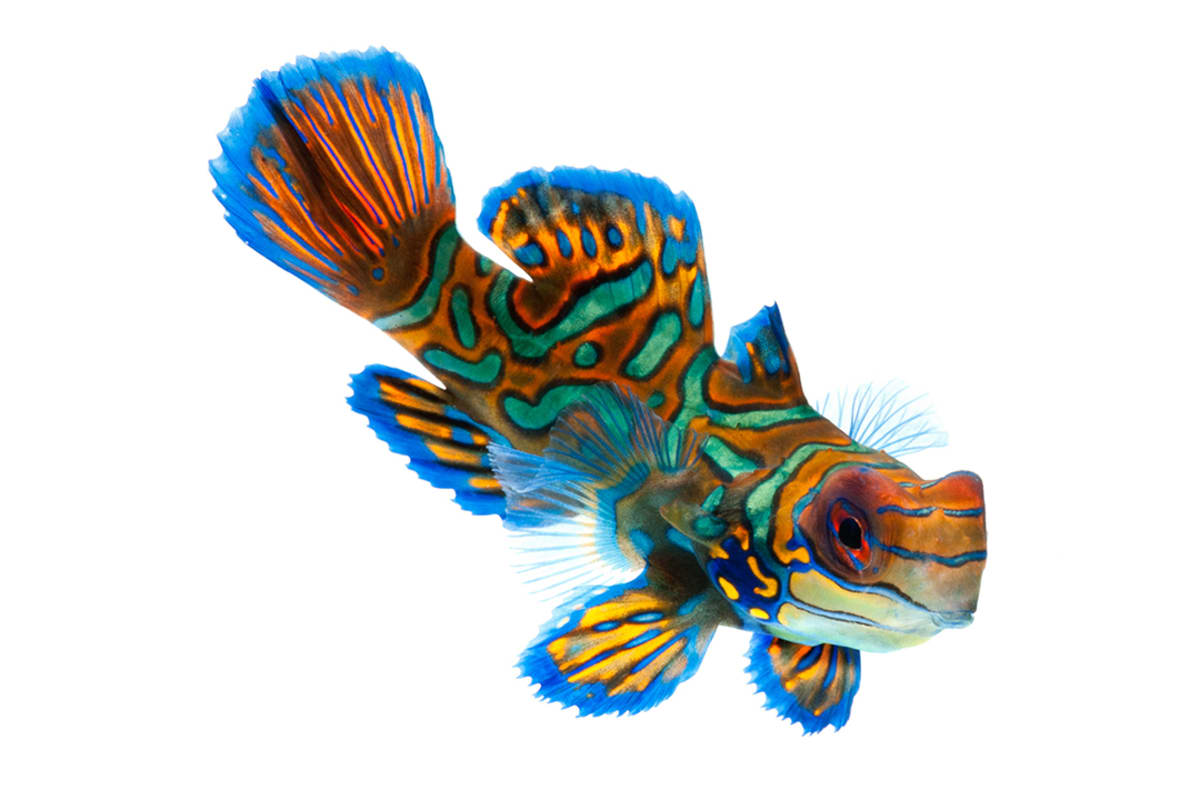
Typical dragonet appearance and behavior
- Dragonets spend most of their time actively skimming the bottom of the aquarium and flitting about the live rock in search of food
- Slow-moving and shy, they appreciate lots of hiding places
- They produce a noxious, bitter mucus to deter predators
- Males have an elongated first dorsal spine or elaborate dorsal fins and may show brighter colors than their female counterparts
- They can be finicky eaters
Characteristics
| Care Difficulty | Advanced |
| Average Life Span | Up to 15 years with proper care |
| Average Adult Size | Up to 12 inches, depending on the species |
| Diet | Carnivore |
| Minimum Habitat Size | 29+ gallons, depending on the species |
| Water Temperature | 74–80°F |
| Specific gravity | 1.020–1.025 |
Habitat
Habitat size
House in an aquarium that's at least 29 gallons so there's plenty of space for live rock for the dragonets to feed from.
Building your habitat
- Water health: Provide proper filtration to ensure optimal water quality to help maintain health. Slow to moderate water circulation should be provided to mimic water currents found in dragonets’ natural habitat. Stable water quality (pH, ammonia, nitrate, nitrite) and water temperature are critical to the health of aquatic life. If you are unsure of your water quality, bring a sample to Petco for free testing. A protein skimmer can help maintain great water quality and high dissolved oxygen levels. An aquatic heater should be used to stabilize water temperature and help ensure it does not fluctuate more than 2 degrees in either direction in a 24-hour period. The specific gravity should remain stable; do not allow specific gravity to fluctuate more than 0.001 in either direction in a 24-hour period
- Décor: Provide plenty of live rock and décor for hiding places; live sand will help provide the natural food supply needed to help keep your dragonet happy and healthy
Feeding
A well-balanced dragonet diet consists of:
- Small crustaceans—copepods, amphipods and ostracods—and polychaete worms
- Live baby brine shrimp called artemia
- Pellets and frozen brine shrimp or mysis shrimp, which some dragonets may be transitioned to eating
Things to remember when feeding your dragonet:
- Dragonets must be kept in a tank with plenty of live rock where they can feed on copepods and other tiny life-forms
- Feed them small amounts two to three times daily, no more than they will eat in 1 to 2 minutes
- Thaw frozen food before feeding
Dragonet care
- Water care: Maintaining great water quality with regular water changes and adequate filtration is important to help keep your dragonet healthy
- Daily: Check filter, water temperature and other equipment
- Weekly: Test water quality at least once a week
- Weekly to monthly: Change 10 to 25% of the total volume of water every two to four weeks, or as needed; change filter media monthly
- Avoid overcrowded conditions, which are a major cause of stress and disease
Where to buy
Dragonets are available for purchase at Petco online and in store; availability varies by location. If visiting your local location, please call ahead to check availability.
Dragonet supplies
- Appropriately size aquarium
- Appropriate food, dry and frozen
- Décor
- Aquarium salt
- Water conditioner
- Filter
- Water test kit
- Full-spectrum lighting
- Net
- Thermometer
- Protein skimmer
- Marine substrate
- Heater
- Refractometer
- Live rock
Tank mates
- Dragonets are best kept in reef-type tanks
- They can't compete for food with larger or more aggressive-eating fish
- Mandarin gobies are very territorial toward their own species; keep only one mandarin goby or one male/female pair per tank
- Scooter dragonets may form small congregations, but territory disputes may occur
- Introduce new inhabitants to the aquarium gradually
Health
Signs of a healthy fish
- Clear eyes
- Healthy appetite
- Bright, even coloring
- Completely intact and undamaged fins
- Free of parasites or disease
Red flags (If you notice any of these signs, contact your local aquatic specialist or aquatic veterinarian.)
- Loss of color or appetite
- Spots or fungus on body or mouth
- Listlessness
- Erratic swimming
- Labored breathing
- Weight loss
- Cloudy eyes
- Frayed fins
- Bloating
Common health issues
| Health Issue | Symptoms or Causes | Suggested Action |
|---|---|---|
| Health IssueFin rot | Symptoms or CausesFrayed or disintegrating fins; the base of the fins usually reddens. | Suggested ActionImprove water quality; consult your local aquatic specialist or aquatic veterinarian for treatment. |
| Health IssueMarine ich or marine velvet | Symptoms or CausesCysts on fins, gills and skin; rapid breathing; excess skin mucus or pale skin; fish rubs against hard objects or swims erratically | Suggested ActionQuarantine fish immediately and use a commercial parasite remedy; complete a water change on main aquarium—freshwater dips can help dislodge the parasites; consult your local aquatic specialist or aquatic veterinarian for treatment |
| Health IssueBacterial infections | Symptoms or CausesCloudy eyes, open sores and/or reddening of the skin. | Suggested ActionImprove water quality; add freshwater salt and use a commercial antibacterial remedy as directed; consult your local aquatic specialist or aquatic veterinarian for treatment. |
| Health IssueViral infection (lymphocystis) | Symptoms or CausesWhite nodule growths on fins or body | Suggested ActionImprove water quality; consult your local aquatic specialist or aquatic veterinarian for treatment |
FAQs
What do dragonets eat?

Dragonets feed on small crustaceans known as copepods, amphipods and ostracods, and polychaete worms.
How can you tell if a dragonet is eating?
Dragonets should be observed picking at the live rock—that’s a good indication that they’re eating. They should be full-bodied with no weight loss.
What should I feed a mandarin goby?
Mandarin gobies primarily feed on small crustaceans living on live rock or in live sand but may be transitioned to consuming pellet diets or frozen brine and mysis shrimp. There are also commercially offered copepod cultures. Additionally, gobies can be offered newly hatched brine shrimp called artemia.
How big do mandarin gobies get?
Mandarin gobies can reach an adult size of 3 inches.
Will dragonets eat brine shrimp?
Dragonets may accept newly hatched brine shrimp called artemia. With some patience, they may be transitioned to accepting commercial foods like brine or mysis shrimp.
Notes and resources
Ask a Petco Pet Care Center partner about Petco's selection of products available for the care and happiness of your new pet. All products carry a 100% money-back guarantee.
Because all aquatic life are potential carriers of infectious diseases such as atypical mycobacterium and salmonella, always wash your hands before and after handling your aquatic life or habitat contents to help prevent the potential spread of disease.
Pregnant women, children under the age of 5, senior citizens and people with weakened immune systems should contact their physician before purchasing or caring for aquatic life and should consider not having aquatic life as a pet.
Go to the Centers for Disease Control at cdc.gov/healthypets for more information about aquatic life and disease.
The information on this care sheet is not a substitute for veterinary care. If you need additional information, contact your veterinarian as appropriate.