Wet vs. Dry Dog Food
Published on August 7th, 2025
Updated on August 7th, 2025


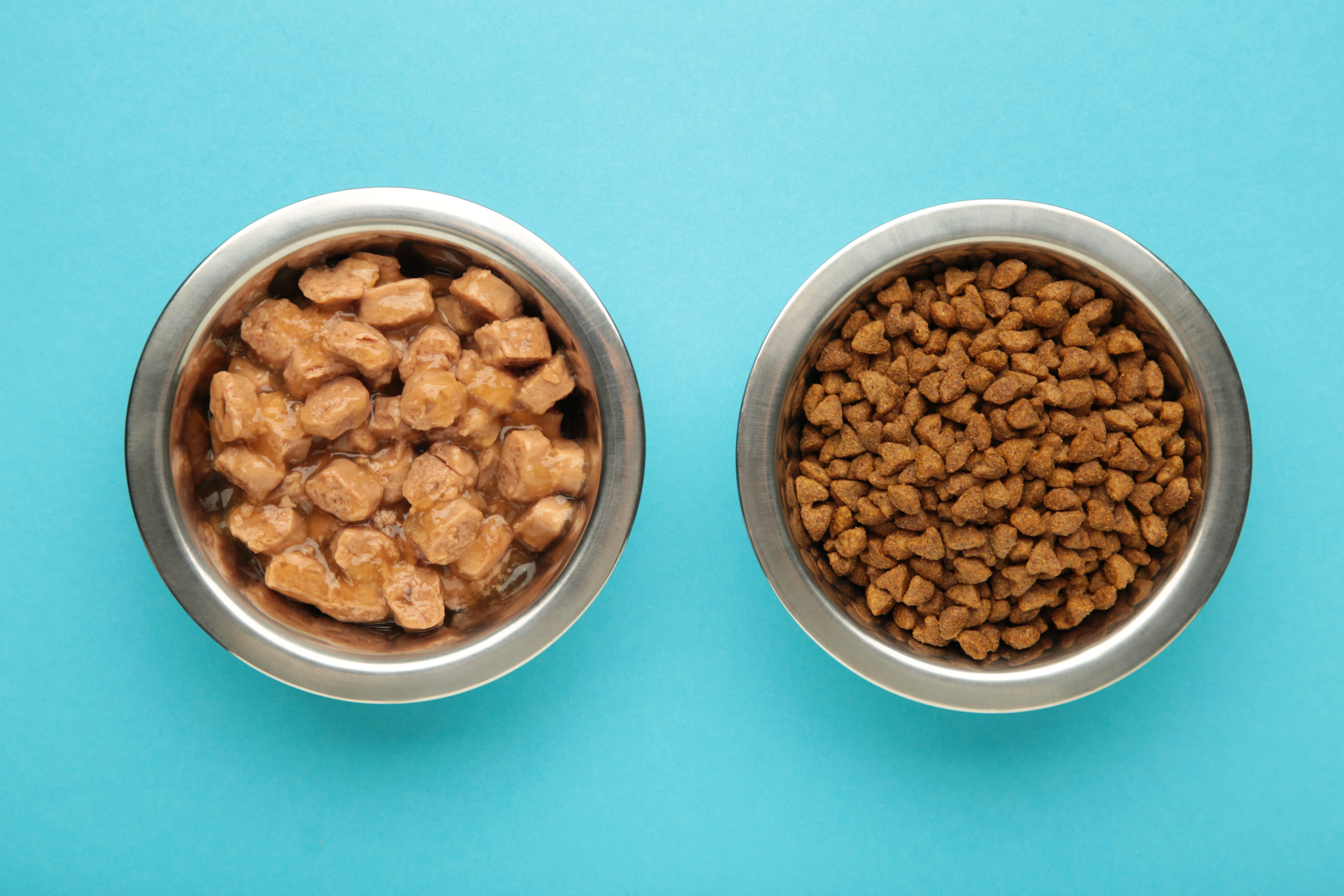
Choosing the right type of dog food is essential to support your dog’s overall health, energy and nutritional needs. A well-matched diet can help maintain a healthy weight, support digestion and help prevent long-term health issues.
Wet, dry and soft dry foods each offer unique benefits. Wet food can boost hydration, dry kibble supports dental health, and soft dry options are often easier to chew. The best choice depends on your dog’s age, health and preferences.
For some dogs, a combination of food types can offer the best of both worlds. Mixing wet and dry food, for example, can enhance flavor, texture and nutritional variety.
Long gone are the days when the only debate was wet vs. dry dog food. Read on to learn the basics of each option and how to choose the best one for your dog.
Dry Dog Food (Kibble)
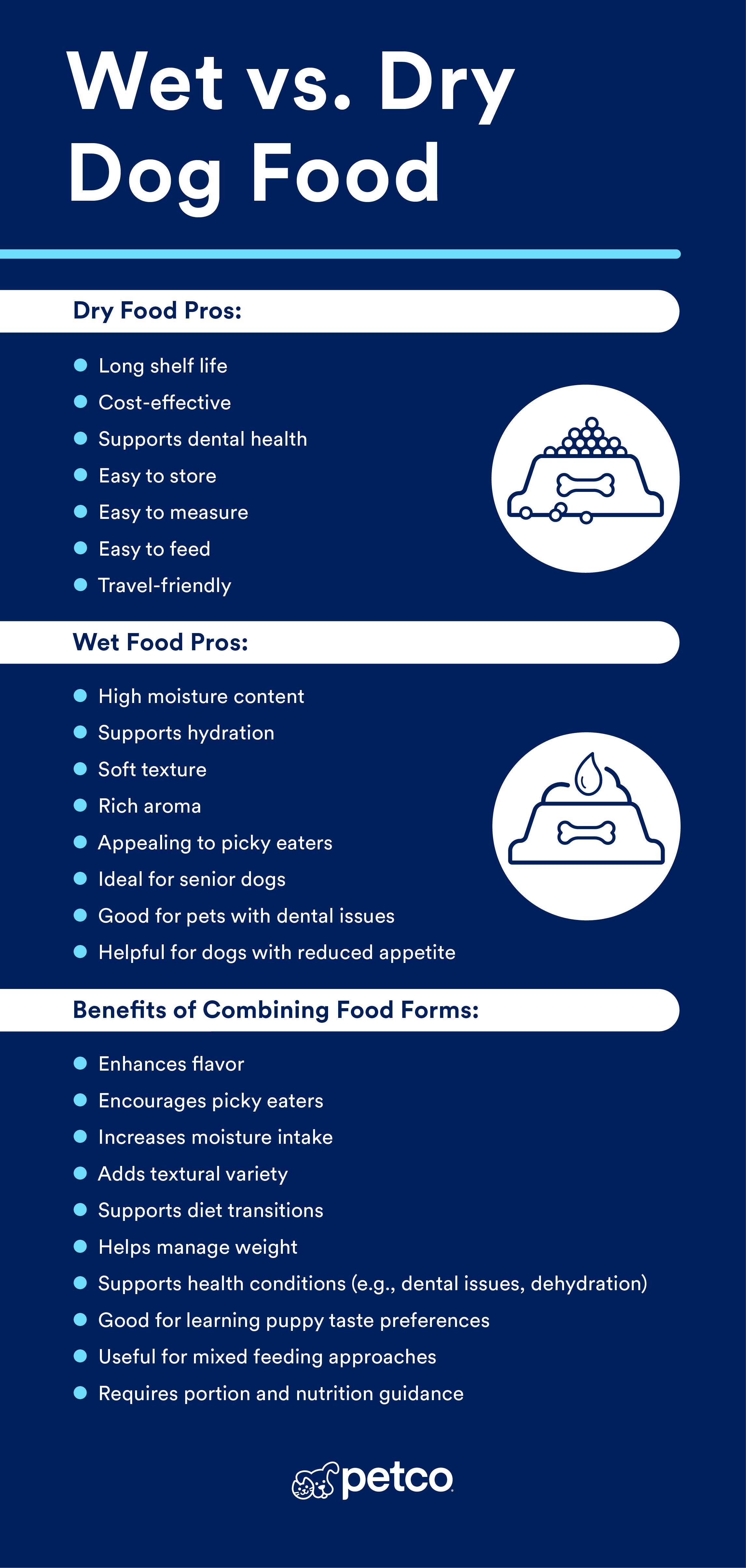
Dry dog food, aka kibble, offers several advantages. It has a long shelf life, is generally more cost-effective and supports dental health by helping to reduce plaque buildup. It’s also easy to store, measure and feed, making it a convenient choice for many pet parents. Put some in a zipper bag and you’re ready for any adventure!
Target pawdience:
Kibble is best suited for healthy adult dogs with no chewing difficulties or hydration concerns. Also, many specialty formulas, including kidney and life stage formulas, primarily come in kibble form.
Potential cons:
Its low moisture content means it may not be ideal for dogs who need extra hydration, and some picky eaters and dogs with dental problems may find it less appealing or harder to chew. (Note: You can create your own softened version by adding some warm water or sodium-free broth. This can be a good workaround if you have multiple dogs.)
Wet Dog Food (Canned)
Wet dog food provides high moisture content, which supports hydration, and its soft texture and rich aroma often make it more appealing to dogs. It’s especially helpful for picky eaters and those with reduced appetites.
Target pawdience:
Wet food is ideal for senior dogs, pets with dental issues and those who need extra hydration in their diet.
Potential cons:
It tends to be more expensive than dry food and requires refrigeration after opening to stay fresh. If you are traveling, the cans can add extra weight to your luggage, and larger cans may require a can opener.
Soft Dry Dog Food
Soft dry dog food is a hybrid option that combines the ease of dry kibble with a softer, more palatable texture. It offers a middle ground for pet parents looking for convenience without sacrificing taste.
Target pawdience:
It’s easier to chew than traditional kibble, making it a good option for dogs with dental sensitivity, and it’s less messy than canned food. This type of food works especially well for small breeds, senior dogs and picky eaters.
Potential cons:
Soft dry dog food can spoil more quickly than kibble once opened due to its higher moisture content. Some formulas may also contain added sugars or sodium to enhance flavor, which isn't ideal for all dogs. Additionally, the soft texture may stick to teeth, increasing the risk of plaque buildup if not paired with regular dental care.
When to Mix Wet and Dry Dog Food
Many pet parents mix wet and dry dog food to enhance flavor, encourage picky eaters and increase moisture intake. Specific products called “dog food toppers” are available, but canned food as a topper can make mealtime more enjoyable while offering textural variety.
However, it’s important to maintain a balanced diet and ensure your dog is still getting the proper nutrients. Mixing foods can affect calorie content, so consult your veterinarian for portion and nutrition guidance to avoid overfeeding.
This approach can also help when transitioning diets, managing weight or supporting specific health conditions like dental issues or dehydration.
Is wet or dry food better for puppies? That depends on their breed and specific nutritional needs. This can be a good time to mix the two to introduce your pup to new things and learn their taste preferences.
Conclusion
There’s no one-size-fits-all answer when it comes to choosing the best dog food—every pup has unique needs and preferences. What works for one dog might not be right for another. When you are in the early stages of mixing food, consider doing taste tests with smaller sizes since it might not be “one and done.”
Always consult your veterinarian before making major dietary changes to help ensure your dog stays healthy and well-nourished. Don’t be afraid to try different combinations to find what works best. And remember, Petco has a wide selection of dog food options to support every stage, style and need.

Can my dog eat only dry food, or is a more natural diet better?

Is it normal for dogs to refuse dry food after eating wet food?
My dog is a picky eater and won't eat dry food. What can I do?

My dog eats Nutrish wet and Wholehearted dry. Is this healthy?
What's the best food for my active dog: kibble, canned, or moist?
My dog is a picky eater. Can he eat wet food or meat chunks?
Are dry pet food nutrients lost in processing? Is raw food healthier?
Is it normal my dog prefers dry food? How much should I feed her?
Should my puppy eat chicken or lamb dry dog food? Which is better?
What's the best diet for my dog: dry, human food, or a mix?