How to Safely Use Ice Melt with Pets
Published on January 12th, 2026
Updated on January 12th, 2026


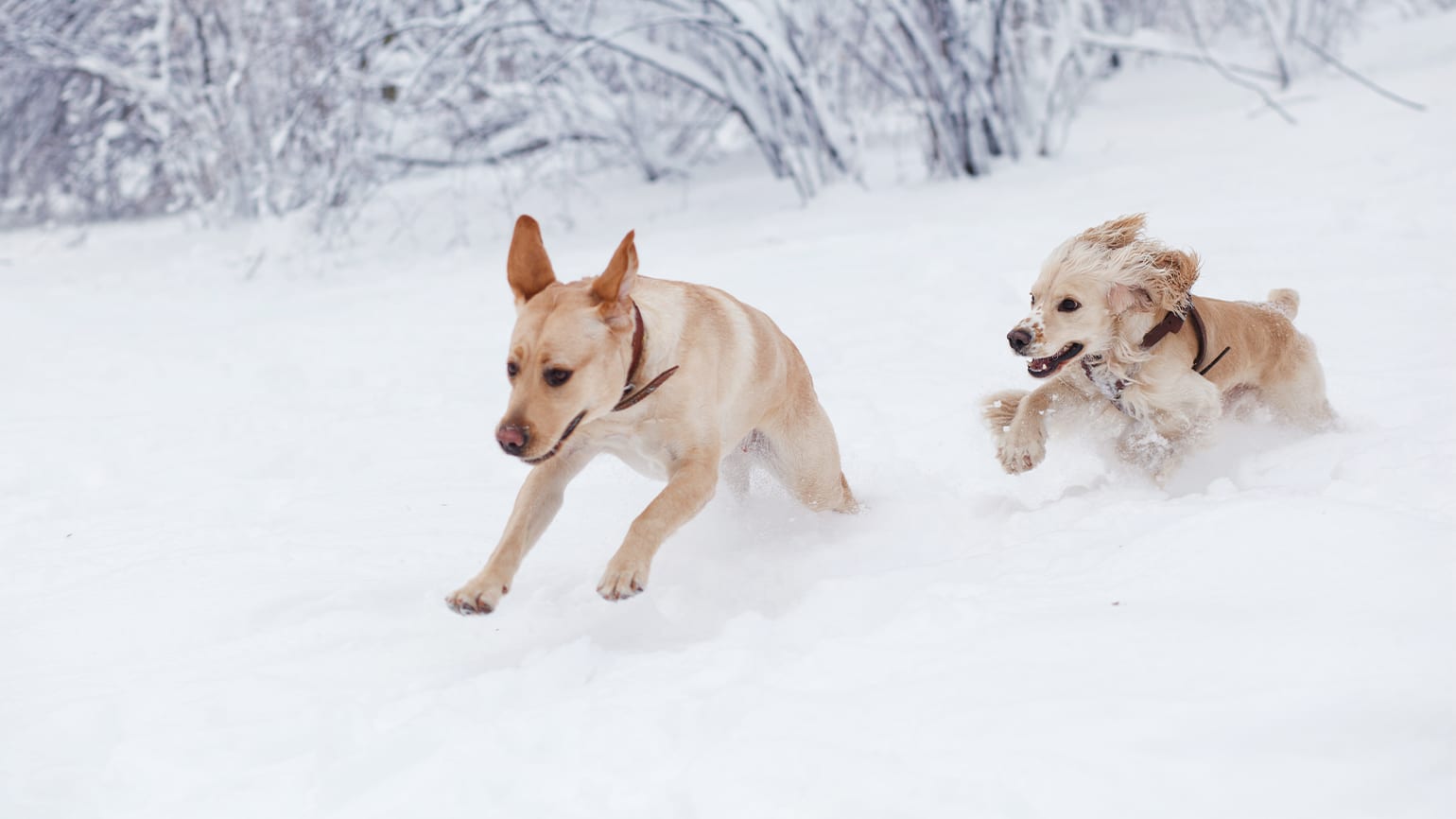
Walks in the snow can be lovely, but hidden dangers can lurk for your dog underneath the winter wonderland. Ice melt products, while helping to keep humans safe from slips, can irritate paws, upset stomachs and even cause poisoning if ingested. Understanding the risks and choosing pet-safe ice melt options can make a big difference.
Are traditional ice melts safe for pets?
No. Traditional ice melts often contain sodium chloride, potassium chloride, calcium chloride, magnesium chloride or urea, chemicals that can irritate your dog’s skin and cause health problems if eaten. Calcium chloride is not safe for pets. While it’s effective at melting ice, it can burn paw pads or skin that comes in contact with it and lead to stomach upset if ingested. According to poison.org, ingesting these chemicals may cause vomiting, diarrhea, tremors or electrolyte imbalances, while skin contact can result in paw burns or redness. Even small amounts can be harmful, and ingestion cases spike every winter as pets lick treated surfaces or their own paws after walks.
Symptoms and warning signs
If your dog shows any of the following symptoms, whether it’s immediately after being exposed to snow or not, act quickly:
Red or irritated paws, limping or excessive licking
Drooling, vomiting or diarrhea
Muscle tremors or seizures
If symptoms appear, call your veterinarian or Poison Control at 800-222-1222 immediately. As always, it’s a good idea to have the number of your local 24-hour ER clinic programmed in your phone since pets don’t confine their medical issues to traditional office hours.
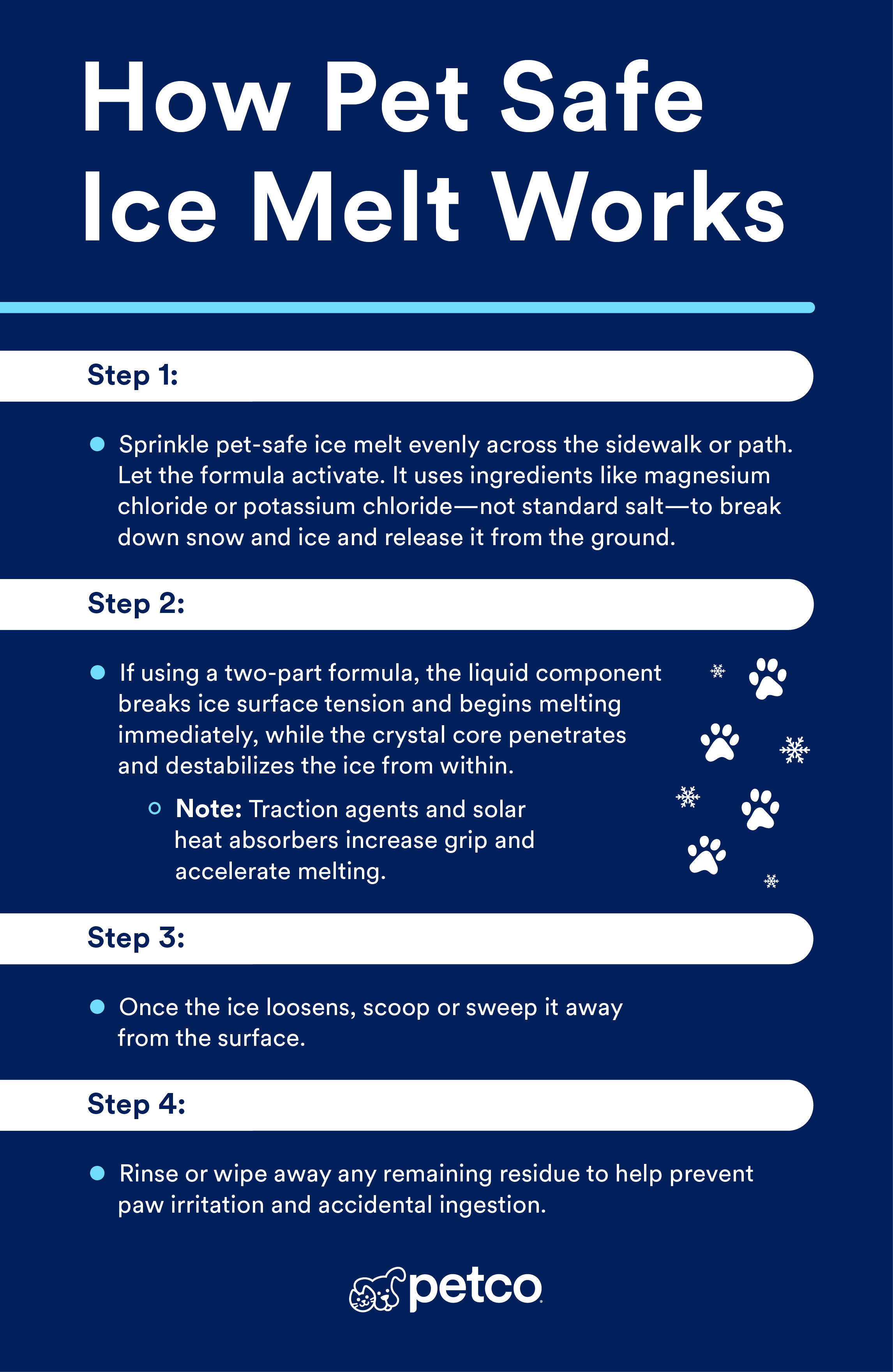
How to use ice melt safely
While you can’t control when Jack Frost makes an appearance, there are four easy steps to help prevent issues before leaving your house and four to mitigate any issues when you and your pup get back home.
Step 1: Prevention
Avoid walking on de-iced sidewalks whenever possible and stick to untreated or cleared paths.
Use pet booties or paw covers that fit comfortably and allow natural movement.
Apply paw wax such as Musher’s Secret from Petco to create a protective barrier.
Trim fur between paw pads to help prevent ice buildup and reduce irritation.
Step 2: Cleaning
Rinse your pet’s paws after every outing, especially between toes. Wipes and foam shampoos are good options to consider. Ask your local Petco what they have on hand.
Use pet-safe soap or dog moisturizers to soothe dry or cracked skin.
Monitor for symptoms for at least 24 hours—licking, limping or vomiting can signal a problem and your vet should be contacted if you notice any concerning symptoms of possible exposure.
Store all ice melt products securely out of reach of pets and children.
Choosing pet-safe ice melts
Not all ice melts are created equal. While no one kind is absolutely pet safe, some are less toxic than others. Pet-safe ice melt products often use urea or magnesium chloride in lower concentrations, making them gentler on paws and less toxic if accidentally ingested. However, no product is completely risk-free, so supervision and proper cleanup are essential after each use.
How to use ice melt responsibly
Follow label instructions carefully—more product won’t work faster.
Apply in targeted areas instead of distributing widely.
Reapply only when necessary and remove leftover residue once melting occurs.
When possible, rinse or sweep treated surfaces to prevent re-exposure.
Recommended pet-friendlier products and alternatives
Try Morton Safe-T-Pet, a gentler deicer recommended by many veterinarians.
Use traction aids such as sand, gravel, wood ash or non-clumping kitty litter instead of chemicals.
Opt for manual methods—regular shoveling, ice scrapers or heated mats.
Ask your local public works department or HOA to use pet-safe deicers in community areas.
Takeaways
There’s a lot to remember about this topic, so some key takeaways are below. Also keep in mind that the fur between paw pads is a prime spot for ice to stick. Need a professional groom to get that under control?
Pet parent checklist
Remember, prevention first, rapid cleaning and careful product choices can make a big difference for your dog’s comfort, health and safety.
Before winter walks:
Protect paws with booties or wax
Choose pet-safe ice melt products
During snow & ice:
Avoid chemical-treated sidewalks
Use traction alternatives
After exposure:
Rinse paws thoroughly
Watch for signs of irritation or illness
Finally, if your dog shows any unusual behavior after outdoor play, contact your veterinarian or Poison Control (800-222-1222) right away. With a few smart steps and the right supplies from Petco, you can help keep winter walks safe and comfortable for your furry friend—and you!