How to Stop Destructive Chewing in Puppies
Published on February 24th, 2026
Updated on February 25th, 2026


Puppies explore the world with their mouths, so chewing is inevitable. What you can control is what gets chewed on. If you’ve been searching for ways to stop your puppy from chewing on furniture, the answer starts with structure, supervision and giving your puppy the right outlets.
While puppy teeth (surprisingly sharp on skin!) typically don’t do tons of damage to furniture, they will grow into big dog teeth, so you want to curb these behaviors now. With a predictable routine and the right tools, you can redirect dog chewing into healthy habits that last a lifetime. Petco is a reliable source for chew toys, crates, baby gates and teething-friendly supplies that make this process easier.
A sample training schedule for your pup’s waking hours is below, and this article gives details on each one and its importance.
Morning: 15-minute sniff walk to give your dog something to focus on that doesn’t involve your kitchen table legs
Midday: Toy rotation + supervised play
Afternoon: Safe zone + special chew
Evening: Training + enrichment chew before settling in for the night
4-step process
Stopping unwanted chewing starts long before your puppy ever reaches for a shoe. Puppies explore with their mouths, so the goal isn’t to eliminate chewing entirely but to guide it. When you understand how to shape behavior in small, predictable steps, chewing becomes manageable rather than frustrating. That’s why an effective plan always includes the following four steps.
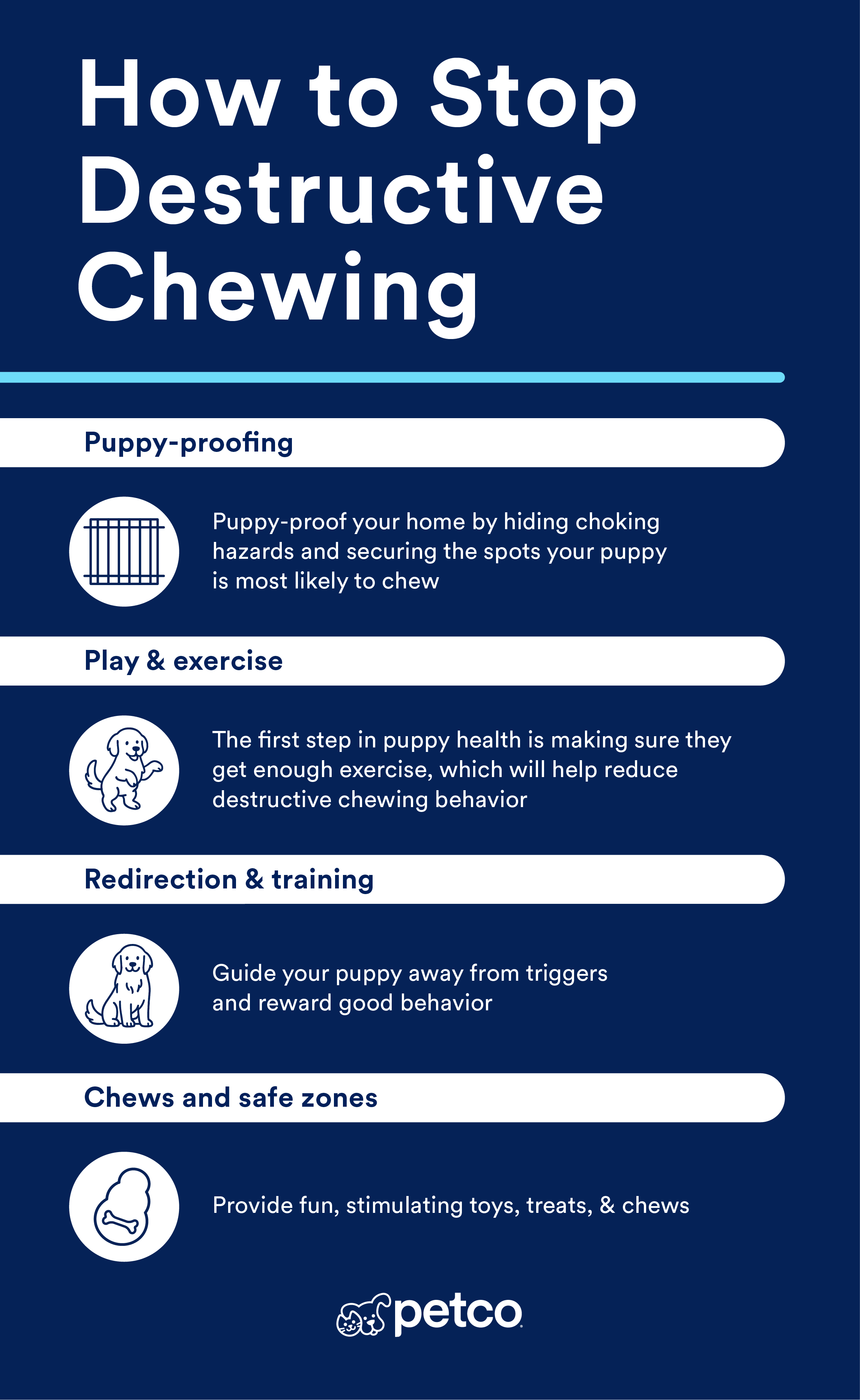
Step 1: Puppy-proof
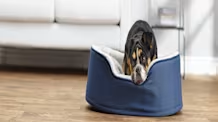
Before training even begins, safeguard your home, and do it with a pup’s POV in mind; they are tiny but curious and can fit in spots you may not consider. Close laundry hampers so socks don’t become chew bait. Use baby gates to block access to rooms with tempting baseboards or furniture at risk. Assign a dedicated safe zone and remove any items a puppy might grab, such as shoes, books and cords.
Keep storage sealed and raise items off the floor to limit mistakes. When you cannot supervise directly, restrict access to only puppy-safe spaces. Many pet parents looking to stop puppy from chewing on furniture discover that management is half the solution. Reducing opportunities sets your puppy up for consistent success.
Step 2: Offer high-value, teething chews
Puppies need appropriate outlets for dog chewing, especially during teething. Provide high-value chews such as:
Frozen teething chews or toys
Rubber toys
Nylon bones
Edible teething sticks
Rotate toy categories every day or two to keep things new and interesting. Introduce a “special only when alone” chew to help your puppy settle during short periods of separation. This boosts engagement and helps prevent boredom-related chewing. A well-timed, high-value chew can completely redirect destructive impulses before they start. And redirection is key—the goal isn’t to stop all chewing but provide safe chewing options that don’t put your furniture, shoes and other household and personal items at risk.
Consider your pup’s size, as well. A rubber toy for a Pom puppy won’t last very long with a Labrador and can be a choking hazard. Always closely monitor chews and toys and replace them when they show signs of wear and tear.
Petco carries a wide range of teething products and puppy toys so you can test which textures your puppy prefers.
Step 3: Training & chewing redirection
Training teaches your puppy what to chew, not just what to avoid. Make it easy to keep eyes on your puppy at all times by using a leash indoors to prevent wandering toward furniture legs or baseboards. If chewing starts, immediately redirect with a permitted chew item and use barriers or restrict access to prevent reoccurrence. Praise as soon as your puppy bites the correct toy. Don’t have a leash yet? https://www.petco.com/category/dog/dog-collars-leashes-and-harnesses
Marking success immediately and clearly speeds learning. Keep training bursts short (2–5 minutes) and repeat throughout the day. Consistency is the fastest way to reduce misbehavior and build automatic good choices. The more often you catch and reward appropriate chewing, the fewer opportunities your puppy has to develop destructive habits.
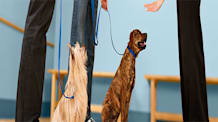
These training tips help create wanted behaviors, contribute to your bond and, as already mentioned, protect your property! If you’re looking for training classes for a variety of other issues, we’ve got you covered! https://www.petco.com/s/petco-dog-training
Step 4: How to prevent chewing when you’re away
Most chewing disasters happen when nobody is watching. Use a crate or gated, puppy-proofed room during all unsupervised periods to help keep both your puppy and your home safe. Provide a single high-value chew to occupy your puppy. If your puppy struggles when alone, exercise first. A 20-minute sniff walk, a brief play session or light training can reduce restlessness.
Remember:
Destruction is not defiance. It signals a management gap, unmet needs or normal developmental urges. With controlled environments and structured routines, you can significantly reduce unwanted chewing.
Redirection training methods
We can’t stress enough that chewing is not an inherently negative behavior. Like magicians, you will find great power in redirection.
Reward-based redirection
Confirm the correct chewing choice immediately using “Yes!” followed by a reward. Build a three-tier reward system:
Praise for everyday success
Treat for good choices
High-value treat for consistent or difficult wins
If your puppy heads toward furniture, redirect with a squeaky or soft chew toy. This helps keep the interaction positive and prevent confusion. When a puppy repeatedly chooses the correct toy, reward that consistency. Positive reinforcement builds habits much faster than punishment ever could.
Using deterrents safely
Dog-safe deterrent sprays such as Bitter Apple can help protect off-limits objects for 2–4 weeks while training is active. Always pair deterrents with clear instructions on what your puppy should chew. A deterrent alone won’t stop chewing; it only guides the puppy toward better choices when paired with redirection.
Avoid spraying deterrents near beds, food and safe toys to prevent negative associations. Use only as much as needed and reassess weekly. Your long-term goal is to build understanding, not dependence on sprays. Speaking of spraying—water is a common deterrent, but that can sometimes backfire and make your pup fearful of water and bathtime. It’s not an effective way to properly train your puppy about what not to chew.
Why puppies chew
To paraphrase Taylor Swift, “chewers gonna chew.” And puppies are inherent chewers for a variety of reasons. In fact, chewing is rooted in biology. Puppies chew to relieve teething pain, strengthen developing jaws and gather sensory feedback about the world.
Chewing is also one of the main ways puppies play and interact with their environment. When puppies lack stimulation, chewing escalates because it is self-rewarding. Increased chewing when alone signals unmet needs rather than willful misbehavior.
However, there are some circumstances when chewing can be a symptom of behavioral or physical issues that need to be addressed. Sometimes chewing points to stress or separation-related issues, especially when it happens only when a puppy is alone. Watch for pacing, drooling, whining and distress behaviors. More serious concerns include self-injury, broken teeth and near-constant chewing fixation.
Red-flag checklist
Chewing exclusively during pet parent absence
Escalation despite consistent training
Physical injury
Signs of panic or distress
If you observe these behaviors, escalate to professional help promptly; see next section for additional guidelines on that.
When to bring in a vet
Sometimes your best efforts aren’t quite enough for a particular chewer and help is needed.
Clear triggers to escalate
Seek help if there is no improvement after 2–4 weeks of consistent structure. Escalate immediately if destruction is paired with:
Anxiety
Risk of ingestion
Injury
Broken teeth
Additionally, persistent chewing past 9–12 months, despite training, often indicates deeper behavioral or medical concerns.
A veterinarian can rule out dental pain, nutritional deficiencies and medical stressors. A certified dog trainer or behaviorist can design a tailored modification plan for behavioral chewing or anxiety-driven patterns. Petco can help you find a veterinarian close to you.
Key takeaways
Routine is more effective than intensity. Prevention plus appropriate replacement is always better than punishment. Supervision, structure and enrichment are the fastest ways to guide a puppy toward healthy chewing habits. And always remember, puppies will, and should, chew! It’s up to you to help them “chews wisely!”
Immediate next steps
With consistent structure, even the most determined chewer can learn reliable habits.
Build a three-item chew rotation (rubber plus edible plus frozen teether)
Create one safe zone today
Start a daily 10-minute redirect session
Reduce unsupervised access or increase safe-zone time
Track progress for 7–14 days and escalate if needed