How to Calm Down Your Dog
Published on November 26th, 2025
Updated on March 24th, 2026


Calming Techniques & Tips
Dogs, like people, can feel anxious, overstimulated or restless. Unlike people, however, dogs don’t always understand why the stressor is happening or that it’s temporary, whether the cause is a lot of holiday and gifting hubbub, thunderstorms, fireworks or just pent-up energy.
Learning how to calm a dog down is key to their well-being and helps solidify your bond. The good news is, there are plenty of “paws-on” strategies you can try at home right away.
Activity and exercise
Burning energy is one of the simplest ways to release tension and reduce stress. Match the activity to your dog’s breed, age, overall health and energy level. These can be great for you, too!
Examples include:
Long walks or hikes, as is age and health appropriate
Fetch
Tug-of-war (avoid if your dog has sensitive teeth or you have a teething puppy)
Dog sports such as agility or flyball under the direction of an experienced trainer
Bonus tip:
If your senior dog has mobility issues, bring a wheeled dog cart so they only have to walk as far as they’re able. Pups who need to be wheeled the whole time can still enjoy outings, especially if doggie siblings are coming along with them.
Mental stimulation
How often have you heard someone suggest a hobby or activity to take your mind off things? An occupied mind is often a calmer mind, and this applies to dogs, too. Mental work helps prevent boredom, ease frustration and burn off nervous energy. Just as physical activity keeps the body fit, mental stimulation helps keep your dog balanced and focused. In fact, engaging the brain is one of the most effective strategies for anyone wondering how to calm a dog down. A dog who is thinking, problem-solving and working for rewards is less likely to channel excess energy into unwanted behaviors like chewing or barking.
Here are some engaging ways to give your dog that mental workout:
Puzzle toys, treat-dispensers and nose-work games. These challenge your dog’s problem-solving skills while rewarding them with tasty treats. Nose work, in particular, taps into their natural scenting instincts and can be as tiring as a long walk.
Short training sessions with new cues or tricks. Teaching a new cue or practicing obedience helps build confidence and strengthens the bond between you and your dog. Even five minutes of focused training can help them settle more easily afterward.
Making meals interactive. Instead of placing food in a plain bowl, try puzzle feeders, snuffle mats or hiding kibble around the house. This turns eating into a job that requires thought, patience and persistence—just the kind of mental challenge that helps your dog relax afterward.
Don’t have these items? Petco is here to help with a huge selection of puzzle toys, feeders and much more. And we’re here 24/7 for online orders.
Bonus tip:
Combine mental and physical stimulation by checking out a new park or neighborhood; dogs appreciate new sights, sounds and especially smells!
Calming environment and sensory input
Dorothy famously said, “There’s no place like home,” and normally that’s a good thing. But sometimes the stressor—guests or thunder, for example—is in or around the home. Some dogs are particularly sensitive to their environment, and even small changes in their surroundings can make a difference.
Use music or white noise. Soft classical music or steady background noise can mask scary sounds like thunder, fireworks or construction, helping your dog feel more secure. This is one of the simplest answers for pet parents asking how to calm an anxious dog.
Try calming dog clothing. Pressure wraps or ThunderShirts provide gentle, consistent pressure that mimics a swaddling effect, which can help soothe nervous dogs during storms, travel or other stressful events. Never leave clothing on an unattended dog.
Consider pheromone diffusers, sprays or collars. Products such as Adaptil mimic natural calming signals, offering dogs a subtle sense of safety. These can be especially helpful when combined with other calming strategies.
Bonus tip:
Whether it’s the 4th of July or wicked weather season, check out this article for more tips on helping pets cope during fireworks and thunder.
Relaxing touch
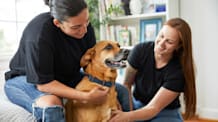
Your own touch can provide reassurance, especially if you’re looking for simple ways to calm a dog down at home. Calm, gentle handling reinforces trust and can quickly ease tension.
Gentle massage or slow, calming petting. Give your anxious pup a “spaw” session, focusing on the shoulders or chest, moving slowly and consistently. Dogs often relax when they feel a steady, predictable touch.
Grooming and brushing. Beyond keeping the coat healthy, brushing can release feel-good endorphins and create a bonding routine. Even short sessions can shift a dog from restless to relaxed.
These moments of quiet connection remind dogs that they are safe, supported and loved—powerful tools in reducing anxiety.
Supplements and medical options (if needed)
If your dog’s anxiety is constant, severe or worsening—even after trying at-home strategies—it may be time to get professional support. The first step is a veterinary visit to rule out pain or health conditions.
Additional options include:
Supplements. Melatonin or calming chews may be helpful for dogs with mild anxiety, occasional stressors or travel-related unease. Supplements should always be discussed with your veterinarian first to ensure safety and proper dosing, especially since melatonin can make some dogs drowsy.
Veterinary consultation (meds). If natural remedies don’t provide enough relief, your veterinarian may recommend prescription medications tailored to your dog’s specific needs.
Veterinary consultation (behavioral). Your vet might instead recommend a behaviorist to give you and your dog an assist with additional calming techniques.
Veterinary consultations (nutrition). Your vet may recommend a veterinary therapeutic diet indicated to reduce anxiety and stress or a probiotic supplement .
More intensive strategies and behavior training
Some stress-reduction strategies require more time and planning but can be effective for long-term relief and retraining anxious behaviors.
Desensitization and counterconditioning
This involves gradual, positive exposure to triggers. By carefully controlling the intensity of the trigger and pairing it with rewards, dogs can learn to stay calm in situations that once overwhelmed them. It is always best to work on these behaviors under the guidance of a professional trainer.
Play recorded noises at a very low volume while rewarding calm behavior, slowly increasing the intensity of the stressor over time.
Practice guest arrivals or car rides in short, safe steps to build confidence.
Don’t do any training exercises when you’re stressed; it creates an additional source of anxiety for your pup.
Bonus tip:
Don’t set a timeline for improvement. Go at your dog’s pace and celebrate small victories.
Establishing routines
It’s no secret that dogs thrive on predictability. A reliable daily rhythm helps them feel safe and secure.
Regular feeding, exercise, play and rest times help reduce uncertainty.
A consistent sleep schedule and quiet rest areas provide the stability anxious dogs often crave.
When replacing your dog’s bed or bowls, put them in the same spot as the old ones so there is an element of familiarity to accompany the new item.
Anxious behavior: Understanding causes and prevention
Anxiety in dogs doesn’t happen randomly but usually stems from specific triggers or underlying factors.
Causes
Recognizing what’s behind your dog’s stress is the first step toward managing it effectively. These are common triggers for some dogs:
Separation from family members or being left alone for long periods
Loud or unpredictable noises like fireworks, thunderstorms or construction
Sudden changes in environment such as moving homes, new family members or travel
Breed predispositions or health conditions that make some dogs more sensitive than others
Solutions:
Once you understand what triggers your dog, reducing or preventing exposure can help them feel safer.
Close windows or use white noise to block out external sounds.
Provide a safe retreat space such as a crate, covered bed or quiet room.
Keep routines predictable with regular feeding, play and rest times.
Introduce new environments or experiences gradually instead of all at once.
By addressing both the cause and the environment, you can often prevent anxious flare-ups before they escalate, helping your dog stay calmer day to day.
Bonus tip:
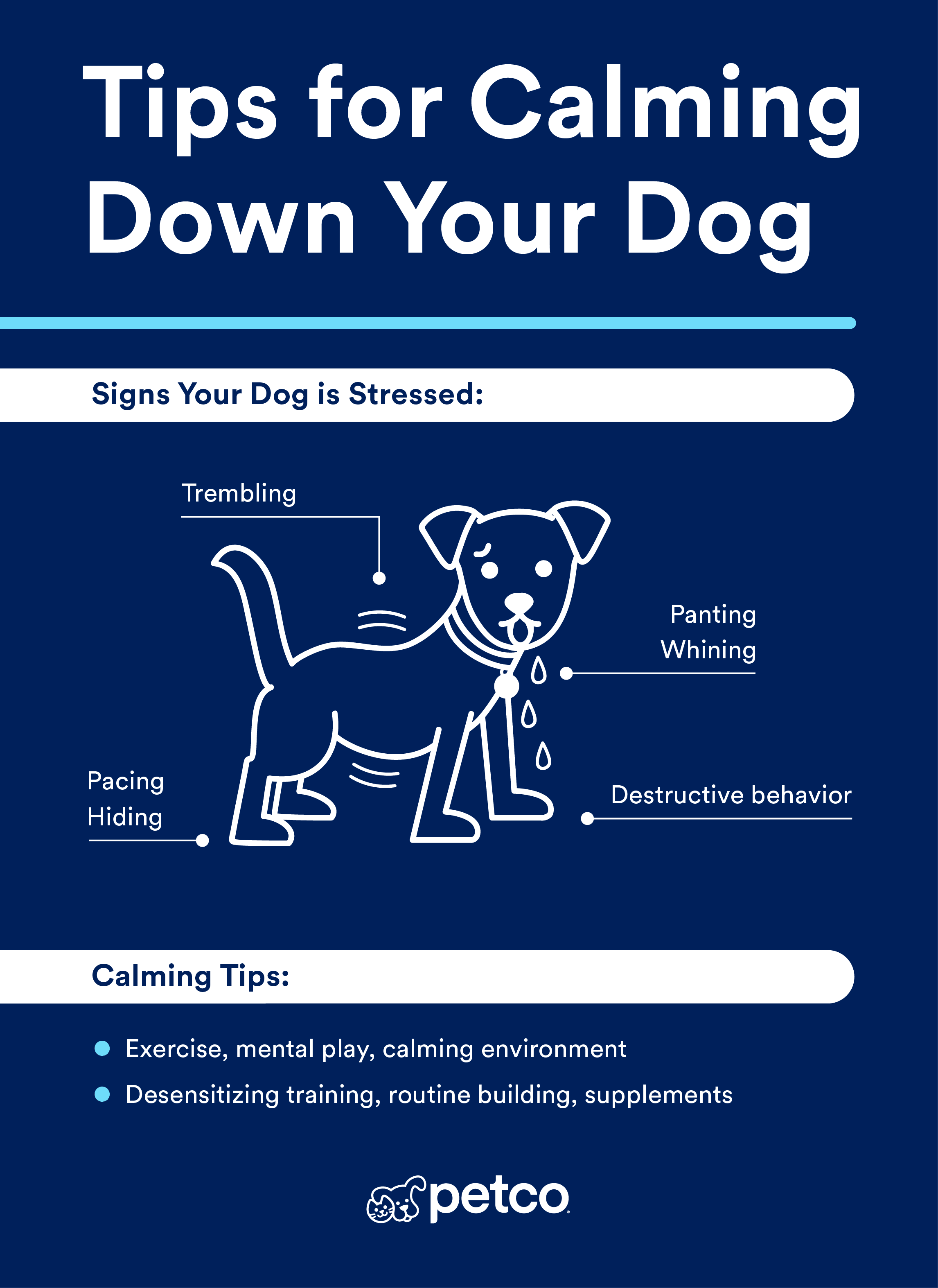
Common signs of anxiety include panting, pacing, whining, shaking, destructive chewing or digging, hiding and not eating. Sudden onset of these behaviors, especially without an identified cause of stress, should be addressed with your vet.
Key takeaways
When learning how to calm a dog down, starting with simple strategies is often best. Regular exercise, engaging mental enrichment and creating a calm environment help provide a strong foundation for reducing stress.
Remember, every dog is unique. What works for one pup may not work for another. That’s why it’s important to observe your dog closely, try different combinations of techniques and stay patient. If you’re still wondering how to calm an anxious dog after trying home strategies, consulting a veterinarian or a board-certified veterinary behaviorist is the next step.
Petco carries puzzle feeders, calming wraps and enrichment toys that can support many of these approaches, making it easier to combine natural supports with lifestyle adjustments. By addressing both the cause and the environment, you can often prevent anxious flare-ups before they escalate, helping your dog stay calmer day to day. You might find yourself a little less stressed, too!