How Long Can You Leave Your Dog Outside?
Published on December 2nd, 2025
Updated on December 2nd, 2025


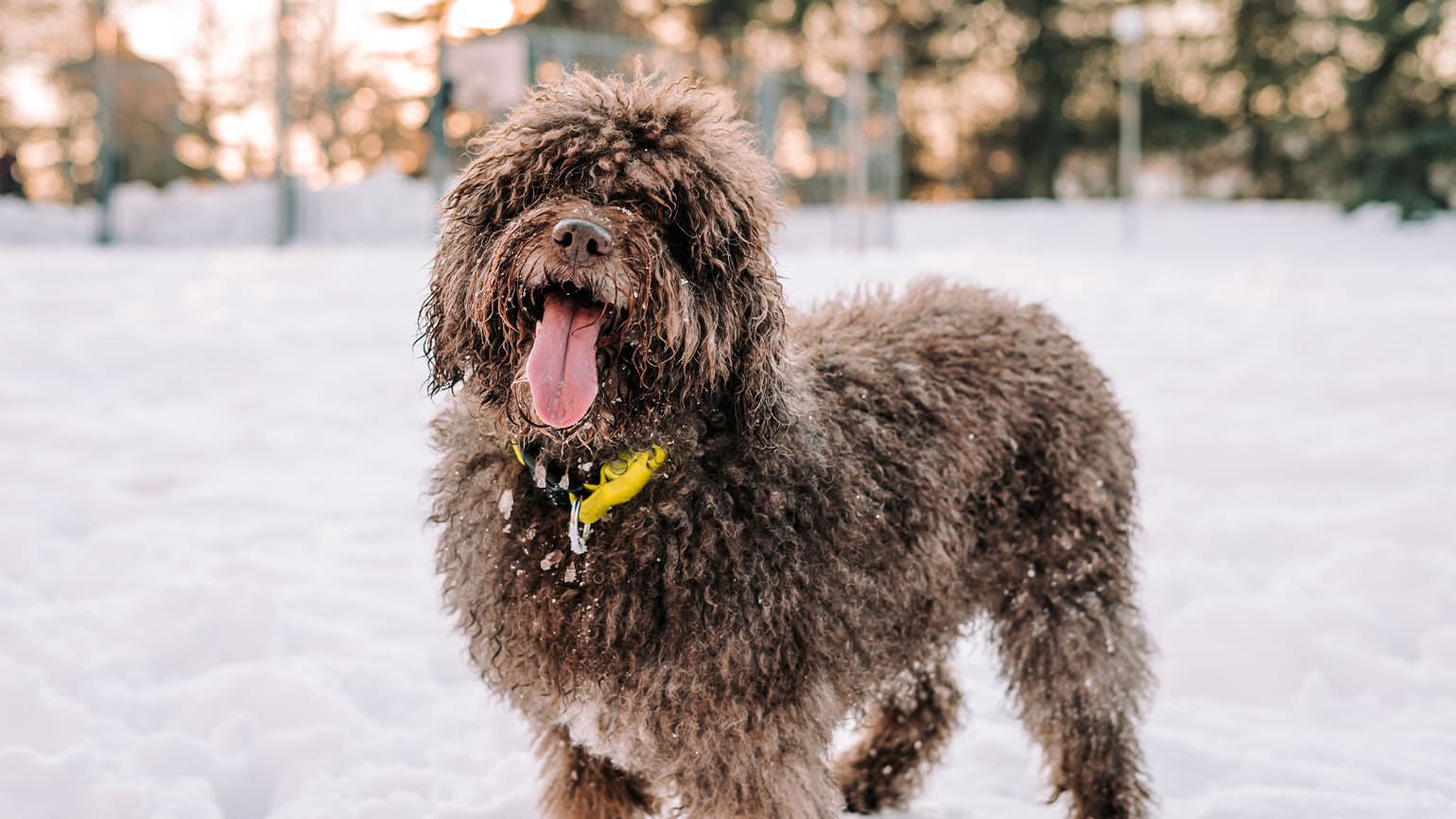
Fresh air is great for dogs, but like anything, too much of a good thing can be a problem. Dog parents often wonder how long their pets can safely spend outdoors. The answer isn’t simple. Factors like breed, size, coat type, age, health and weather all play a role. Understanding your dog’s specific needs helps prevent heat stress or hypothermia and helps ensure outdoor time stays enjoyable and safe.
Are there laws about dogs being left outside?
Paw & order: Most of this article focuses on dog safety outside, but maybe you’re wondering about the legal aspects of keeping a dog outside for extended periods. Perhaps you see a dog in your neighborhood and wonder what the laws are. While you can look up local statutes, 23 states and the District of Columbia have laws restricting the amount of time a dog can be tethered to a solid object in your own backyard, sometimes for as little as 30 minutes.
Most laws specify that your dog cannot be confined or tethered at all in temperatures below 32°F (0°C), during extreme heat advisories or when the National Weather Service issues a storm warning for the area. Responsible pet parenthood means knowing your region’s laws and prioritizing your dog’s comfort and safety above all else. If you feel someone in your neighborhood isn’t doing that, reach out to local authorities; some allow anonymous reports.
Why there’s no one-size-fits-all answer
Every dog is unique, and outdoor tolerance varies widely. Breeds developed for colder climates such as Huskies have dense double coats that offer natural insulation. When acclimated, they can typically handle frigid temperatures for longer periods provided they have shelter and access to fresh water. Both of those breeds will tolerate cold far better than a short-haired breed like a Boxer. And we all know the little and short-haired breeds like Chihuahuas typically are not fans of Jack Frost. Somewhere in the middle are breeds like the Golden Retriever with their thick but softer coats. They thrive best in moderate weather but struggle in extremes. Extremely hot or cold weather can quickly cause discomfort or health issues for any dog.
Age, medical conditions and acclimation also matter. A young, healthy dog who’s used to outdoor play will fare better than an older pet with arthritis or one who has recently relocated to a dramatically different climate.
Local regulations and the type of environment—urban, rural or coastal—can also determine what’s safe. Always check your area’s weather advisories before letting your dog spend extended time outdoors.
Weather or not: temperature guidelines and risk zones
Extreme weather poses the greatest risks, but knowing safe temperature ranges can help you responsibly plan outdoor activities for your pup.
Mild conditions are best (60–80°F)
Most dogs enjoy being outside for walks or play sessions in this range. Always provide shade and fresh water. Other factors like wind, humidity and rain can also affect the amount of time a dog may tolerate being outside even in these temperatures.
Cold weather:
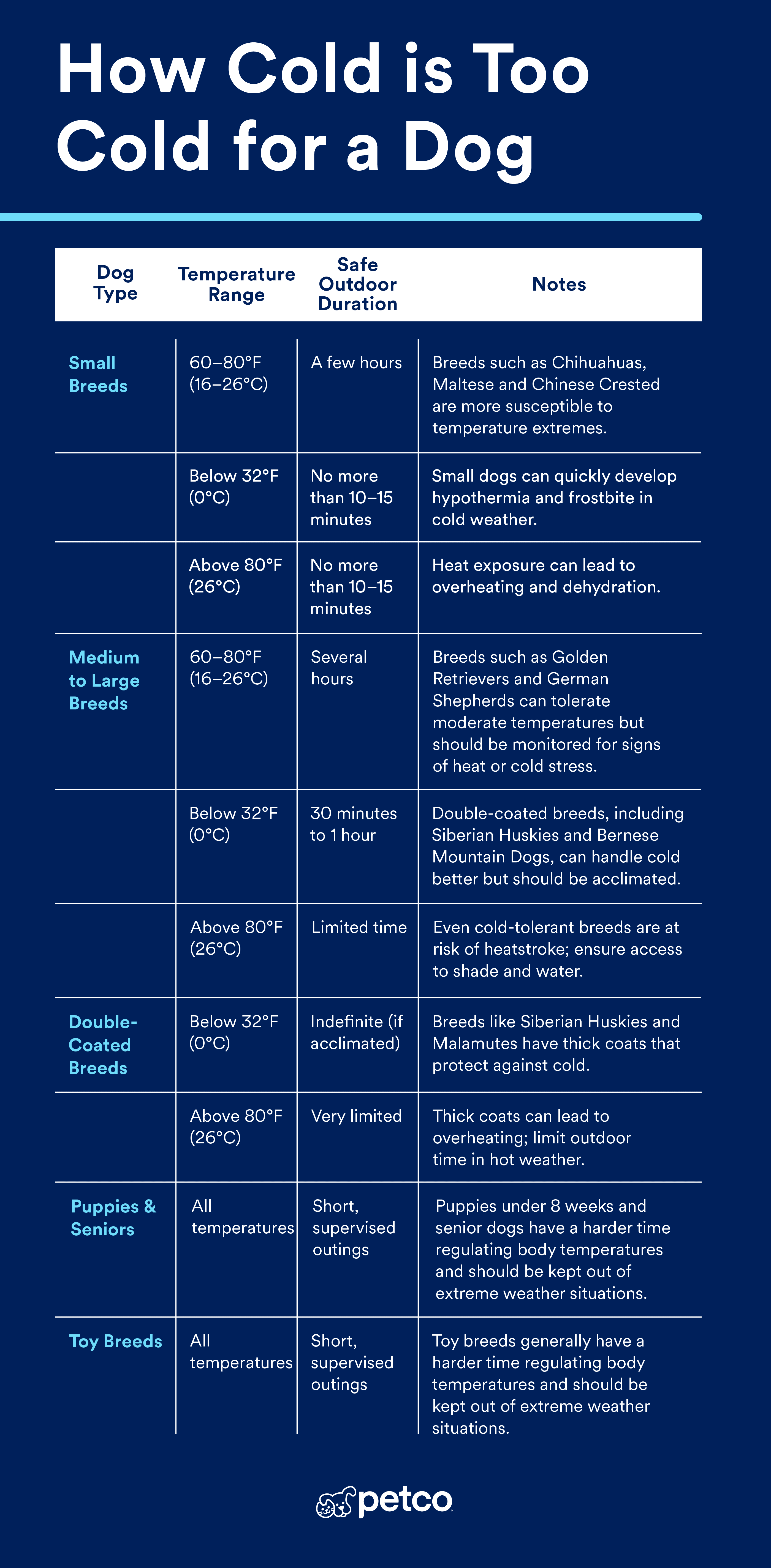
How cold is too cold for a dog? When temperatures drop below 45°F, monitor your dog for shivering or reluctance to move, especially in damp or windy conditions. Below freezing (32 °F), limit outdoor time to short potty breaks or brisk play unless your dog is a cold-tolerant breed. Provide insulated bedding and draft-free shelter for dogs who spend time outdoors.
Hot weather:
Once the temperature rises above 80°F, even heat-tolerant breeds can overheat quickly. Limit exercise, avoid midday heat and ensure constant access to fresh water and shade. Never leave a dog unattended in a parked car where temperatures can climb dangerously in minutes.
Dog Type
|
Temperature Range
|
Safe Outdoor Duration
|
Notes
|
Small Breeds
|
60–80°F (16–32°C)
|
A few hours
|
Breeds such as Chihuahuas, Maltese and Chinese Crested are more susceptible to temperature extremes.
|
|
Below 32°F (0°C)
|
No more than 10–15 minutes
|
Small dogs can quickly develop hypothermia and frostbite in cold weather.
|
|
Above 80°F (32°C)
|
No more than 10–15 minutes
|
Heat exposure can lead to overheating and dehydration.
|
Medium to Large Breeds
|
60–80°F (16–32°C)
|
Several hours
|
Breeds such as Golden Retrievers and German Shepherds can tolerate moderate temperatures but should be monitored for signs of heat or cold stress.
|
|
Below 32°F (0°C)
|
30 minutes–1 hour
|
Double-coated breeds, including Siberian Huskies and Bernese Mountain Dogs, can handle cold better but should be acclimated.
|
|
Above 80°F (32°C)
|
Limited time
|
Even cold-tolerant breeds are at risk of heatstroke; ensure access to shade and fresh water.
|
Double-Coated Breeds
|
Below 32°F (0°C)
|
Indefinite (if acclimated)
|
Breeds like Siberian Huskies and Malamutes have thick coats that help protect against cold.
|
|
Above 80°F (32°C)
|
Very limited
|
Thick coats can lead to overheating; limit outdoor time in hot weather.
|
Puppies & Seniors
|
All temperatures
|
Short, supervised outings
|
Puppies under 8 weeks and senior dogs have a harder time regulating body temperatures and should be kept out of extreme weather situations.
|
Toy Breeds
|
All temperatures
|
Short, supervised outings
|
Toy breeds generally have a harder time regulating body temperatures and should be kept out of extreme weather situations.
|
Breed and size
How long a dog can stay comfortable outside depends on their specific dog breed, size and coat type.
Small and short-haired dogs like Chihuahuas and toy breeds lose body heat quickly, so outdoor time should be brief, especially in cold weather.
Huskies, who are bred for Arctic conditions, thrive in the cold when acclimated but can easily overheat in warm climates, even during mild exercise. German Shepherds are highly adaptable, but their dense undercoats trap heat, so summer outdoor sessions should be shorter. Golden Retrievers tolerate moderate climates well, but their playful, energetic nature may push them to stay outside longer than is safe.
Brachycephalic—or squished-faced—dogs like Pugs and Bulldogs have short airways that make it hard to regulate temperature, meaning they need close supervision in both heat and cold. Petco offers insulated shelters, lightweight jackets and fetching sweaters that can help protect dogs across all coat types and climates.
Health and behavioral factors
Puppies and senior dogs have lower tolerance for temperature extremes regardless of breed. Their smaller size, thinner coats and slower ability to regulate body heat make them more vulnerable to both heat and cold.
Dogs with arthritis, heart or respiratory conditions also feel weather shifts more intensely.
Watch for the following signs that indicate your dog needs to go back inside:
Whining
Scratching at doors
Panting
Shivering
These apply even to hardy breeds such as Huskies, German Shepherds and Golden Retrievers; they need to be monitored for discomfort.
Petco’s orthopedic beds and weather-safe shelters can help dogs of all ages and health levels recover comfortably after outdoor play.
Seasonal guidance
Seasonal changes on both ends of the spectrum can dramatically affect your dog’s comfort and safety outdoors.
Winter:
Many pet parents wonder how cold is too cold for a dog. Cold weather brings risks of frostbite and hypothermia. Always provide dry shelter and insulated bedding and avoid prolonged exposure during snow, rain or wind.
Summer:
High temperatures increase the risk of heatstroke and paw pad burns. Huskies and those brachy breeds are especially vulnerable in heat, while breeds such as German Shepherds and Golden Retrievers may tolerate the heat better but still need frequent water breaks and shaded rest. Adjust outdoor routines seasonally—early morning or late evening walks work best in summer—while midday outings are safer in winter.
Real-world examples
Dog parents across online communities share a wide range of experiences about keeping their dog outside safely. Some report letting their dogs roam outdoors for hours, while others keep outdoor breaks to just a few minutes depending on the weather.
Husky parents often describe their dogs joyfully playing in the snow for long stretches, while Golden Retriever and German Shepherd parents emphasize the importance of constant shade, fresh water and check-ins during warm days. Ultimately, each dog’s comfort level is unique—and paying attention to body language cues matters most.
Practical safety tips and best practices
No matter the season, keeping your dog outside safely requires planning and observation.
Always provide shade, shelter and fresh water
Avoid tethering dogs for long periods
Check pavement or ground temperature before walks
Schedule indoor breaks for cooling or warming
Monitor for distress signals:
Some dogs may overexert themselves outdoors, mask discomfort until it becomes serious or even resist coming inside when overheating.
Petco carries outdoor safety essentials like cooling vests, insulated dog houses and portable water dispensers to help make outdoor time safer and more enjoyable year-round.
Takeaways
There’s no single rule for how cold is too cold for a dog or how long a dog can safely stay outdoors. The right balance depends on age, breed, weather and individual health.
Monitor your dog closely, adjust routines by season and consult your veterinarian for personalized guidance. Petco makes it easier to support your dog outside when enjoying that fresh air with weather-ready gear and wellness essentials for every breed.