How to Keep Your Dog Calm Around Guests
Published on November 5th, 2025
Updated on November 11th, 2025


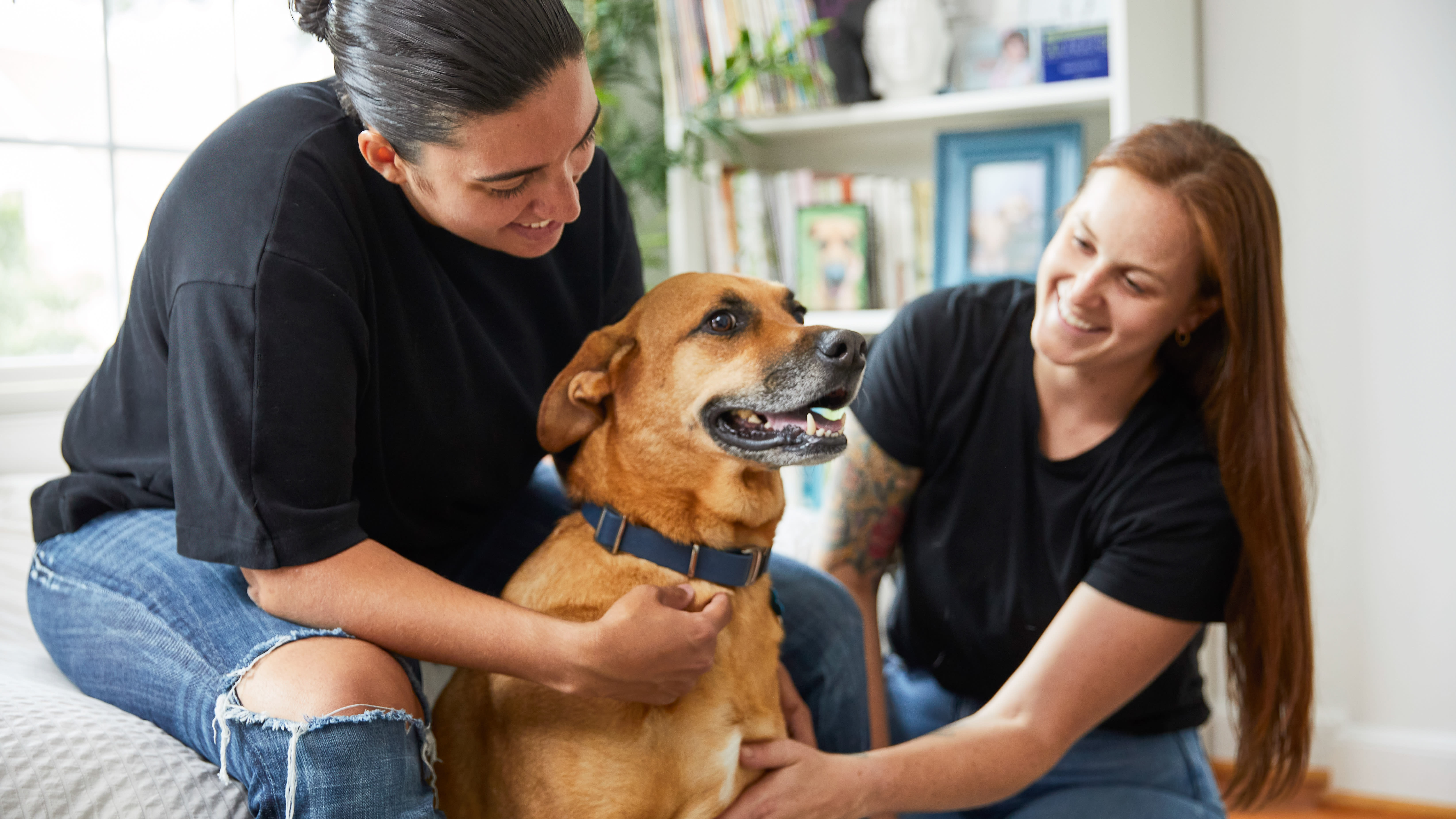
Welcoming guests into your home should feel joyful, not stressful, for you, your visitors and your dog—whether it’s the holidays or any time of year. But the festive season can mean a huge increase in guests, and for many pups, the excitement of new people, scents and sounds can lead to over-the-top greetings, barking and anxious behavior. Preparing your dog for company isn’t just about manners; it helps ensure your dog feels comfortable, your guests feel safe and your household runs smoothly. Now that’s something worth celebrating!
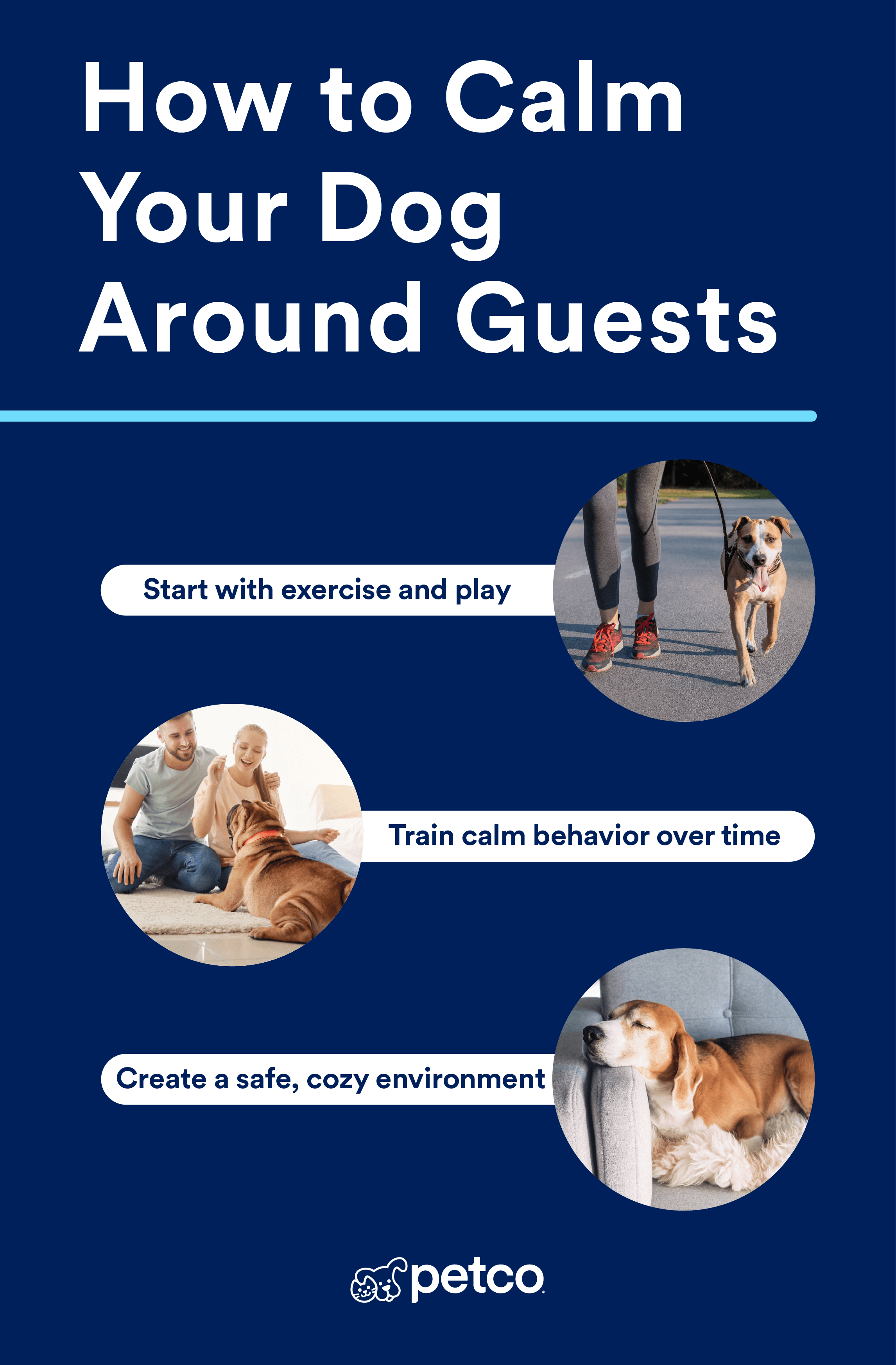
How to help your dog stay calm around new people
Manage your dog’s energy with exercise and enrichment
Train calm behaviors in advance with helpful cues
Create a smooth arrival routine
Provide a retreat space for downtime
Reinforce positive behavior and troubleshooting common issues
Tire out your pup first
A tired dog is typically a calmer dog. Daily exercise helps reduce excess energy that can fuel overexcitement when guests arrive. Age-appropriate brisk walks, runs and backpack walks that add gentle resistance can help pups burn off steam. Structured obedience drills are also useful for training, mental stimulation and exercise.
Pair physical activity with mental enrichment to set a balanced mood. Petco has plenty of affordable options in all these categories:
Licking mats or stuffed toys for soothing, focused activity
Sniffing games, like hiding treats for your dog to find
Chew toys for satisfying and stress-reducing downtime
Exercising and mentally stimulating your pup beforehand helps them release excess energy, making it much easier for them to stay composed when people come over. Build this into your timeline for the day, perhaps even setting a phone alarm to give you a respite from the prep work of hosting.
Train calm behavior
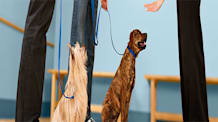
If your dog jumped on Grandma on Mother’s Day, now is the time to “get a jump” on curbing that behavior for upcoming gatherings. Training sets the foundation for good manners. Start with essential cues like “sit,” “stay” and “place.” Consistency matters—practice daily, not just when guests are around. Your dog will need a solid understanding of these cues before the distraction of company.
Start with "Place"
One of the most effective strategies is directing your dog to a mat, bed or crate when visitors arrive using a consistent command like “place,” “bed” or “crate.” This will give them a clear “job” and an understanding of where they are expected to be.
Reward calm
Start with positive reinforcement by rewarding your dog when they go to their crate on their own. If you’ve ever wondered why does my dog bark when people come over, you might take a look in the mirror. Dogs feel your energy, and if you’re super excited, it’s natural for them to be, too. Some dogs are also self-appointed sentinels in the house and take their “role” of notifying the family about activity at the door very seriously. Barking often comes from overexcitement or uncertainty, but you can teach them calmness instead.
Sound training (doorbells)
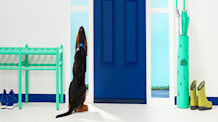
Another overlooked skill? Sound desensitization. Practice knocking on doors or ringing the doorbell during training sessions. Pair these sounds with calm cues and rewards so your dog learns that noises don’t always equal chaos.
By rehearsing before the real event, you’ll have a dog who feels prepared rather than startled when the doorbell rings.
Create arrival habits
The first minutes after a visitor enters your home sets the tone. If you are expecting multiple guests, you might consider crating your dog or putting them in a separate room until everyone arrives. (See the next section for more tips on that.)
Redirection
If that isn’t feasible, keep a leash and harness on your dog so you can easily redirect them if necessary. By practicing ahead of time, you’ll teach your dog that calmness is rewarded while frantic greetings aren’t.
If you’re struggling with how to get your dog to leave guests alone, this four-step arrival routine can be an effective solution:
Leash up your dog before opening the door so you can guide their behavior from the start.
Ask guests to ignore your dog until calm behavior is shown.
Redirect jumping or chaos by sending your pup to their “place” or asking for an alternative behavior such as “sit.”
Reintroduce calmly once the excitement has diminished.
It’s worth noting that you may also have to train your guests. A fellow dog parent who isn’t worried about getting toppled by your Belgian Malinois may say they don’t mind being jumped on, but let them know that you don’t want to confuse your dog by allowing them to jump on some—but not all—guests.
Create a safe, comfortable environment
Even the most sociable dog sometimes needs a break. Follow the rule of “supervise or confine.” If you’re too busy entertaining to watch closely, it’s kinder (and safer) to give your dog quiet downtime. Don’t worry about your dog having FOMO if they aren’t in the hub of the party; it’s more important that they feel secure.
Create a designated retreat where your pup can relax undisturbed. Options include:
A separate room or cozy corner away from activity
Here again you may need to train your guests to leave your dog alone for a while
A crate or gated room with familiar bedding and interactive toys like chew bones and puzzle feeders
Soft lighting and background music
Calming sprays like pheromone diffusers that either plug into a wall or can be misted on your dog’s bandana. While lavender can also be calming, it should only be used with pet-friendly applications since common household deodorizers like potpourri and essential oils can be toxic to pets. Even then, all fragrances should be used in moderation as odors are much stronger to dogs than humans and can irritate their senses.
Petco has many solutions to help create an oasis that is relaxing but not boring. Check in store and online for our calming chews and supplements, toys, gates and more.
Reinforce and troubleshoot
Reward-based reinforcement is your other best friend. Use high-value treats and praise when your dog responds calmly.
Common challenges:
Jumping: Keep the leash on, ignore the behavior and reward when all four paws are on the floor. Teach your dog that an alternative behavior, such as “sit,” earns them positive attention.
Barking: Desensitize your dog to triggers and reward quiet moments with treats.
Protectiveness or anxiety: Work on gradual desensitization and positive associations; don’t be afraid to seek guidance from your vet or enlist a trainer if needed. Any signs of aggression should always be followed up with professional assistance.
Consistency and patience are crucial. Training doesn’t happen overnight, but every calm interaction is a step in the right direction.
Takeaways
Helping your dog greet guests calmly takes planning, practice and patience. When your dog feels calmer, your guests feel more welcome and you can relax knowing everyone is enjoying the visit. Focus on exercise, training (Petco’s training classes and packages can be a great resource), a smooth arrival routine, safe retreat spaces and environmental setup. Most importantly, celebrate progress. Even small wins matter, and your dog will be happy knowing they are making you happy.
With these strategies, you’ll be well on your way to stress-free season’s greetings every time company comes to the door, no matter what the time of year.
Have your own tried-and-true strategies for helping your dog adapt to guests, especially during the holidays? Share them—yule never know who you might help!