


My dog has a new bump on her neck that's getting bigger. What is it?
Updated On September 23rd, 2025
Pet's info: Dog | Mixed Breed Small (up to 22lb) | Female | 7 years old | 15 lbs
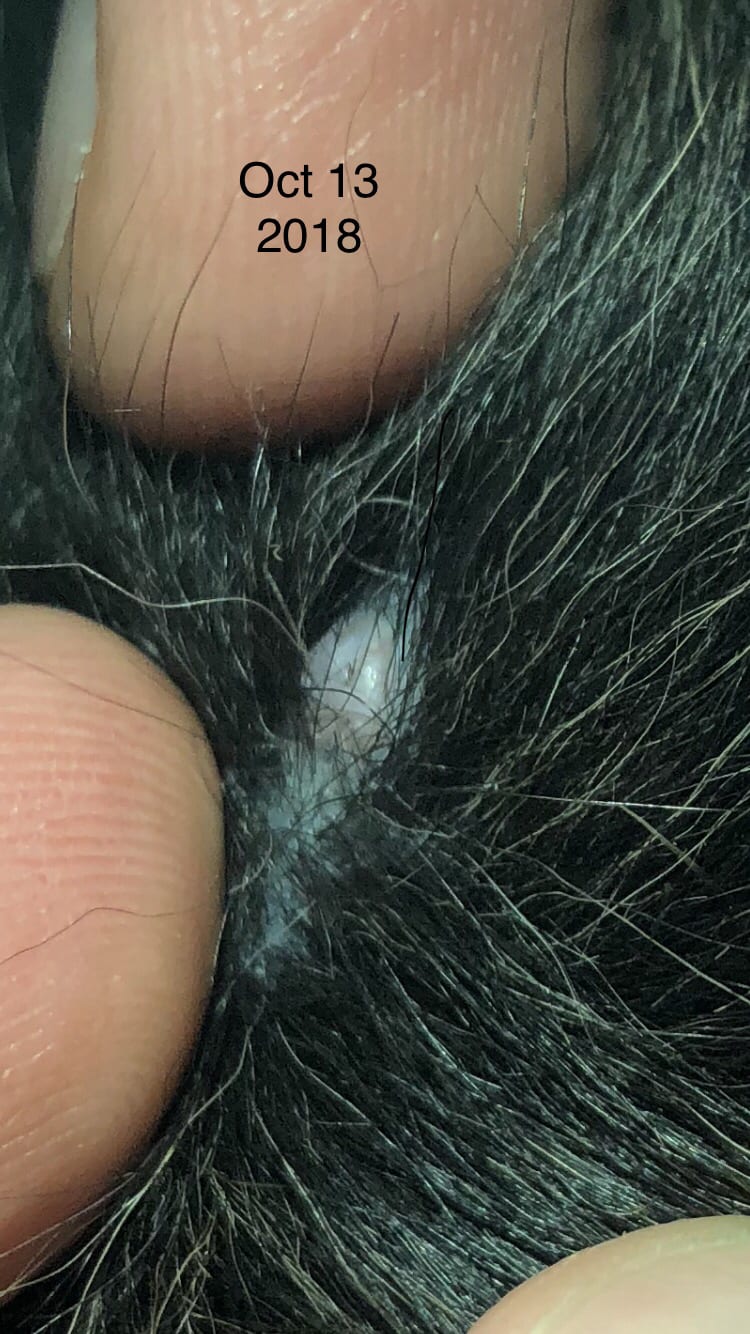
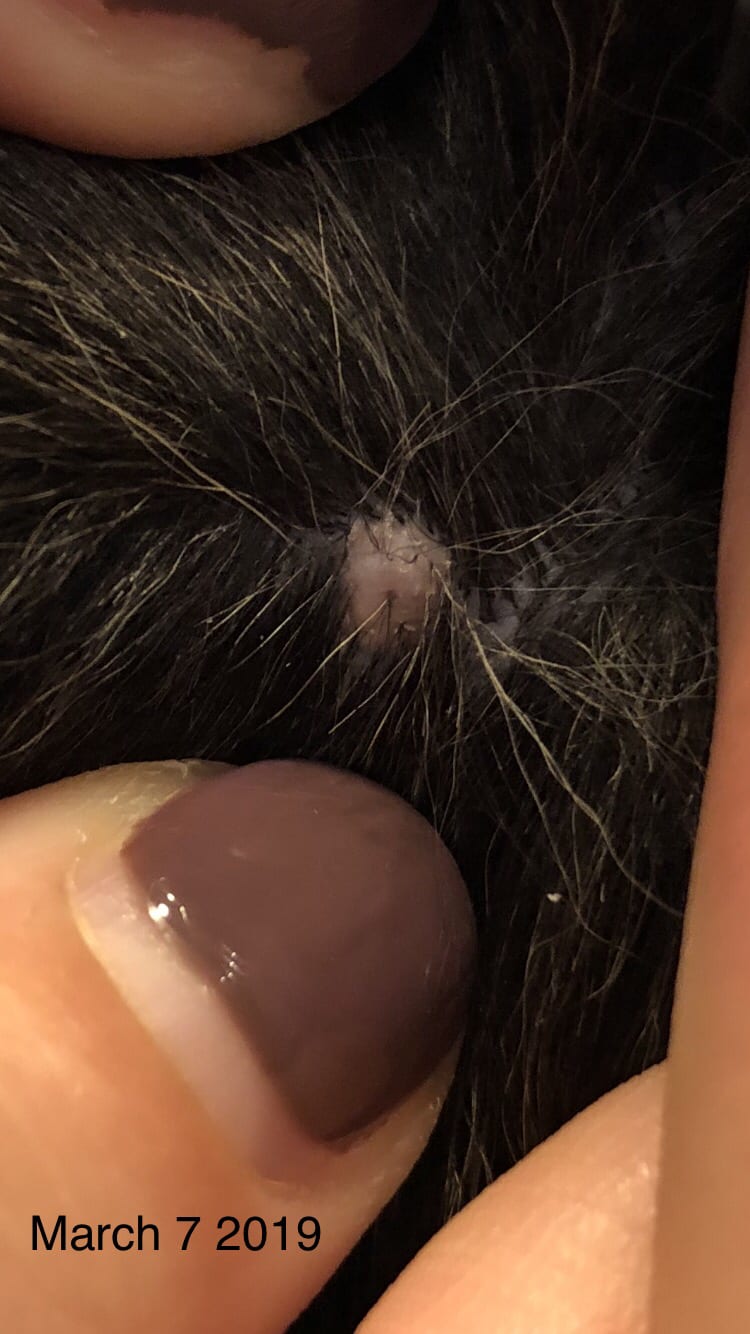
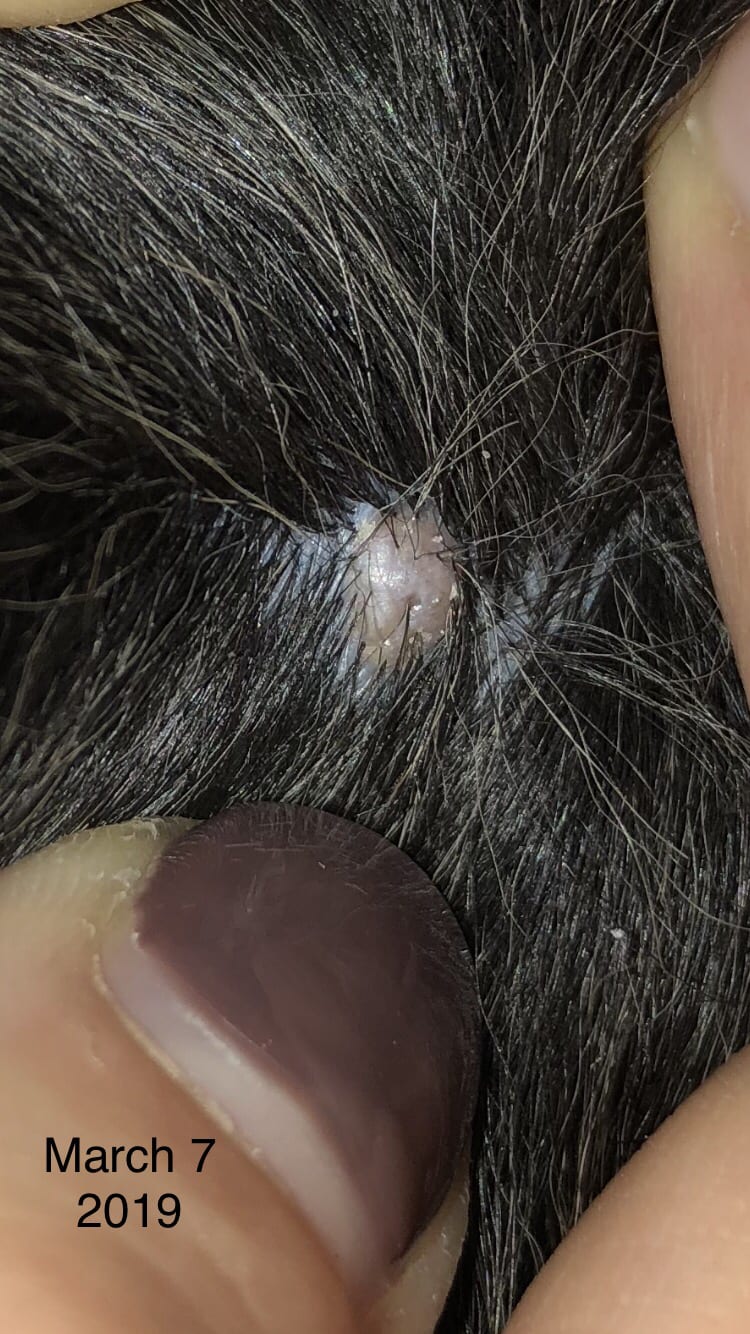
Tavia is a 7yr old Boston/Pug/Beagle/Shih Tzu cross. She has been healthy aside from several seizures she suffered when she was 4 due to stress from a new dog in the house. 5 months ago I noticed a bump on the back of her neck. I have attached a picture of the bump on Oct 13, 2018 and another from March 7, 2019. The bump feels slightly bigger now than it did in October. Based on the pictures (dates are stamped on the pics) does this look like a cause for concern? Thank you in advance


4 Answers
Most Helpful Answer

Published on March 8th, 2019
This could be a benign tumor, but it is concerning that it's gotten bigger. Any suspicious lumps should be examined by the vet. The vet can perform a test called a fine needle aspirate on it. To do this, the vet sticks a small needle into the lump to get a sample of its cells, and examines the cells on a slide under a microscope. It's usually painless to the animal, and relatively quick to perform. Once the cause of the lump is diagnosed, the vet can discuss treatment options if needed. I would give Tavia's vet a call in the morning to make her an appointment. Best of luck.

1Pet Parents found this answer helpful
Related Answers from Veterinarians
-
Published on March 9th, 2017
This growth on Toby would be a cyst, a benign tumor, or a malignant tumor. Because it's getting bigger, it definitely needs to be examined by a vet. The vet can perform a test called a fine needle aspirate on it. To do this, the vet sticks a small needle into the growth to get a sample of it's cells, and examines the cells on a slide under a microscope. It's usually painless to the animal, and relatively quick to perform. I would have Toby seen by a vet tomorrow to have the growth examined and diagnosed, and the vet can treat it as needed.
1Pet Parents found this answer helpful
-
Published on June 17th, 2019
This could be a benign tumor that's started growing. Any suspicious lumps should be examined by the vet. The vet can perform a test called a fine needle aspirate on it. To do this, the vet sticks a small needle into the lump to get a sample of its cells, and examines the cells on a slide under a microscope. It's usually painless to the animal, and relatively quick to perform. Once the cause of the lump is diagnosed, the vet can discuss treatment options if needed. Give Mia's vet a call to make her an appointment.
1Pet Parents found this answer helpful
-
Published on May 30th, 2018
It's really difficult to say what this is without examining her, because there are many possibilities that fit that description. It's best to have a vet examine Zoey sometime soon in the next day, or two, because this seems to be very large and if it grows much bigger it may be inoperable (in the case that it's a tumor). We can usually identify the cause of these lumps within the time of an exam period, or soon thereafter, so it's well worth having her seen by a professional. Below is a link to an article that explains a few different causes of lumps in dogs. https://www.petcoach.co/article/lumps-and-bumps-on-your-pet/ I hope that helps and all is well with Zoey.
1Pet Parents found this answer helpful



Is something wrong here? My dog normally has a wilder bump there but it seems to have gotten bigger.

my small dog has developed a blister like bump approx 10mm and 5mm high skin surrounding slightly darken ,, she wants to lick it all the time any suggestion .. one what it might be and how to heal it

My dog has a grayish bump on her neck with a black end on it. What could that be?
I just found a lump on my dogs right side neck? What could it be?

My dog has this weird bump on his that i saw him biting at. I’ve never noticed it but it looks bad. It could be a tick or something but i just wanted to see if u knew what it was

Our 7 year old female Boston Terrier has a black (soft and movable) mole/growth on her face. It has increased in size since we noticed it about 4 or 5 months ago. What could this be? We see a local farm vet and he just said aww it's nothing to worry
So for the last month or so.... my dog has had this lump on her stomach. Now, it’s grown a bit bigger over time. I’m not sure if it’s a lump that could be harmful to her or not. But it doesn’t seem to hurt her if we touch it. So, could it just be a n
So my dog has a small bump on her lower left side of her back. It's about the size of a pinkie fingernail. It is firm not squishy. I noticed it about 6 maybe 8 months ago. It has not grown since I noticed it. It can be seen on her back in the light.
Is this bump on my dog’s nose a concern?

Found a lump on Luckie's nape area, somewhere below her left ear but above shoulder blades. It wasn't there day before last. All her bloodtests (CBC, liver, kidney) were normal except for slightly elevated hemoglobin (vet said she might be a bit deh

Book an appointment with the pros – our expert vets are here to help.
