Why is my senior cat drooling thick, sticky, foul-smelling saliva?
Updated On September 23rd, 2025
Pet's info: Cat | Mixed Breed | Female | spayed | 6 lbs
Peanut has viscous foul saliva. No apparent oral issues other than missing teeth. She is approx 14. For past 3 months eats wet, grain free food and eats well. Is alert and active. Prior to this was eating dry food, losing weight and hair was dull with many Matt's. She has medium to long hair. On wet food weight has stabilized and hair is much improved. Still drooling the nasty saliva. Her extremities have sticky hard clumps and her face around her mouth is syrupy and brown. I add probiotics.
3 Answers
Most Helpful Answer

Published on October 19th, 2018
Typically excess salivation is either caused by nausea or pain (oral or abdominal), although this is not an all inclusive list. There can still be oral disease present, especially if these missing teeth were not removed but fell out. Cats can get resorptive lesions of their teeth which can be really painful and the changes can be hard for owners to detect. They can also get lesions in their mouth (stomatitis, a mass, ulcers, etc.) that an owner may not see. Additionally diseases of other body systems may cause drooling (kidneys, gi, etc ). I would recommend your kitty seeing a vet for a thourough oral exam and blood work to start. A good oral exam will likely require sedation and perhaps dental xrays. Additional testing may be recommended based on the case. I hope this helps and thank you for using Petco Pet Education Center, formerly Petcoach!

1Pet Parents found this answer helpful
Related Answers from Veterinarians
-
Published on April 14th, 2017
There can be several causes of excessive salivation in cats. Certainly, liver problems can cause this, however blood work would easily confirm whether there is definitively a liver problem or not. If liver values are elevated, then further testing would need to be done to determine exactly what is causing the problem in the liver - infection, inflammation, cancer, etc. If the liver is OK, then other possibilities include severe nausea (caused by a number of GI and non-GI problems), ingestion of a toxin, or dental disease. If the medication the vet you saw is not helping your cat, I would urge you to seek a second opinion.
1Pet Parents found this answer helpful
-
Published on July 21st, 2019
No, it is more likely that he has a dental issue or some kind of problem inside his mouth. I suggest you get him to the vet for an exam. Cats cannot go too long without eating or drinking or their liver starts to get damaged.
1Pet Parents found this answer helpful


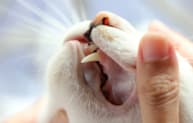
Hi. My old cat (at my dad's) is getting on a bit but I have just visited after 3 months away and he has deteriorated gradually to the state where he now dribbles. The saliva is thick and sticky. The black is something he has been in and us hard and c

Hello, my 7 year and 1 month old female cat is drooling from several days.. Now it seems to little excessive, thick and light buff in colour.. Her mouth gives stinky bad odour and today i saw that she was moving ,opening lower jaw and time to time
My cat seems to be salivating a lot but does seem to still have an appetite. As far as I can tell he has not gotton into anything. He had a little poop om his butt stuck to fur. What could this be?
My grandmother's cat has been drooling for a few weeks now. He is 11-12 years old and lost his teeth a while ago but never drooled. She was hoping the problem would go away on its own but he is also having trouble eating. Is there anything at the pet
Hello. I have a male cat who just turned 21. He is drooling alot. Will only eat wet food, he never liked it b4. Is there something that can be done at his age? I am on a fixed income, but I don't want him in pain. Thank you
My cat have come in drooling lots of thick mucas which is all matted in her fur plus there's a bad odour when close to her, what could it be?
My cat is drooling excessively I brought him to the bet but he doesn't know what's wrong all his blood work came back good there is a slight redness on his rear lower left side but its unclear if that's what's causing the discomfort can anyone give m
Kitty (stray 4.5yearold cat) has trouble eating and drools.Problem started in January2017. Seems like she has trouble swallowing.Gave her a course of Amoxicillin Trihydrate a few months ago; condition immediately improved, but a few weeks later gradu
Kitty (semi-stray 4.5yearold cat) has trouble eating and drools. Problem started in January, almost a year ago. Seems like she has trouble swallowing. Gave her a course of Amoxicillin Trihydrate a few months ago; her condition immediately improved, b
My cat is a 3 year old male. He has been uncontrollably drooling for at least half a day. I do not know why either. He seems a little more unmotivated also.
Book an appointment with the pros – our expert vets are here to help.
