


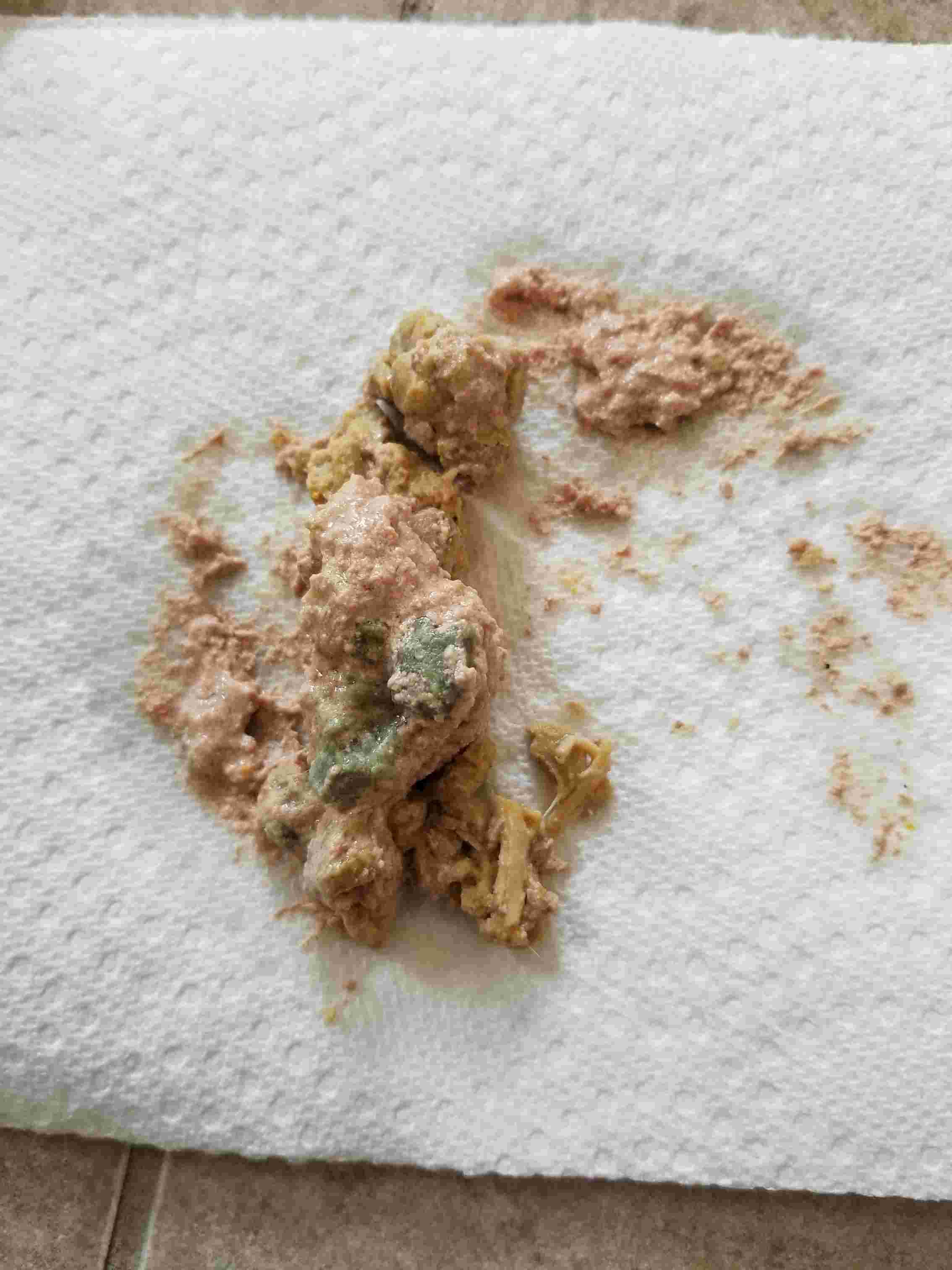
My kitten threw up green vomit but seems fine. Is it normal?
Updated On September 23rd, 2025
Pet's info: Cat | Siamese | Female | spayed | 7 months and 9 days old | 4.41 lbs
Hello there, Skye ate some dry food a little after had some wet food and about 5 to 10 minutes after that she threw up ( sometimes she does that when she eats too fast) but there is some green stuff in the vomit. She is acting her normal self no signs of eilness... playful, eating and drinking well. I'm just concerned about the green stuff, is that normal? Purina veterinarian diet Essential care kitten dry food Weruva, cat in the kitchen, fancy feast (sometimes) Iams (sometimes) wet food. Than


4 Answers
Most Helpful Answer
Published on August 29th, 2018
Hi there and thank you for using Petco Pet Education Center, formerly Petcoach to address your concern. Bile can cause this coloration. I would recommend starting a bland diet as outlined below and feed this at least 3 days beyond the resolution of the vomiting. After the vomiting resolves, transition back to the regular food and if there is no improvement, I would recommend switching to a new food altogether and see 8f there is improvement. If there is still no improvement after that, then I would recommend having a veterinarian examine her so that the most appropriate diagnostic and treatment recommendations can be made. I hope this helps guide you in the right direction! Please let me know if you have any other questions or concerns and I would be more than happy to help you further. GENERAL INFORMATION A bland diet is a diet that is soft and highly digestible. It is low in fiber, fat and protein and is high in carbohydrates. Bland diets are generally composed of a single carbohydrate source and a single lean protein source. The most common bland diet is boiled rice and boiled lean chicken breast, without skin and bones. Since bland diets are low in fiber, stool production slows and defecation is less frequent. Bland diets are fed to rest the gastric system and to help promote normal stool formation. Animals that are physically sick should not be fed bland diets as a method of treatment. PRIOR TO FEEDING A BLAND DIET Pets should be fasted for 12 to 24 hours. Young animals should not be fasted for more than 12 hours. Fasting will allow the intestinal system to relax and minimize acid secretions that may irritate and inflame the intestinal lining. During the fast small amounts of water or ice chips may be provided. Never fast a sick animal, it may cause disease progression and death. BASIC BOILED RICE AND CHICKEN BLAND DIET RECIPE CARBOHYDRATE SOURCE: Boiled white rice LEAN PROTEIN SOURCE: Chicken breast, no skin and bones BOILED RICE: 1 part white rice with 3 parts water boiled for 20 – 25 minutes or until the rice is easily crushed. BOILED CHICKEN: De-fat chicken breast and boil in water for 10 – 15 minutes or until the chicken meat is easily pulled apart and cooked all way through. MIXING INSTRUCTIONS: Finely chop the lean protein and mix 2 cups carbohydrate source and ½ cup lean protein source. STORAGE INSTRUCTIONS: Bland diets can be premade and stored in the refrigerator for a maximum of 48 hours. The bland diet can be cooked in a batch and frozen in feeding sized portions to minimize preparation time. Thaw and warm the frozen diet prior to feeding. PERMITTED LEAN PROTEIN SUBSTITUTIONS Pork loin, egg whites, low fat cottage cheese. 7% low fat hamburger, plain low fat yogurt. PERMITTED CARBOHYDRATE SUBSTITUTIONS Boiled potatoes, boiled spaghetti, Minute rice. PERMITTED COMMERCIAL BLAND DIETS Science Prescription Diet I/D, Eukanuba Veterinary Diet Low Residue, Royal Canin Veterinary Diet Intestinal HE. FEEDING INSTRUCTIONS Estimate 25% of your animal’s diet and feed that amount of the bland diet every 6 – 8 hours. Smaller animals will require less and larger animals will require more adhering to the same carbohydrate to lean protein source ratio. The bland diet should be fed for 4 -5 days with no treats or other food sources until stools are firm. TRANSITION BACK TO A NORMAL DIET Never transition back to a regular diet rapidly. Transition back to the regular diet over a 1 week period. Start by adding 25% of the regular diet to 75% of the bland diet and feed that combination for 2 days. If stools continue to be firm then continue substituting the regular diet in 25% increments and feeding the combination in 2 day time intervals until the diet is 100% regular diet. Minimize treats for 1 week after moving the diet back to 100% regular diet.

2Pet Parents found this answer helpful
Other Answers
-
Published on January 23rd, 2018
Hi there and thank you for using Petco Pet Education Center, formerly Petcoach to address your concern. Vomiting can be a symptom of many things. Unfortunately it is difficult to say without testing and ruling various causes out what the main problem could be. If he has normal energy, is still interested in food and water then I would recommend starting a bland diet as outlined below and adding in a probiotic such as Purina Fortiflora, which can be found online quite easily. If he is lethargic and not eating then I would recommend that he be examined by a veterinarian so that the most appropriate diagnostic and treatment recommendations can be made. I hope this helps! Please let me know if you have any other questions or concerns and I would be more than happy to help you further. GENERAL INFORMATION A bland diet is a diet that is soft and highly digestible. It is low in fiber, fat and protein and is high in carbohydrates. Bland diets are generally composed of a single carbohydrate source and a single lean protein source. The most common bland diet is boiled rice and boiled lean chicken breast, without skin and bones. Since bland diets are low in fiber, stool production slows and defecation is less frequent. Bland diets are fed to rest the gastric system and to help promote normal stool formation. Animals that are physically sick should not be fed bland diets as a method of treatment. PRIOR TO FEEDING A BLAND DIET Pets should be fasted for 12 to 24 hours. Young animals should not be fasted for more than 12 hours. Fasting will allow the intestinal system to relax and minimize acid secretions that may irritate and inflame the intestinal lining. During the fast small amounts of water or ice chips may be provided. Never fast a sick animal, it may cause disease progression and death. BASIC BOILED RICE AND CHICKEN BLAND DIET RECIPE CARBOHYDRATE SOURCE: Boiled white rice LEAN PROTEIN SOURCE: Chicken breast, no skin and bones BOILED RICE: 1 part white rice with 3 parts water boiled for 20 – 25 minutes or until the rice is easily crushed. BOILED CHICKEN: De-fat chicken breast and boil in water for 10 – 15 minutes or until the chicken meat is easily pulled apart and cooked all way through. MIXING INSTRUCTIONS: Finely chop the lean protein and mix 2 cups carbohydrate source and ½ cup lean protein source. STORAGE INSTRUCTIONS: Bland diets can be premade and stored in the refrigerator for a maximum of 48 hours. The bland diet can be cooked in a batch and frozen in feeding sized portions to minimize preparation time. Thaw and warm the frozen diet prior to feeding. PERMITTED LEAN PROTEIN SUBSTITUTIONS Pork loin, egg whites, low fat cottage cheese. 7% low fat hamburger, plain low fat yogurt. PERMITTED CARBOHYDRATE SUBSTITUTIONS Boiled potatoes, boiled spaghetti, Minute rice. PERMITTED COMMERCIAL BLAND DIETS Science Prescription Diet I/D, Eukanuba Veterinary Diet Low Residue, Royal Canin Veterinary Diet Intestinal HE. FEEDING INSTRUCTIONS Estimate 25% of your animal’s diet and feed that amount of the bland diet every 6 – 8 hours. Smaller animals will require less and larger animals will require more adhering to the same carbohydrate to lean protein source ratio. The bland diet should be fed for 4 -5 days with no treats or other food sources until stools are firm. TRANSITION BACK TO A NORMAL DIET Never transition back to a regular diet rapidly. Transition back to the regular diet over a 1 week period. Start by adding 25% of the regular diet to 75% of the bland diet and feed that combination for 2 days. If stools continue to be firm then continue substituting the regular diet in 25% increments and feeding the combination in 2 day time intervals until the diet is 100% regular diet. Minimize treats for 1 week after moving the diet back to 100% regular diet.
1Pet Parents found this answer helpful
-
Published on October 3rd, 2017
Thank you for your post! I would recommend withholding food for 12 hours and then initiating a bland diet as outlined below. If the vomiting does not stop or your cat worsens, I would suggest having a veterinarian examine your cat for further testing / treatment. I hope this helps! Please let me know if you have any further questions or concerns. I am also available for consult if needed. GENERAL INFORMATION A bland diet is a diet that is soft and highly digestible. It is low in fiber, fat and protein and is high in carbohydrates. Bland diets are generally composed of a single carbohydrate source and a single lean protein source. The most common bland diet is boiled rice and boiled lean chicken breast, without skin and bones. Since bland diets are low in fiber, stool production slows and defecation is less frequent. Bland diets are fed to rest the gastric system and to help promote normal stool formation. Animals that are physically sick should not be fed bland diets as a method of treatment. PRIOR TO FEEDING A BLAND DIET Pets should be fasted for 12 to 24 hours. Young animals should not be fasted for more than 12 hours. Fasting will allow the intestinal system to relax and minimize acid secretions that may irritate and inflame the intestinal lining. During the fast small amounts of water or ice chips may be provided. Never fast a sick animal, it may cause disease progression and death. BASIC BOILED RICE AND CHICKEN BLAND DIET RECIPE CARBOHYDRATE SOURCE: Boiled white rice LEAN PROTEIN SOURCE: Chicken breast, no skin and bones BOILED RICE: 1 part white rice with 3 parts water boiled for 20 – 25 minutes or until the rice is easily crushed. BOILED CHICKEN: De-fat chicken breast and boil in water for 10 – 15 minutes or until the chicken meat is easily pulled apart and cooked all way through. MIXING INSTRUCTIONS: Finely chop the lean protein and mix 2 cups carbohydrate source and ½ cup lean protein source. STORAGE INSTRUCTIONS: Bland diets can be premade and stored in the refrigerator for a maximum of 48 hours. The bland diet can be cooked in a batch and frozen in feeding sized portions to minimize preparation time. Thaw and warm the frozen diet prior to feeding. PERMITTED LEAN PROTEIN SUBSTITUTIONS Pork loin, egg whites, low fat cottage cheese. 7% low fat hamburger, plain low fat yogurt. PERMITTED CARBOHYDRATE SUBSTITUTIONS Boiled potatoes, boiled spaghetti, Minute rice. PERMITTED COMMERCIAL BLAND DIETS Science Prescription Diet I/D, Eukanuba Veterinary Diet Low Residue, Royal Canin Veterinary Diet Intestinal HE. FEEDING INSTRUCTIONS Estimate 25% of your animal’s diet and feed that amount of the bland diet every 6 – 8 hours. Smaller animals will require less and larger animals will require more adhering to the same carbohydrate to lean protein source ratio. The bland diet should be fed for 4 -5 days with no treats or other food sources until stools are firm. TRANSITION BACK TO A NORMAL DIET Never transition back to a regular diet rapidly. Transition back to the regular diet over a 1 week period. Start by adding 25% of the regular diet to 75% of the bland diet and feed that combination for 2 days. If stools continue to be firm then continue substituting the regular diet in 25% increments and feeding the combination in 2 day time intervals until the diet is 100% regular diet. Minimize treats for 1 week after moving the diet back to 100% regular diet.
1Pet Parents found this answer helpful
-
Published on December 10th, 2017
Hi there and thank you for using Petco Pet Education Center, formerly Petcoach to address your concern. I am sorry to hear that Emmy is not feeling well. I would recommend against deworming her so that this does not cause any further stomach upset. The streak of red you are seeing in the vomit is blood and is a small amount. I am not concerned about this amount of blood and it can be expected in animals that have been vomiting a lot. Emmy probably has some inflammation in her stomach (gastritis) that is causing the blood to be present. If she ate something she is not normally used to, this could have caused a dietary indiscretion. I would recommend starting a bland diet as recommended below. I would feed this at least 3 days past the resolution of the vomiting. If the vomiting does not go away or worsens, I would recommend taking her to be seen by a veterinarian and have her blood tested and have abdominal x-rays taken. I hope this helps guide you in the right direction! Please let me know if you have any other questions or concerns. GENERAL INFORMATION A bland diet is a diet that is soft and highly digestible. It is low in fiber, fat and protein and is high in carbohydrates. Bland diets are generally composed of a single carbohydrate source and a single lean protein source. The most common bland diet is boiled rice and boiled lean chicken breast, without skin and bones. Since bland diets are low in fiber, stool production slows and defecation is less frequent. Bland diets are fed to rest the gastric system and to help promote normal stool formation. Animals that are physically sick should not be fed bland diets as a method of treatment. PRIOR TO FEEDING A BLAND DIET Pets should be fasted for 12 to 24 hours. Young animals should not be fasted for more than 12 hours. Fasting will allow the intestinal system to relax and minimize acid secretions that may irritate and inflame the intestinal lining. During the fast small amounts of water or ice chips may be provided. Never fast a sick animal, it may cause disease progression and death. BASIC BOILED RICE AND CHICKEN BLAND DIET RECIPE CARBOHYDRATE SOURCE: Boiled white rice LEAN PROTEIN SOURCE: Chicken breast, no skin and bones BOILED RICE: 1 part white rice with 3 parts water boiled for 20 – 25 minutes or until the rice is easily crushed. BOILED CHICKEN: De-fat chicken breast and boil in water for 10 – 15 minutes or until the chicken meat is easily pulled apart and cooked all way through. MIXING INSTRUCTIONS: Finely chop the lean protein and mix 2 cups carbohydrate source and ½ cup lean protein source. STORAGE INSTRUCTIONS: Bland diets can be premade and stored in the refrigerator for a maximum of 48 hours. The bland diet can be cooked in a batch and frozen in feeding sized portions to minimize preparation time. Thaw and warm the frozen diet prior to feeding. PERMITTED LEAN PROTEIN SUBSTITUTIONS Pork loin, egg whites, low fat cottage cheese. 7% low fat hamburger, plain low fat yogurt. PERMITTED CARBOHYDRATE SUBSTITUTIONS Boiled potatoes, boiled spaghetti, Minute rice. PERMITTED COMMERCIAL BLAND DIETS Science Prescription Diet I/D, Eukanuba Veterinary Diet Low Residue, Royal Canin Veterinary Diet Intestinal HE. FEEDING INSTRUCTIONS Estimate 25% of your animal’s diet and feed that amount of the bland diet every 6 – 8 hours. Smaller animals will require less and larger animals will require more adhering to the same carbohydrate to lean protein source ratio. The bland diet should be fed for 4 -5 days with no treats or other food sources until stools are firm. TRANSITION BACK TO A NORMAL DIET Never transition back to a regular diet rapidly. Transition back to the regular diet over a 1 week period. Start by adding 25% of the regular diet to 75% of the bland diet and feed that combination for 2 days. If stools continue to be firm then continue substituting the regular diet in 25% increments and feeding the combination in 2 day time intervals until the diet is 100% regular diet.
1Pet Parents found this answer helpful



Book an appointment with the pros – our expert vets are here to help.
