


My dog has morning diarrhea, bad breath, and a sensitive stomach.
Updated On September 23rd, 2025
Pet's info: Dog | Mixed Breed Large (61lb +) | Male | neutered | 4 years and 7 months old | 82 lbs
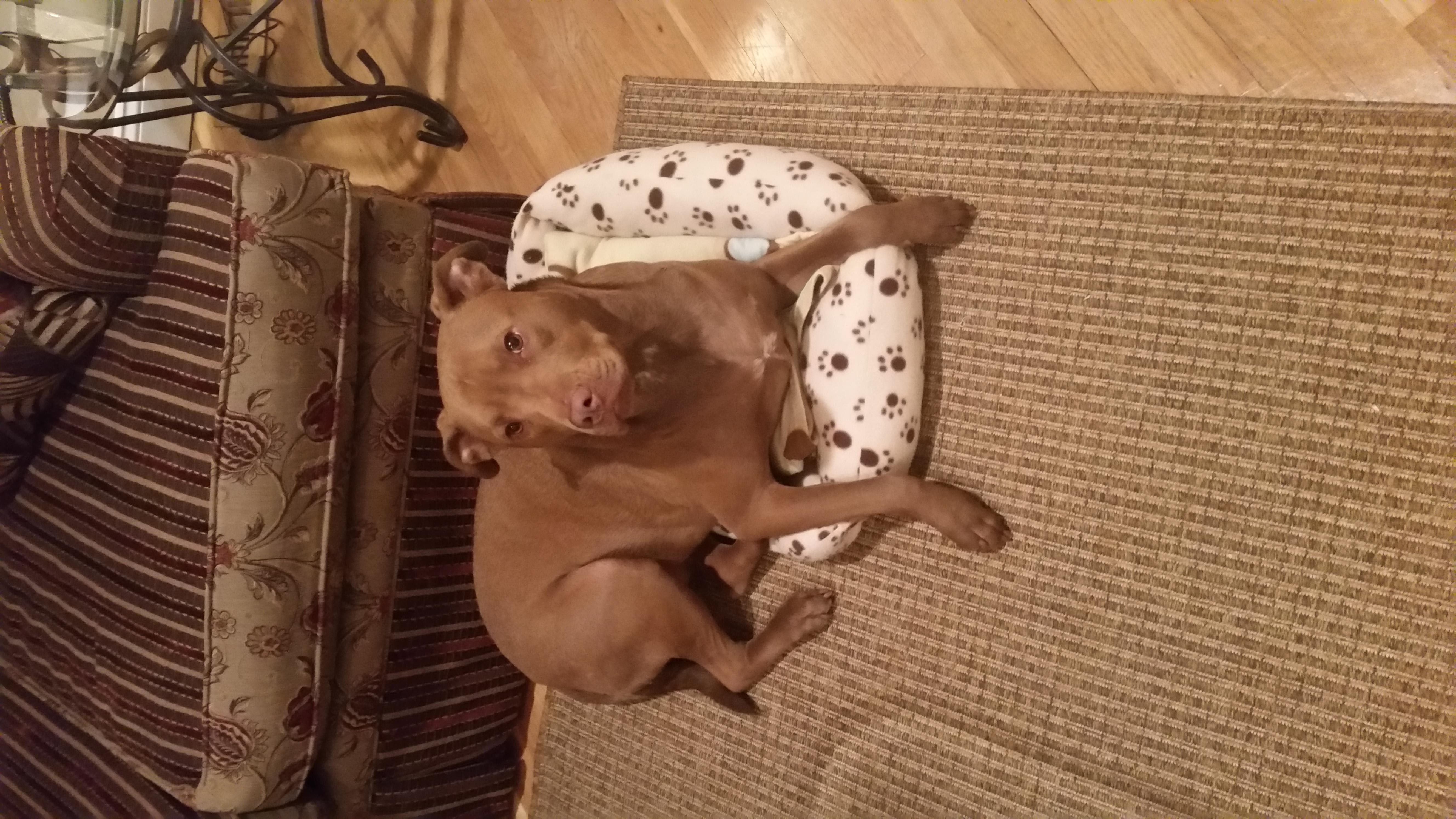
Hi my four-year-old Has been having diarrhea only in the morning he’s always had a sensitive stomach since a puppy and he’s been on grain free food always because he’s allergic to grains also lately his gums have been smelling very bad, and his teeth are in good condition, he is not a big eater, he eats his dinner which is hard mix with some soft food. Do you think I should have his Gastrointestinal tract, tested?


1 Answer
Most Helpful Answer
Published on March 2nd, 2018
Hi there and thank you for using Petco Pet Education Center, formerly Petcoach to address your concern. Many cases of diarrhea can be directly linked back to the diet or an imbalance of GI bacteria. If Mason has been on the same food for a while now, I would initiate a bland diet as outlined below and then transition back to the regular dog food 3 days after the diarrhea resolves. If he is still having diarrhea, I would consider switching to a low fat / GI / sensitive stomach formula such as Science Diet or Royal Canin. As for the gums, just because he does not have much tartar does not mean he doesn't have bacteria in his mouth. He may have a larger than normal bacteria population in his mouth causing the bad breath. If he has not had a dental cleaning ever or its been a while, I would recommend having a veterinarian professionally clean his teeth to help with the bad breath. Products such as Plaque Off, Oravet and CET toothpaste can help with the bad breath as well as help prevent tartar formation. If the diet change does not help, I would consider adding in a probiotic such as Purina Fortiflora. If he continues to have diarrhea after switching the diets and the probiotic does not work, I would recommend having a veterinarian take a look at Mason so that the most appropriate diagnostic and treatment recommendations can be made. I hope this helps! Please let me know if you have any other questions or concerns and I would be more than happy to help you further! GENERAL INFORMATION A bland diet is a diet that is soft and highly digestible. It is low in fiber, fat and protein and is high in carbohydrates. Bland diets are generally composed of a single carbohydrate source and a single lean protein source. The most common bland diet is boiled rice and boiled lean chicken breast, without skin and bones. Since bland diets are low in fiber, stool production slows and defecation is less frequent. Bland diets are fed to rest the gastric system and to help promote normal stool formation. Animals that are physically sick should not be fed bland diets as a method of treatment. PRIOR TO FEEDING A BLAND DIET Pets should be fasted for 12 to 24 hours. Young animals should not be fasted for more than 12 hours. Fasting will allow the intestinal system to relax and minimize acid secretions that may irritate and inflame the intestinal lining. During the fast small amounts of water or ice chips may be provided. Never fast a sick animal, it may cause disease progression and death. BASIC BOILED RICE AND CHICKEN BLAND DIET RECIPE CARBOHYDRATE SOURCE: Boiled white rice LEAN PROTEIN SOURCE: Chicken breast, no skin and bones BOILED RICE: 1 part white rice with 3 parts water boiled for 20 – 25 minutes or until the rice is easily crushed. BOILED CHICKEN: De-fat chicken breast and boil in water for 10 – 15 minutes or until the chicken meat is easily pulled apart and cooked all way through. MIXING INSTRUCTIONS: Finely chop the lean protein and mix 2 cups carbohydrate source and ½ cup lean protein source. STORAGE INSTRUCTIONS: Bland diets can be premade and stored in the refrigerator for a maximum of 48 hours. The bland diet can be cooked in a batch and frozen in feeding sized portions to minimize preparation time. Thaw and warm the frozen diet prior to feeding. PERMITTED LEAN PROTEIN SUBSTITUTIONS Pork loin, egg whites, low fat cottage cheese. 7% low fat hamburger, plain low fat yogurt. PERMITTED CARBOHYDRATE SUBSTITUTIONS Boiled potatoes, boiled spaghetti, Minute rice. PERMITTED COMMERCIAL BLAND DIETS Science Prescription Diet I/D, Eukanuba Veterinary Diet Low Residue, Royal Canin Veterinary Diet Intestinal HE. FEEDING INSTRUCTIONS Estimate 25% of your animal’s diet and feed that amount of the bland diet every 6 – 8 hours. Smaller animals will require less and larger animals will require more adhering to the same carbohydrate to lean protein source ratio. The bland diet should be fed for 4 -5 days with no treats or other food sources until stools are firm then transition to dog food

1Pet Parents found this answer helpful
My dog has had several bouts of diarrhea today and tonight I noticed he's having problems swallowing his food when he eats. There's been no change in his diet and he is up to date on all his shots.

My dog, a Schnoodle, has been throwing up sporeticslly over the past couple of weeks and eating very little. We thought she was pouting because my dad got a new puppy and she is a little jealous. But she has also started to emit a horrible odor from
My miniature poodle has severe diarrhea and is pooping every 1-3 hours....what does that mean and what should I do?

My dog is a Pomeranian and Chihuahua mix that is 9 to 10 years old. He has been having diarrhea, doll coat, slow heart rate and weight loss.
My dog has had Mushy stool followed by completely liquid stool drops after for the last two days and he just threw up spit/bile. What should I do, and at what point should I go to the vet for tests?
Took my dog for a walk Tuesday and he ate something that made him vomit. He has had liquid poo since and there is no traces of blood. He’s still eating biscuits and seem higher and excitable still. He also has bumps on his head

i have a 6mos american bully puppy and has diareha for 2 days sleeping alot and no appetite what can i give him to stop diarreha?

my 13 year old patterdale on thursday evening had very soft stool. friday we bought some stool firming tablets from the pet store . saturday am she had a good well formed poop, but then as the day went on she was straining to pass very small amounts
Ive got a rednose pitbull. He's been lying from yesterday refusing to eat but he still drinks water. He threw up through the night and yesterday morning he had only once diarrhea. I can see his not himself he is always very playfull but now he just l
Watery diarrhea. Tired. Straining when when trying to go but no stool. What can I do to help alleviate his symptoms tonight before I can call his vet tomorrow?
Book an appointment with the pros – our expert vets are here to help.
