


My dog has severe separation anxiety. How to stop destruction?
Updated On September 23rd, 2025
Pet's info: Dog | Siberian Husky | Male | neutered | 3 years and 7 months old | 60 lbs
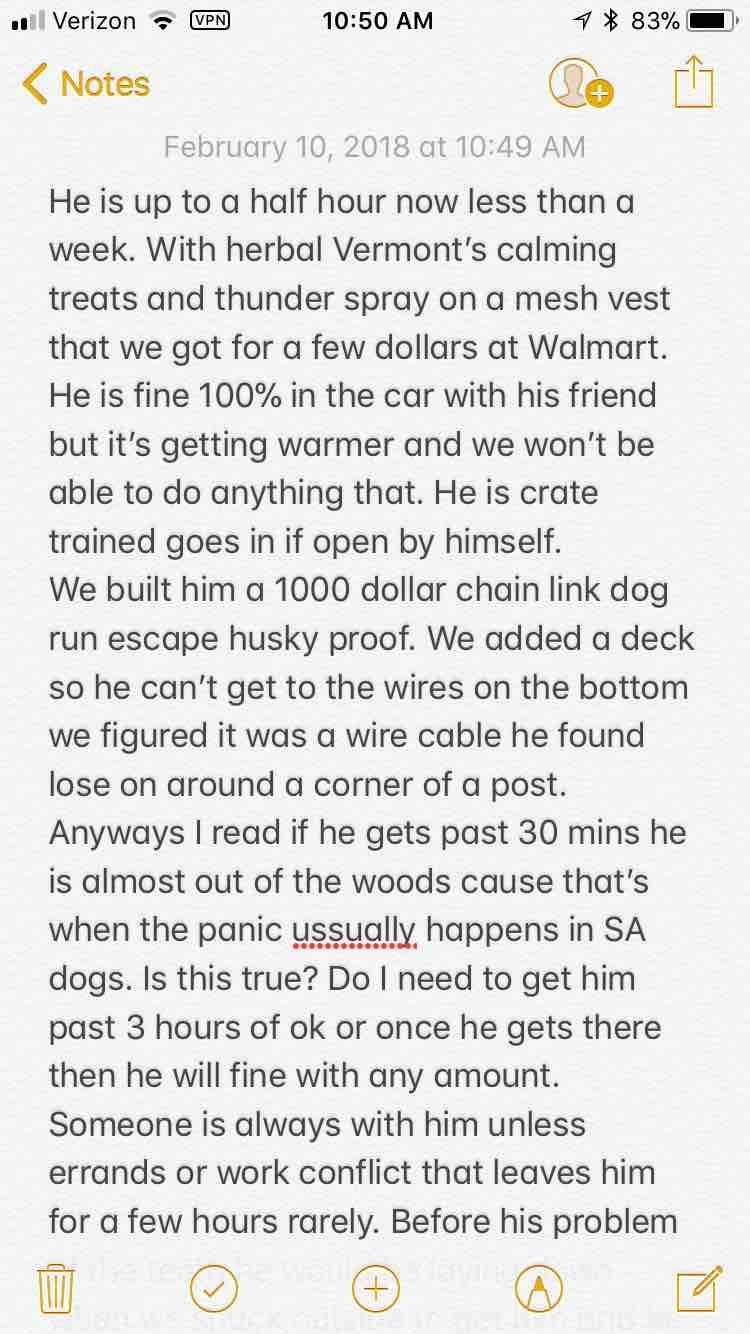
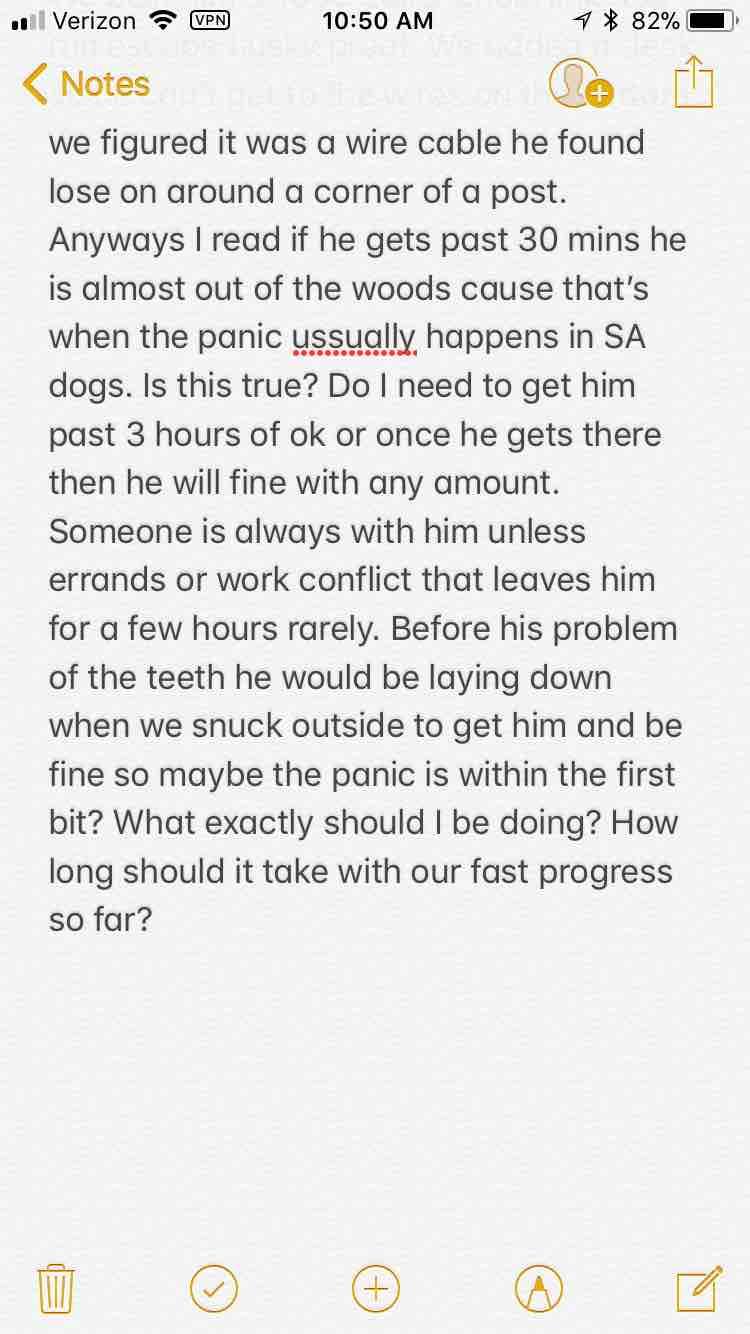
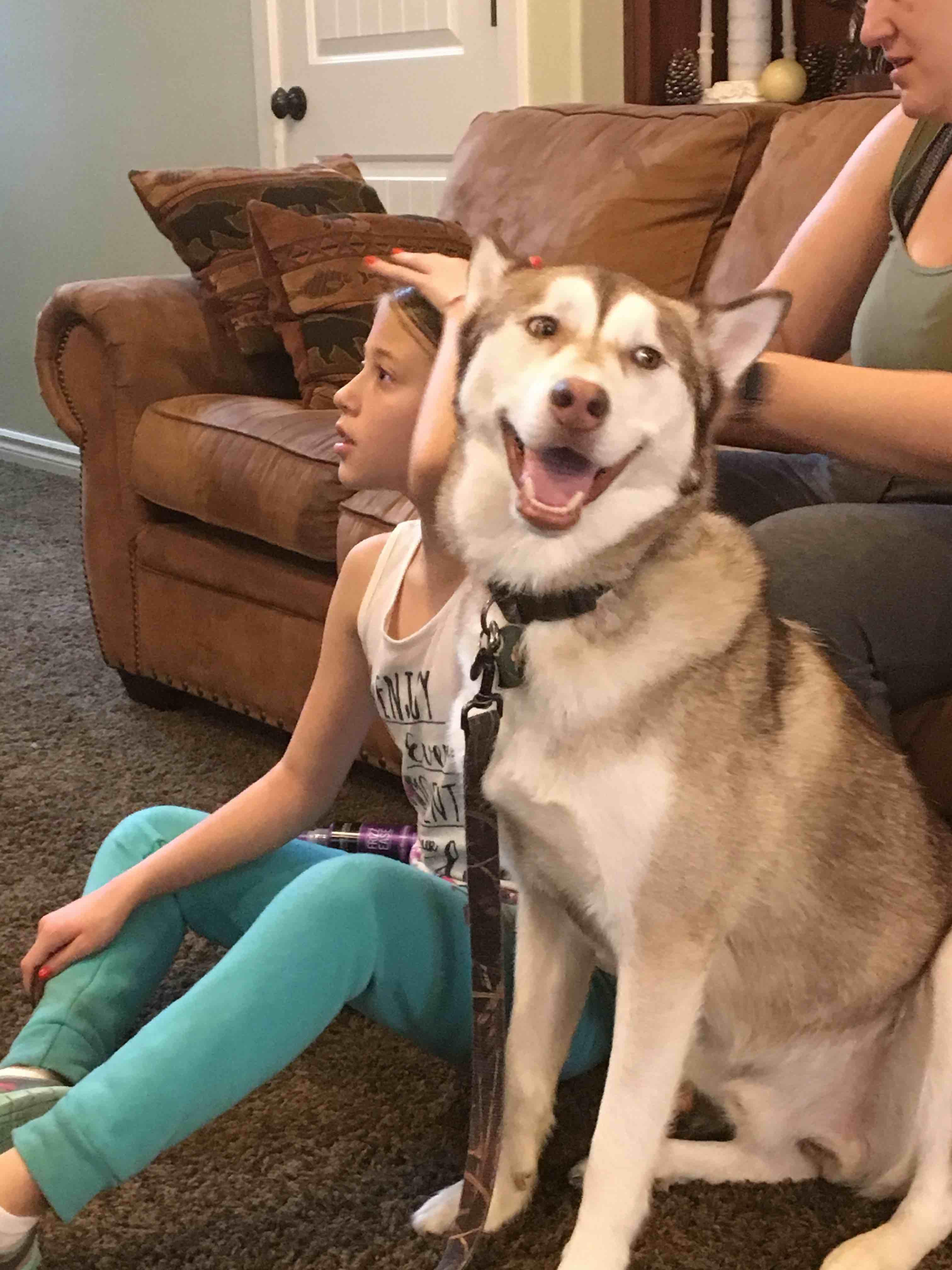
My husky has severe separation anxiety. He broke his canines when he was alone before we got him a friend husky. One at a boarding place (not at the pulp but the vet removed because he said after one more chewing it could break) and later one that broke the pulp. We removed both at that time. We got him when he was almost 3 years old. He ate two plastic crates as a puppy from his vet records. We have been doing remodification of his behavior leaving him progressively w/ other dog. Look at pics


5 Answers
Most Helpful Answer

Published on February 10th, 2018
What can I do if my dog already has separation anxiety? Treating an established case of separation anxiety will require the guidance and help of your vet. The road to recovery takes time and patience, but with the right tools you and your dog can both lead a less stressful life. It is very important that you visit with your veterinarian. Your veterinarian will help you formulate a specific plan to help reduce your dog’s anxiety and build his confidence. Things your vet may recommend are: Behavioral exercises SPECIFIC for you and your dog. Anxiety-reducing medication. These medications will not cure your dog; however, they can alleviate his anxiety enough so that he is able to learn new behaviors. An examination to look for underlying medical conditions.

1Pet Parents found this answer helpful
Related Answers from Veterinarians
-
Published on
Hello, sorry to hear about Timber. In humans, it is known that anxiety attacks when they occur do not last longer than 30 minutes. This has not been studied as in depth in dogs. What we do know, is that there are certain triggers which may induce the anxiety such as putting on your work shoes, starting the car, saying goodbye/hello, and walking out the door. Our goals are to desensitize pets to these triggers. It sounds like so far you have been doing everything right. I would recommend continuing to practice what you have been doing and leave him with your other dog for longer periods of times. Here is some more information on separation anxiety and how you can manage it. Hope this helps and best of luck.
1Pet Parents found this answer helpful
-
Published on
What is separation anxiety? Separation anxiety is a state of panic and distress that occurs when a dog is away from his owner; whether you are simply in another room or have left the house. Dogs with this disorder are generally well behaved when the owner is present, and only display signs of anxiety when unable to be in the immediate vicinity of their owner. Signs of separation anxiety can range from mild to severe. The following are some behaviors associated with separation anxiety in dogs: • Excessive salivation • Pacing • Not eating • Excessive vocalization (whining, barking, howling) • Escape attempts • Urination or defecation in the house • Self-inflicted trauma (broken teeth or nails trying to escape) • Destruction (chewing objects, scratching walls and doors) What causes separation anxiety? Separation-related issues stem from the social tendencies of dogs to be pack animals. The human-animal bond is a very special thing, but in some cases this bond can be too strong. Such dogs are sometimes termed “Velcro dogs,” because they must always be right next to their owner. They may follow their owner from room to room, sleep next to their owner, and never let their owner out of sight. These dogs have not yet learned to be comfortable with being independent from their owners, which is why separation causes them distress. Is he doing this because he is mad? No! It is important to understand that this behavior is caused by panic because your dog loves you “too much,” and feels highly insecure when you are not there. Any damage done by your dog is not of malicious intent or out of “spite”. As a result, punishment is not an effective treatment, and may result in increasing your dog’s anxiety. How do I prevent my dog from developing separation anxiety? The goal of preventative action is to teach your dog that being away from you is a positive experience. Some suggestions for accomplishing this are: • Practice “sit and stay.” Ask your dogs to sit and stay, then move a distance away that your dog is comfortable with. Reward your dog for remaining calm. Gradually increase the distance and time that you are separated. If your dog does not stay or becomes anxious, decrease the distance and duration of the exercise until your dog is successful. • Desensitize to normal leaving cues. Use objects that are typically only associated with you leaving, but stay at home. For example, jingle your keys and then sit down to read a book. Grab your purse and then go make dinner. Put on your work shoes and walk around the house. • Leadership exercises. This is a concept that works on the principle that your dog should have to “earn” everything good he gets in life. For example, if he wants to go for a walk he must sit quietly while you put on his leash. Or before giving him his dinner, he must lay down. This helps your dog become less dependent on you, increases your sense of control, and assists in reducing your dog’s anxiety. • Practice leaving. You want your dog to trust that you are coming back and stay calm while you are gone. Practice leaving for small incriminates of time, even if just closing the door for a moment at first, and rewarding your dog for remaining relaxed. • Minimize “Goodbye” and “Hello.” To teach your dog that leaving and arriving is not a big deal, it is helpful to not draw attention to the fact that you are leaving or have been gone. • Give distracting treats and toys. Give your dog a positive distraction with long- lasting tasty treats approximately 20-30 min prior to your departure that will occupy him until after you have left. For example, a peanut-butter-and-kibble-filled Kong®. Also, provide plenty of chewable toys for your dog’s entertainment while you are away. • Leave on the radio/television. Some dogs may be comforted by background noise.
1Pet Parents found this answer helpful
-
Published on February 13th, 2018
How do I prevent my dog from developing separation anxiety? The goal of preventative action is to teach your dog that being away from you is a positive experience. Some suggestions for accomplishing this are: • Practice “sit and stay.” Ask your dogs to sit and stay, then move a distance away that your dog is comfortable with. Reward your dog for remaining calm. Gradually increase the distance and time that you are separated. If your dog does not stay or becomes anxious, decrease the distance and duration of the exercise until your dog is successful. • Desensitize to normal leaving cues. Use objects that are typically only associated with you leaving, but stay at home. For example, jingle your keys and then sit down to read a book. Grab your purse and then go make dinner. Put on your work shoes and walk around the house. • Leadership exercises. This is a concept that works on the principle that your dog should have to “earn” everything good he gets in life. For example, if he wants to go for a walk he must sit quietly while you put on his leash. Or before giving him his dinner, he must lay down. This helps your dog become less dependent on you, increases your sense of control, and assists in reducing your dog’s anxiety. • Practice leaving. You want your dog to trust that you are coming back and stay calm while you are gone. Practice leaving for small incriminates of time, even if just closing the door for a moment at first, and rewarding your dog for remaining relaxed. • Minimize “Goodbye” and “Hello.” To teach your dog that leaving and arriving is not a big deal, it is helpful to not draw attention to the fact that you are leaving or have been gone. • Give distracting treats and toys. Give your dog a positive distraction with long- lasting tasty treats approximately 20-30 min prior to your departure that will occupy him until after you have left. For example, a peanut-butter-and-kibble-filled Kong®. Also, provide plenty of chewable toys for your dog’s entertainment while you are away. • Leave on the radio/television. Some dogs may be comforted by background noise. What can I do if my dog already has separation anxiety? Treating an established case of separation anxiety will require the guidance and help of your vet. The road to recovery takes time and patience, but with the right tools you and your dog can both lead a less stressful life. It is very important that you visit with your veterinarian. Your veterinarian will help you formulate a specific plan to help reduce your dog’s anxiety and build his confidence. Things your vet may recommend are: Behavioral exercises SPECIFIC for you and your dog. Anxiety-reducing medication. These medications will not cure your dog; however, they can alleviate his anxiety enough so that he is able to learn new behaviors. An examination to look for underlying medical conditions.
1Pet Parents found this answer helpful
-
Published on June 17th, 2018
Hi there and thank you for using pet coach to address your question. Separation anxiety can be difficult to manage. Some dogs do well in a kennel While others exhibit the same behavior and caused a mess in the kennel. I would recommend using something such as NaturVet Quiet Moments calm chews with Melatonin which can be found online quite easily or at your local Petco. I would also recommend using an Adaptil collar to see if this works. I hope this helps! Please let me know if you have any other questions or concerns and I would be more than happy to help you further.
1Pet Parents found this answer helpful



Our dog rates the places up we hen we leave. She is a rescue dog and we didn't know she had. Seperation problem what can I do about it. I'm 75 yrs

What can I do if my dog wants continuous attention? He has the whole terrace for himself, toys, food and what not. Yet he will slam doors and windows if he’s outside for more than 30mins& if I crate him he will bark for 4 hours straight. I’m not allo

How can I get her to stay quiet when my mom leaves for work at 6:30 am I’m tired of having to get up with her because she woke up and wants to come out on the days my mom is off they sleep in very late

I recently took in a dog. He occasionally has made a mess in the house if we aren't paying attention to him when he wants. He also has anxiety BAD. He pees in his crate when I leave for work because he is crated at that time. I need help.
What can we do to help my dog get use to being left alone? She is 7.5 months old and has seperation anxiety where she will cry, bark and is distructive.
my dog seems to have severe separation anxiety when we leave her alone in our apartment. She doesn't like her crate, but will also destroy the apartment if she's left outside the crate. Almost instantly, as soon as we leave, she starts barking and wi
She has really bad anxiety if she thinks I’m leaving or when I do. She’s housebroke and goes to the bathroom everywhere and tried to chew through door in a hr and a half

We rescued a dog about three weeks ago. He just turned two years old in August. whenever we leave the house, no matter the length, he uses the bathroom in the house. Do you have any suggestions to help this problem
How do you know if your dog has separation anxiety?
I believe my dog is experiencing a serious case of separation anxiety. When he is crated he instantly tries to get out by bending the door of the crate and bruises up his nose in the process and paws. He barks uncontrollably as well as urinates and d

Book an appointment with the pros – our expert vets are here to help.
