


My 9-year-old dog has a marble-sized leg lump. What should I do?
Updated On September 23rd, 2025
Pet's info: Dog | American Cocker Spaniel | Female | spayed | 9 years and 8 months old | 21 lbs
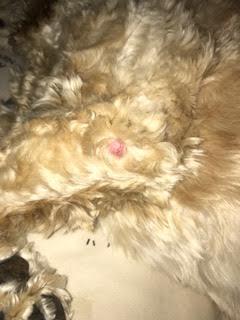
My dog has a lump on her leg roughly the size of a marble. She is a 9 year old cocker spaniel and is very healthy otherwise.


3 Answers
Most Helpful Answer

Published on February 4th, 2018
Thank you for providing a picture of Mia's lump! It could be a benign tumor, a cyst, or a malignant tumor. Unfortunately in a senior dog, there is always a chance it could be malignant. Any suspicious lumps should be examined by the vet. The vet can perform a test called a fine needle aspirate on it. To do this, the vet sticks a small needle into the lump to get a sample of it's cells, and examines the cells on a slide under a microscope. It's usually painless to the animal, and relatively quick to perform. I would take her into the vet in the next couple of days to have this lump examined and diagnosed so it can be treated as needed. Good luck, I hope this helps!

1Pet Parents found this answer helpful
Related Answers from Veterinarians
-
Published on June 27th, 2017
Thank you for providing a picture of Kelly's lump! In a senior dog, there's always a chance it could be a malignant tumor, but it could also be a benign tumor or a cyst. Any suspicious lumps should be examined by the vet. The vet can perform a test called a fine needle aspirate on it. To do this, the vet sticks a small needle into the lump to get a sample of it's cells, and examines the cells on a slide under a microscope. It's usually painless to the animal, and relatively quick to perform. I would take Kelly into the vet tomorrow or the next day to have this lump examined and diagnosed so it can be treated as needed.
1Pet Parents found this answer helpful
-
Published on June 25th, 2017
Unfortunately in a senior dog like Libby, there is always a chance this lump could be a malignant tumor. It could also be a benign tumor, but the only way to know for sure is to have her seen by a vet. Any suspicious lumps should be examined by the vet. The vet can perform a test called a fine needle aspirate on it. To do this, the vet sticks a small needle into the lump to get a sample of it's cells, and examines the cells on a slide under a microscope. It's usually painless to the animal, and relatively quick to perform. I would take Libby into the vet tomorrow to have this lump examined and diagnosed so it can be treated as needed.
1Pet Parents found this answer helpful

Hi my dog has had this lump on her front right leg for about a month now and out of no were it got very big it is not solid it feels like fluids are inside but also doesn’t seem to bother her but I no it does I need answers so bad

We recently discovered a lump on our dogs leg. It started to shrink yesterday but today grew larger and changed from pink to purple.
Hello, I noticed my cattle dog had this sore on her hind leg today. It doesn't seem to bother her shes not limping or showing any signs of discomfort. I can touch it and it doesn't seem to bother her

Cut our yorkies hair earlier and noticed this lump on her head,shes 12 years old,it's brown and soft and hair seems to be growing through it

My dog has a lump on her side grey round the edge pink in the middle one is now appearing on her back leg
I noticed today that my 11 year old 50lb mixed breed female dog has a pink growth, in the inner thigh region right where the leg joins the body. The attached picture isn't the best but is the only one she will let me take, I don't think she's in pain

My 11 yo chi terrier has this on his leg, thought was tick but took photo and looks like mole?

My 9 year old German Shepherd has a small pea sized hard black lump. It doesn't seem to bother him and he is in good shape.... other than being overweight.
My dog is a 13yrs old and has lumps on his front legs like the elbow area and are getting sore looking but also has 2 big lumps on his chest area 1 of which looks to be getting bigger do you think they might be cancer

There is a giant red lump on my dogs back leg. It’s also losing hair on it and around it.

Book an appointment with the pros – our expert vets are here to help.
