


My 7-week-old kitten has diarrhea. Is it her wet food or diet change?
Updated On September 23rd, 2025
Pet's info: Cat | American Shorthair | Female | unspayed | 1 month and 21 days old | 1.4 lbs
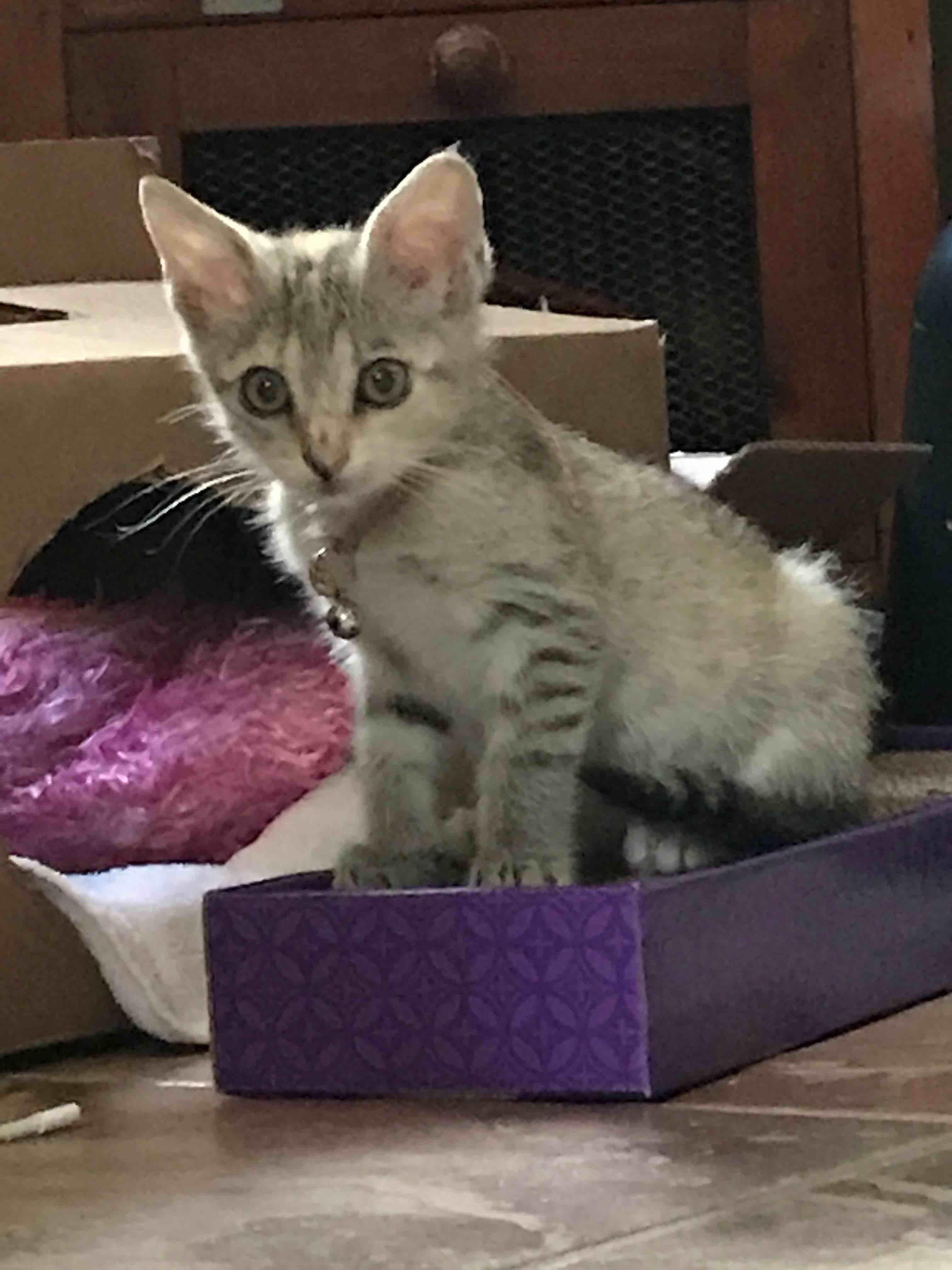
My kitten is 7 weeks old and around 1.6 pounds. I found her in a building by my work after a flood. I've had her for a little over a week and I have been feeding her a mixture wet food 3 times a day and dry food put out all day. She had been having some issues with diarrhea, and I'm wondering if it's the wet food or just nutrition change.


5 Answers
Most Helpful Answer

Published on July 2nd, 2017
She's adorable! I would be a little more concerned that she might have intestinal parasites or another disease causing her diarrhea. I would recommend seeing a veterinarian if you have not taken her in already. They can check a stool sample and she may be old enough for vaccines at this point. If there does not seem to be a medical issue you could try seeing how she does on just wet or just dry food - kittens sometimes do better on one vs. the other.

1Pet Parents found this answer helpful
Related Answers from Veterinarians
-
Published on June 7th, 2017
You are doing the right thing by feeding Lela three time per day at this young age. Young kittens need to eat frequently to help maintain a normal blood sugar. She may have vomited and had a slighy softer stool as a result of eating too much at a time, due to parasites, a virus, or stomach upset from eating new foods or treats. If she is still vomiting and crying in the morning, she will need to go to the vet for evaluation. Dehydration won't be an issue after one episode of vomiting, but can certainly be a problem if her vomiting continues. I hope that Lela feels better soon!
1Pet Parents found this answer helpful
-
Published on June 16th, 2019
Hello and thank you for reaching out to Petco Pet Education Center, formerly Petcoach. Any diarrhea and/or vomiting in kittens may be due to gastrointestinal parasites, or worms. I recommend consulting with your veterinarian about what dewormers they carry that can be given to your kittens that are having diarrhea and/or vomiting. It is also possible the diarrhea is from the diet change, and will just require time to resolve. If you are concerned that any of your kittens are poor doers and not thriving, I recommend having them evaluated by your veterinarian. I hope this is helpful!
1Pet Parents found this answer helpful
-
Published on March 9th, 2017
Because the kittens haven't been fully weaned, their system won't be used to the solid food just yet. It may have been too much for them just yet, and a sudden change in diet can lead to GI symptoms such as vomiting and diarrhea. They could also be suffering from intestinal worms, which are common in kittens and can cause vomiting and diarrhea. I am concerned that two are vomiting and two are having diarrhea, and I think they should be seen by a vet right away. They likely need medication for their symptoms, and maybe fluids so that they don't become dehydrated. Make sure they are all up to date on their deworming treatments. At seven weeks old, they should start to be weaning onto kitten food, and I can give you a method to start weaning the two who aren't sick at the moment. Weaning kittens: To help them wean and to get used to dry food, I would soak a high quality kitten formulated dry food in warm water until soft. Then mix that with kitten formula such as KMR to make a mush the consistency of oatmeal. Over the next two weeks, gradually increase the amount of dry kitten food and decrease the amount of water and KMR you use until they are eating the dry kitten food only.
2Pet Parents found this answer helpful
-
Published on September 12th, 2017
Thanks for using Petco Pet Education Center, formerly Petcoach! I suspect your kitten may have intestinal parasites. I recommend taking her to a vet with a fresh stool sample to check for microscopic eggs. They can then treat her with the necessary dewormer. Good luck and kisses to your kitten!
1Pet Parents found this answer helpful


It's been 3 days since my cat (5 months old) started to eat a new wet food (Weruva)she is on dry food too. She's been having diarrhea since yesterday, about 2 or 3 times a day, she pees about 4 or 5 times a day (maybe more) Is this normal? Thank you
Hi I have a question. My kitten is one month. When I got her the person that had her said she was eating wet food. But she had diarrhea when I got her. I switched to formula milk. But when she drinks milk she doesn’t poop. Now that I tried giving her
I have a kitten that I got 1 month ago. She is very playful eats and drinks. About 2 weeks ago she seem to all of a sudden have diarrhea. She hasn’t change in behavior. I have just changed her food to instinct wet cat food 2 days ago. The food she wa
My kittens are 6 weeks old i tried to give them wet food, after a while they poops and their poop si luquid, its color is same as the color of the wet food they ate.. Is it normal? Its the first time i gave them wet food. Thank you.
My kitten is 7 weeks old. I got her a couple days ago. She has watery eyes, diharrea and sneezing. She just started eating wet food and came off milk. She will not eat dry. What could this be?
My 5 week old kitten just started eating canned food. In a pinch I gave her some human formula and she then soon after started vomiting and having diarrhea. This was 3 days ago and she is still having the same diarrhea and occasional vomiting. Is she
My 6 week old foster kitten Cheerio has had a very poor appetite the last few days. She loves KMR, but it causes her to have bad diarrhea. I've tried wet food, but she eats very little and she's losing weight fast. I've tried small amounts of pumpkin
Fostering 4 kittens. All about 6-7 weeks old. I switched them from kmr kitten formula to kmr 2nd step weaning food about 4 days ago. They all have diarrhea. I read that that can happen if you change their diet so I gave it a few days and it’s not bet
New kitten aged 11 weeks has bad diarrhea. Should I withhold food for 12 hours to help her ?
Hello, My kitten has diarrhea,I've been giving her this medicine for 2nd day she only drinks milk as a kitten tho she has teeth.it's a bit hot as I keep the ac hot for her sake.. shes super playful and drinks lots of milk. I've read if shes sick she
Book an appointment with the pros – our expert vets are here to help.
