Non-Sporting Group
The breeds in the Non-Sporting Group are a varied collection in terms of size, coat, personality and overall appearance.
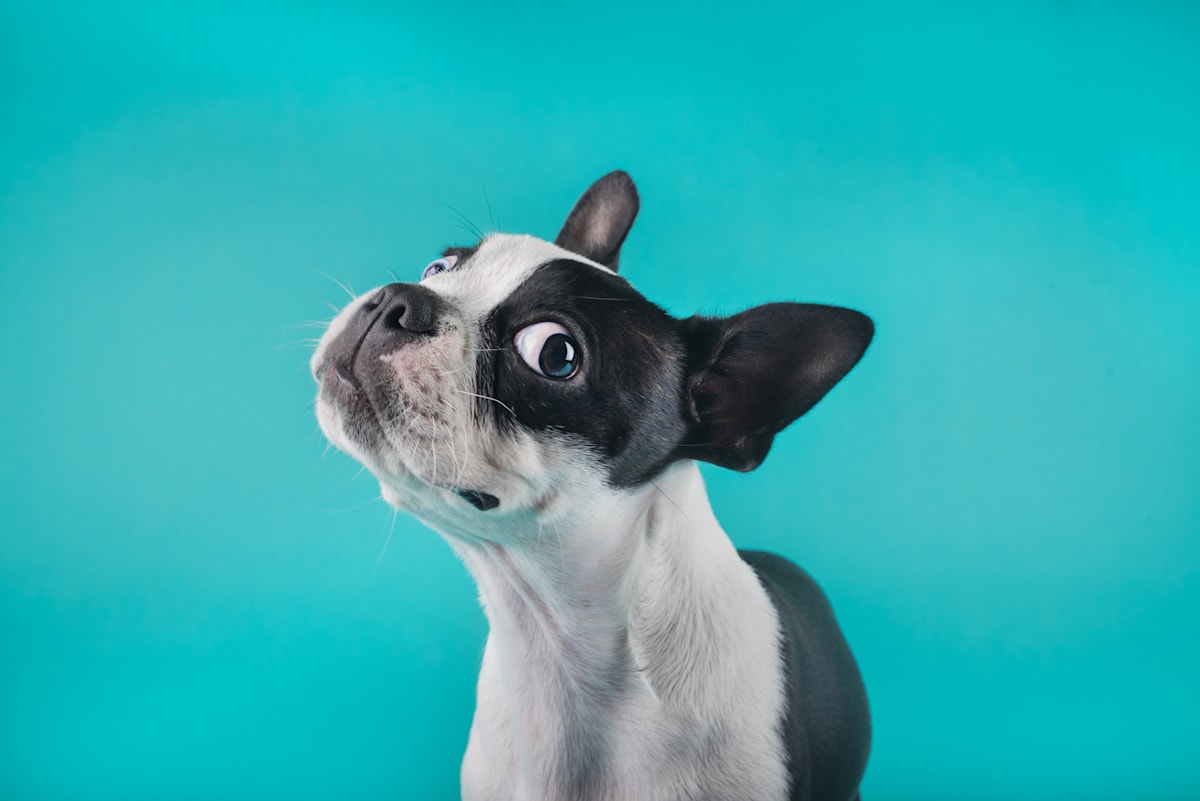
Boston Terriers are a friendly and sometimes stubborn breed originally from the United States. It’s one of the top 25 breeds in the USA, and have an ardent following here. A Boston Terrier is a small and compact dog with a short tail and perky ears. With a happy-go-lucky temperament and a substantial amount of intelligence, the Boston Terriers is a great pet for anyone with a commitment to proper socialization and training.
Origin: United States Other Names: Boston, Boston Bull, Boston Bull Terrier, Boston Round Head, Boxwood
The breeds in the Non-Sporting Group are a varied collection in terms of size, coat, personality and overall appearance.
Non-sporting dogs are a diverse group. Here are sturdy animals with as different personalities and appearances as the Chow Chow, Dalmatian, French Bulldog, and Keeshond. Talk about differences in size, coat, and visage! Some, like the Schipperke and Tibetan Spaniel are uncommon sights in the average neighborhood. Others, however, like the Poodle and Lhasa Apso, have quite a large following. The breeds in the Non-Sporting Group are a varied collection in terms of size, coat, personality and overall appearance.
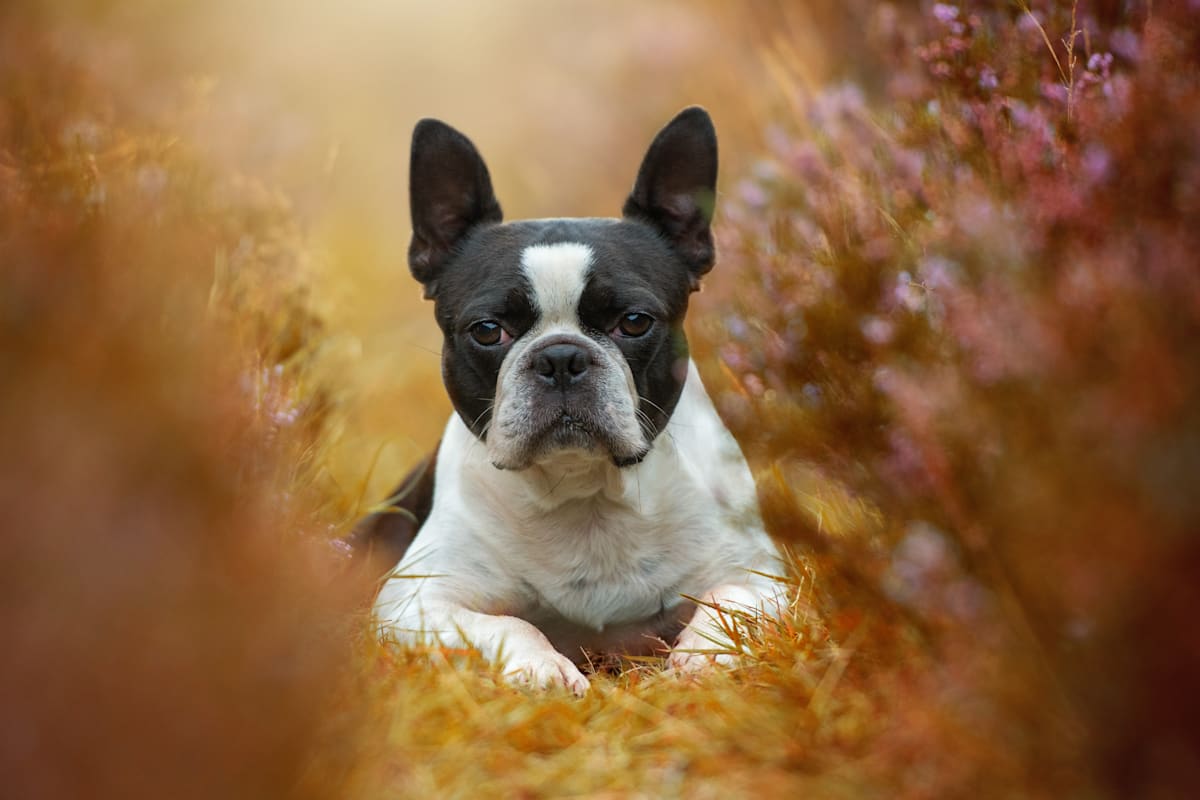
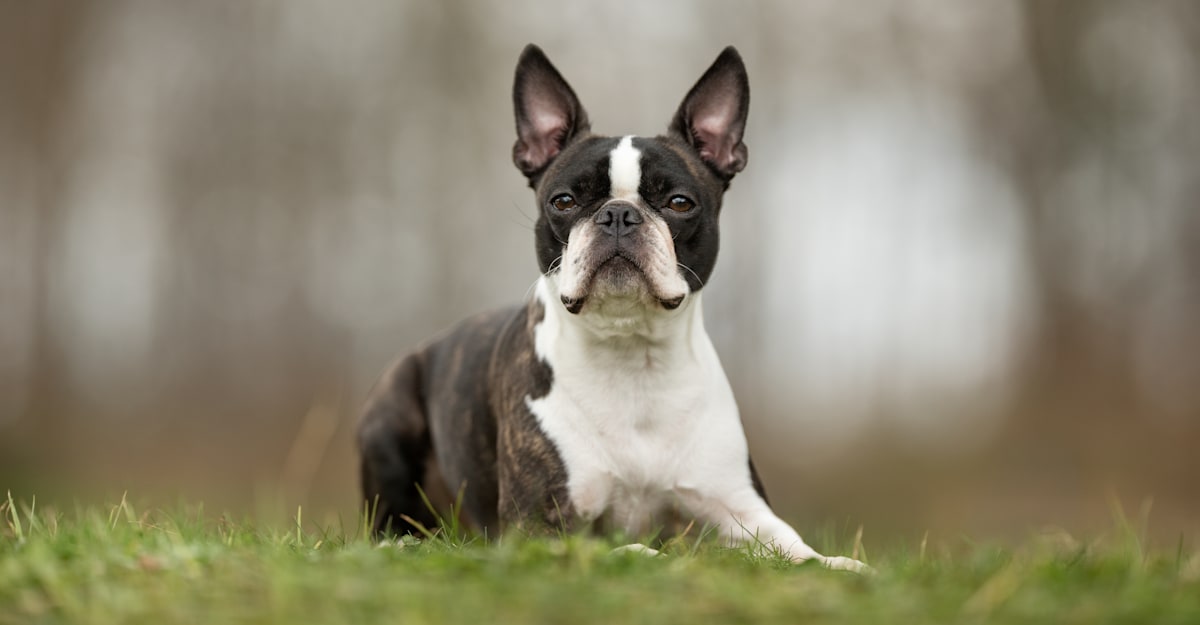
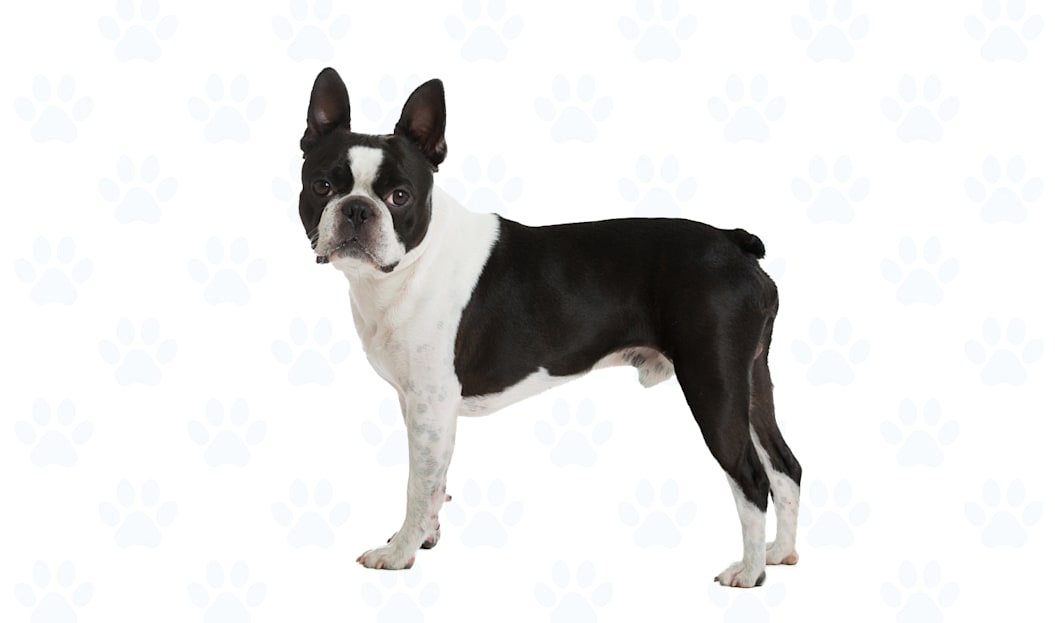
The American Kennel Club (AKC) recognizes 5 coat colors in Boston Terriers: black/white, black brindle/white, brindle/white, seal/white, and seal brindle/white. Bostons are a compact dog with a short tail and well-balanced frame. Their expression is intelligent and curious with expressive eyes. The ears are perky and stand tall on the head. The AKC notes that the Boston Terrier “conveys an impression of determination, strength, and activity.”
Boston Terriers’ coats are short and easy to manage. Sometimes the black and white coat on Boston Terriers gives them the appearance of wearing a tuxedo. This certainly helped them to earn the nickname “The American Gentleman.”
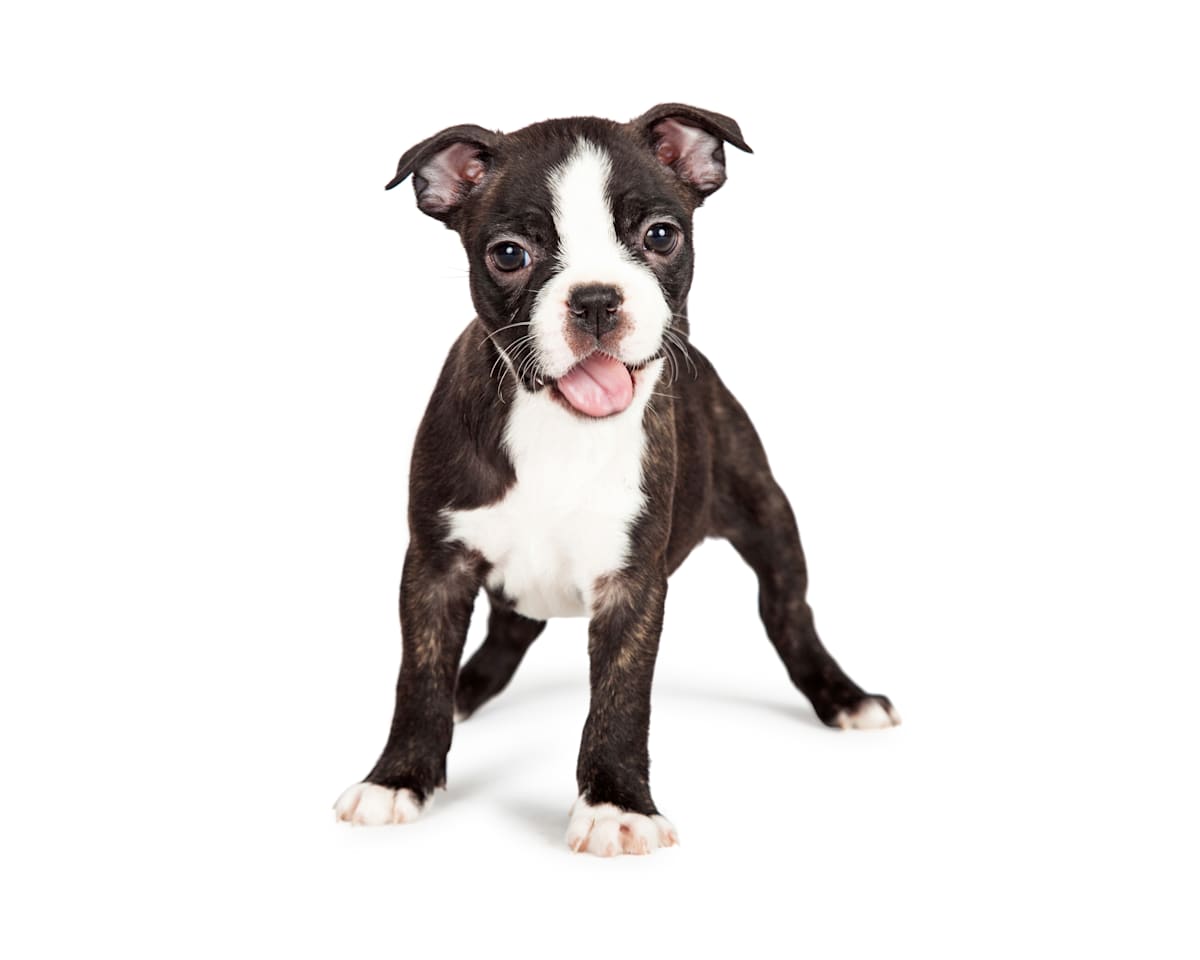
Boston Terriers are not a large dog but they aren’t tiny either. The adult males typically weigh between 8 and 25 pounds. There is quite a range, and the AKC classifies the breed into three distinct groups by weight class. The Boston Terrier is usually 9 to 15 inches tall.
| Full Grown | |
|---|---|
| Female | 9 in. / 15 lbs. |
| Male | 15 in. / 25 lbs. |
Height is measured up to the shoulders.
The Boston Terrier is usually 9 to 15 inches tall.
Boston Terriers are not a large dog but they aren’t tiny either. The adult males typically weigh between 8 and 25 pounds. There is quite a range, and the AKC classifies the breed into three distinct groups by weight class.
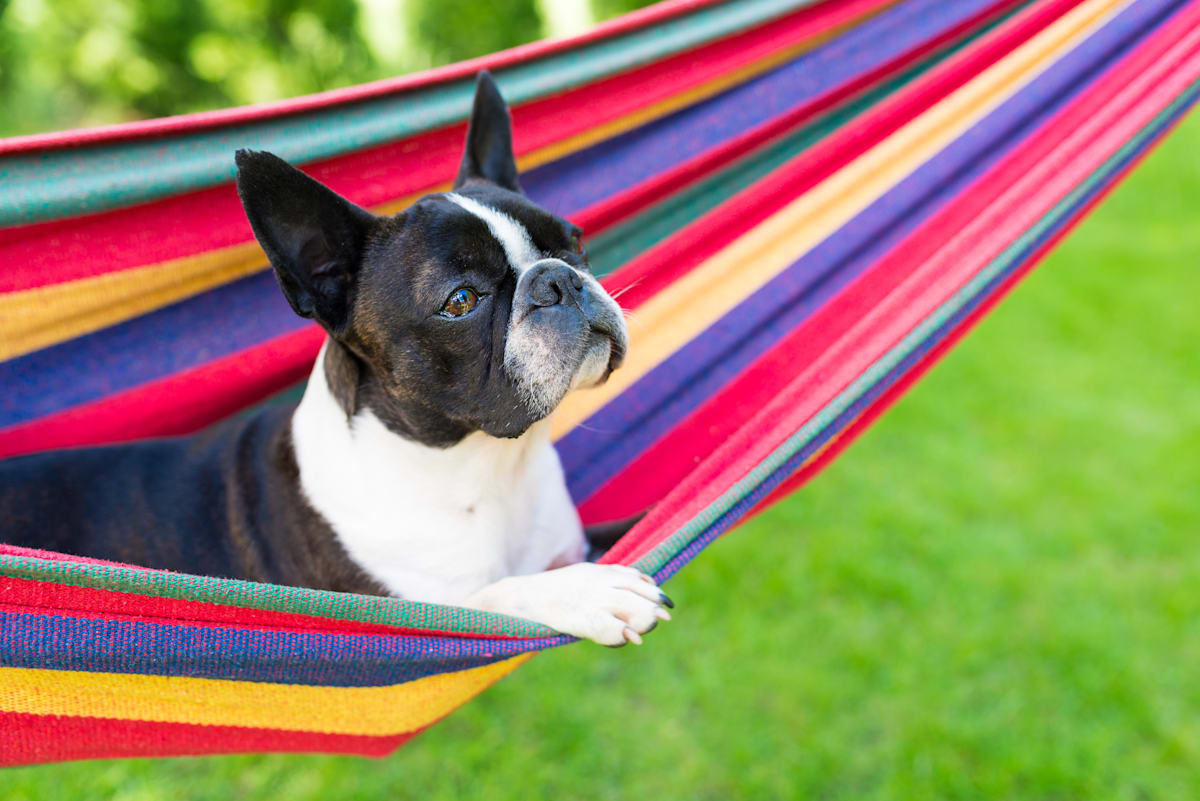
Boston Terriers are perfect for small homes. They don’t require a lot of space to run around, plus their compact frames fit just about anywhere. If you have a small apartment, you might consider this breed if you’re looking for a small and reliable pet.
Boston Terriers don’t need a lot of exercise, but you should try to get them moving at least one per day. A brisk walk or some games in the dog park should be enough to maintain a healthy weight and stamina.
Boston Terriers are friendly and loyal companions. They make fast friends with other pets and anyone they come across. It’s a great breed for families since they are so gentle and calm most of the time.
Boston Terriers are very friendly and sociable dogs. They can be protective of their family, but most Boston Terriers are ready to be friends with everyone they meet on the street. If you’re looking for an alert guard dog, you might consider a different breed. Boston Terriers are built for loving, not home security!

Boston Terriers are very family-friendly since they have a gentle and calm disposition most of the time. You won’t need to worry about children and elderly people being around your dog, but remember to always supervise new and small children around your pet for safety’s sake.
Boston Terriers love to train and learn new things. They are naturally curious and very intelligent when it comes to understanding their owners. With proper obedience training and early socialization, your Boston Terrier will be the best-behaved dog in the neighborhood.
Since they have a short coat without too much shedding, your Boston Terrier won’t shower your apartment with dog hair like other breeds might. With regular bathing and brushing, you shouldn’t have a problem dealing with dog hair.
Boston Terriers do well in most climates, but their short snout leaves them prone to overheating. They don’t tolerate extreme cold weather well, due to their short coats. Be sure to bundle up in the winter if you live in a chilly climate. In general, you should limit any prolonged exposure to cold and heat.
Boston Terriers are fairly silent unless they really want your attention. They might snort or reverse-sneeze, but barking usually isn’t a problem. Like with most things, training and early socialization are crucial to developing good habits in your Boston Terrier.
Choose a breed from the dropdown to see potential crosses.
Boston Terriers are cheerful and loving companions for single people, families, or couples who want a dog that is easy to look after. They are strong and friendly – very sure of themselves. While some dogs in this breed can be overprotective, the vast majority are sociable and accepting of all creatures. The breed is a great choice for families with small children, but always supervise your little ones around any dog.
Unlike many small breeds, the Boston Terrier doesn’t have an annoying high-pitched yap. They don’t bark very often unless it’s absolutely necessary. With proper training and early socialization, most Boston Terriers will only bark if they are really excited or concerned about something in their environment.
Boston Terriers need a lot of love, since they adore humans and want to be around them as often as possible. “The American Gentleman” loves to be part of a family, and is perfectly suited to life with children and elderly people. Boston Terriers may be prone to developing separation anxiety, but this can be avoided with proper training and a healthy environment at home. While the ancestors of the Boston Terrier were aggressive hunting and fighting dogs, the modern version is quite happy to relax and enjoy the company of their family in peace and quiet.
Boston Terriers love to play games, so make sure you have a good collection of dog toys to keep them engaged.
You don’t earn the title “American Gentleman” without being very well-mannered and sociable. The Boston Terrier is a delight to train, since they are highly intelligent and eager to please. While some members of the breed might be a tad stubborn, you can overcome this issue with a commitment to regular training on a consistent schedule. Try to limit your training sessions to 15 minutes to make sure you hold their attention during the lessons. Early socialization with other dogs, other pets, strangers, children, and elderly people makes a big difference. Make sure you expose your Boston Terrier to lots of new experiences early in their life to build confidence and help them understand the world around them.
If a breed takes it name from a big city, chances are that it is a good dog for urban dwellers. The Boston Terrier is no exception, and it’s easy to provide a healthy and happy home without a lot of space. This compact and people-friendly breed is perfect for families and anyone who wants a loyal companion while living in the big city. They don’t require a lot of exercise, so your daily walks to take care of business should be plenty to keep them in good shape. There’s a reason that the Boston Terrier has been a popular breed in American households for over 100 years!

Enjoys some moderate exercise every now and then
Because Bostons are prone to allergic disease, fish oil supplements may prove useful to promoting healthy skin. Select a brand that is specifically developed for dogs, and use according to label directions.
The problems associated with brachycephalic breeds become more pronounced with obesity. Make sure to keep your Boston Terrier at a healthy weight for his entire life. These dogs love food and treats, so this may prove difficult, but be vigilant! Your veterinarian can help you determine your Boston’s ideal weight, and guide you in selecting an appropriate food and in feeding the right amount.
Average daily consumption for an adult Boston is ½ to ¾ cup.
Routine preventive care is critical to ensure the health and longevity of any dog. Make an appointment with your veterinarian as soon as you bring your new Boston Terrier puppy home in order to discuss and plan for vaccinations, deworming treatments, and spaying or neutering surgery.
Boston Terrier owners should pay careful attention to a couple of important aspects of their health. Because Bostons are a brachycephalic breed, meaning“short head,” they are prone to specific respiratory issues. The most concerning of this is the propensity towards heat exhaustion. Pay close attention to your Boston when he’s outdoors on hot days, and always provide sufficient shade and water. Make a point not to over exert him in the heat, and keep him indoors during warm days.
Because Bostons are prone to allergic disease, fish oil supplements may prove useful to promoting healthy skin. Select a brand that is specifically developed for dogs, and use according to label directions.
All purebred dogs are prone to certain hereditary conditions. This can mean that the problem is commonly passed from parents to offspring, or that the breed seems to contract the condition more frequently. With some conditions, we understand how the disease is inherited, and genetic testing can be performed on the parents to determine the likelihood of the disease being passed to the offspring. It’s important to always discuss inherited diseases with breeders, and determine if they perform testing to try to remove genetic disease from their breeding lines. Following is a list of the most common conditions affects Bostons. It is by no means all inclusive: allergies, demodectic mange, cancer, cleft palate, vascular ring anomaly, patellar luxation, Cushing’s disease, hydrocephalus, cataracts, glaucoma, Cherry eye, uveal cysts, dystocia and Brachycephalic upper airway syndrome.
On average, Boston Terriers live to be about 11-13 years old.
Since Boston Terriers have a short coat, they don’t require a lot of grooming and attention. Use a soft bristle brush to maintain a healthy shine in the coat. This process also helps to remove damaged and broken hairs before they fall out on your couch or carpet. Aside from the coat, you should take care to look after your dog’s teeth, ears, and nails. Stick to a regular schedule to keep on top of these things. Trim the nails regularly and be sure to check their ears for wax buildup and infectious debris. Don’t forget the teeth! A good brushing goes a long way to promoting good oral health in your pet.
Short
Occasional
Boston Terriers don’t shed very much compared to most other breeds, and their short coat requires little maintenance. A decent soft brush will keep their coat looking shiny and clean. Stick to your regular dog bathing and house cleaning schedules, and you shouldn’t have a problem with too much hair in your home.
The Boston Terrier breed originates from the late 1800s. A dog named Judge was purchased by Robert C. Hooper from Edward Burnett, a well-known Boston politician. The AKC recognizes Judge as the prime ancestor of all “true” Boston Terriers. The origins of the breed are somewhat contentious, but the Boston Terrier is likely a cross between French Bulldogs and English Terriers. It’s one of the earliest breeds recognized by the AKC. The Boston Terrier was officially added to the registry of breeds in 1893 after becoming popular in New England over the previous two decades.
Early on in the history of the Boston Terrier, the coloring and markings weren’t seen as very important. By the time the breed was recognized by Kennel Clubs in the UK and America, distinctive colors and markings were included in the standards for competition.