









Herding Group
Created in 1983, is the newest AKC classification; its members were formerly members of the Working Group.
If you can provide the space, time, and love, your Australian Cattle Dog will pay you back with devoted companionship and laughter for many years to come. As a herding dog, they can be suspicious of strangers and very watchful when it comes to their surroundings. Adolescents are particularly “testy” with their human family at times, but a seasoned trainer should be able to handle them without any problems.
Origin: Australia, 19th c. Other Names: Cattle Dog, Blue Heeler, Queensland Heeler, Red Heeler, Blue Heeler
Created in 1983, is the newest AKC classification; its members were formerly members of the Working Group.
The Herding Group, created in 1983, is the newest AKC classification; its members were formerly members of the Working Group. All breeds share the fabulous ability to control the movement of other animals. A remarkable example is the low-set Corgi, perhaps one foot tall at the shoulders, that can drive a herd of cows many times its size to pasture by leaping and nipping at their heels. The vast majority of Herding dogs, as household pets, never cross paths with a farm animal. Nevertheless, pure instinct prompts many of these dogs to gently herd their owners, especially the children of the family. In general, these intelligent dogs make excellent companions and respond beautifully to training exercises.
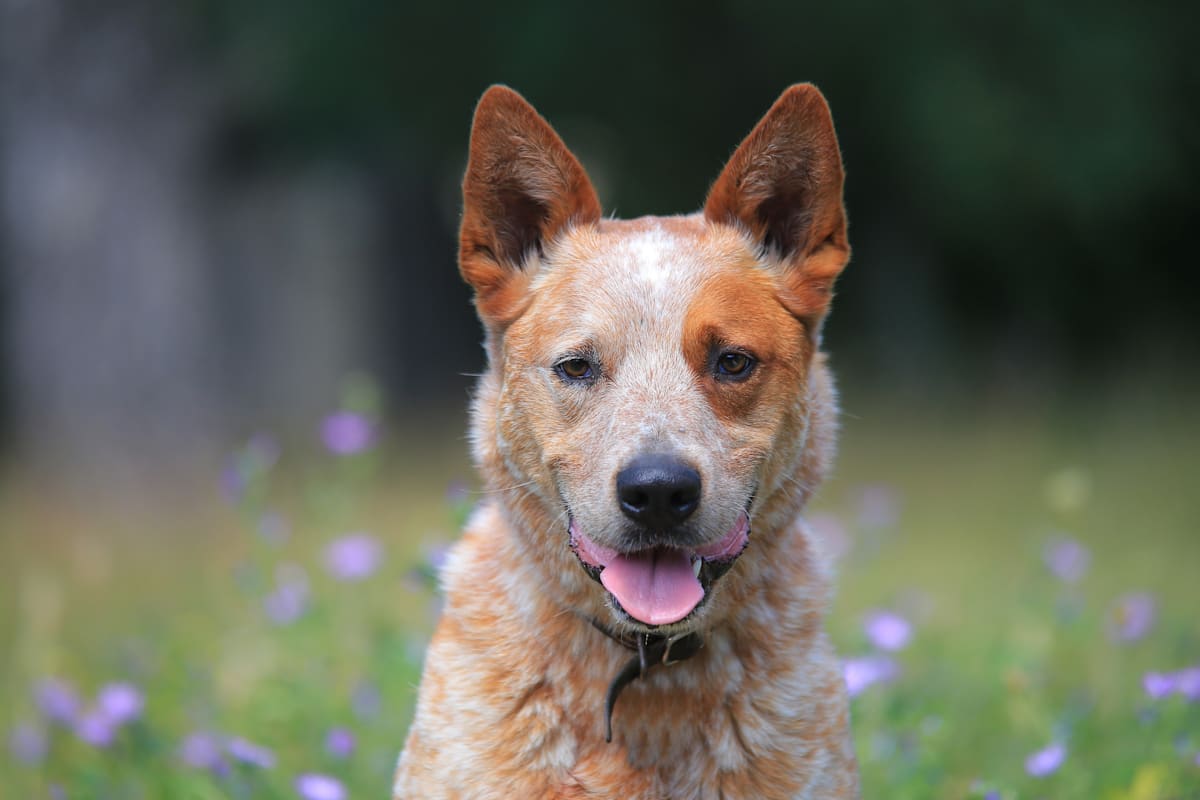
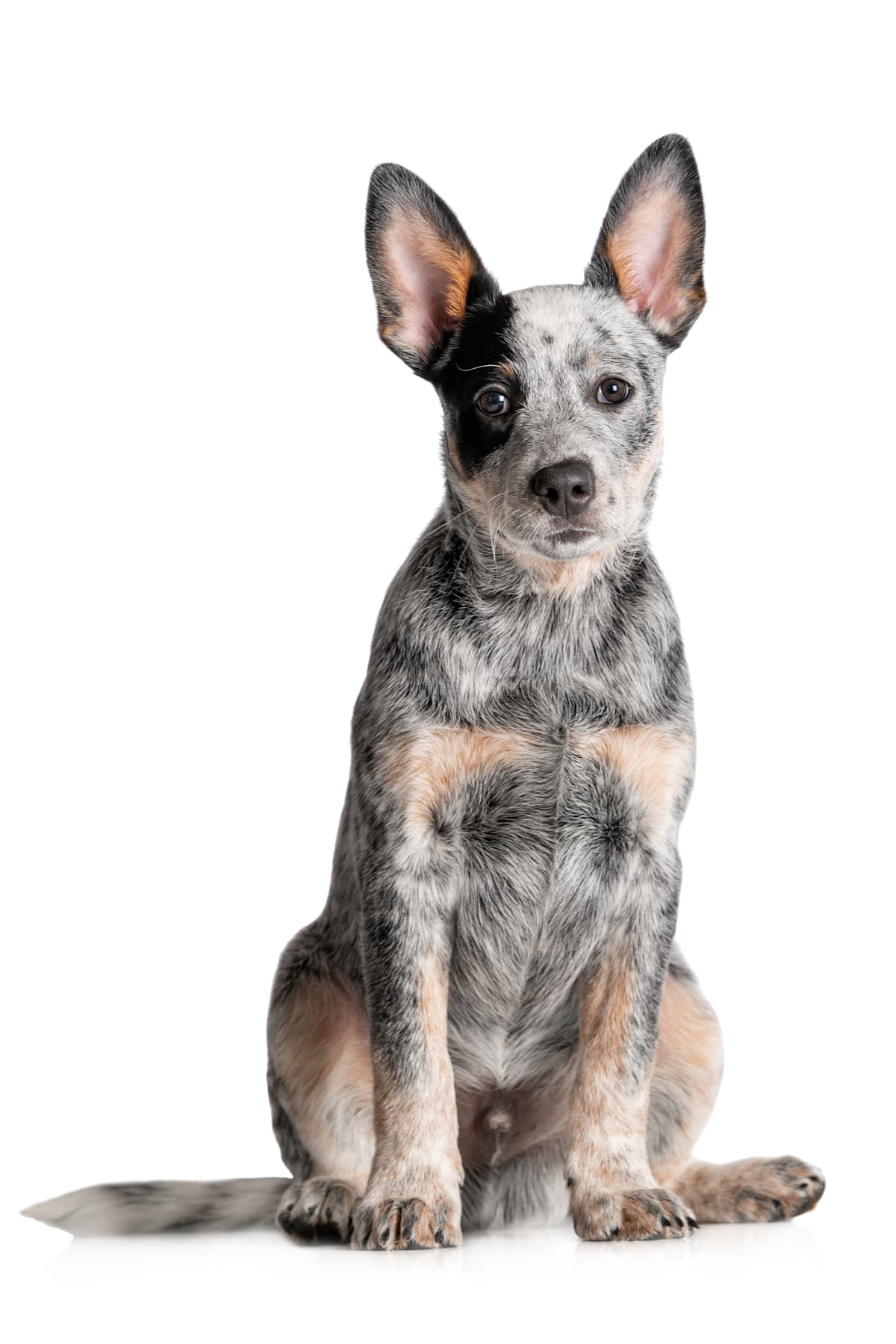
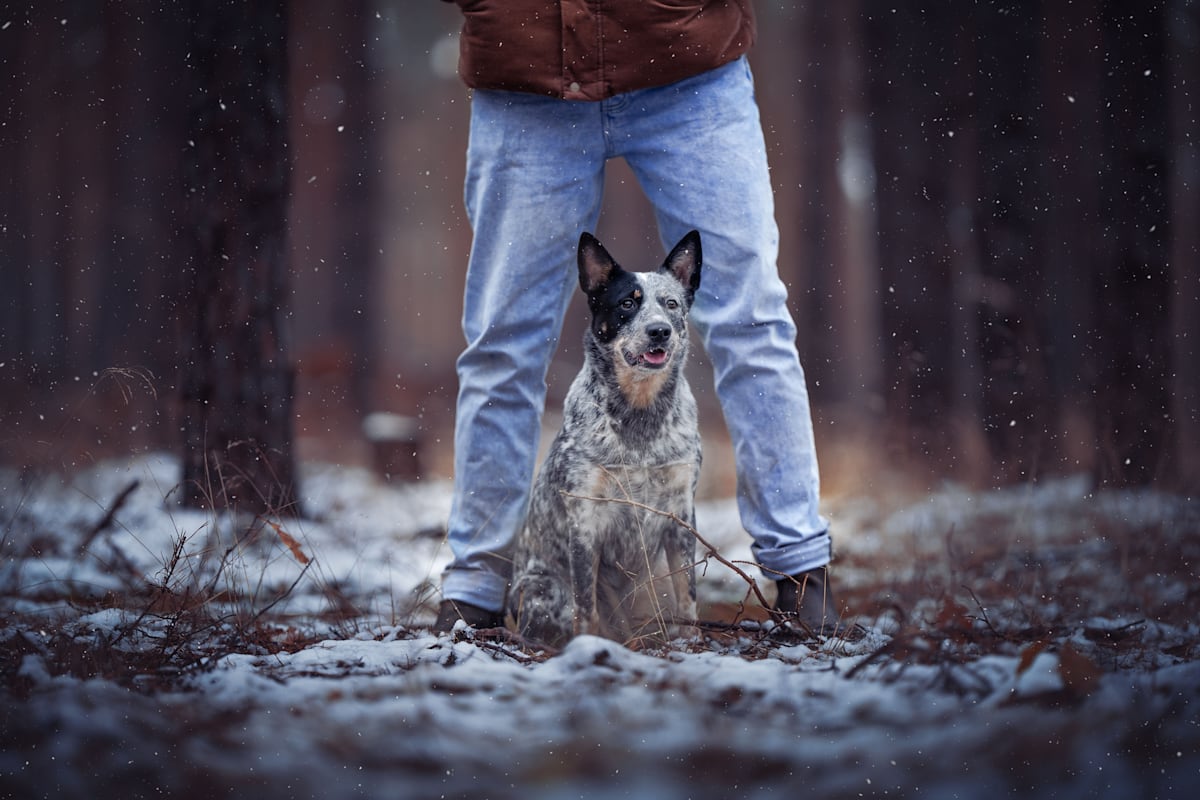
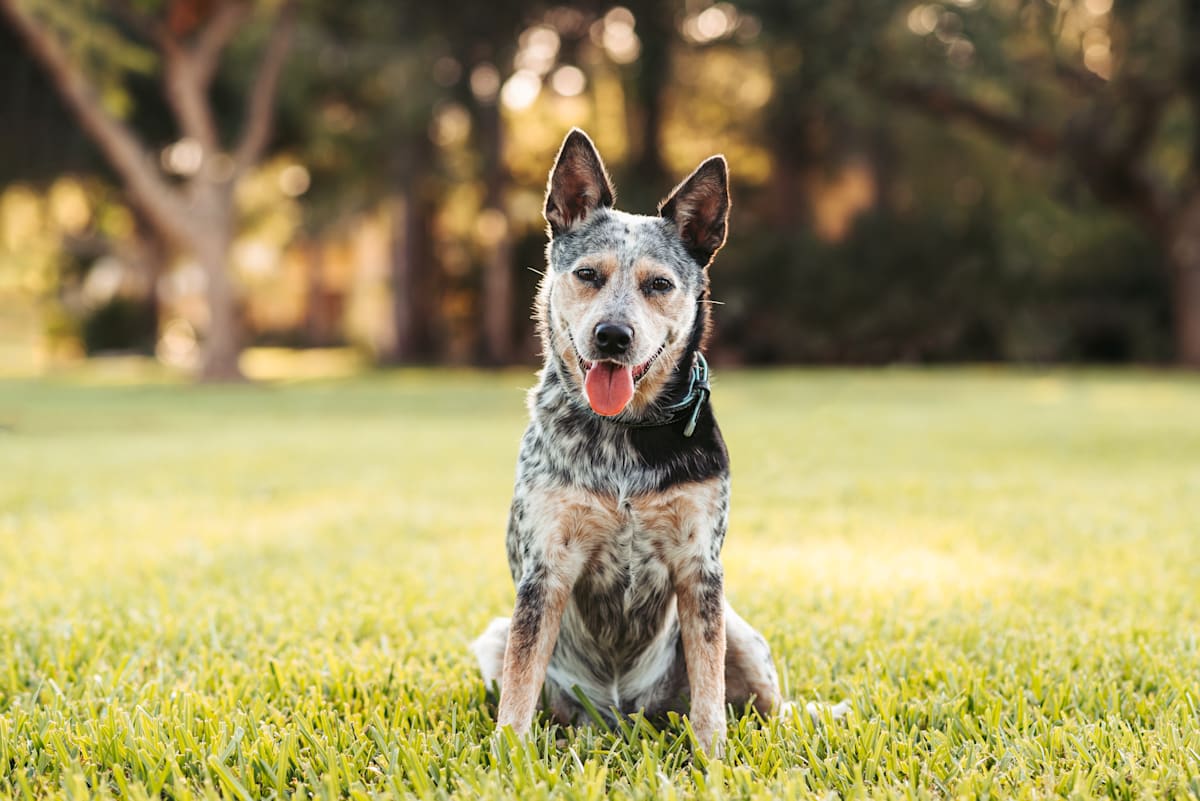
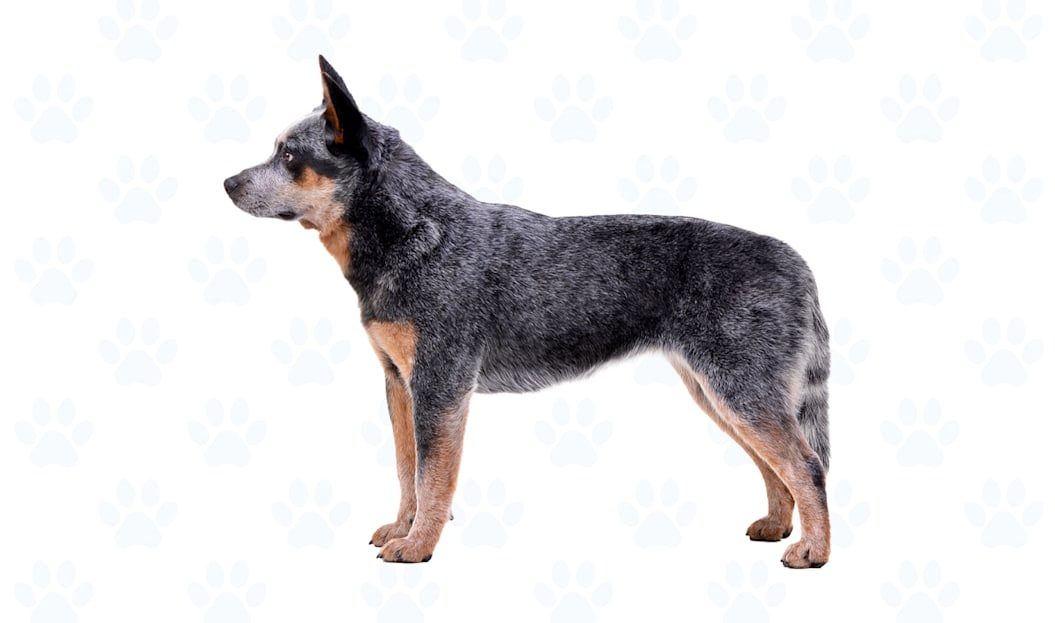
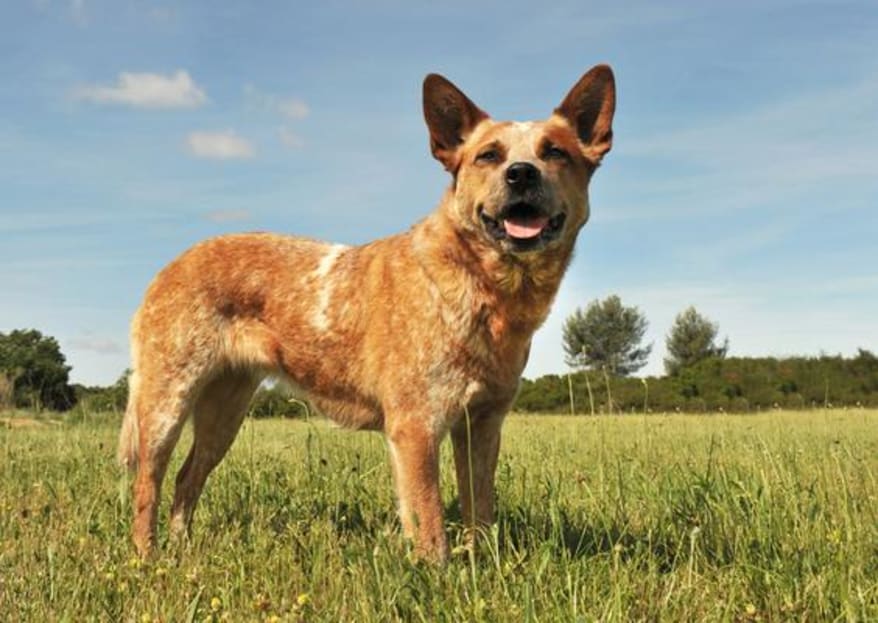
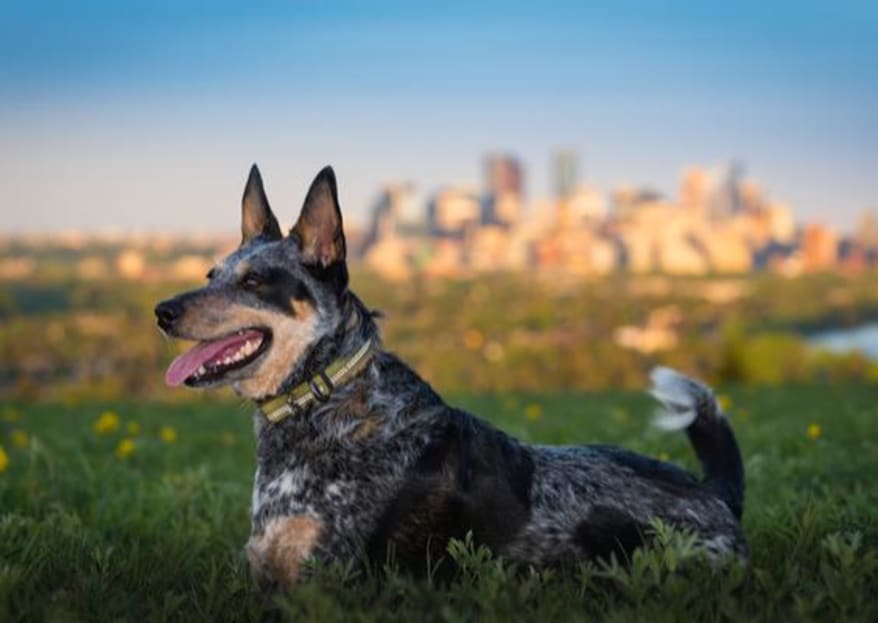
The Australian Cattle Dog is a medium sized breed with a stocky, muscular frame fit for the endurance of herding. Their broad skull with triangular, erect ears and oval shaped dark brown eyes keep their senses on high alert. Australian Cattle Dogs have a smooth double coat with short hairs on the head and longer hairs on their body. The American Kennel Club (AKC) recognizes two main colors: blue or red speckle. Blue-coated dogs may be solely blue, blue mottled, or blue speckled, with or without black, blue, or tan markings on the head. Tan undercoats are permissible, as are red markings.
This breed can be found in a variety of colors. You can check them out below.
Australian Cattle Dogs are a medium-sized dog. They usually weigh around 35 to 50 pounds, and adult males can grow to be 20 inches tall at the shoulders.
| Full Grown | |
|---|---|
| Female | 17 in. / 35 lbs. |
| Male | 20 in. / 50 lbs. |
Height is measured up to the shoulders.
Australian Cattle Dogs are a medium-sized dog. If you have a small apartment, though, you might think twice before housing this rambunctious breed at home.
They usually weigh around 35 to 50 pounds, and adult males can grow to be 20 inches tall at the shoulders.
Herding dogs are built for running and working long days in the field. They have a tremendous gas tank and an independent streak. Without enough time and energy spent on regular exercise, your Australian Cattle Dog won’t be its usually happy and healthy self.
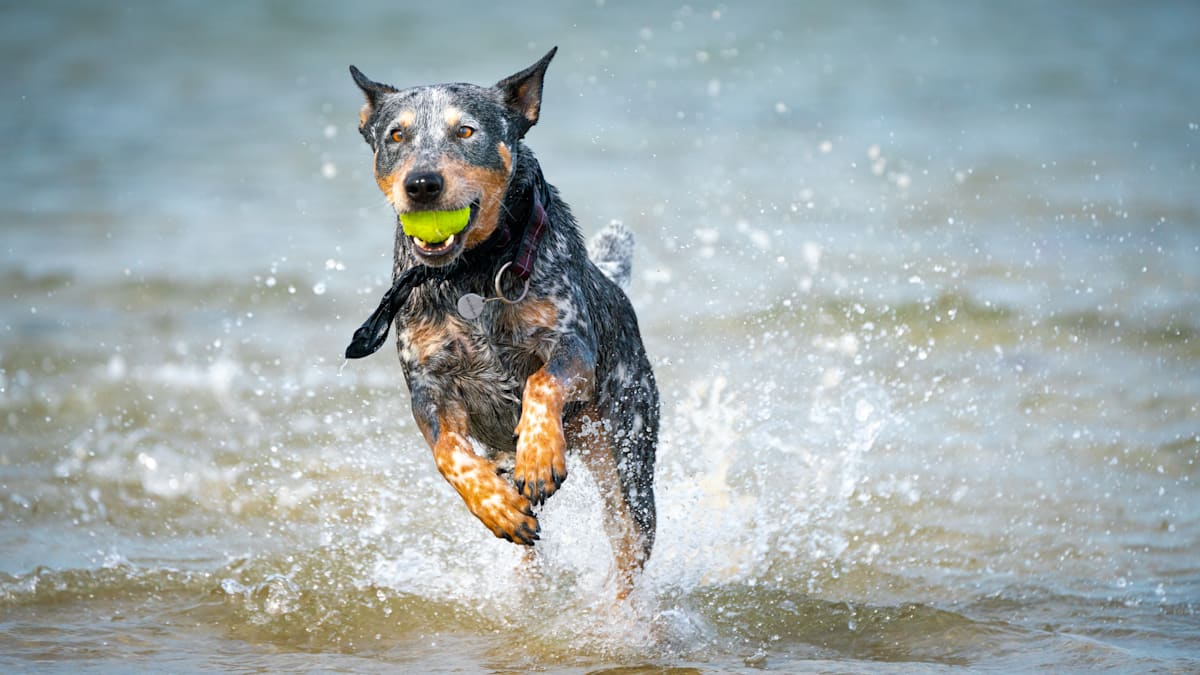
If you love the outdoors and spend your free time hiking, biking, or skiing, this breed might be the perfect choice. The Australian Cattle Dog has a massive supply of energy, and it takes a long day of hard work to tire them out.
The Australian Cattle Dog can be warm, playful, and affectionate when they feel comfortable at home. They can be standoffish outside their comfort zone, and they often mix poorly with other dogs. A well-socialized Australian Cattle Dog should never be aggressive with anyone, but it can be difficult for novices to train the breed’s dominant herding urges out of their system.
Herders generally make good watchdogs, and the Australian Cattle Dog is no exception. It’s easy to see why they are a favorite of farmers and ranchers in Australia. They are alert, territorial, and keen to protect their family turf. Proper training is key, but the right instruction can turn an Australian Cattle Dog into a stalwart protector.
As with any herding breed, the Australian Cattle Dog may attempt to herd small children and may inadvertently knock little ones over in their excitement. Although they are generally good family-friendly dogs, supervision and care should be taken to supervise unfamiliar children around your Australian Cattle Dog.
Australian Cattle Dogs are extremely intelligent and eager to please when given the right motivation. They can easily lose focus from an inexperienced trainer, so this breed is not really a good choice for a novice dog owner. An Australian Cattle Dog is a big responsibility, but they are versatile and smart with the right instruction. Games, tricks, and mental stimulation are just as important as exercise.
Your Australian Cattle Dog doesn’t need much help with stray fur outside of the shedding season. A regular brushing and wipe-down are plenty for most of the year, but it’s worth investing extra time to grooming when they drop their coat.
Cold weather, hot weather, and everything in between is no problem for the sturdy and reliable Australian Cattle Dog. It’s easy to see why Australian cattle farmers loved the breed. They are tough, resilient, and eager to work in any condition. Always keep a keen eye on any dog in extreme cold or heat, but rest assured, your Australian Cattle Dog is happy to be outside 99.9% of the time.
Australian Cattle Dogs aren’t known to be loud dogs, but they are herders. A little barking goes a long way when you’re trying to move cattle around. Your Australian Cattle Dog shouldn’t bark a lot, but they are territorial and protective at home.
Australian Cattle Dogs are bold, confident, and independent. They aren’t pack animals, so it can be a struggle to play nice with other dogs. ACDs are used to running their own show, and they aren’t afraid of 2000 lb cattle or anything else in the world. Don’t be fooled by their playful nature – this breed can be cunning and deceptive if they think they can get away with mischief.
People often say that “idle hands is the devil’s workshop.” This is certainly true when it comes to the Australian Cattle Dog. If you can’t provide meaningful work for them at home, it’s important to give them the next best thing. Agility training, mastering tricks, and structured play are good tools to instill a sense of pride in your dog. Without a job to do, the Australian Cattle Dog will find its way into trouble in no time.
All herding dogs rely on a sharp bark and other calls to move cattle or horses around. Australian Cattle Dogs were specifically bred to be the best possible long-distance drovers in the punishing conditions of the Australian terrain. At home, your Australian Cattle Dog shouldn’t be barking at everything all the time, but you should expect them to use their voice now and again. If your dog is barking all the time, it can be a sign of mental stress or health problems. Australian Cattle Dogs are not meant to be cooped up all day inside, so don’t even try it. If you have your heart set on one and you work long hours, it’s a good idea to pay a dog walker to help with their exercise regime during the workday.
One of the keys to training success with your Australian Cattle Dog is fun. They love a challenge, and their intelligence is remarkable. Learning tricks and playing games are great ways to build their obedience skills without too much boredom on their end. Australian Cattle Dog can be a big challenge to a novice trainer, but it’s worth the time and energy to nurture them. With proper socialization and early obedience lessons, your Australian Cattle Dog will become a faithful companion you can trust.
Like any heeler, the Australian Cattle Dog is a bit of a biter. Even in playtime, they will often nip and bite to have fun and show off their confidence. It’s important to train them properly to ensure a safe and fun experience for everyone around your dog. Communication is key, and it’s up to you to promote the right behavior and discourage bad habits. They aren’t a typical house pet –Australian Cattle Dogs love to nip, chase, dig, and defend their territory from all invaders (especially squirrels). If you aren’t ready to take on the training challenge of Australian Cattle Dogs, there’s no shame in building your skills with an “easier” breed before you dive into life with an Australian Cattle Dog.
Frisky, energetic breed that is always ready for action
Even though Australian Cattle Dogs are a highly active breed, overfeeding can still lead to overweight or obese dogs, resulting in a host of health problems. Feeding your dog a high quality balanced diet in proper portions is a crucial step in maintaining overall health. Lay off excessive treats or table foods since these can quickly pack on the pounds.
Average daily consumption for an adult Australian Cattle is 2-3 cups
Many of the more common health problems found in the Australian Cattle Dog have a genetic or inherited link. While it is not possible to directly prevent these conditions in your dog, responsible breeders work closely with veterinarians to perform screening tests in breeding animals. This screening can lead to a decreased incidence of these conditions in future generations of Australian Cattle Dogs.
Even if your Australian Cattle Dog seems to be happy and healthy at home, this is no reason to skip over routine wellness visits to your veterinarian. Subtle changes may be detectable by your veterinarian that can diagnose and treat problems before they become bigger issues. Sustaining a healthy body weight for your dog is a critical step in maintaining long-term health.
Health conditions can occur in any breed and the Australian Cattle Dog is no exception. Many health conditions have a genetic or inherited link, for which responsible breeders work to screen and test breeding animals in an attempt to decrease the incidence of these conditions. Other conditions occur at an increased frequency within the breed. Conditions include but are not limited to: congenital portosystemic shunt, congenital deafness, polioencephalomyelopathy of the Australian Cattle Dog, ceroid lipofuscinosis, cataracts, generalized progressive retinal atrophy, glaucoma, lens luxation and cystine urolithiasis.
On average, Australian Cattle Dogs live to be about 12-16 years old.
The AKC recognizes five standard coat colors for the Australian Cattle Dog breed standard: blue, blue mottled, blue speckled, red mottled, and red speckled. Standard markings for competition dogs are tan, red, and black & tan. If you find grooming an annoying chore, this is the breed for you. The Australian Cattle Dog is a “wash and wear” dog, requiring very little grooming. A brush-down every once in a while is plenty to keep your Australian Cattle Dog looking their best.
Medium
Occasional
The Australian Cattle Dog is fairly low maintenance when it comes to shedding. It’s easy to maintain their coat outside of the heavy shedding weeks, especially if you invest in a good brush or grooming glove. It’s worth the cost to buy proper tools for the job. During the flying fur season, take some extra time to brush your Australian Cattle Dog to collect the stray hairs before they hit the carpet or the couch.
An early settler of Australia, George Hall, moved into the NSW territory in 1802. He quickly saw the need for a sturdy droving dog to move cattle across long distances. After losing over 200 head of cattle in the scrubby countryside, he decided to breed the perfect dog for the Australian working man. He crossed the droving dog of his childhood, the Northumberland Blue Merle, with his tamed dingoes to create Hall’s Heelers. After over 30 years of service exclusively on Hall’s property, the dog attracted attention from Sydney’s competitive dog show community. After early popularity and a following outside of Hall’s ranch, the Australian Cattle Dog breed standard was born in 1903. The dog remains popular to this day in its native Australia and elsewhere through the British Commonwealth (current and past members).
In the United States, the Australian Cattle Dog first appeared after American servicemen fell in love with the breed during military service in World War II. The breed grew in popularity and was found acceptable as a “miscellaneous” breed in the AKC show circuit in 1930. It wasn’t until the national Australian Cattle Dog club formed in 1969 that Americans could buy AKC-registered members of the breed. The club gave up the breed standard to the AKC in 1979 to ensure formal breed recognition later in 1980. Today, the breed remains popular outside its homeland of Australian. The US, Canada, and the United Kingdom all maintain national Australian Cattle Dog clubs and formal registration processes.