


Related Articles


How to Travel with Your Cat: Your Guide to a Purr-fect Journey
Published on September 18th, 2023
Updated on April 2nd, 2026


Cat Travel Best Practices for Beginners
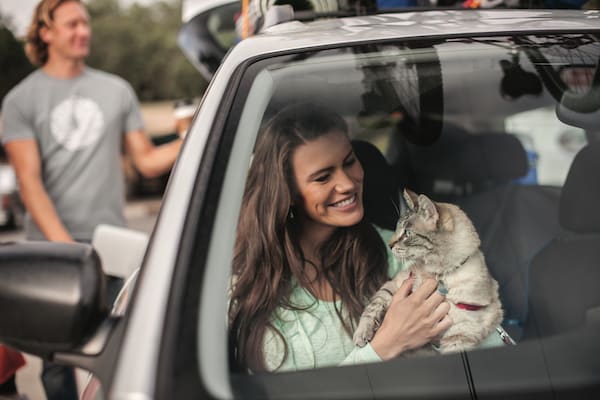
Thinking about taking a trip? Maybe your cat could use a vacation, too. To help make it a fun and successful journey for both of you, you'll need to make your plans with your cat's physical, social and mental health top of mind.
Use a harness and carrier: Use both so your cat can travel securely and still enjoy a safe stretch during breaks. It’s a great way to help keep them secure, calm and comfortable on the go.
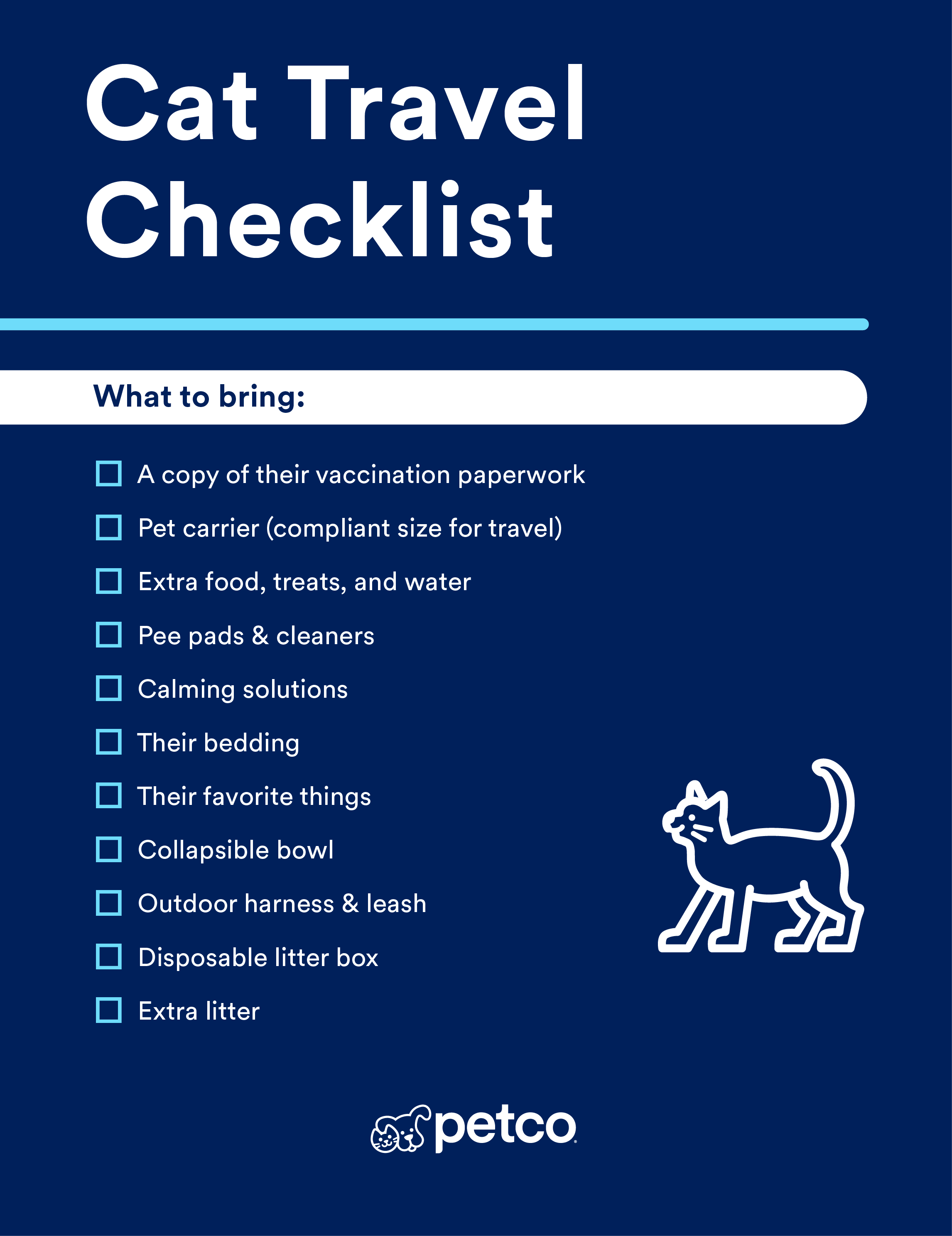
Pack more than you need: Pack a kit with a couple extra servings of cat food beyond what is necessary, calming aids, plenty of drinking water, a travel bowl and some favorite treats. Don’t forget a disposable litter box—travel plans often include delays out of your control.
Plan for accidents: Speaking of out of your control, bring potty pads, gloves, paper towels, pet-friendly cleaner and pet-safe wipes (and some for people, too) to quickly clean up any messes and keep the carrier fresh and clean.
Time it right: When possible, start your trip after your cat has used the litter box to help minimize discomfort and potential for messes.
Practice before, if you can: Take short car rides beforehand to help your cat acclimate. Those howls of protest often stop within 20–30 minutes or even less once a cat has become properly introduced to travel.
Step 1: Decide if Your Cat Should Travel
Consider whether your cat should stay with a trusted sitter or come with you. There are four main reasons to leave kitty at home:
Cats are natural homebodies. They enjoy lounging on window perches, quietly stalking their mouse toys and clawing up their scratching posts within the comfort of their own home. They do not care about fancy hotel rooms. Cats find travel stressful. Disrupting your feline’s routine with travel can cause anxiety. The anxiety occurs during both the journey and at the destination, and not just for your furry friend. A stressed-out cat often means a stressed-out pet parent. And that’s no fun for anyone.
Traveling can lead to illness. Again, travel is a source of stress. As stress can lower the immune system of your cat, just like in humans, an excessively stressed kitty can have an increased risk of illness. “Stress is the number one cause of upper respiratory and feline herpes flare-ups in cats,” says Molly Beth Fisher, clinic assistant at Tree House Humane Society in Chicago. “Cats with ongoing or chronic conditions can also experience a temporary worsening of symptoms when exposed to stressful situations.”
Litter box logistics are difficult. When you’re on the road, your cat doesn’t have access to their normal litter box routine. That can be problematic for cats with specific litter box preferences. If your cat isn’t comfortable using the litter box as they normally would at home, this can lead to increased potty accidents or cause your cat to hold it, which is especially concerning for cats who tend to get UTIs.
Your cat may be forbidden. Gasp! Some cities, counties and even pet-friendly lodgings have specific breed bans, for example on Savannah and Bengal cats. No matter what breed you have, however, it’s a good idea to verify before you pack everyone up and go. This applies to some other types of pets, too, so it’s good to get into a habit of checking, no matter who your furry (or feathered or scaled!) travel buddy is.
Step 2: Proper ID and a Vet Visit
Add Identification
Make sure your pet has proper identification and accessories. This means a current ID tag, as well as a well-fitting cat collar and harness.
If your cat isn’t microchipped, now is the perfect time to schedule an appointment to have it done. Again, make sure the contact information is current. If you rescued an already microchipped cat, make sure you are listed as their current pet parent.
Ask your vet to scan the microchip for readability.
Visit the Vet Before Your Trip
There are three key reasons to schedule a vet visit for your cat before your trip (well in advance if you’ll be traveling in summer or during holidays):
Schedule a wellness check. This is to make sure kitty is healthy enough to travel. This is both for the physical aspects, as well as behavioral/stress. Depending on where and how you and your cat are traveling, a Certificate of Veterinary Inspection (CVI) may be required.
Get prescriptions. Whether your cat has ongoing health issues requiring medication or you want specific ones for the trip, including anti-anxiety or anti-nausea medication, get in to see your vet well ahead of your trip. Be sure to also pack any necessary routine preventives such as flea and tick medication or heartworm medication if you’ll be traveling when your cat is due for their next dose.
Get copies of current vaccinations. Some airlines, states and countries require that traveling pets have proof that they’re up to date on vaccines against specific diseases such as rabies and treatments for parasites such as fleas or GI parasites. Check with the appropriate regulatory agencies, especially if you are traveling to an island such as Hawaii or out of the country, to find out what is required before scheduling your vet appointment. Make sure each human in your party has a photocopy in case multiple family members will be caring for your cat. Keep these copies on you at all times while traveling. If you haven’t already, set up a profile with Petco Love in case of emergency to help you act quickly!
Bonus tip regarding vets: Get the name and number of an emergency vet clinic near where you will be staying and program it in your phone now, just in case. If your cat has a chronic health condition, also bring along a copy of their vet records in case of emergency.
Step 3: Choose a Carrier
Whether you’ll be traveling by plane, train or automobile (more details on each later), your cat will need to be in a cat carrier for their own safety and security, as well as for others. Whatever carrier you get, make sure you include a luggage tag with your current contact info.
The general guideline is that the carrier should be large enough for your cat to easily stand up, turn all the way around and lie down.
If you’ll be driving and have more leeway, your cat might appreciate some extra space.
If someone else will be driving, as in you’ll be taking a bus or subway, you’ll have less control over your space. Expect more noise and unusual smells and sights for your cat. Try to minimize your cat’s stress by covering the carrier with a dark but lightweight blanket to block visual stimuli and muffle the noise when it is not too hot to do so.
If you’ll be flying or traveling by train, you’ll need to know the dimensions required to ensure your carrier will fit securely beneath the seat. You’ll also need to ask about weight restrictions and any other rules the airline has about passengers traveling with cats. Keep in mind that Persians and other brachycephalic breeds may not be permitted on some airlines due to increased health risks. As you shop, look for the words “airline approved” on the tag, always double check it meets your specific airline’s requirements, and keep in mind that soft-sided carriers can be easier when you have a close fit. Also, some airlines allow only so many pets per flight, so it’s one more reason to book your tickets early.
Regardless of how you’ll be traveling, line the carrier with a potty pad (don’t tell your cat it’s for puppies!) to make cleaning up any accidents easier. Bringing some gloves, wipes and paper towels is helpful, too.
Step 4: Train Your Cat
Cats need time to adjust to new things, and this four-step process will help them get acclimated before your trip.
Leave the carrier out for your cat to explore at home. Don’t make a big fuss over the carrier, just let it be part of the room.
Put treats and toys or even your cat’s food bowl in the carrier to create pawsitive associations with it.
Practice putting your cat in it, using positive reinforcement through treats or petting, then taking them out. This helps build familiarity with the process and reduce stress on travel day.
Take short car trips while they are safely housed in the carrier to help them adjust to the unfamiliar sounds and movements while traveling.
Step 5: Pack Everything
Bring Familiar Items and Maintain Routine
You know that part of “The Shawshank Redemption” where Red says “Prison life is made up of routine and more routine”? Well, cats can relate, but routine isn’t a punishment for them, it’s their happy place. When traveling with your cat, there are things you can do to maintain as much routine as possible.
Keep feeding, play and potty schedules consistent.
Use their usual bedding, toys and food. Bedding is a physical comfort, as well as a psychological one with familiar smells. Bring some of your cat’s extra-special toys on the trip. Keeping the food the same is important for routine and also to avoid any tummy issues. Bringing water from home or providing bottled water at the destination can also help prevent avoidable digestive issues, as well as a finicky cat refusing to properly hydrate due to strange-smelling water that they are not used to.
Use travel-friendly food and water bowls. Petco has a great selection in different sizes and materials. Use them a couple times ahead of the trip so your cat is used to them.
Bring a disposable litter box. We all know how some cats can be picky about their potties. This, too, should be tested early so your cat is more willing to use it in a new location.
Step 6: Prepare for a Smooth Car Ride
Practice Short Trips Before Long Drives
Watch how your cat reacts and adjust plans accordingly. This means you should also bring a car buddy who can focus on your cat while you focus on the road.
Tire them out with play and let them use the litter box before leaving (if possible). A tired cat is less likely to be a stressed cat.
Confine your cat to a smallish room before putting them in the carrier. Why? Because many cats are psychic and somehow know something is up! Bring the carrier into the room and it may be easier to get your cat to go in. As always, consider saving an extra-special treat to put in the carrier to lure them in. If you have been building positive associations with the carrier, this should be a much less daunting task.
Monitor Your Cat During the Drive
Watch and listen for common signs of stress, typically pacing, panting or howling.
Stop for breaks to offer water and the litter box. Remember, using a harness when traveling is an extra layer of security when taking kitty in and out of the carrier. Always ensure car doors and windows are closed and secure before opening the crate door to prevent escape.
Offer treats and petting for comfort when you stop. You also might have that car buddy sit in back with your cat for easy petting access during the drive.
Step 7: Prepare for Air or Train Travel
There are a lot of similar requirements and guidelines for flying with a cat or traveling via train:
Before you travel
✈️ When booking flights with a cat, prioritize direct flights whenever possible to reduce travel time
✈️ 🚂 Confirm the train line or airline allows cats in carriers (some only allow small pets) and that your cat is not a restricted breed or type
✈️ 🚂 Check for reservation requirements, weight limits and pet fees
✈️ 🚂 Practice putting them in and taking them out of the carrier
✈️ 🚂 Pack a Certificate of Veterinary Inspection (CVI), if needed, or vaccination paperwork—airlines, train companies or customs (if applicable) may ask for them
✈️ 🚂 Let your cat get used to wearing a harness and leash
✈️ 🚂 Don't feed immediately before traveling to help reduce nausea
At the Airport/Train Station
✈️ Understand the TSA process. Remove your cat from their carrier, which goes through the x-ray machine, while walking through security. The pet parent and feline will walk through another x-ray machine.
✈️ 🚂 Keep food and water with you to offer them when you arrive or in case there is a long flight delay. Not letting them eat immediately before car or air travel could help reduce the risk of vomiting.
Step 8: Help Your Cat Adjust
Ease Your Cat Into New Surroundings
OK! You’ve made it to your destination. Congratulations! But your vigilance must continue.
Confine them to one secure room at your destination at first. This helps your cat feel less overwhelmed and lets you unpack in peace without worrying your cat has escaped or gotten into something they shouldn’t while you are otherwise occupied. If you are traveling with other people, be sure to communicate what room the cat is secured in so no one opens the door unprepared. Watch for signs your cat is calm, curious and ready to explore.
Step 9: Make a Positive Experience
Stay Patient
Remember, some cats adapt quickly while others need more time. This is where those trial runs will really help. If your cat seems more resistant, do more trial runs to boost familiarity. If the situation worsens or your cat shows moderate to severe signs of stress during practice, consider letting your furry friend skip the trip to hang out with a pet sitter at home when possible.
Practice and preparation go a long way toward stress-free travel. From vet visits to shopping, getting prepared early means less time stressing about what you need to do or buy for your cat.
Conclusion
Although cats tend to be less enthusiastic about being transported than dogs, many are cooperative, don’t object to carrier rides in cars, and readily adapt to new surroundings. Whether your feline friend is a seasoned traveler or has never been away from home, travel can impact their health and happiness. Here are things to consider to help make the experience easier for everyone involved.

How to safely travel with my cat to college and help him adjust?
Is it okay to travel internationally with my cat once or twice a year?

How do I prepare my semi-stray cat for safe and easy travel?

How to make my cat comfortable after travel and help them adjust?
Best way to travel long distance with two anxious or skittish cats?
How do I prepare my cat for long-distance bus or train travel?
Moving with a cat? How to ease stress and introduce to other pets?

Traveling with my pet for holidays: Is flying safe? What to pack?
What do I need to prepare for moving my cats long distance by car?
What's best for my old cat: Long travel or finding a new home?









Book an appointment with the pros – our expert vets are here to help.
