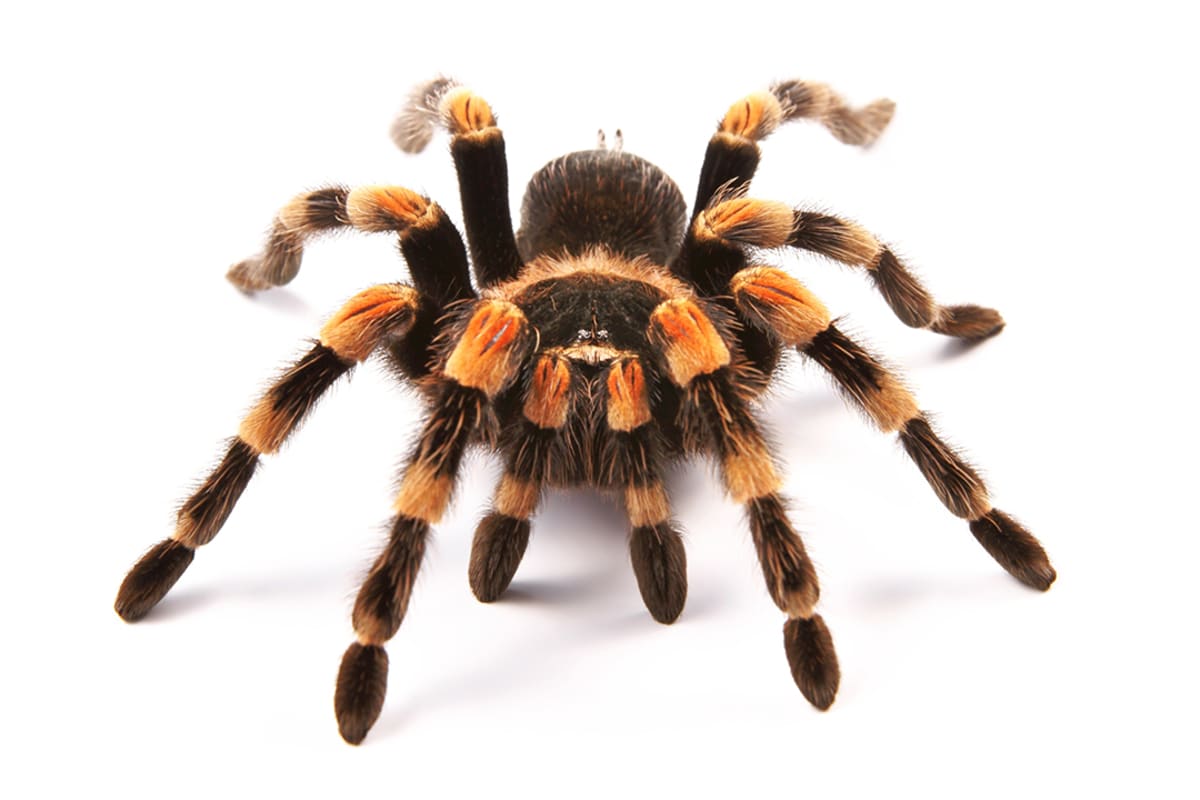
This care sheet covers a variety of tarantula species, including:
- Pink toe
- Red knee
- Rose hair
Habitat
Habitat size
An appropriately sized and shaped habitat at least three times their leg-span long and two times their leg-span wide is required to accommodate normal behavior and exercise. Minimum height for ground dwellers should be the length of the tarantula. Tree-dwelling tarantulas require a 10-inch minimum height.
Building your habitat
- Décor - Provide a place to hide such as a half log. Tree-dwelling tarantulas also need cork bark, branches and plants to build their webs.
- Substrate - Mulch-type substrate such as coconut fiber bedding, reptile bark or dampened sphagnum moss. Avoid gravel and artificial turf, which is too harsh for the skin
- Temperature - 68 to 82°F, depending on species. Use of an under-tank heater can help maintain appropriate habitat temperature
- Lighting - Keep in a darker part of the room away from sunlight. Avoid incandescent lights, which can dry out a tarantula. Use a low-wattage nocturnal or infrared light to watch your tarantula after dark
- Humidity - Maintain 40 to 90% humidity, depending on species, by misting as needed every day
Cleaning your habitat
Thoroughly clean and disinfect the habitat at least once a month, or more often if needed:
- Place tarantula in a secure habitat
- Scrub the tank and furnishings with a reptile habitat cleaner or 3% bleach solution
- Rinse thoroughly with water, removing all traces of habitat cleaner or bleach smell
- Dry the tank and furnishings and add clean substrate before placing the tarantula back in their habitat
What Do Tarantulas Eat
A well-balanced tarantula diet consists of:
- Appropriately sized live insects such as gut-loaded (recently fed) crickets, mealworms, superworms, hornworms and roaches
- Some species may eat thawed frozen pinkie mice
Things to remember when feeding your tarantula:
- Fresh, clean, chlorine-free water should be available at all times (in a shallow bowl). Your tarantula may not drink from a bowl but will rely on moisture on plants
- Feed juveniles daily, adults every other day. Since they are nocturnal, feeding should occur at night
- Be sure that food is smaller than the tarantula. Remove any uneaten live food as it may cause injury to a resting tarantula
- Replace water daily
Care
Handling tarantulas is not recommended. If feeling threatened, they may bite or even run and fall. A short fall can cause a serious or even fatal injury.
When tarantulas molt, they lie on their back with their feet up in the air. Juveniles molt about four times a year and adults once a year. They may stop eating up to two weeks before a molt; do not disturb during this time. Be sure to remove all live food from enclosure, as even a cricket could harm them during this period.
Where to buy
Tarantulas are available for purchase at your local Petco location. Please call ahead to check availability.
Supplies
- Appropriately sized habitat
- Substrate
- Moss
- Water dish
- Hideaway place
- Climbing décor
- Plants
- Thermometer
- Humidity gauge
- Vitamin supplement
- Crickets
- Calcium supplement
- Under-tank heater
- Cricket keeper
- Cricket food
- Cricket quencher
Tank mates
Pink toe tarantulas are one species of tarantula that can sometimes be kept in groups if the habitat is large enough and all are well fed. House other tarantula species separately and do not house different invertebrate species together.
Health
Signs of a healthy tarantula
- Eats regularly
- Healthy molt
- Active and alert
- Rounded abdomen
- Free of parasites
Red flags (If you notice any of these signs, contact your veterinarian.)
- Shriveled abdomen
- Bleeding from injury to leg or abdomen
- Very slow or uncoordinated movements
- Getting stuck in a molt
- Loss of appetite that is not associated with molt
Common tarantula health issues
| Health Issue | Symptoms or Causes | Suggested Action |
|---|---|---|
| Health Issue Dehydration | Symptoms or Causes Slow moving, shriveled appearance. | Suggested Action Consult your veterinarian and ensure the proper humidity by misting the habitat more frequently. |
| Health Issue Falls, injuries | Symptoms or Causes Bleeding. | Suggested Action Immediately consult your veterinarian. |
FAQs
- Is a tarantula a spider? Yes, tarantulas are spiders and members of the family Theraphosidae, however, they are hairy bodied and usually larger than most spiders.
- What do tarantulas eat? Tarantulas eat a variety of insects such as roaches, crickets, mealworms, superworms and hornworms. Larger tarantulas can eat thawed frozen rodents.
- How long do tarantulas live? The life span of a tarantula will vary by species and gender. This can span from 7 to 30 years.
- Where do tarantulas live? Some live in the desert and others are found in the tropics, depending on the species. They can be found in burrows, under logs, under vegetation and in small crevices in rocks. Arboreal species will be found on trees within the foliage.
- How many eyes do tarantulas have? Tarantulas have eight eyes—two larger eyes in the middle of their head, surrounded by three smaller eyes on each side.
- How many legs does a tarantula have? Tarantulas have eight legs and two pedipalps.
- Can tarantulas swim? Yes, tarantulas can swim, however, placing your tarantula in water is not recommended since they are not excellent swimmers. Use shallow water bowls.
Notes & sources
Ask a Pet Care Center employee about Petco's selection of products available for the care and happiness of your new pet. All products carry a 100% money-back guarantee.
Because all invertebrates are potential carriers of infectious diseases such as salmonella, always wash your hands before and after handling your invertebrate or habitat contents to help prevent the potential spread of disease.
Pregnant women, children under the age of 5, senior citizens and people with weakened immune systems should contact their physician before purchasing or caring for invertebrates and should consider not having an invertebrate as a pet.
Go to the Centers for Disease Control at cdc.gov/healthypets for more information about invertebrates and disease.
The information on this Care Sheet is not a substitute for veterinary care. If you need additional information, please contact your veterinarian as appropriate.