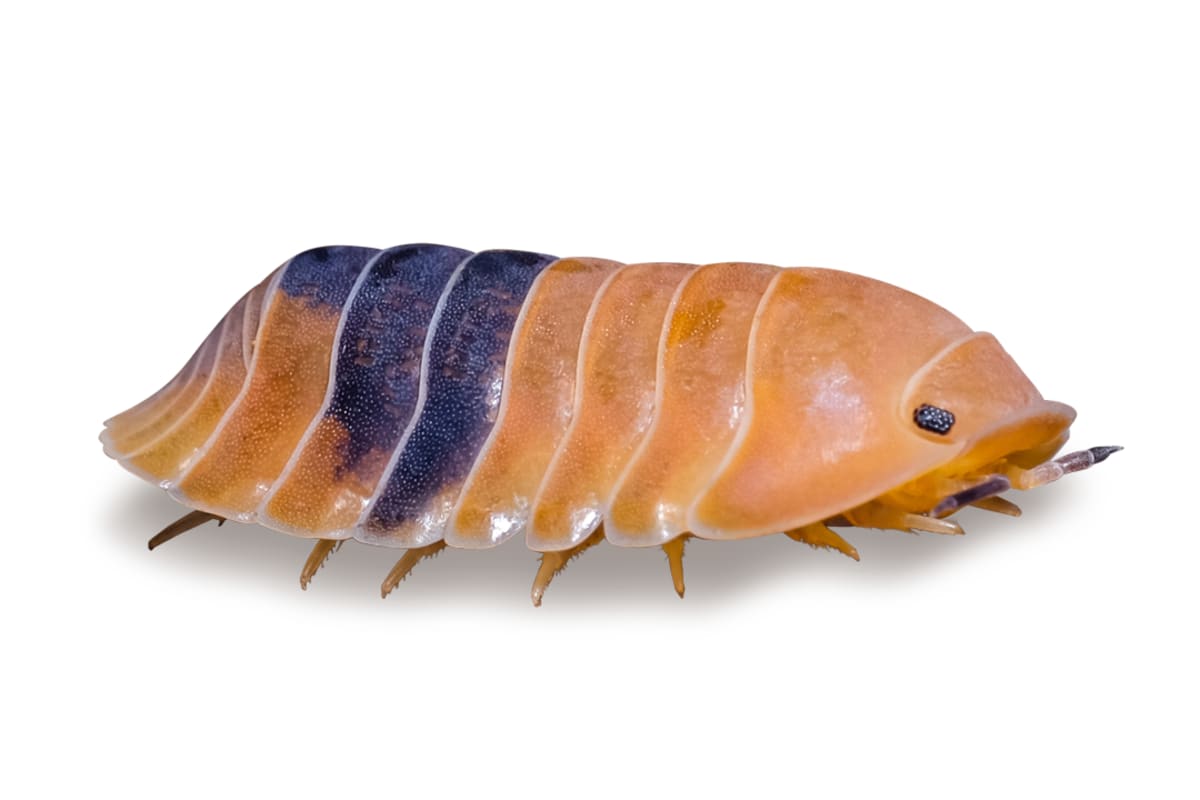
This care sheet covers the following Isopods:
- Arid Isopods: Porcellio Scaber var., Porcellio Dilatatus, Armadillidium Klugii
- Tropical Isopods: Porcellionides pruinosus, Porcellionides floria,Porcellio scaber
- Pet Isopods: Armadillidium maculatum, Armadillidium nasatum, Armadillidium vulgare, Porcellio laevis,Venezillo parvus
- Specialty Isopods: Porcellionides virgatus, Porcellio spinicornis, Atlantoscia floridiana, Cylisticus convexus, Cubaris murina
Typical Isopod appearance & behavior
- Most prefer dimly lit to dark environments
- Rate of movement is determined by environment. Generally slower moving, their rate of travel will increase until a favorable location is found
- Isopods lack a waxy cuticle which allows them to absorb moisture from the air
- Their gills must remain moist to allow for gas exchange
- Females can carry up to 200 eggs in an under-belly pouch called a marsupium
- Isopods are detritivores, feeding on decaying matter
Characteristics
| Care Difficulty | Beginner |
| Average Life Span | Up to 4 years with proper care |
| Average Adult Size | Up to 1” |
| Diet | Detritivore |
| Minimum Habitat Size | 1.5+ gallons |
| Temperature | 60–90+°F depending on species |
| Humidity | 20-80% depending on species |
Habitat
Habitat size
An appropriately sized habitat, such as a 1.5-gallon enclosure, with a secure, vented lid to prevent escape is recommended for a small colony of Isopods.
Building your habitat
- Décor – Provide hiding areas using nontoxic plants, leaf litter, branches and logs.
- Substrate – Provide mulch-like commercial material such as coconut fiber bedding, bark, peatmoss and potting soil.
- Temperature – Depending on species, maintain a temperature between 60–90+ F; use an under-tank heater, on one side of the enclosure, to maintain stable temperatures for warm environment species.
- Lighting – Isopods do not have any special lighting needs. Most prefer dark, moist environments. Don’t expose them to direct sunlight. Use a black light to view at night.
- Water – Mist multiple times each day using chlorine-free water to maintain appropriate humidity levels. Do not allow substrate to dry out.
Cleaning your habitat
- Clean the enclosure by sifting the top layer of the substrate regularly to remove any frass (feces) and replace food to prevent mold.
- As the Isopods consume the substrate, the enclosure will eventually require a complete cleaning and substrate replacement.
- Monitor the habitat for mold. If mold is present, it could indicate the presence of harmful microbes that could harm your isopods and the habitat should be thoroughly cleaned and disinfected.
Feeding
What to feed your Isopod:
- Isopods will feed on leaf litter (natural plant leaves), small amounts of fruits and vegetables like potatoes, carrots, zucchini and apples, as well as some commercially available Isopod foods.
Where to buy an Isopod
Various Isopods are available at select Petco locations and Petco.com. Offerings vary by location. Call ahead to check availability.
Supplies
- Appropriate size habitat
- Appropriate food
- Décor
- Live plants
- Habitat cover
- Light
- Thermometer
- Humidity gauge
- Substrate
- Moss
- Misting bottle
- Under-tank heater
- Sand sifter
Habitat mates
Isopods can be housed together with other isopods of the same species. Do not house with different Isopod species. Depending on species, some acceptable habitat mates may include hermit crabs, toads, salamanders, cave geckos, crested geckos and dart frogs.
Health
Signs of a healthy Isopod:
- All appendages intact
- Actively feeding at night
- Proper molting
Red flags: (If you notice any of these signs, contact your veterinarian.)
- Change in color
- Loss of appetite
- Decreased growth
- Inability to molt
Common health issues
| Health Issue | Symptoms or Causes | Suggested Action |
|---|---|---|
| Dehydration | Substrate was allowed to dry out | Ensure habitat humidity is appropriate per species to ensure the isopod’s gills remain moist and functional |
| Drowning | Habitat is too wet | Habitat should be kept moist but do not pour water directly into the substrate as this can cause the isopod to drown |
| Inability to molt | Environment temperature or humidity concerns. Lack of proper nutrients | Ensure habitat temperature is stable and humidity is appropriate for species. Offer additional foods to improve nutrition. |
| Iridoviruses | Anemia, organ atrophy, and decreased growth. Crystals form beneath the external skeleton |
Thoroughly clean and disinfect habitat and isolate the ill isopod. Consult veterinarian for additional care instructions. |
FAQs
Are Isopods insects?

No; although they look like insects, they are more closely related to shrimp, lobsters and crabs.
What do Isopods eat?
Terrestrial Isopods are detritivores and will consume decaying matter.
How long do Isopods live?
Their life span can average up to 4 years with proper care.
How big do Isopods get?
Adult Terrestrial Isopods can reach an average length of 1 inch.
Notes and sources
Ask a Pet Care Center partner about Petco's selection of products available for the care and happiness of your new pet. All products carry a 100% money-back guarantee.
Because all invertebrates are potential carriers of infectious diseases, such as atypical Mycobacterium and Salmonella, always wash your hands before and after handling your invertebrate or habitat contents to help prevent the potential spread of disease.
Pregnant women, children under the age of 5, senior citizens and people with weakened immune systems should contact their physician before purchasing or caring for invertebrates and should consider not having an invertebrate as a pet.
Go to cdc.gov/healthypets for more information about invertebrates and disease.
The information on this Care Sheet is not a substitute for veterinary care. If you need additional information, please contact your veterinarian as appropriate.