

Related Articles


Blue Death Feigning Beetle: The Guide to Habitat, Food & Health Essentials
Published on March 13th, 2026
Updated on March 13th, 2026

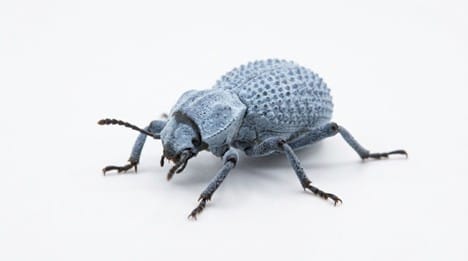
Includes the blue death feigning beetle, black death feigning beetle (Asbolus verrucosus), and the smooth death feigning beetle (Asbolus laevis)
Overview
The blue death feigning beetle, also known as the desert ironclad beetle, gets its name from its go-to survival trick: flipping onto its back and playing dead until a predator loses interest. Docile and easy to handle, they thrive in a simple dry, sandy setup and can live up to 10 years in captivity.
Typical appearance and behavior
- Generally easy to handle; blue death-feigning beetles are slow-moving, docile, and do not bite
- They are crepuscular, meaning they are most active at dawn and dusk
- When threatened, they flip onto their backs and play dead, remaining completely still until the danger has passed. They may also release a sticky fluid that causes sand and debris to cling to their body as camouflage
- Their signature powdery blue color comes from a waxy coating on their body that helps retain moisture and protection from the sun. If kept in high humidity, this wax fades and the beetle will appear black instead of blue
Characteristics
Care Difficulty |
Beginner |
Average Life Span |
Up to 10 years with proper care |
Average Adult Size |
0.7 – 0.8 inches long |
Diet |
Omnivore |
Minimum Habitat Size |
10 gallons |
Habitat
Habitat size
A 10-gallon glass tank with a screen mesh lid fastened securely is recommended for blue death feigning beetles. A tank this size can comfortably house several beetles together.
Building your habitat
- Hideaway - Provide cork bark, cholla wood, or small hides so beetles can shelter from heat and retreat from tank mates when needed
- Substrate - A mix of organic topsoil as a bottom layer topped with sand works well, giving beetles a surface to move on and dig into. Avoid using only play sand or calcium-based sand, as it makes movement difficult and forces beetles to burn unnecessary energy
- Lighting - A small heat lamp with a low-wattage bulb placed on one end of the enclosure helps maintain warmth and keeps humidity low. Aim for surface temperatures in the mid-80s°F on the warm side and mid-70s°F on the cooler side
Cleaning your habitat
Thoroughly clean and disinfect the habitat at least every other week for a single blue death feigning beetle or every week if housing multiple blue death feigning beetles:
- Place blue death feigning beetle(s) in a secure habitat
- Scrub the tank and furnishings with a reptile-safe habitat cleaner or 3% bleach solution
- Rinse thoroughly with water, removing all traces of habitat cleaner or bleach smell
- Dry the tank and furnishings before adding clean substrate and placing your blue death feigning beetle back into their habitat
What Do Blue Death Feigning Beetles Eat?
A well-balanced diet consists of:
- High-protein foods such as crushed up fish flakes, fish pellets, dried krill, reptile pellets, and fresh deceased insects. These are typically preferred and accepted most readily
- Vegetables such as shredded greens, carrots, and cucumber can be offered in small amounts as a supplement
- Fruits can be offered as a treat but avoid offering fruits and processed or sugary foods too often, as they offer little nutritional value for beetles and can raise humidity
Things to remember when feeding your blue death feigning beetles:
- Change food daily and remove any uneaten portions to keep the enclosure clean
- Water: Always provide a small, shallow dish of water so beetles have the option to drink. A plastic bottle cap works well as a dish. Keep the water level very shallow to prevent any risk of drowning
Blue Death Feigning Beetles habitat care
- Maintain gradient temperatures between 70 to 85°F with a warm side and a cooler side to allow beetles to regulate their own body temperature. Keep humidity at less than 20%, as excess moisture is harmful and will cause the beetle to lose its blue waxy coating
- Handle with care and always wash hands before and after handling. Beetles are docile and may play dead in your hands, which is completely normal
- These beetles do not secrete harmful chemicals, but good hygiene practice after handling is always recommended
Where to buy a Blue Death Feigning Beetle
Blue death feigning beetles are available for purchase at your local Petco store. Please call ahead to check availability.
Supplies
- Appropriately sized habitat
- Substrate
- Food and water dishes
- Décor
- Thermometer
- Humidity gauge
- Vitamin supplement
- Calcium supplement
- Red or blue bulb and lighting fixture
Habitat mates
Blue death feigning beetles can be housed together comfortably in groups.
Health
Signs of a healthy blue death feigning beetle
- Eats regularly
- Waxy blue coating is intact and vibrant
- Active and alert at dawn and dusk
- Moves steadily and responds to its environment
Red flags (If you notice any of these signs, contact your veterinarian.)
- Poor appetite or refusing food
- Lethargic or unresponsive outside of playing dead
- Loss of the blue waxy coating without a change in humidity
- Damaged or dull exoskeleton
Health Issue |
Symptoms or Causes |
Suggested Action |
Health Issue Dehydration |
Symptoms or Causes Lethargic, shriveled appearance. |
Suggested Action Consult with a veterinarian. |
Health Issue Humidity Stress |
Symptoms or Causes Loss of blue waxy coating, dull or darkened appearance, lethargy |
Suggested Action Consult your veterinarian. |
Notes and sources
Ask a store employee about Petco's selection of products available for the care and happiness of your new pet. All products carry a 100% money-back guarantee.
Because all invertebrates are potential carriers of Salmonella bacteria, always wash your hands before and after handling your invertebrate or habitat contents to help prevent the potential spread of disease.
Pregnant women, children under the age of 5, senior citizens and people with weakened immune systems should contact their physician before purchasing or caring for invertebrates and should consider not having an invertebrate as a pet.
Go to cdc.gov/healthypets for more information about invertebrates and disease.
The information on this Care Sheet is not a substitute for veterinary care. If you need additional information, please contact your veterinarian as appropriate.
FAQs
Why is the blue death feigning beetle blue?

Its blue color comes from a waxy coating the beetle secretes over its body to protect against dehydration and overheating in the desert. In high humidity, this wax fades and the beetle will appear black.
What do blue death feigning beetles eat?
They eat a variety of foods including fish flakes, dried insects, reptile pellets, and small amounts of vegetables like carrots and cucumber. They tend to prefer higher-protein foods.
What is a blue death feigning beetle?
It is a species of darkling beetle, an arthropod and invertebrate native to the Sonoran Desert of the southwestern United States and Mexico.
How long do blue death feigning beetles live?
With proper care, they can live up to 10 years in captivity.
How does a blue death feigning beetle drink water?
They drink from a shallow water dish in their enclosure. Always keep a small dish available, as hydration is important even for desert-dwelling species.

What essential care steps should I take for my new bullfrog toad?
How to care for my Nile monitor: diet, health, and behavior tips?
I just got a Pacman Frog. Where can I learn about its proper care?
Do male Dynastes Grantii beetles fight in a tank without females?
How to make my bearded dragon comfortable, happy, and bond after prolapse?
Crested gecko care: Food, age, tongue flicking, and handling tips?
Injured lizard care: food, lighting, and habitat setup tips?
How to care for an injured alligator lizard found by my cat?
How to help my new rescued crested gecko with metabolic bone disease?