


Related Articles


Pacman Frog Care: Tank Setup, Diet, & Beginner's Guide
Published on July 18th, 2024
Updated on October 22nd, 2025

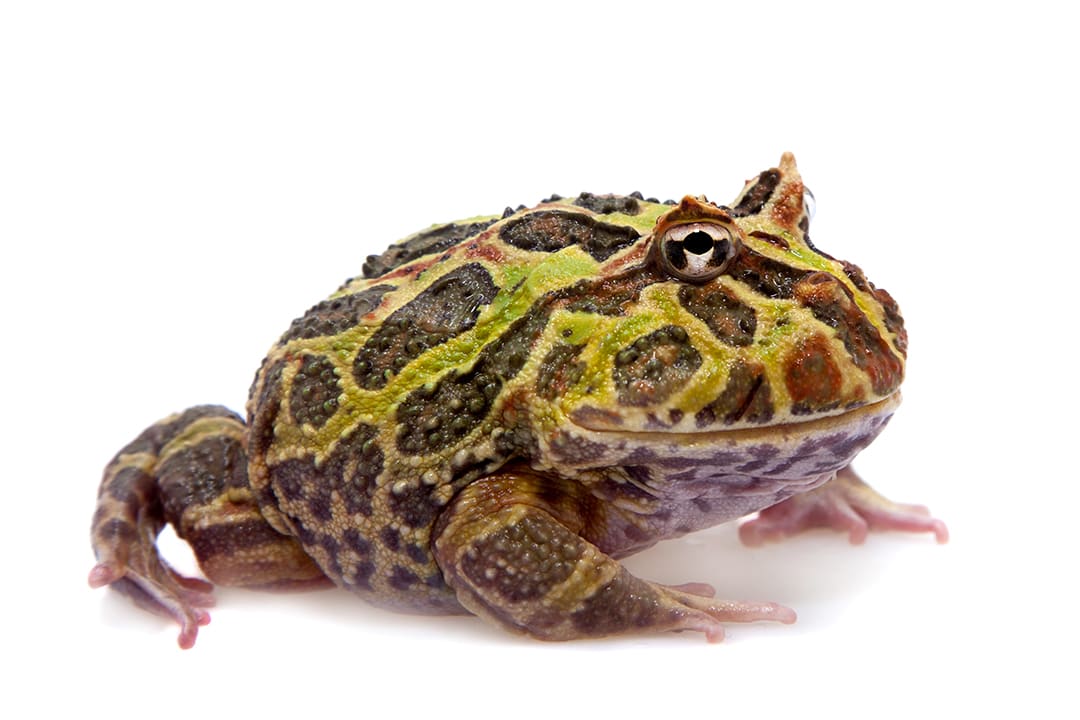
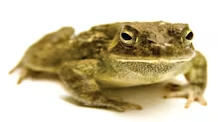
Native to the damp, humid forests of South America, Pacman frogs are known as horned frogs because the top of their head comes to a point over each of their eyes, as if they had two horns. With their large mouths and triangular-shaped heads, they are sometimes called Pacman frogs after Pac-Man, the popular video game character they resemble.
Typical Pacman frog appearance and behavior
- Large, stocky-looking body, weighing a half-pound to a pound when fully grown
- Very sedentary
- Lie in wait, buried in substrate, with only their eyes and “horns” exposed, ready to ambush predators
- More active at night (spends most of day buried in substrate)
- Generally, adapt well to a new enclosure within a few days
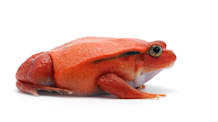
- Available in several different skin colors and patterns of brown, green, red, orange and albino (pink and yellow); colors and patterns may change as pet ages
- Generally, are hardy eaters and require minimal space because of sedentary behavior
- Are better observed than handled, as they have sharp teeth and tend to bite—plus, frogs’ skin is fragile and porous; their skin can absorb bacteria from human hands, leading to potential skin infection, and it gets damaged easily if frogs are held without wearing protective disposable gloves
Characteristics
| Care Difficulty | Beginner |
| Average Life Span | 10–15 years with proper care |
| Average Adult Size | Males 3–4" long; females 4–8" inches long |
| Diet | Carnivore |
| Minimum Habitat Size | 10–20 gallons |
Habitat
Habitat size
An appropriately sized (10–20 gallon) glass habitat will allow juvenile to adult Pacman frogs to behave normally and to burrow. Horned frogs reach adult size in 6–12 months under ideal conditions; upgrade your habitat size as your frog grows.
Tanks should be wider than they are tall and have a screen top to allow proper ventilation and prevent escape.
Building your habitat
- Substrate: For an adult frog, provide 3-4” of deep substrate, such as coconut fiber or sphagnum moss, that is easy for frogs to bury under and that will help maintain humidity. Leaf litter can be used on top of substrate to aid in burrowing and to promote a more natural look. Gravel and rocks are not generally recommended, as they are potentially abrasive to frogs’ delicate skin and may be ingested, leading to fatal gastrointestinal tract obstructions
- Temperature: Maintain a daytime temperature of 75–83°F and a nighttime temperature of 70–75°F; an under-tank heater may be used, as long as it is regulated by a thermostat to prevent frogs buried in substrate from getting burned. Heat mats should not be used with plastic tanks, as they may damage these habitats. A low wattage (15–25 watt) incandescent bulb also may be used as a heat source, if proper humidity level can be maintained. A red incandescent bulb may be used to provide supplemental heat if necessary
- Humidity: Maintain humidity at 70–80% by misting substrate as needed every day. Substrate should be damp but not wet. Excess humidity can lead to skin infections, and deficient humidity can lead to dehydration and dormancy
- Lighting: Low-level UVB lighting is recommended for 10–12 hours a day, and because horned frogs are nocturnal, you may provide a low wattage nocturnal bulb for nighttime viewing, too. Be sure to provide hiding places to allow frogs to hide from light, as needed
- Water: Provide a shallow, open bowl of filtered water (do not use distilled or tap water), surrounded by plants (such as pothos) that help make a soaking frog less stressed, for frogs to drink from and sit in


Cleaning your Pacman frog habitat
Thoroughly clean the habitat at least once a week. To safely clean the habitat:
- Spot clean soiled bedding and discarded food daily from the habitat
- Place frog in a secure container
- Scrub the habitat and furnishings with a reptile habitat cleaner or 3% bleach solution
- Rinse thoroughly with hot water until no residue remains to potentially absorb through your frog’s porous skin
- Dry the habitat and furnishings completely
- Add clean substrate and return frog to habitat
What Do Pacman Frogs Eat
A well-balanced horned frog diet consists of:
- A variety of insects, including gut-loaded (recently fed) crickets, Dubia roaches and earthworms, with mealworms and waxworms only as occasional treats because of their high fat content
- Thawed frozen rodents may be offered to adults; feeding live rodents is not recommended, as they can bite and scratch frogs, inflicting injury
Things to remember when feeding your horned frog:
- Due to their painful bite, frogs should be offered prey with tongs
- Fresh, clean, chlorine-free water should be available at all times
- Feed juveniles daily and adults 1–2 times a week; don’t feed thawed frozen rodents until your frog reaches adult size. Thawed frozen rodents, such as adult mice or pinkie rats, may be offered every other week to adult horned frogs
- Since horned frogs like to strike at live prey, they may need to be enticed to eat when fed thawed frozen rodents
- Sprinkle food with a calcium powder supplement containing vitamin D3 daily and a multivitamin supplement once a week
Pacman frog care
- Don’t handle your frog unless necessary, and always wear disposable gloves when handling your frog. Residue or oil on your skin can harm amphibians, and all amphibians secrete toxins from skin that can irritate human skin and mucus membranes
- Do not allow your frog’s secretions to contact your eyes, mouth or open wounds
- Use an appropriately sized, small-mesh, soft net to move or block your frog while spot cleaning their habitat
- Don’t be surprised to see your frog eating their shed skin. When their environmental humidity is too low, their skin thickens to prevent them from becoming dehydrated, and they can look like they are dead. Once humidity rises, they will shed this thick skin, eat it and become more active.
Where to buy a Pacman frog
Petco sells Pacman frogs in stores. Call your local location ahead of time to ensure availability.
Pacman frog supplies
- Appropriately sized habitat
- Substrate
- Moss
- Water dish
- Live insects for food
- Day and night reptile bulbs
- Plants
- Under-tank heater
- Thermostat
- Hygrometer
- UVB lighting and fixture
- Vitamin supplement
- Calcium supplement
- Cricket keeper
- Cricket food
- Plant mister
Pacman frog habitat mates
House horned frogs separately, and do not house different amphibian species together. Horned frogs may be cannibalistic when housed together.
Pacman frog health
Signs of a healthy Pacman frog
- Active and alert
- Clear eyes
- Moist, supple skin free from lesions
- Stocky-looking, solid body
- Eats regularly and maintains weight
Red flags (if you notice any of these signs, contact your veterinarian)
- Lethargy
- Skin lesions
- Loss of appetite
- Distressed breathing
- Weight loss
- Weak leg movements
- Bloated abdomen
Common Pacman frog health issues
| Health Issue | Symptoms or Causes | Suggested Action |
|---|---|---|
| Health Issue Chemical intoxication | Symptoms or Causes Caused by exposure to excessive ammonia (from waste buildup), soap, detergent, pesticides, etc.; can cause respiratory signs and skin lesions | Suggested Action Consult your veterinarian and protect your amphibian from exposure |
| Health Issue Intestinal obstruction | Symptoms or Causes Caused by swallowing gravel or by eating too many hard-shelled insects | Suggested Action Consult your veterinarian; surgery may be required |
| Health Issue Metabolic bone disease | Symptoms or Causes Swollen, curved arms and legs, deformed spine and jaw | Suggested Action Consult your veterinarian about proper diet and vitamin and mineral supplementation |
| Health Issue Vitamin A deficiency | Symptoms or Causes Swollen eyelids and back legs, rough skin | Suggested Action Consult your veterinarian to ensure proper diet and vitamin and mineral supplementation |
| Health Issue Skin problems | Symptoms or Causes Abrasions, bacterial and fungal infections, redness, swelling, or discharge from skin; frogs are particularly susceptible because of their thin skin and moist environment, which encourages the growth of microorganisms | Suggested Action Consult your veterinarian; ensure enclosure is clean and diet is appropriate |
FAQs
What does a Pacman frog eat?

Pacman frogs eat a variety of insects, including gut-loaded (recently fed) crickets, Dubia roaches and earthworms, with mealworms and waxworms as occasional treats; adult frogs also can eat mice and small rats.
How often should I feed my Pacman frog?
Feed juvenile Pacman frogs daily and adults 1–2 times a week; don’t feed thawed frozen rodents until adult size. Thawed frozen rodents, such as adult mice or pinkie rats, may be offered every other week to adults.
Horned frogs get their name from the way the top of their head comes to a point over each of their eyes, as if they had two horns. With their large mouths and triangular-shaped heads, they are also called Pacman frogs after Pac-Man, the popular video game character they resemble.
Horned frogs get their name from the way the top of their head comes to a point over each of their eyes, as if they had two horns. With their large mouths and triangular-shaped heads, they are also called Pacman frogs after Pac-Man, the popular video game character they resemble.
How long can a Pacman frog go without eating?
Pacman frogs can go into a state of partial hibernation, called estivation, in which they don’t eat or move for days to months, typically in response to environmental temperatures that are too high or too low.
Where can I buy a Pacman frog?
Pacman frogs are available at Petco stores.
How do I feed a Pacman frog?
Pacman frogs can bite, so they should be fed with tongs.
How do I set up a Pacman frog tank?
A Pacman frog can live in a glass habitat with deep substrate so they can bury themselves to hide, a water dish in which to soak, décor that enables them to hide, a heat source (either a heat mat attached to a thermostat under the tank or a low-wattage incandescent bulb above the tank), thermometers to monitor temperature range, a humidity gauge to monitor humidity levels and a low-level UV lightbulb to support vitamin D production in skin for dietary calcium absorption
Notes and resources
Ask a Pet Care Center associate about Petco's selection of products available for the care and happiness of your new pet. All products carry a 100% money-back guarantee.
Because all reptiles are potential carriers of infectious diseases, such as Salmonella bacteria, always wash your hands before and after handling your reptile or habitat contents to help prevent the potential spread of disease.
Pregnant women, children under the age of 5, senior citizens and people with weakened immune systems should contact their physicians before purchasing or caring for reptiles and should consider having a pet other than a reptile.
Go to the Centers for Disease Control at cdc.gov/healthypets for more information about frogs and disease.
See petco.com for more information.
Note: The information in this care sheet is not a substitute for veterinary care. If you need additional information, please contact your veterinarian.



Book an appointment with the pros – our expert vets are here to help.
