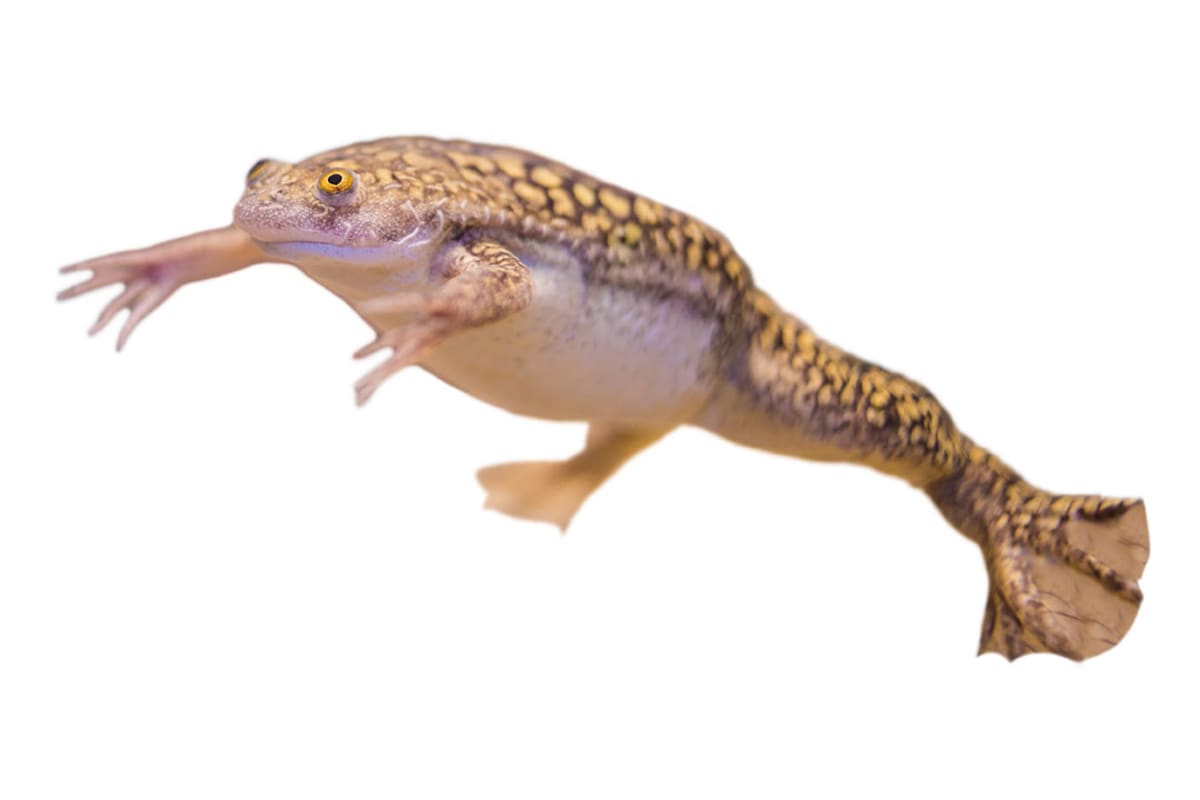
This care sheet covers a variety of freshwater amphibian species, including:
- African dwarf frogs
- Albino clawed frog
- Firebelly newt species
- Tadpoles
- Axolotl
Typical appearance and behavior
- Most amphibians will spend the majority of the day on the bottom of the tank but swim to the surface to breathe air
- Dwarf frogs' back feet have three claws
- Axolotls and newts are capable of regenerating lost appendages, such as their tail
- Although missing vocal sacs, clawed frogs are still capable of producing trills
- Most amphibians are nocturnal
- Axolotls prefer cooler water temperatures of 65-70 degrees Fahrenheit
Characteristics
| Care Difficulty | Beginner to intermediate, depending on species |
| Average Life Span | Depends on species |
| Average Adult Size | Depends on species |
| Diet | Omnivore |
| Minimum Habitat Size | 5+ gallons |
| Water Temperature | 72-82°F |
Habitat
Habitat size
Keep freshwater amphibians in an appropriate size aquarium. A minimum of 5 gallons, depending on the adult size of the species, is recommended.
Building your habitat
Water health
- Provide proper filtration to ensure optimal water quality to help maintain health. Slow water circulation should be provided to mimic water currents found in the freshwater amphibian’s natural habitat. Stable water quality (pH, ammonia, nitrate, nitrite) and water temperature are critical to the health of aquatic life. If you are unsure of your water quality, bring a sample to Petco for free testing
- An aquatic heater should be used to stabilize water temperature, ensuring it does not fluctuate more than 2 degrees in either direction in a 24-hour period
- Many freshwater amphibians will benefit from the addition of freshwater salt to the aquarium; the specific gravity should be kept at 1.004. Always research your species-specific needs before adding freshwater aquarium salt. Do not allow specific gravity to fluctuate more than 0.001 in either direction in a 24-hour period
- It is best to keep amphibians in aquariums less than 18” deep to allow them to easily surface for air
Décor - Provide plenty of rocks and plants for hiding places and a secure lid to prevent jumping
Feeding
A well-balanced freshwater amphibian diet consists of:
- Bloodworms and brine shrimp (live, frozen or freeze-dried)
- Sinking pellets
- Tadpoles require algae wafers and sinking pellets
Things to remember when feeding your freshwater amphibian:
- Feed once a day
- Thaw frozen food before feeding
- Ensure the food reaches the bottom of the aquarium
Freshwater amphibian care
Maintaining great water quality with regular water changes and adequate filtration is important to help keep your freshwater amphibians healthy
- Daily: Check filter, water temperature and other equipment
- Weekly: Test water quality at least once a week
- Weekly to monthly: Change 10–25% of the total volume of water every 2–4 weeks, or as needed; change filter media monthly
Avoid overcrowded conditions, which are a major cause of stress and disease
Where to buy freshwater amphibians
Various amphibians are available for purchase at your local Petco Pet Care Center location; availability varies by location. Please call ahead to check availability.
Supplies
- Appropriately sized habitat
- Appropriate food, dry and frozen
- Décor
- Water conditioner
- Filter
- Water test kit
- Full spectrum lighting - T5 recommended
- Net
- Thermometer
- Freshwater substrate
- Heater
- Refractometer
- Airstone
- Air pump
- Airline tubing
- Check valve
- Freshwater salt
- Live plants
- Cover
Tank mates
- Mollies
- Platies
- Swordtails
- Gouramis
- Tetras
- Danios
- Rainbowfish
Some amphibians can eat smaller fish; do not keep with fish smaller than their mouth
Health
Signs of a healthy freshwater amphibian
- Eats vigorously
- Clear eyes and smooth skin
- Good coloration
- Free of parasites or disease
Red flags (If you notice any of these signs, contact your local aquatic specialist or aquatic veterinarian)
- Loss of appetite
- Hazy or cloudy eyes
- Does not swim away from capture
- Red sores
- Bloating
- Erratic swimming
- Spots or fungus on body or mouth
Common health issues
| Health Issue | Symptoms or Causes | Suggested Action |
|---|---|---|
| Health IssueBacterial infection | Symptoms or CausesCloudy eyes, open sores, and/or reddening of the skin. | Suggested ActionImprove water quality and consult your local aquatic specialist or aquatic veterinarian for treatment. |
| Health IssueFungal Infection | Symptoms or CausesRed inflammation of the skin, or any other abnormal change in skin color. | Suggested ActionQuarantine freshwater amphibian immediately; consult your local aquatic specialist or aquatic veterinarian for advice. |
Notes and resources
Ask a Pet Care Center store employee about Petco's selection of products available for the care and happiness of your new pet. All products carry a 100% money-back guarantee.
Because all aquatic life are potential carriers of infectious diseases, such as atypical mycobacterium and salmonella, always wash your hands before and after handling your aquatic life and/or habitat contents to help prevent the potential spread of diseases.
Pregnant women, children under the age of 5, senior citizens and people with weakened immune systems should contact their physician before purchasing and/or caring for aquatic life and should consider not having aquatic life as a pet.
Go to the Centers for Disease Control at cdc.gov/healthypets for more information about aquatic life and disease.
The information on this Care Sheet is not a substitute for veterinary care. If you need additional information, please contact your veterinarian as appropriate.
FAQs
What do water frogs eat?

A healthy diet for aquatic frogs consists of live, frozen or freeze-dried bloodworms or brine shrimp and sinking pellets.
Where to buy aquatic frogs?
Various amphibians are available for purchase at a local Petco location; availability varies by location.
What do freshwater frogs eat?
A healthy diet for aquatic frogs consists of live, frozen or freeze-dried bloodworms or brine shrimp and sinking pellets.