


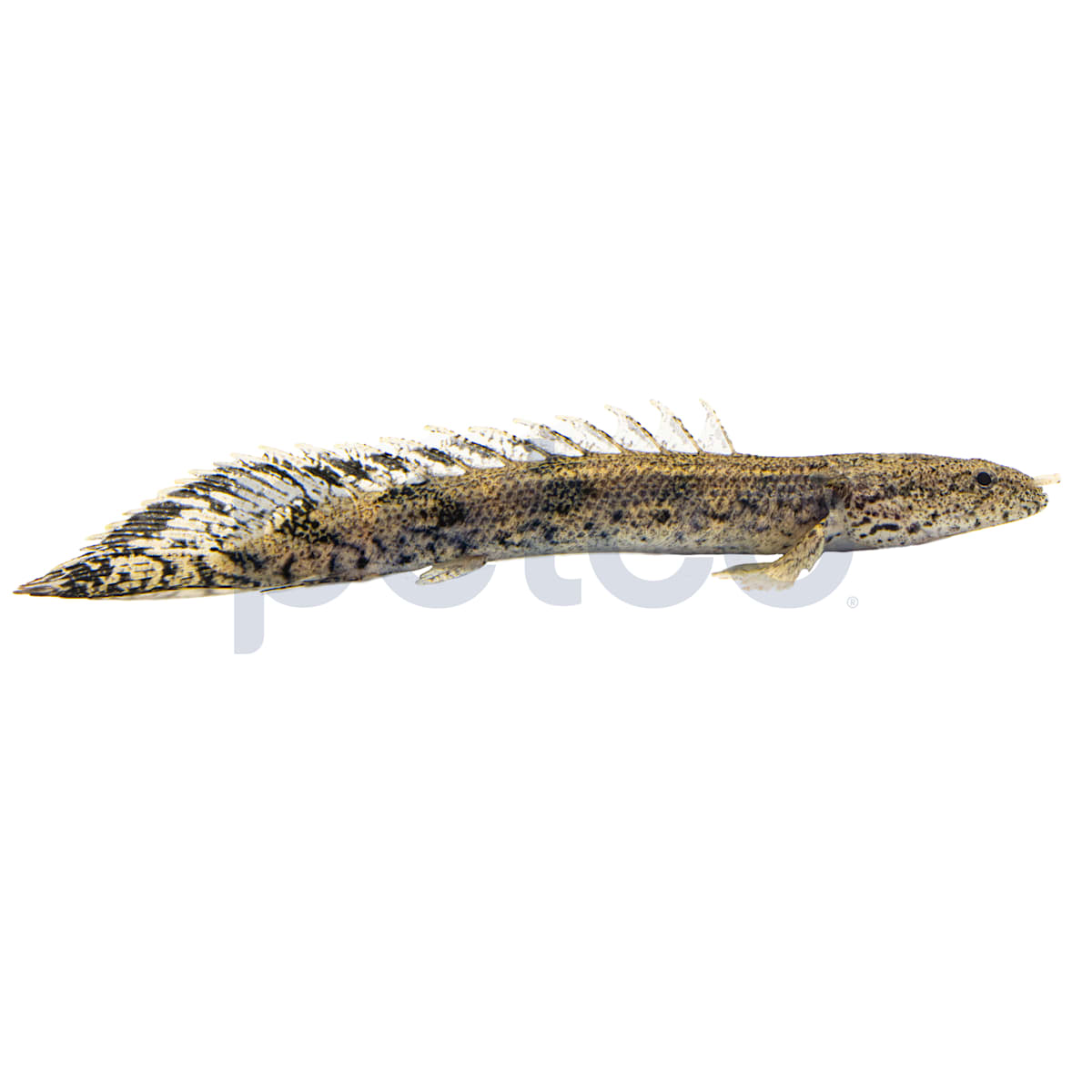
This care sheet covers a variety of Bichir species, including:
- Barred or Armored
- Platinum Semi Senegalus
- Cuvier
- Saddled Endlicheri
- Lapradei
- Guinean
- Ornate
Overview
Scientific names: Polypterus delhezi, p. senegalus, p. endlicheri, p. lapradei, p. ansorgii, p. ornatipinnis
Bichirs are native to the northeast African Nile River region and its tributaries; they also have the ability to thrive in semi-brackish environments. This dinosaur looking species has been around for millions of years and has changed very little appearance. Their scientific name 'bichir polypterus' means “many fins” referring to the series of spiny dorsal fins. Outside of their unique prehistoric appearance they have another unique feature, bichirs have lungs, in addition to their gills, allowing them to breathe out of water. These lungs, large pectoral fins and the eel/snake like body allows them to move across land for short distances to catch prey or settle into another body of water. Bichirs have poor eyesight, this and being nocturnal they spend their nights hunting for prey. Like sharks, they have a great sense of smell and little organs called Ampullae of Lorenzini that can pick up the weak electrical fields of other animals helping them hunt for food. They are semi-aggressive and can have some aggressive tendencies grabbing anything that will fit in their mouth.
Typical appearance and behavior
· Eel/snake shaped body
· Have lungs as well as gills
· Multiple spiny dorsal fins
· Nocturnal
· Freshwater but can thrive in semi-brackish waters
· Have Ampullae of Lorenzini
Characteristics
Care difficulty |
Intermediate |
Average life span |
Up to 10+ years when properly cared for |
Average adult size |
Up to 24+ inches long, depending on species |
Diet |
Carnivore |
Minimum habitat size |
90+ gallons |
Water temperature |
77–83°F |
Habitat
Habitat size
Keep in an appropriately sized aquarium for the species selected, which can range from 90 gallons for a smaller species, to a much larger aquarium for larger growing species.
Building your habitat
- Water health
- Provide proper filtration to ensure optimal water quality to help maintain health; low to moderate water circulation should be provided to mimic the water currents found in the bichir’s natural habitat
- Stable water quality (pH, ammonia, nitrate, nitrite) and water temperature are critical to the health of aquatic life; if you are unsure of your water quality, bring a sample to Petco for free testing
- An aquatic heater should be utilized to stabilize water temperature, ensuring it does not fluctuate more than 2 degrees in either direction in a 24-hour period
- Bichir’s will benefit from the addition of freshwater salt to the aquarium. The specific gravity should be kept at 1.004; do not allow specific gravity to fluctuate more than 0.001 in either direction in a 24-hour period.
- Décor: Provide plenty of space for swimming, as well as plants, rocks or décor for hiding places
- A top should be added to the aquarium as they can jump out of the aquarium
Feeding
A well-balanced bichir diet consists of:
· Brine shrimp, mysis shrimp, bloodworms, tubifex, crustaceans (live, freeze-dried, or frozen) and carnivorous pellets.
Things to remember when feeding your bichir:
· Feed small amounts two to three times daily, no more than your fish will eat in 1–2 minutes
· Thaw frozen food before feeding
· Nocturnal, food should be provided at night
Bichir care
- Maintaining great water quality with regular water changes and adequate filtration is important to help keep your bichir healthy
- Daily: Check filter, water temperature and other equipment
- Weekly: Test water quality at least once a week
- Weekly to monthly: Change 10–25% of the total volume of water every 2–4 weeks, or as needed; change filter media monthly
- Avoid overcrowded conditions, which are a major cause of stress and disease
Where to buy
Various Bichirs are available for purchase at Petco online and in-store; availability varies by location. If visiting your local Petco Pet Care Center location, please call ahead to check availability.
Bichir supplies
· Appropriately sized aquarium
· Aquarium top
· Appropriate food, freeze-dried and frozen
· Décor
· Filter
· Net
· Heater
· Airstone
· Air pump
Tank mates
Bichirs are generally peaceful, but they are territorial and can have aggressive tendencies and will grab anything that will fit in their mouth. Should be kept with species of the same or larger size such as such as other bichir, larger cichlids, larger catfish and arowanas.
Health
Signs of a healthy fish
· Clear eyes
· Eats vigorously
· Good coloration
· Free of parasites or disease
Red flags (if you notice any of these signs, contact your local aquatic specialist or veterinarian)
· Loss of color or appetite
· Spots or fungus on body or mouth
· Cloudy eyes or pop-eye
· Listlessness
· Labored breathing
· Erratic swimming
· Weight loss
· Bloating
· Frayed or discolored fins
Common Bichir health issues
Health issue |
Symptoms or causes |
Suggested action |
Frayed or disintegrating fins; the base of the fins usually reddens |
Improve water quality; consult your local aquatic specialist or aquatic veterinarian for treatment. |
|
Bacterial infections |
Cloudy eyes, open sores and/or reddening of the skin |
Improve water quality; add or slightly increase freshwater aquarium salt level; use a commercial antibacterial remedy as directed; consult your local aquatic specialist or aquatic veterinarian for treatment |
White spots appear on fins and body; fish rubs against hard objects or swims erratically, rapid respirations |
Quarantine fish immediately; add or slightly increase freshwater aquarium salt level and use a commercial ich remedy as directed; Consult your local aquatic specialist or aquatic veterinarian for treatment
|
Cottonmouth or Columnaris |
Cottony white growths along the body and/or gills, frayed fins and gills turn brown and necrotic in late stages; caused by bacterial infection |
Quarantine fish; improve water quality; lower aquarium temperature to 72°F to deter bacteria from growing; medicate as directed; consult your local aquatic specialist or aquatic veterinarian for treatment |
- Cichlids Care Sheet
- Catfish Care Sheet
- Plecostomus Care Sheet
Notes and resources
Ask a Pet Care Center store employee about Petco's selection of products available for the care and happiness of your new pet. All products carry a 100% money-back guarantee.
Because all aquatic life are potential carriers of infectious diseases, such as atypical mycobacterium and salmonella, always wash your hands before and after handling your aquatic life and/or habitat contents to help prevent the potential spread of diseases.
Pregnant women, children under the age of 5, senior citizens and people with weakened immune systems should contact their physician before purchasing and/or caring for aquatic life and should consider not having aquatic life as a pet.
Go to the Centers for Disease Control at cdc.gov/healthypets for more information about aquatic life and disease.
The information on this Care Sheet is not a substitute for veterinary care. If you need additional information, please contact your veterinarian as appropriate.
FAQs
How long do bichirs live?

Bichirs can live from 10 to 20+ years when properly cared for.
What do bichirs eat?
Bichirs should be provided with a variety of freeze-dried, frozen, or live brine shrimp, mysis shrimp, bloodworms, tubifex, crustaceans and carnivorous pellets.
What fish can live with bichirs?
Bichirs are semi-aggressive. can live with other appropriately sized and similar temperament fish such as other bichirs, larger cichlids, large catfish and arowanas.
How many types of bichirs are there?
There are approximately 13 identified species of bichir.
How big do bichir get?
Bichirs can grow from up to 24+ inches depending on species.

