


My dog has a red, itchy leg growth. What is it and should I cone him?
Updated On September 23rd, 2025
Pet's info: Dog | American Bulldog | Male | neutered | 12 years old | 110 lbs
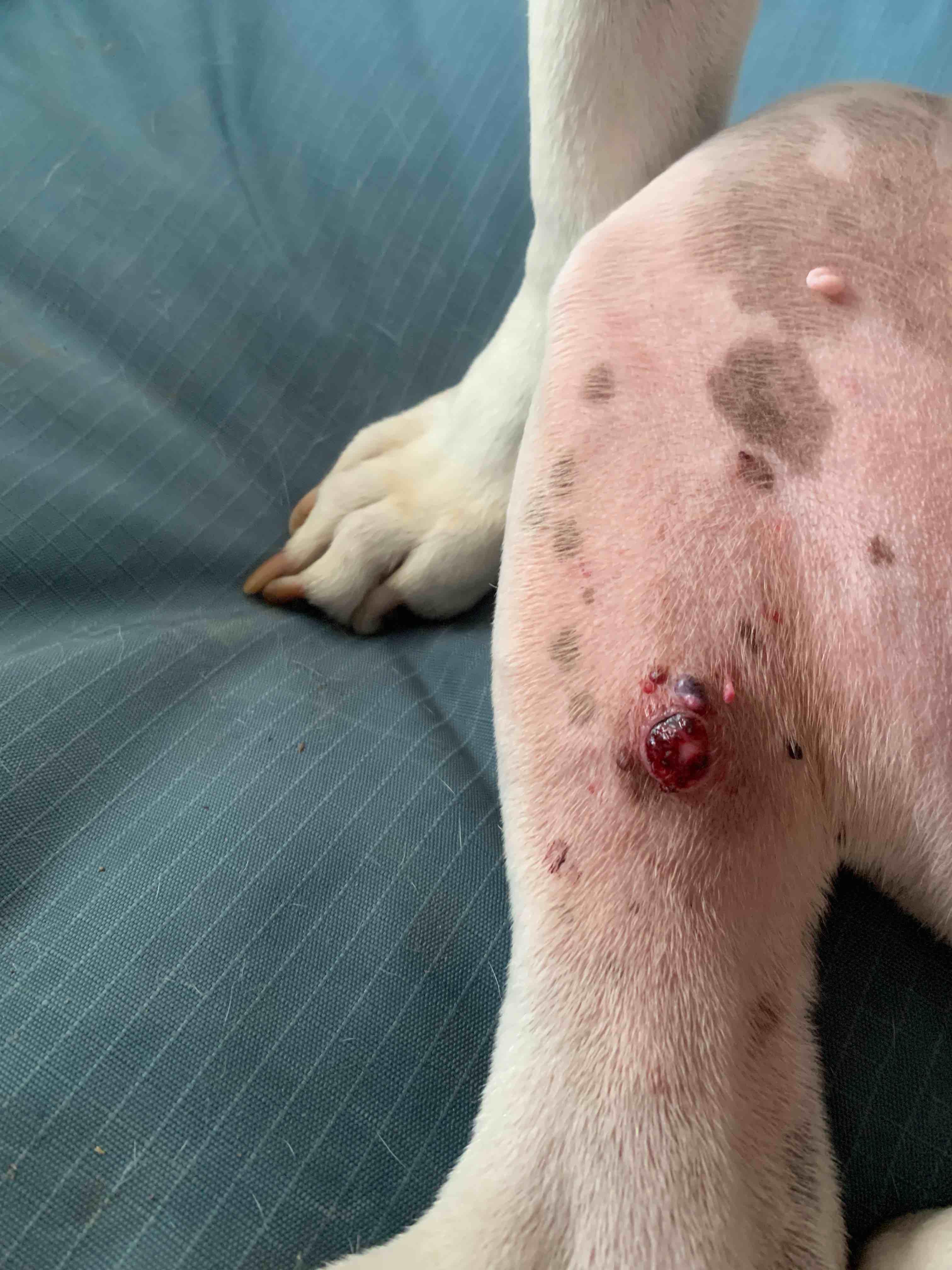
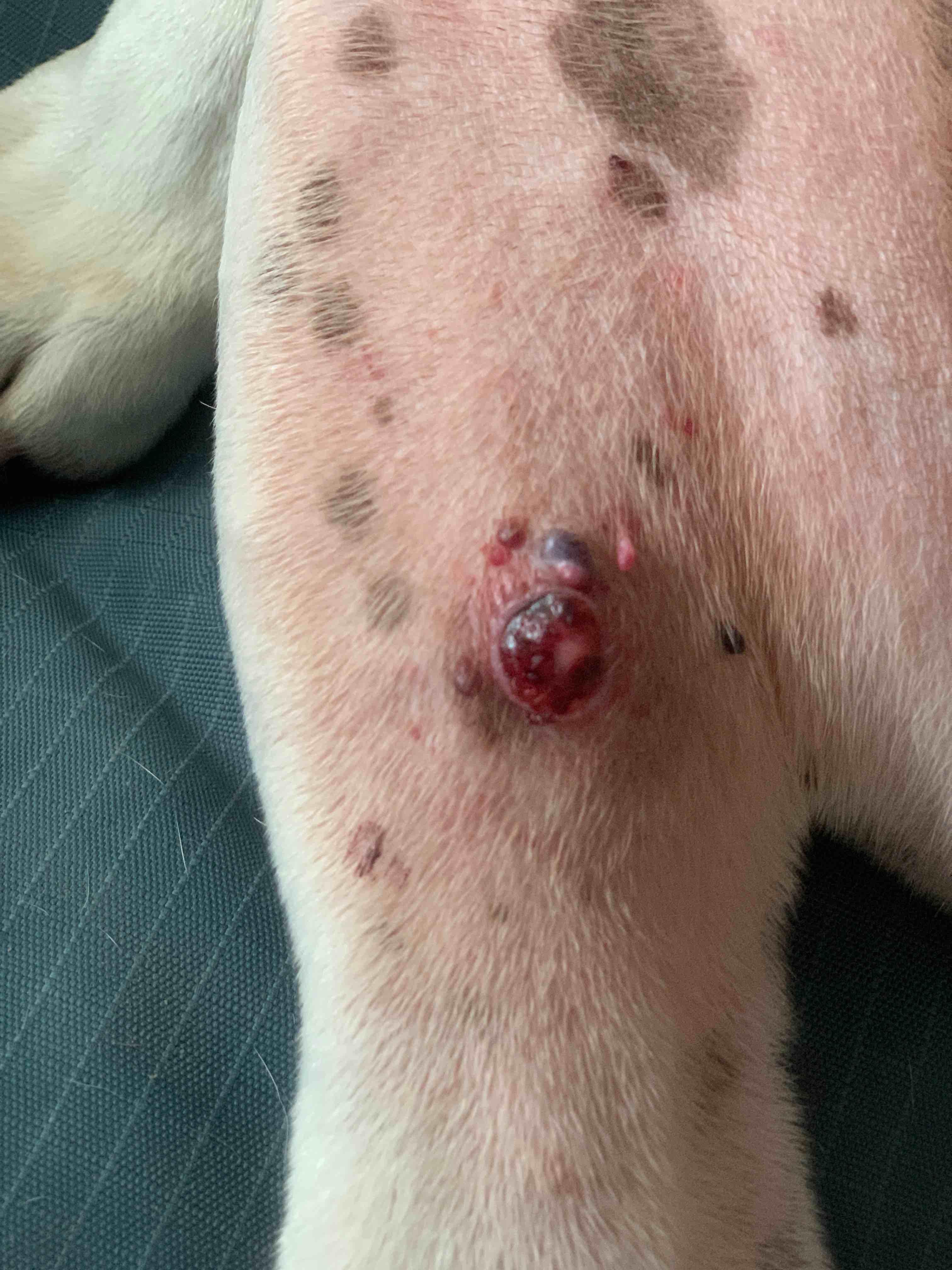
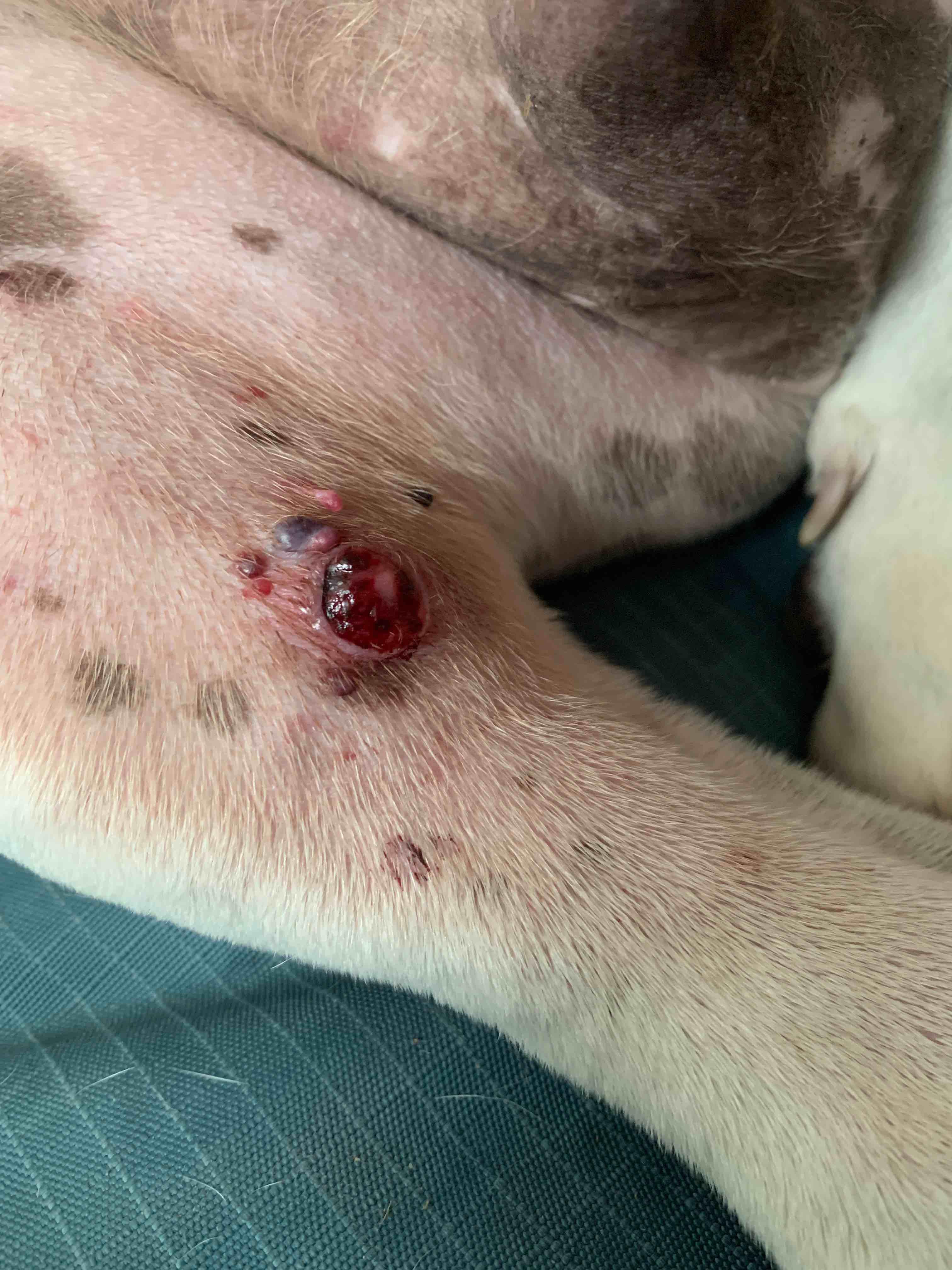
Gunner has a growth emerging from his leg that we have noticed for about a month now. It does not seem to cause him pain but he does lick it often so we assume it itches. He is covered in moles which is what we thought this was originally but it grew to this size and then stopped. It doesn’t seem to ooze or bleed but is always red from licking. We try to keep him from licking it so much but both work outside of the home during the day. Should we cone him? What might this be?


4 Answers
Most Helpful Answer

Published on January 24th, 2020
Given Gunner's age, there is a chance this growth could be malignant. Any suspicious lumps should be examined by the vet. The vet can perform a test called a fine needle aspirate on it. To do this, the vet sticks a small needle into the lump to get a sample of its cells, and examines the cells on a slide under a microscope. It's usually painless to the animal, and relatively quick to perform. Once the cause of the lump is diagnosed, the vet can discuss treatment options if needed. Give his vet a call to make him an appointment.

1Pet Parents found this answer helpful
Related Answers from Veterinarians
-
Published on July 31st, 2017
Hi, thanks for using Petco Pet Education Center, formerly Petcoach! Any lump that grows quickly and is changing (dog is licking and skin is now red) warrants getting it looked at by a Vet. They may decide to aspirate it first before setting up surgery to remove it. A mass on the leg is a tricky location for removal since there isn't much skin there so removing any mass while it's small is best. Good luck!
1Pet Parents found this answer helpful
-
Published on September 3rd, 2022
That's an interesting looking growth, it looks almost purplish in the photo. In a dog Huey's age, any growth has a chance to be malignant. Any suspicious lumps should be examined by the vet. The vet can perform a test called a fine needle aspirate on it. To do this, the vet sticks a small needle into the lump to get a sample of its cells, and examines the cells on a slide under a microscope. It's usually painless to the animal, and relatively quick to perform. Once the cause of the lump is diagnosed, the vet can discuss treatment options if needed. I would give his vet a call to make him an appointment. I hope this helps!
1Pet Parents found this answer helpful
-
Published on February 25th, 2019
That looks like it could be a growth of some sort, and it's concerning that it has doubled in size in a week. This is not something that can be treated at home. Any suspicious lumps should be examined by the vet. The vet can perform a test called a fine needle aspirate on it. To do this, the vet sticks a small needle into the lump to get a sample of its cells, and examines the cells on a slide under a microscope. It's usually painless to the animal, and relatively quick to perform. Once the cause of the lump is diagnosed, the vet can discuss treatment options if needed. I would give Athena's vet a call to make her an appointment. I hope this helps!
1Pet Parents found this answer helpful



My dog has a red lump on his leg, near his foot.

My 5 year-old standard poodle has a lump (about 1 cm) on his leg. Doesn't seem to hurt but he licks it sometimes. I was asking if it was a Histiocytoma, It appears to be only skin deep as I can move the skin around it and the lump moves. No discha
My 2 yo collie/husky x has a red lump on rear leg near ankle. It is about 1cm diameter no pus or blood but does look like a burst abscess. He has no lump and is behaving normally but it does hurt when I touch near it.

My dog has a red lump on her rear right leg just below the bend that has doubled in size since 1 week ago. It is about the size of a marble now and she seems defensive over it but otherwise doesnt seem bothered by it. Any idea what it is and any ways

There is a giant red lump on my dogs back leg. It’s also losing hair on it and around it.
My female Staffordshire bull terrier who is 4 years old has a lump on her leg, which seems to be growing. It causes her no pain and seems to be colourless but I am unsure what it is

My dog is a 3 year old pit mix , he has a hard bump the size of a quarter on his left hind leg. He does scratch and lick a lot more. What can I use to help with the itching

My 11 yo chi terrier has this on his leg, thought was tick but took photo and looks like mole?

Bella always has licked her paws and sometimes front legs. I noticed tonight it was wet there from licking and checked and noticed a small pea sized lump on her front upper leg. It is redish and soft. I attached pictures that are zoomed in. She does
theres a red raised lump on my dogs leg

Book an appointment with the pros – our expert vets are here to help.
