


Puppy vomiting, not eating. How to keep her hydrated until vet?
Updated On September 23rd, 2025
Pet's info: Dog | Mixed Breed Large (61lb +) | Female | unspayed | 4 months and 15 days old | 70 lbs
Hey puppy won't eat and has thrown up. We have a vet appointment for tomorrow morning. Is there anything that can help get water in her?
2 Answers
Most Helpful Answer

Published on December 23rd, 2019
Hello. It is best not to force anything into a vomiting pet. This could just cause her to vomit more. She will not become seriously dehydrated if you are going to have her examined tomorrow. What you can try is to rub some Karo syrup on her gums, perhaps a teaspoon or two every few hours. This will help to keep her energy levels up, but is she vomits even after you do this, then it is best just to leave her be until your vet can evaluate her tomorrow. Thanks for using Petco Pet Education Center, formerly Petcoach.

1Pet Parents found this answer helpful
Related Answers from Veterinarians
-
Published on November 16th, 2017
Hi and thanks for using Petco Pet Education Center, formerly Petcoach! Sorry to hear about Laila. I always tell clients that if abnormal signs persist, worsen, or other signs develop they need to have their pets assessed right away. If you cannot get her seen right away and the vomiting continues, pull the food and water up just for tonight. Fasting her shouldn't hurt her and it will give her stomach/intestinal tract a slight break. But, if you offer her a little water in the morning and the vomiting returns, you should have her evaluated right away. Just offer a small amount of water in the morning. If she drinks (less than 1/2 cup) and is able to hold the water down for 1 hour, go ahead and give her a small meal of her regular food. Again, if she vomits get her evaluated immediately. Vomiting has many causes including intestinal worms, inflammation, infection, dietary problems (including dietary indiscretion or eating things pets are not supposed to eat, food sensitivities/allergies), ingestion of foreign bodies or exposure to toxins, bacterial overgrowth in the gut, problems in the stomach, intestines, or even problems outside of the intestinal tract/stomach including pancreatitis, kidney/liver problems, metabolic disease (diabetes,etc), endocrine diseases (thyroid or other hormone problems), etc. Usually, in puppies, we worry about intestinal parasites, infection, foreign body ingestion or dietary indiscretion. A thorough history and physical exam with resultant diagnostics such as fecal tests, blood tests, imaging studies such as x-rays/ultrasound can be done to try to determine what is going on. Good luck.
1Pet Parents found this answer helpful


My 50 pound, 11 month old Goldendoodle has been vomiting today and is very lethargic. Nose is cold and wet, gums are pick and not sticky, skin is not tenting. Vomited x 4 throughout day. First time appeared to be yesterday’s formed food, kibble.

Hi, my puppy has vomited about 10 times in the last hour, at first she was throwing up her food whole, then it was just vomit then it was just white phlegm. I’m not sure if she had maybe eaten something outside and she’s sleeping now. Do I need to ta

My german shepard puppy has been vomiting on and off since this morning. Shes been acting normal otherwise (playing with my other dog, cuddles, etc). There is no blood in her vomit or stool. Her stool is same as usual. Her gums are pink. Shes been ab

My 41/2 week old puppy has suddenly stopped eating and drinking. She has became very weak, feels burning hot to the touch, has diarrhea, and is shaking all over. I am in the disaster area for hurricane Michael and there is no vet open. Is there anyth
My puppy has lost his appetite and is vomiting what looks like saliva. He has been like this for two days but I've been working and unable to take him to a vet. The vets nearby are closed today or don't take walk-ins. Is there anything I can do to he

My dog has been vomittting for a week now her doc suggest to give pedialyte, sent me home with antibiotic and anti nausea/vomiting drugs. I fed her bone broth as well. She also has valley fever disease. What should I do to give her hydrated?
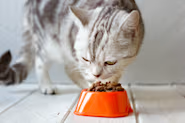
Hello! My cat has been refusing most food since Sunday, and she just threw up some tiny pieces of bread that I managed to get her to eat. She has never thrown up before and usually is a good eater. Her energy and alertness levels seem normal. I just
I just took Bailey to the vet yesterday. She has gastroenteritis and was put on antibiotics. She just took her 2nd dose and started to look a little better today but still very low energy. She started drinking water today but still no food and the la
Help! I took my Puggle to the vet and everything seemed alright until I woke up in the morning to see her vomiting! What do I do?! She hasn't bounced back to normal health yet and isn't looking better!
Help! We have a fading puppy!! She is extremely dehydrated!! What can I do? How do I make this honey solution? She doesnt swallow the Milk replacer. My vet doesnt answer.

Book an appointment with the pros – our expert vets are here to help.
