


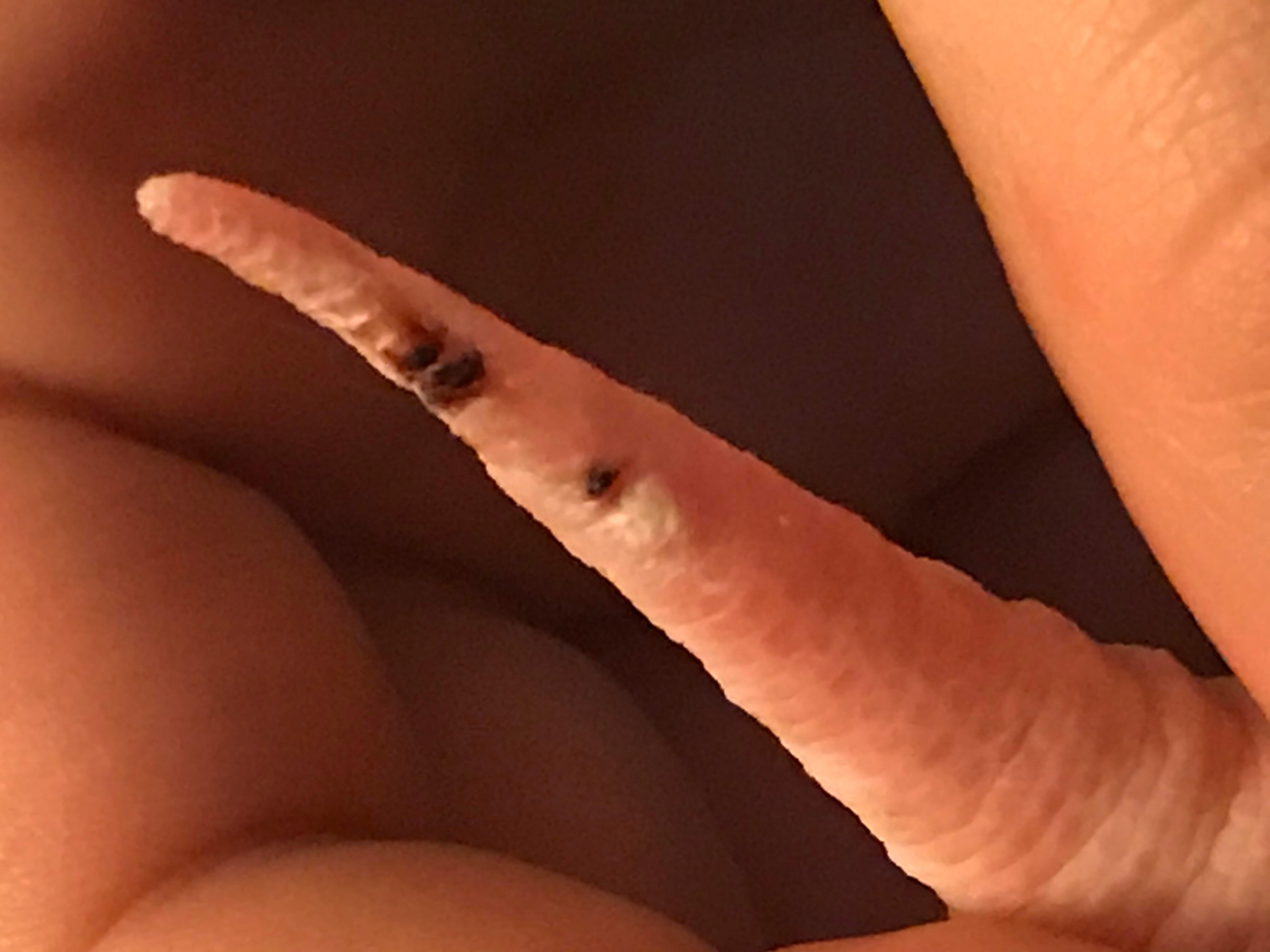
My leopard gecko's tail is red, irritated, and scabby. Is it tail rot?
Updated On September 23rd, 2025
Pet's info: Reptile | Gecko | Male | unneutered | 1lb
My leopard gecko’s tail is showing signs of tail rot but I wanted to make sure before I take him in to a vet. His skin is red and irritated, and he has black scabs on the end; it looks like he or his food has been attacking his tail.


2 Answers
Most Helpful Answer

Published on February 23rd, 2021
Yes, these could be potentially signs of scale rot. Swab the infected area with a diluted povidone-iodine solution twice daily. Scrape away the infected area gently with a blunt tool or a cotton pad. If this time of first line treatment does not help and you do not see any improvement in 48 hours a check up at your local veterinarian would be required as antibiotic ointment and more aggressive treatment may be needed.

1Pet Parents found this answer helpful
Related Answers from Veterinarians
-
Published on April 21st, 2020
Ideally, she should be physically examined by your veterinarian, at the nearest veterinary ER or by a vet experienced in treating reptiles. If this is not possible, get her under a heat lamp to start warming her up. You can also soak her in a warm 50/50 solution of water and unflavored PediaLyte for 15-20 minutes. Afterwards, clean the tail stump with a diluted Betadine or chlorhexidine (Hibiclens) solution. Dab a bit of triple antibiotic ointment on it after each cleaning. Clean it gently once daily and dry thoroughly afterwards. Keep her on paper towels and change it daily. Pick up some Fluker's Repta Boost and use that to feed her initially. When she is more active, you can introduce prey slowly. She may eventually regrow her tail. Even with care, she may not recover. It cannot be determined without a physical exam. https://www.petco.com/shop/en/petcostore/product/flukers-reptaboost-insectavore-and-carnivore-high-amp-boost
1Pet Parents found this answer helpful

My one year-old leopard gecko about a week ago shed and ripped too many layers of skin off her tail and it’s been bleeding and cracking she didn’t drop it off and giving her a bath putting mineral oil on it Neosporin and Vaseline she’s very restless
My leopard gecko lost he's tail and I think it is infected how can I tell if it is and what can I do
Hi there. I have a 10 months old bearded dragon. In the last week I have noticed that the bottom half of his tail has been really dark. I know for a fact it dosent have anything to do with his mood because it it like that all the time, including when

I came home today to see Benji's tail looking like this. I'm worried that maybe he burnt it on his heat lamp from climbing too high and sticking his tail up? I just treated it with betadine and neosporin. What do you guys think is wrong with it? Any

1 year ago my leopard gecko escaped outside. 5 minutes ago we heard our dogs barking.When we found them we found our lizard Diana. She was and still is in terrible shape. She has a bloody eye and lost her tail. She is very pale but that may be becaus
I’m looking for advice with my 18 month old female Crested Gecko. This dark spot on her tail appeared after we came back from a vacation. Is this tail rot? Should I see an exotic vet or is there at home treatment I can provide?
It seems to me as if my chameleons tail is rotten and I’m not sure if this might spread around his body or what I can but for my chameleon to treat his skin so that it can recover in time? Please help
hello I rescued a bearded dragon around 6 weeks ago the dragon had a few problems to begin with a chunk out her side and a bit of tail rot my problem is the tail rot over 1 month the tail rot has reached 3 inches up her tail I was told by a friend wh
We noticed on the leopard gecko has red/brown that looks like a possible cut or scrape. We have two geckos in the same cage. We have had them for about a week. We were wondering what we should do Thanks!
I’ve been looking into tail rot and the end of my lizzards tail is a lot darker than the rest of her tail what do you think?

Book an appointment with the pros – our expert vets are here to help.
