


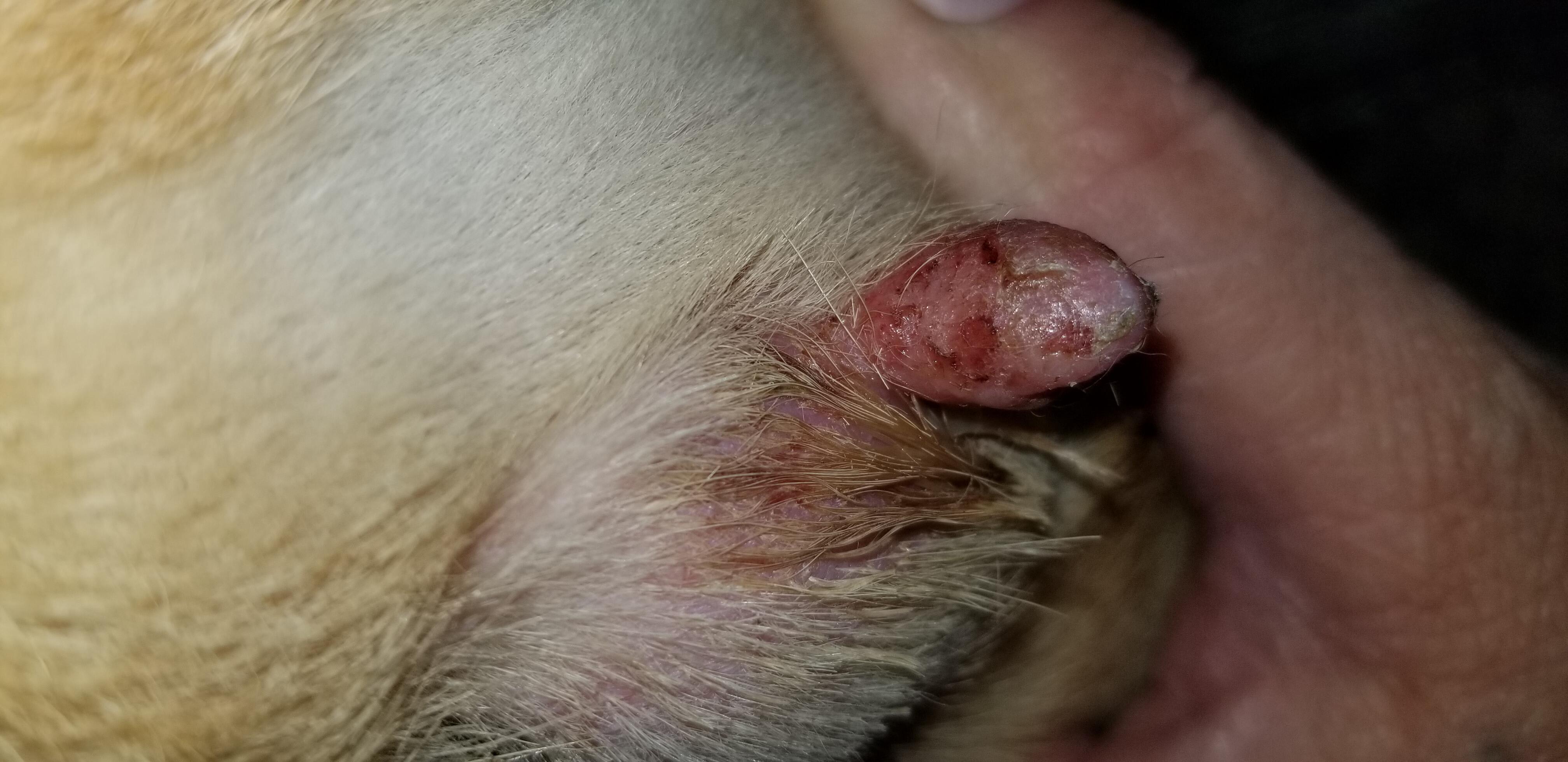
My dog's elbow lump is growing, inflamed, and he keeps licking it. Is it cancer?
Updated On September 23rd, 2025
Pet's info: Dog | Mixed Breed | Male | neutered | 9 years and 1 month old | 55 lbs
Hello my dog developed what I thought was a skin tag about 8 months ago on his elbow. It has got much larger and is inflamed because he continues to lick it. I'm so worried. Does this look malignant?


2 Answers
Most Helpful Answer

Published on September 23rd, 2020
Sam is at an age where a lump could be malignant, and I don't like the way this looks in your picture. I cannot diagnose malignancy from a picture, however. Any suspicious lumps should be examined by the vet. The vet can perform a test called a fine needle aspirate on it. To do this, the vet sticks a small needle into the lump to get a sample of its cells, and examines the cells on a slide under a microscope. It's usually painless to the animal, and relatively quick to perform. Once the cause of the lump is diagnosed, the vet can discuss treatment options if needed. Give his vet a call in the morning to make him an appointment. Best of luck.

5Pet Parents found this answer helpful
Related Answers from Veterinarians
-
Published on May 21st, 2017
Thank you for providing pictures of Sebatian's lump! It does look like it may be a wart, but it could also be another type of benign tumor. There is always a chance it could be a malignant tumor, and the chance of that occurring rises if he is a middle aged to older dog. Any suspicious lumps should be examined by the vet. The vet can perform a test called a fine needle aspirate on it. To do this, the vet sticks a small needle into the lump to get a sample of it's cells, and examines the cells on a slide under a microscope. It's usually painless to the animal, and relatively quick to perform. I would have him seen by a vet sometime next week to diagnose the cause of the lump so it can be treated as needed.
1Pet Parents found this answer helpful

Dog has a growth on elbow

My dog is a 13yrs old and has lumps on his front legs like the elbow area and are getting sore looking but also has 2 big lumps on his chest area 1 of which looks to be getting bigger do you think they might be cancer

This is the same question about my dog and a growth on his elbow. I did try to attach a picture but I dont known why the picture did not attach. I am going to reattempt attaching however if there is no picture this time, then no reply is necessary. t

My 9 year old German Shepherd has a small pea sized hard black lump. It doesn't seem to bother him and he is in good shape.... other than being overweight.
Noticed a lump under my dogs front elbow. Smaller than a ping pong. She hasn’t changed her gait, appetite, or energy level.
My dog has this lump on his right side that he is continuously licking. He does have a skin condition, where he has black dandruff.
My girl dog has a hard lump it's shape is oblong and it doesn't roll around when touched, it's feels hot, but it came up and grew like this in just 3 weeks or so, she still eats good, but the place seems very sore to her if you touch it, does this so
My dog is 12. At beginning of March he started with a small lump, photo on right. In last fortnight it has got bigger, photo on left. He is displaying no other symptoms, he does limp, he’s not constantly licking at at it etc.

Hi I’ve just noticed a growth on my German Shepard’s elbow was wondering if you could help identify what it is please
We got our dog, Bella, a few months ago. When we adopted her we were aware of this little skin thing on the back of her leg, but she chewed on it a little while back and ever since then it seems to be growing and getting angrier looking. She hasn’t c

Book an appointment with the pros – our expert vets are here to help.
