


My vet suggested cream for cat ringworm, but it's not working. Help!
Updated On September 23rd, 2025
Pet's info: Cat | Domestic Shorthair | Female | spayed | 4 months and 21 days old | 3 lbs
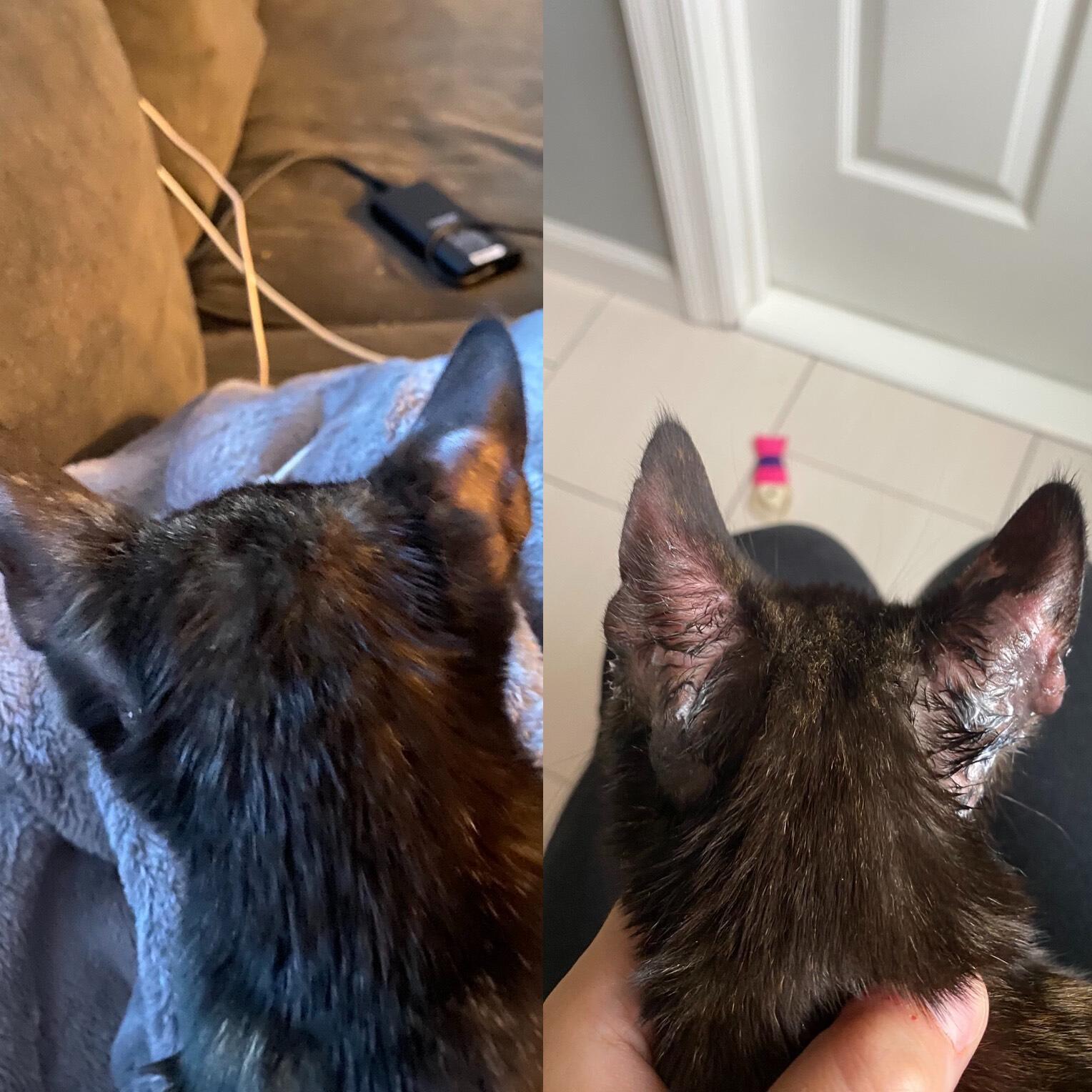
My vet recommended only OTC cream (Lotrimin AF) to treat my cats ringworm. He said he could prescribe oral anti-fungal (ITRAFUNGOL ORAL SOLUTION) if I wanted but that it is expensive. He also said I could do lime sulfur dips but they aren't that important. I have just been using the cream for a week and her spots are worse. Is this cream harmful (it's for people)? I want to ask for the oral medicine and go ahead an do the Lime Sulfur Dips ASAP. Is my vet not taking this seriously?


4 Answers
Most Helpful Answer

Published on September 12th, 2020
The cream isn't harmful but I have never come across a topical medication that has been effective for treating ringworm in cats aside from prescription-based lime sulfur dips. The concern is that the Microsporum canis (fungal organism causing ringworm) is spread diffusely throughout a cat's entire hair coat, such that an isolated topical spray will not cover all surfaces of every hair, and lead to frequent recurrence. Since the topical treatment isn't working and Nova's spots are worse, I would go back to the vet to get an oral treatment. I hope that all goes well!

1Pet Parents found this answer helpful
Related Answers from Veterinarians
-
Published on May 4th, 2020
Thank you for contacting Petco Pet Education Center, formerly Petcoach with your question about Shadow. It could be ringworm, but I can't say for certain without seeing him in person. I have never come across a topical medication that has been effective for treating ringworm in cats aside from prescription-based lime sulfur dips. The concern is that the Microsporum canis (fungal organism causing ringworm) is spread diffusely throughout a cat's entire hair coat, such that an isolated topical spray will not cover all surfaces of every hair, and lead to frequent recurrence. If you are concerned that he may have ringworm, he should go to his vet for confirmation and will need to be started on oral antifungal medication. I hope that all goes well!
1Pet Parents found this answer helpful
-
Published on January 9th, 2020
I have never come across a topical medication that has been effective for treating ringworm in cats aside from prescription-based lime sulfur dips. The concern is that the Microsporum canis (fungal organism causing ringworm) is spread diffusely throughout a cat's entire hair coat, such that an isolated topical spray will not cover all surfaces of every hair, and lead to frequent recurrence. If you are concerned that Baby may have ringworm, she should go to his vet for confirmation and will need to be started on oral antifungal medication. I hope that all goes well!
1Pet Parents found this answer helpful
-
Published on February 14th, 2021
Poor Tuki! With that degree of hair loss, if ringworm has already been diagnosed as the cause, I would agree with the first vet that a systemic (oral) antifungal such as Sporanox, in addition to a medicated topical treatment is necessary for this degree of hair loss. All anti-fungal medications have risks in cats, but we need to weight the pros & cons, and with a serious fungal infection the treatment is often necessary. I do not recommend using a scalpel to remove ringworm lesions - however, there is a test called a "skin scrape" where we use a scalpel blade to gently scrape (not cut) the very top layer of skin onto a microscope slide, in order to look for skin mites as a cause of hair loss. This would be done as a diagnostic test, not as a treatment. I wonder if this is the test that second vet was recommending, in order to make sure there isn't something else causing Tuki's hair loss. And in that case, I would also agree with this second vet. If Tuki is getting worse despite treatment, then it's worth making sure there isn't something else requiring an adjustment in Tuki's treatment plan. Hope this helps!
1Pet Parents found this answer helpful


Hi there Are there different topical treatments for ringworm in cats and reasons why one would work over the other, if a cat is not responding to a given cream? Could one active ingredient Terbinafine hydrochloride vs Miconazole nitrate work but not

How do I treat ringworm on my cat's tail? Any cream suggestion? It keeps coming back

What is the best treatment for ringworm?

We took our cat to the vet because she was losing hair on her head. They took a skin sample to see if it was ringworm. Until the results come back they gave us an oral medicine for the treatment of ringworm. Giving her oral medicine has been a real c

Ring worms treatment for kitten?
My cat has been having this for 2 weeks now. She is about 5 months old and I’ve been putting an ointment on her because i think that this is wringworm but i am not sure. I want to know what it is and what i can do to help her get rid of it. Thank u!
My cat ( male 4 months ) was infected with ringworm a month ago and been treated with apple cider vinegar. but now he has it again what oral medicine should i give him . He have it on the ears head and the back ..
Is this ringworm? What can I buy to help this skin problem go away?
I believe a kitten that I am fostering has ringworm. I have tried to schedule an appointment with my vet but it’s in a week and I want to know if I can treat him now before it gets any worse. His skin is scaly and he’s been scratching his ears to the
I think this is ringworm.is it bad for my cat when she licks the anti-fungal cream and can she infected me?? And how much i can wait to see a defferent ? Can she still sleeps with me in same bed?

Book an appointment with the pros – our expert vets are here to help.
